
"Those works created from solitude and from pure and authentic creative impulses, where the worries of competition, acclaim and social promotion do not interfere, are, because of these very facts, more precious than the productions of professionals. After a certain familiarity with these flourishings of an exalted feverishness, lived so fully and so intensely by their authors, we cannot avoid the feeling that in relation to these works, cultural art in its entirety appears to be the game of a futile society, a fallacious parade." That is Jean Dubuffet's manifesto for Art Brut, "raw art," art made outside the art world, by people "untouched by artistic culture." Dubuffet coined the term in the 1940s, inspired by the art of psychiatric patients, self-taught creators, and social outsiders. In July 1945, Dubuffet travelled through Switzerland. He visited mental hospitals and prisons, places where some doctors and therapists had begun to view, and collect, pictures and objects created by patients with curiosity. The collection he built, approximately 5,000 works by 133 creators, including Aloïse Corbaz and Adolf Wölfli, became the Collection de l'Art Brut in Lausanne, the first institution of its kind in the world, founded in February 1976. The term "outsider art" was coined in 1972 as the title of a book by art critic Roger Cardinal. It is an English equivalent for art brut. The field has grown: an annual Outsider Art Fair has taken place in New York since 1993, and there are at least two regularly published journals dedicated to the subject. But the core question remains: what counts as art? Who decides? And what happens to art that is made outside the system, by people who do not know they are artists, who do not seek exhibition or acclaim, who make art because they must?
Outsider Art and Art Brut is one of the most provocative categories in art history. It challenges the definition of art itself, who makes it, who validates it, and who it is for. The category was created by an insider (Dubuffet) to celebrate outsiders, a paradox that has shaped the field from its inception. This guide covers Jean Dubuffet and the origins of Art Brut, Adolf Wölfli and Aloïse Corbaz, the Collection de l'Art Brut in Lausanne (founded 1976, 5,000+ works), Roger Cardinal and the term "Outsider Art" (1972), the paradox of categorizing outsider art, the Outsider Art Fair (since 1993), and why art made outside the system matters.
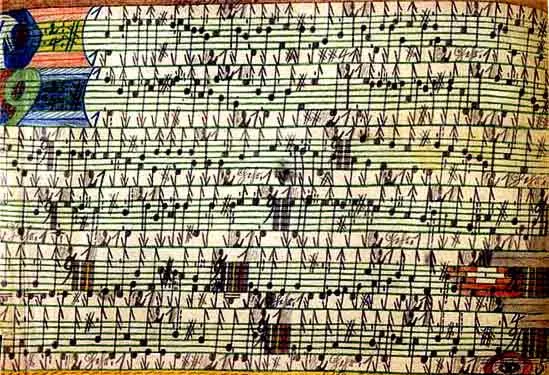
Adolf Wölfli (1864-1930). Psychiatrist Walter Morgenthaler observed the patient Adolf Wölfli at what was then the Waldau mental hospital. The former indentured child was diagnosed with schizophrenia and created thousands of drawings and collages in which he not only reimagined his childhood but also invented an entirely new world order. Morgenthaler recognised the artistic value of Wölfli's work and published a book about him (Swissinfo). Image via Wikimedia Commons.
Jean Dubuffet and the Origins of Art Brut
Dubuffet, the most important French artist to emerge after World War II, became interested in the art of the mentally ill in mid-career, after studying "The Art of the Insane" by the Swiss psychiatrist Hans Prinzhorn. Originally inspired by the childlike art of the Swiss painter Paul Klee, from the 1940s on, Dubuffet's paintings emulated the sincerity and naiveté that he associated with real art. He applied the name art brut to the drawings, paintings, and doodlings of the psychotic, the naive, and the primitive, works that he regarded as the purest forms of creative expression. He defined Art Brut as "the works executed by people untouched by artistic culture, works in which imitation, contrary to what occurs among intellectuals, has little or no part, so that their makers derive everything (subjects, choice of materials used, means of transportation, rhythms, ways of patterning, etc.) from their own resources and not from the conventions of classic art."
In July 1945, Dubuffet travelled through Switzerland. He visited mental hospitals and prisons, places where some doctors and therapists had begun to view, and collect, pictures and objects created by patients with curiosity. In 1948 he formed the Compagnie de l'Art Brut along with other artists, including André Breton and Claude Lévi-Strauss. Dubuffet dedicated three decades (1945-1975) to bringing psychiatric art out of the cabinet of curiosities of the medical sciences and to affirming the dignity of this type of creation as equal to that of "cultural art." One of his first texts, titled "L'Art Brut préféré aux arts culturels," a short text written in 1949 as a preface to the catalog of an exhibition that went off with a deafening bang in the high society of Paris, contains the key postulates of the aesthetic theory that he then developed over several decades. To this bankrupt art, he opposes "true art," which is to say art brut, literally "raw art": an art that is the result of the "pure artistic operation," reinvented in all its phases by an author that doesn't draw on anything but his own impulses.
Three years after the Compagnie de l'Art Brut was formed, Dubuffet dissolved it, caving in to form the more conventional Collection de l'art brut afterward. Dubuffet's distaste for the mainstream art world helped ensure that art brut and the Compagnie de l'Art Brut would not survive on a commercial basis. Dubuffet would kill art brut as he defined it in his quest for its authenticity. That sentence is the whole paradox of the field in miniature. For the wider movement context, see our complete guide to art movements.
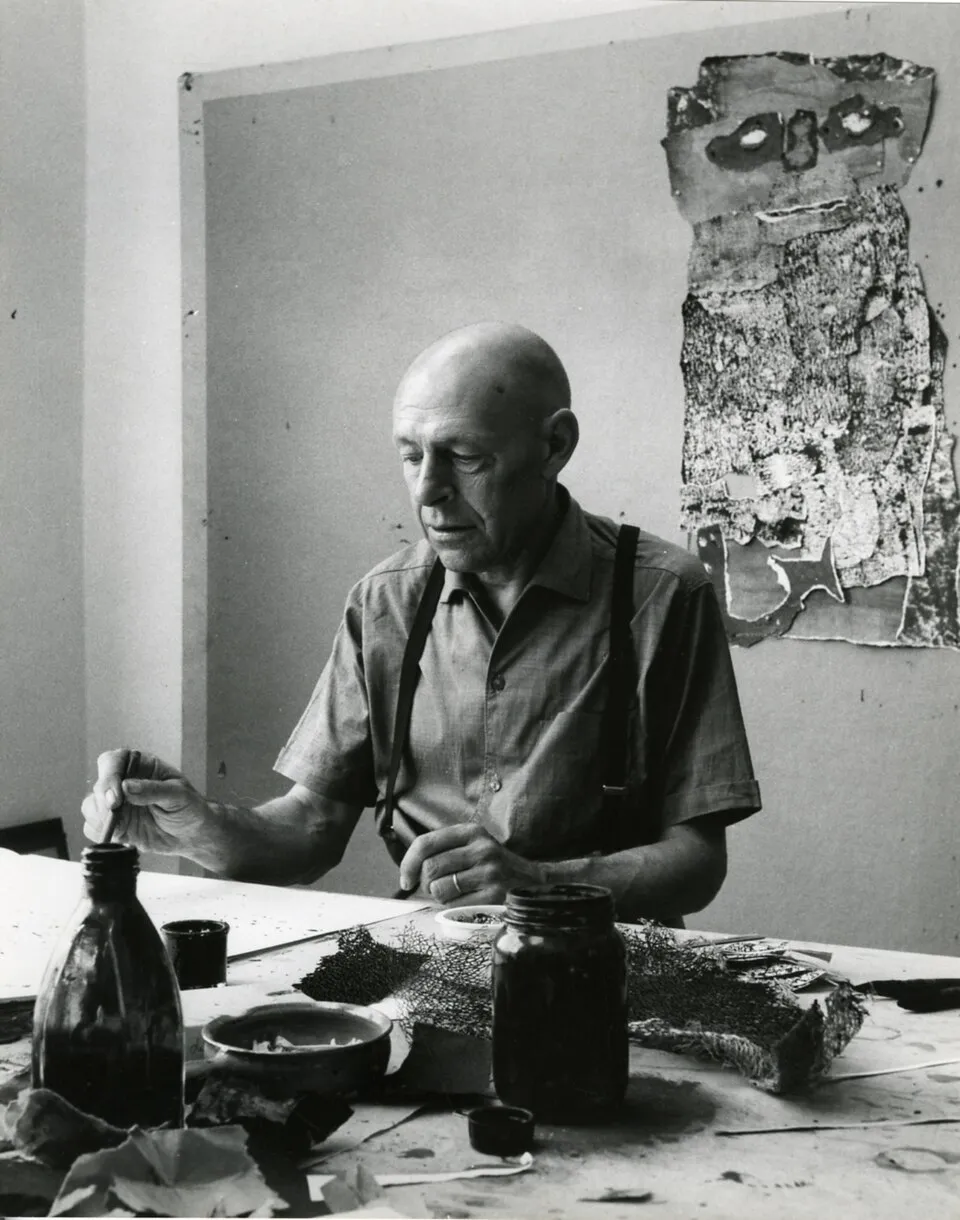
Jean Dubuffet (1901-1985). Dubuffet dedicated three decades (1945-1975) to bringing psychiatric art out of the cabinet of curiosities of the medical sciences and to affirming the dignity of this type of creation as equal to that of "cultural art." He named this type of art Art Brut (which literally translates as "raw art"). Image via Wikimedia Commons.
Adolf Wölfli and Aloïse Corbaz: Key Figures
Adolf Wölfli (1864-1930) is the figure who makes the category real. Psychiatrist Walter Morgenthaler observed the patient Adolf Wölfli at what was then the Waldau mental hospital (now the University Psychiatric Services Bern). The former indentured child was diagnosed with schizophrenia and created thousands of drawings and collages in which he not only reimagined his childhood but also invented an entirely new world order. Morgenthaler recognised the artistic value of Wölfli's work and published a book about him, in 1921, one of the first times a psychiatrist treated a patient's work as art rather than symptom. Jean Dubuffet was also fascinated by Wölfli. In 1948 he exhibited some of his drawings in Paris. Wölfli became a cornerstone of Dubuffet's Art Brut collection.
Aloïse Corbaz (1886-1964) was a Swiss woman who was institutionalized and created art using packing paper, crayons, and flower petals. Her early works were discovered by Jean Dubuffet in 1947 and added to the Compagnie de l'Art Brut collection in 1948. She paints almost life-size women in workwear, craftswomen, on packing paper, and writes short texts alongside them in which the fictional women introduce themselves. The stylised depictions feel strikingly lifelike. Wölfli and Corbaz were not "artists" in any conventional sense. They were psychiatric patients who made art because they were compelled to, by inner necessity, by hallucination, by the need to create order out of chaos. Their work was not made for exhibition, sale, or acclaim. It was made because it had to be made. The Outsider Artist deals incessantly with a war in mind (which is often mistakenly labeled as mental illness), always navigating emotional conflict in order to create outwards paths to find inner peace. For how to look at this work on its own terms, see our guide on how to look at art.
The Collection de l'Art Brut in Lausanne
In 1971 the collection was donated to the city of Lausanne. In February 1976 the Collection de l'Art Brut was founded, the first institution of its kind in the world. The collection he established became known as the Collection de l'art brut and the curator was Slavko Kopač for almost three decades. It contains thousands of works and is now permanently housed in Lausanne, Switzerland. The collection grew to include about 5,000 works by 133 creators, including Aloïse Corbaz and Adolf Wölfli.
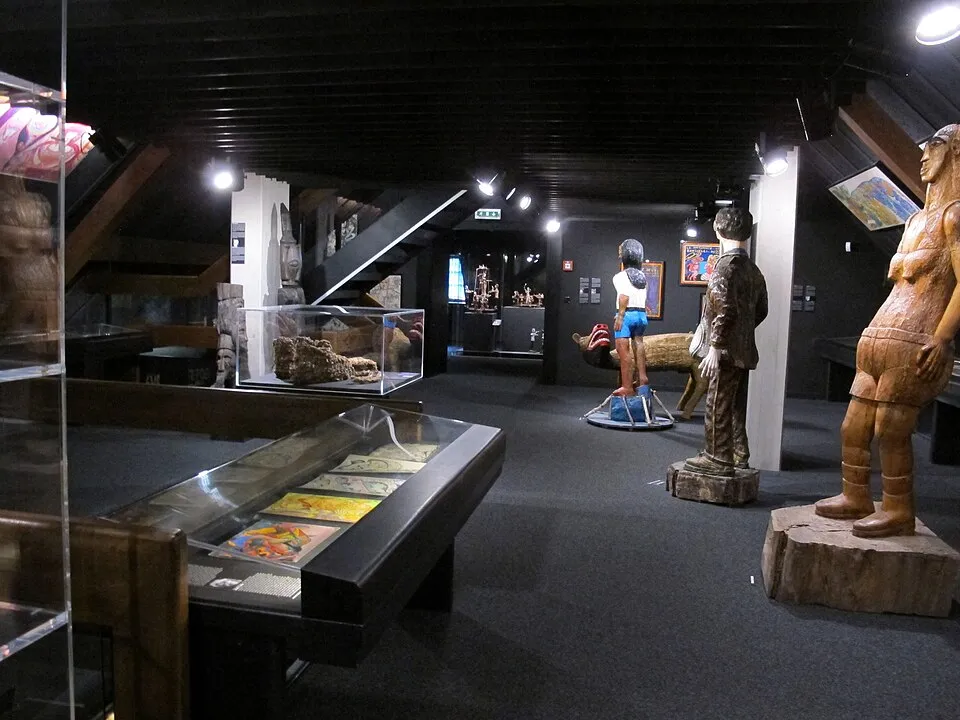
Collection de l'Art Brut, Lausanne. In 1971 the collection was donated to the city of Lausanne. In February 1976 the Collection de l'Art Brut was founded, the first institution of its kind in the world. The collection grew to include about 5,000 works by 133 creators, including Aloïse Corbaz and Adolf Wölfli (Swissinfo). Image via Wikimedia Commons.
The Collection de l'Art Brut in Lausanne is turning 50 in 2026, and is marking the occasion with an exhibition. It tells the story of how an untamed art form found fertile ground in Switzerland. "Art Brut en Suisse" takes visitors back to the early days, when art created in psychiatric clinics went unseen for a long time. The anniversary exhibition brings together historical and contemporary works from the collection. It offers insight into how the definition of mental illness, and the treatment of those affected, has changed over the decades. The Collection de l'Art Brut is not a museum of "outsider art" in the conventional sense. It is a museum of art that was never meant to be in a museum. The paradox is built into the institution. Dubuffet collected art that was made outside the system, then placed it in a museum, which is the system. The paradox is productive: without the museum, the art would be lost. With the museum, the art is preserved but also transformed, from private compulsion to public exhibition. For the social logic of how institutions shape what counts as art, see our piece on art and society.
Roger Cardinal and the Term "Outsider Art" (1972)
The term "outsider art" was coined in 1972 as the title of a book by art critic Roger Cardinal. It is an English equivalent for art brut (French: "raw art" or "rough art"), a label created in the 1940s by French artist Jean Dubuffet to describe art created outside the boundaries of official culture. The term, Outsider Art, was introduced in 1972 (eight years after Art Brut) by the English academic, Roger Cardinal, and like Dubuffet he intended to shine a light on art made by artists usually untrained, living quietly, and possibly somehow sheltered.
The distinction from neighboring categories matters. Related terms such as Folk Art, Naïve Art, and Neuve Invention have some more specific characteristics and will not be used generally. Primitivist Art will be avoided, as this is bound to problematic social and ethnological dimensions. Outsider Art is not the same as Folk Art (which is rooted in communal tradition) or Naïve Art (which is self-taught but aware of art conventions). Outsider Art is art made by people who are "unwilling or unable to be assimilated" into the art world. The editors of "Raw Vision," a leading journal in the field, suggest that "Whatever views we have about the value of controversy itself, it is important to sustain creative discussion by way of an agreed vocabulary." Consequently, they lament the use of "outsider artist" to refer to almost any untrained artist. "It is not enough to be untrained, clumsy or naïve. Outsider Art is virtually synonymous with Art Brut in both spirit and meaning, to that rarity of art produced by those who do not know its name." For a structured way to study these distinctions, see our guide on how to teach yourself art history.
The Paradox of Categorizing Outsider Art
Dubuffet was an insider, a successful artist, exhibited in Paris galleries, who created a category for outsiders. He collected their work, exhibited it, and wrote manifestos about it. In doing so, he brought outsider art into the art world, the very system it was defined by being outside of. Scholars argue Dubuffet's distaste for the mainstream art world helped ensure that art brut and the Compagnie de l'Art Brut would not survive on a commercial basis. Dubuffet would kill art brut as he defined it in his quest for its authenticity.
The market followed. Outsider art has emerged as a successful art marketing category: an annual Outsider Art Fair has taken place in New York since 1993, and there are at least two regularly published journals dedicated to the subject. The term is sometimes applied as a marketing label for art created by people who are outside the mainstream "art world" or "art gallery system," regardless of their circumstances or the content of their work. The marketization of Outsider Art is the final paradox, art made outside the system, sold inside the system. The paradox is not a flaw. It is the condition of Outsider Art's existence. Without Dubuffet's insider advocacy, the art would have been lost. Without the Collection de l'Art Brut, the works would have been destroyed. Without the Outsider Art Fair, the artists would have no market. The system that Outsider Art is defined by being outside of is also the system that preserves, exhibits, and values it. The paradox is productive, but it must be acknowledged. If you are new to these debates, start with our guide on art for beginners.
Why Art Made Outside the System Matters
Outsider Art challenges the definition of art. If art can be made by people with no training, no awareness of art history, and no desire for exhibition, then art is not a profession, a discipline, or a cultural category. It is a fundamental human activity, as basic as speaking, singing, or dreaming. The corollary of this definition is that making art is open to everyone who wishes to embrace this endeavor and that no legitimizing institution is necessary, which boils down to saying that none of the legitimizing institutions are in fact legitimate. That is a radical claim, and it is the claim at the heart of Art Brut.
Outsider Art expands the canon. It includes works by people who have been excluded from art history: psychiatric patients, prisoners, self-taught creators, social outsiders, people with disabilities. Art Brut exists everywhere. It refers to art created by people without formal artistic training: amateurs, children, social outsiders and people with mental illness or intellectual disabilities. Outsider Art holds a mirror to the art world. It asks: what if the art world's categories, professional, amateur, trained, untrained, insider, outsider, are not natural but constructed? What if the distinction between "art" and "not-art" is not a fact but a decision, made by institutions, with consequences for who is included and who is excluded?
The boundary between outsider and insider is not as clear as it once was. Having a mental illness does not mean artists are unaware of the world around them. Some works displayed at the end of the anniversary exhibition could easily have come from the studios of trained artists or graphic designers with no psychiatric diagnosis. The category that Dubuffet created to challenge the art world has been absorbed by the art world, and in being absorbed, it has changed the art world, expanding what counts as art and who counts as an artist. For where this expansion is heading now, see our guide to contemporary art trends, and for the related category of community-rooted work, see our piece on folk art and vernacular creativity.
Final Thoughts
"Those works created from solitude and from pure and authentic creative impulses, where the worries of competition, acclaim and social promotion do not interfere, are, because of these very facts, more precious than the productions of professionals" (Dubuffet). Dubuffet applied the name art brut to the drawings, paintings, and doodlings of the psychotic, the naive, and the primitive, works that he regarded as the purest forms of creative expression. In July 1945, Dubuffet travelled through Switzerland. He visited mental hospitals and prisons. In 1948 he formed the Compagnie de l'Art Brut along with other artists, including André Breton and Claude Lévi-Strauss. The collection grew to include about 5,000 works by 133 creators, including Aloïse Corbaz and Adolf Wölfli. In 1971 the collection was donated to the city of Lausanne. In February 1976 the Collection de l'Art Brut was founded, the first institution of its kind in the world. The term "outsider art" was coined in 1972 as the title of a book by art critic Roger Cardinal. An annual Outsider Art Fair has taken place in New York since 1993. Adolf Wölfli (1864-1930) created thousands of drawings and collages in which he not only reimagined his childhood but also invented an entirely new world order. Aloïse Corbaz (1886-1964) was discovered by Jean Dubuffet in 1947. The paradox: "Dubuffet would kill art brut as he defined it in his quest for its authenticity." "It is not enough to be untrained, clumsy or naïve. Outsider Art is virtually synonymous with Art Brut in both spirit and meaning, to that rarity of art produced by those who do not know its name." "Making art is open to everyone who wishes to embrace this endeavor and that no legitimizing institution is necessary." The Collection de l'Art Brut in Lausanne is turning 50 in 2026.
Go to the Collection de l'Art Brut in Lausanne. It is the first institution of its kind in the world, 5,000+ works by 133 creators, housed in a château overlooking Lake Geneva. The 50th anniversary exhibition "Art Brut en Suisse" runs through 2026. If you cannot go to Lausanne, go to the Outsider Art Fair in New York (annual, since 1993). Or go to the American Folk Art Museum in New York, which holds more than seven thousand works of art from four centuries and nearly every continent. Look at the work. Look at Wölfli's drawings, thousands of drawings and collages in which he not only reimagined his childhood but also invented an entirely new world order. Look at Corbaz's almost life-size women in workwear on packing paper. Then ask yourself: who decided this was not art? And who decided, eventually, that it was? The answer is the same: the art world. The same system that excluded these works later collected them, exhibited them, and sold them. The paradox is the point. "Making art is open to everyone who wishes to embrace this endeavor and that no legitimizing institution is necessary." Dubuffet said it. The art world has not yet fully reckoned with it. For reference, read the Swissinfo feature on 50 years of the Collection de l'Art Brut and the Britannica entry on Art Brut.


