
"The best gifts for artists, from the practical to the poetic, are the ones that say 'I see you, I support your practice, and I want to be part of your creative life'" (Creative Boom, gift guide). Buying a gift for someone who loves art is harder than it looks. The art lover is a particular kind of person, sensitive to aesthetics, opinionated about taste, and often difficult to surprise. The wrong gift, a generic coffee-table book, a mass-produced poster, a "live laugh love" canvas, lands flat. The right gift, a sketchbook they would not buy themselves, a museum membership they keep meaning to get, a print from an artist they discovered last month, lands perfectly. The trick is matching the gift to the person, and matching the budget to the gift. This guide is organized by budget, from under $25 to over $200, with specific, tested recommendations in each tier. Every recommendation is something an art lover would actually want, not a generic listicle filler. The goal is to help you give a gift that says "I know you," not "I searched 'gifts for artists' on Amazon."
Art gifts fall into six categories: supplies (things to make art with), books (things to learn from), experiences (things to do), originals (things to own), prints (things to display), and subscriptions (things that keep giving). This guide covers all six, organized by budget. Within each budget tier, you will find recommendations across categories, so you can match the gift to the person, not just the price. Plus: how to choose, what to avoid, and how to wrap an art gift well.
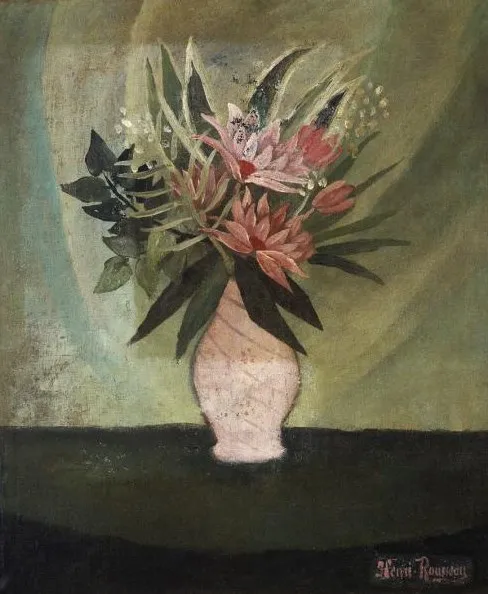
Henri Rousseau, "Still Life, Vase of Flowers." The kind of work an art lover would cherish, as an original, a print, or a museum membership to see in person. Image via Wikimedia Commons.
Under $25: Stocking Stuffers and Small Joys
The under-$25 tier is for stocking stuffers, small thank-yous, and add-ons to a larger gift. These are small in price but not in thought, and an art lover will recognize the thought.
For supplies, a Moleskine Art Sketchbook (around $20) is the classic. Pocket-sized, hardcover, acid-free paper. Every artist needs a sketchbook, and a Moleskine is the one they would not always buy themselves. Pair it with a Blackwing 602 pencil (around $25 for a pack of 12), the pencil that E.B. White, John Steinbeck, and Chuck Jones used. "Blackwing pencils are the perfect gift for the artist who has everything, because they will use them, and they will remember you every time they sharpen one" (Pencils.com). For a cheaper option, a set of Faber-Castell Pitt Artist Pens (around $18 for a set of 4) gives an artist a new tool to play with.
For books, Phaidon's "The Art Book" (around $20 in paperback) is the single-volume reference every art lover should own. A-to-Z, 500 artists, one image and one paragraph each. It is the book they will reach for when they want to look something up. For a more focused option, "Ways of Seeing" by John Berger (around $15 in paperback) is the book that changed how a generation looks at art. "Seeing comes before words" is the first line, and the rest of the book delivers on it. For something lighter, a Taschen Basic Art series book (around $15) on their favorite artist, Van Gogh, Kahlo, Hokusai, is a focused, affordable introduction.
For experiences, a single museum day pass (around $15-25) to a local museum is a small, thoughtful gift. Pair it with a note: "A day at the museum, on me." For subscriptions, a one-month trial of Skillshare (around $14) or Domestika (around $11) gives access to thousands of art classes. For prints, a postcard set from a museum shop (around $12-20) is a small, beautiful gift. The MoMA postcard set, the Tate postcard set, the Rijksmuseum postcard set, each contains 30-50 postcards of works from the collection. They can be displayed, sent, or kept. For more on the practice these gifts support, see our guide on drawing every day.
$25 to $50: The Sweet Spot
The $25-to-$50 tier is the sweet spot for art gifts. It is enough to buy something substantial without being extravagant, and it is where the most thoughtful gifts live.
For supplies, a Copic Sketch marker set (around $40 for a set of 6) is the marker that illustrators and manga artists swear by. Refillable, replaceable nibs, 358 colors. For a painter, a set of Winsor & Newton Cotman watercolors (around $30 for a 12-color set) is a quality student-grade set that is good enough for serious work. For a drawer, a set of Caran d'Ache Luminance colored pencils (around $40 for a set of 12) is the most lightfast colored pencil on the market. "Caran d'Ache Luminance are the pencils that professional colored-pencil artists use, and they are a gift that says 'I take your work seriously'" (Colored Pencil Magazine).
For books, "The Story of Art" by E.H. Gombrich (around $40 in hardcover) is the most-read art history book in the world, and the one most art lovers do not yet own. First published in 1950, translated into 30 languages, sold over 8 million copies. "There really is no such thing as Art. There are only artists" is the opening line, and the rest of the book is a 600-page demonstration. For a more visual option, "Women in Art" by Rachel Ignotofsky (around $30) is a beautifully illustrated book about 50 women artists, from the Renaissance to today. For a coffee-table book, a Taschen 25th Anniversary edition (around $30-50) on their favorite artist or movement is a substantial, beautiful gift.
For experiences, a museum membership (around $40-100 for an individual annual membership) is the gift that keeps giving. The Metropolitan Museum of Art, the Art Institute of Chicago, the National Gallery, the Tate, most major museums offer annual memberships in this range. A membership gives free admission, members-only previews, and a discount at the museum shop. For more on using museums well, see our guide on museum apps and audio guides. For subscriptions, a three-month Skillshare subscription (around $45) or a six-month Domestika subscription (around $50) gives time to actually take a class. For prints, a museum-shop poster (around $30-50) of a favorite work, printed on quality paper, is a step up from a postcard set. The MoMA poster of Van Gogh's "Starry Night," the Tate poster of Hockney's "A Bigger Splash," the Rijksmuseum poster of Vermeer's "Milkmaid."
$50 to $100: Substantial and Memorable
The $50-to-$100 tier is for substantial gifts, the kind that become a fixture in the recipient's life.
For supplies, a set of Sennelier oil pastels (around $60 for a set of 24) is the oil pastel that Picasso helped develop. Sennelier made them for Picasso in 1949, and they are still the standard. For a watercolorist, a Daniel Smith Essentials set (around $60 for 6 tubes) is professional-grade watercolor at its best. For a sketcher, a Stillman & Birn Alpha sketchbook (around $20 for an 8.5x11 hardcover) is the sketchbook that professional illustrators use, with paper that takes ink, watercolor, and graphite. Pair it with a Sakura Pigma Micron set (around $20 for 6 sizes) and you have a complete drawing kit for around $40.
For books, "Janson's History of Art" (around $80 in hardcover) is the textbook that most art-history students use, and the book that most art lovers want on their shelf. For a more focused option, the Phaidon "Art of the XXth Century" (around $60) or a Taschen XL book (around $70-100) on their favorite artist is a substantial, beautiful gift. For something interactive, "The Metropolitan Museum of Art Masterpiece Paintings" (around $60) is a 500-painting tour of the Met's collection, with commentary.
For experiences, a private museum tour (around $75-100) at a major museum is a memorable gift. The Met, the Art Institute, and the National Gallery all offer private one-hour tours with a docent. For a more social experience, a one-day art workshop (around $50-100) at a local art school or community college is a gift that gives them a day of making. For subscriptions, a one-year Skillshare subscription (around $99) gives unlimited access to thousands of classes. For prints, a framed print from a museum shop (around $50-100) is a step up from a poster. The frame makes it a gift, not a purchase. For more on what to look for in prints, see our guide on starting an art collection.
$100 to $200: The Big Gift
The $100-to-$200 tier is the big gift, the one for a partner, a parent, a close friend, or yourself.
For supplies, a set of Holbein Duos (around $150 for a set of 24) is professional-grade oil water-soluble paint, the kind that professional painters use. For a watercolorist, a set of Daniel Smith Extra Fine Watercolors (around $150 for a set of 12) is the top of the line. For a drawer, a full set of Caran d'Ache Luminance (around $200 for a set of 76) is the dream gift, the colored pencil set that most artists covet and few own.
For books, the Taschen XL series (around $150-200) is the ultimate art book gift. "XL" means extra-large, and these books are 14 inches tall, 600 pages, and weigh 15 pounds. The Van Gogh XL, the Michelangelo XL, the Leonardo XL, each is a complete visual catalog of the artist's work. For a more focused option, a Phaidon "The Artist's Eye" book (around $150) or a Yale University Press art-history monograph (around $100-150) is a scholarly, beautiful gift.
For experiences, a weekend art workshop (around $150-200) at a serious art school, like the Art Students League, the School of the Art Institute of Chicago, or a local equivalent, is a gift that gives them a weekend of focused making. For a more luxurious experience, a private art tour (around $200) of a major city's galleries and museums, with a guide, is a memorable gift. For subscriptions, a one-year Masterclass subscription (around $180) gives access to art classes taught by famous artists, like Jeff Koons on art and design. For prints, a limited-edition print from an artist's studio (around $100-200) is a step up from a museum-shop poster. Look on Etsy, Saatchi Art, and Society6 for emerging artists selling limited-edition prints.
Over $200: The Investment
The over-$200 tier is for investments, the kind of gift that becomes a permanent part of the recipient's life and collection.
For originals, a small original work from an emerging artist (around $200-500) is the most meaningful gift you can give an art lover. Look on Saatchi Art, Artsy, Etsy, and at local gallery shows. The key is to buy from an artist whose work the recipient already loves, or whose work is in a style they love. "The best art gift is an original work by an artist the recipient loves, because it says 'I know what you love, and I want you to own a piece of it'" (Artsy, gift guide). For more on how to do this well, see our guide on starting an art collection.
For supplies, a full set of professional-grade paints (around $300-500) is the gift that a serious painter dreams of. A set of Winsor & Newton Professional Watercolors (around $300 for a set of 24), a set of Holbein Artists' Oils (around $400 for a set of 24), or a set of Sennelier Extra Fine Oils (around $500 for a set of 24) is the kind of gift that a painter would never buy for themselves, and will never forget receiving. For experiences, a week-long art workshop (around $500-1000) at a serious art school, like the Art Students League, Anderson Ranch, or Haystack Mountain, is the gift of a lifetime. For subscriptions, a lifetime Masterclass subscription (around $300) or a multi-year museum patron membership (around $500) is a gift that lasts decades.
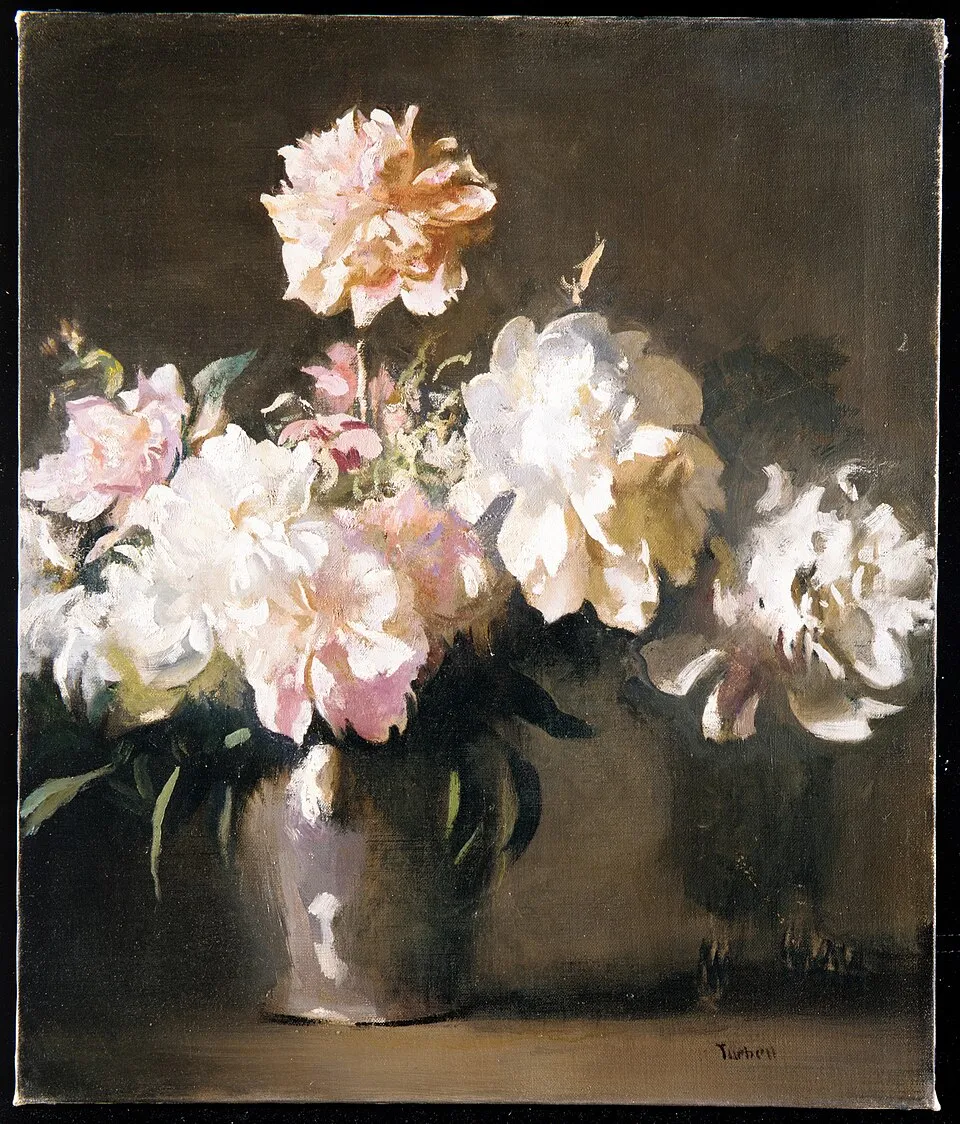
Still Life with Vase of Peonies, Metropolitan Museum of Art. The best art gifts say "I know what you love, and I want you to own a piece of it." Image via Wikimedia Commons.
How to Choose the Right Art Gift
Match the gift to the person, not the price. A $20 sketchbook for someone who draws every day is a better gift than a $200 print for someone who does not care about that artist. The thought is in the matching, not the spending. Look at what they already have. An artist's studio, desk, or shelf tells you what they use and what they need. A painter who is out of cadmium yellow needs cadmium yellow more than they need a coffee-table book. A drawer who is on their last sketchbook needs a sketchbook more than they need a print.
Listen to what they say. Artists complain about their tools. "I wish I had a better brush." "I need a bigger palette." "I'm out of good paper." These are gift instructions. Write them down. Ask if you are not sure. "What do you need?" is not a bad question. Most artists will tell you, and they will appreciate that you asked. For more on the practice these gifts support, see our guide on drawing every day, and for the books that pair with these gifts, our guide on art for beginners.
What to Avoid
Avoid generic "art" gifts. The "live laugh love" canvas, the mass-produced poster of "Starry Night" from a big-box store, the "artist" mug with a paintbrush on it. These are not art gifts. They are gifts that say "I searched 'gifts for artists' and bought the first thing." An art lover will recognize them, and they will be polite, and the gift will go in a closet. Avoid "how to draw" books for someone who already draws. They have them. They have read them. They do not need another one. Avoid expensive supplies for a beginner. A $200 set of oils for someone who has never painted is not a gift, it is a pressure. Start them with a $30 student set, and let them grow into the expensive stuff.
Avoid art you think they "should" like. If they love contemporary abstraction, do not buy them a Renaissance print. If they love illustration, do not buy them a conceptual art book. The gift is about their taste, not yours. For more on what to read instead, see our guide on art for beginners.
How to Wrap an Art Gift Well
Wrap it like it matters. An art gift wrapped carelessly says "I did not think about this." An art gift wrapped well says "I thought about this as much as the gift itself." For a book, wrap it in brown paper, tie it with twine, and tuck a sprig of something green under the twine. For a print, roll it in a tube, tie a ribbon around the tube, and include a note. For supplies, wrap them together in a box, with tissue paper, and include a note about why you chose them. The note matters. A handwritten note that says "I saw you were out of cadmium yellow, so I got you this. I love watching you paint" turns a $20 tube of paint into a $200 gift. The thought is in the note, not the price. For more on the practice these gifts support, see our guide on drawing every day.
Final Thoughts
Art gifts for every budget, from under $25 (Moleskine sketchbook, Blackwing pencils, Phaidon "The Art Book," museum postcard sets) to over $200 (small originals from emerging artists, professional-grade paint sets, week-long workshops). The $25-to-$50 tier is the sweet spot (Copic markers, Gombrich's "The Story of Art," museum memberships, framed posters). The $50-to-$100 tier is for substantial gifts (Sennelier oil pastels, "Janson's History of Art," private museum tours, framed prints). The $100-to-$200 tier is the big gift (Holbein Duos, Taschen XL books, weekend workshops, limited-edition prints). The over-$200 tier is for investments (originals from emerging artists, full professional paint sets, week-long workshops, lifetime memberships). "The best gifts for artists, from the practical to the poetic, are the ones that say 'I see you, I support your practice, and I want to be part of your creative life'" (Creative Boom). Match the gift to the person, not the price. Look at what they have, listen to what they say, ask if you are not sure. Avoid generic "art" gifts, "how to draw" books for someone who already draws, expensive supplies for beginners, and art you think they "should" like. Wrap it like it matters, and include a handwritten note. The note turns a $20 tube of paint into a $200 gift, because the thought is in the note, not the price.
The best art gift is the one that says "I know you." A $20 sketchbook for someone who draws every day is a better gift than a $200 print for someone who does not care about that artist. The thought is in the matching, not the spending. Look at what they have. Listen to what they say. Ask if you are not sure. Wrap it well. Include a note. The art lover in your life will know that you see them, and that is the best gift of all. For reference, see Creative Boom's gift guide, Artsy's art gift guide, and Saatchi Art's gift collection.


