Vermont Studio Center: The Residency That Runs Like a Monthly Town
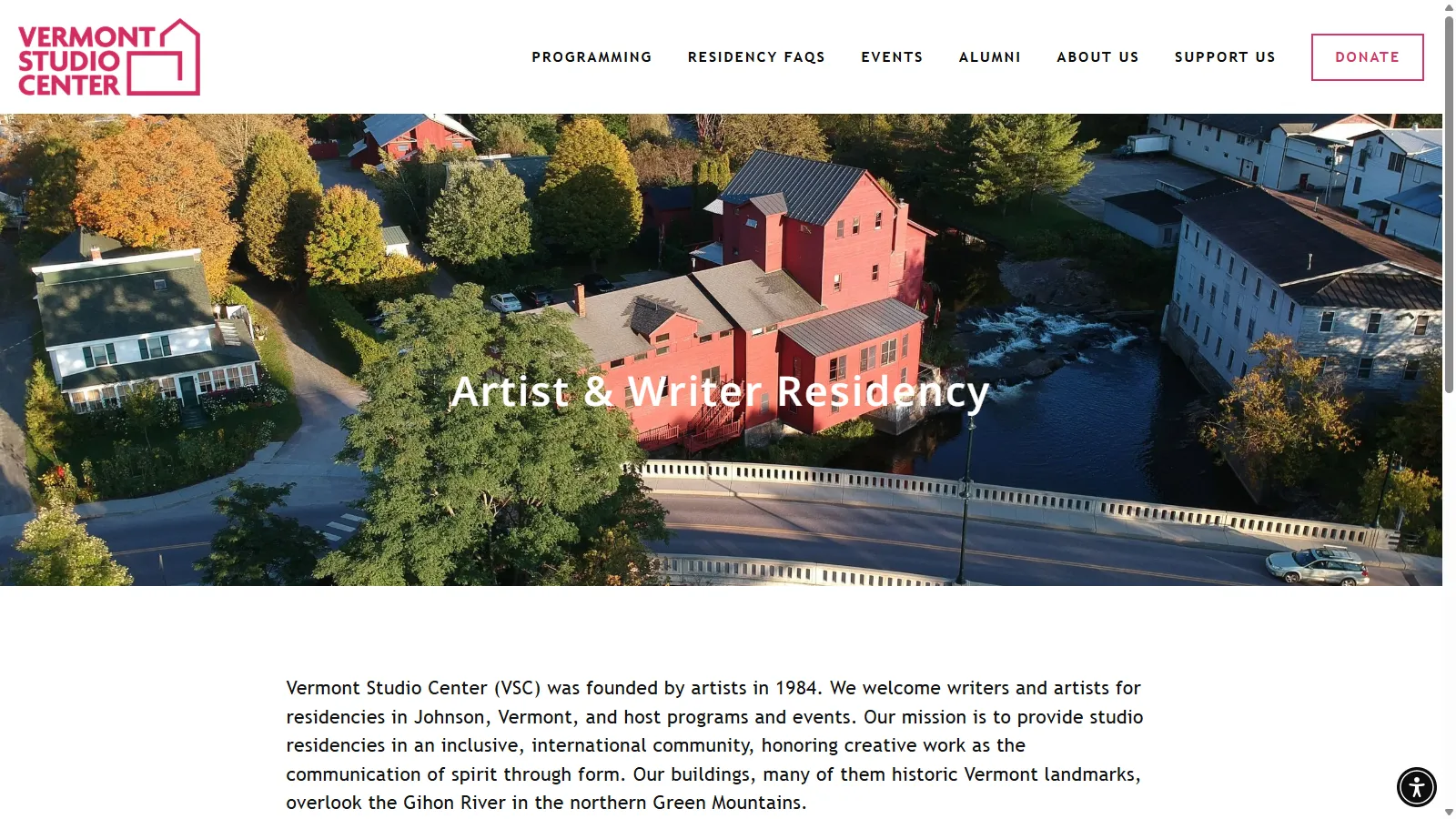
VSC does something no other major residency does: it runs a new cohort every single month. Roughly 40 visual artists and writers arrive in the small village of Johnson each session, live in historic houses along the Gihon River, and work in a campus of converted studios. Since 1984 it has grown into the largest international artist and writer residency program in the United States.
Sessions run on a fixed monthly calendar, so unlike rolling residencies you share arrival and departure days with your whole cohort, which creates a stronger group bond but less scheduling flexibility.
The model is different from Yaddo or MacDowell. Those are invitation-grade colonies; VSC is structured, social, and scaled. Every session includes resident presentations, open studios, and a Visiting Artists and Writers program where established figures like David Humphrey come through for studio visits and talks.
The Money Question
This is where VSC differs sharply from the free colonies. Every accepted resident receives a fellowship, but the levels differ:
- Full fellowship (35% of residents): covers everything. You pay nothing for room, studio, and meals.
- Partial fellowship (everyone else): reduces the fee to $2,700 for two weeks, $3,825 for three weeks, or $4,950 for four weeks.
A 10 percent discount applies if you share a bathroom. A $500 non-refundable deposit holds your place once you accept. The application fee itself is $25.
That means roughly two-thirds of residents pay real money to attend. If you need the residency to be free, the competitive strategy is obvious: your work sample has to land in the top third of the pool, because that is where the full fellowships go.
The Fellowship Landscape
Beyond the general VSC Fellowship Fund, specialty fellowships target specific artists: the Wolf Kahn Fellowship for merit, the Harpo Foundation Native American Fellowship with a $500 travel stipend, the Dohrn Zachai Fellowship for women artists 65 and older, the Clowes Family Foundation Fellowship for BIPOC artists in New England or Indianapolis, and a First Timer Fellowship for new attendees. The full list changes each cycle.
What a Session Feels Like
Two to four weeks of structured community. Days are yours in a private studio; evenings bring artist talks, readings, and open studios. The Visiting Artist program puts your work in front of established practitioners, which is where the career value lives. Johnson is remote enough that you will not leave campus much, and the town itself is small.
Compared to the solitude-first model of MacDowell, VSC is socially denser. Artists who thrive on feedback and conversation do better here; artists who want silence should ask whether 39 peers is a feature or a distraction.
Insider Tips
The jury sees your portfolio or manuscript first, so lead with your strongest recent work, not your most famous. Fellowships are awarded inside the same applicant pool, so there is no separate scholarship application. If cost is the barrier, state it in the application context; the Access-style fellowships exist for financial need.
Apply in the earlier cycle you can make, since popular months fill. And if you are invited without a full fellowship, the partial fee is negotiable in practice only through the listed discounts, so budget honestly before accepting.
The Visiting Artist Program
The Visiting Artists and Writers program is the feature competitors cannot replicate at scale. Each session brings several established figures for studio visits, talks, and informal contact, and because cohorts run monthly, a resident meets a genuinely rotating professional cast rather than a fixed faculty. Studio visits are opt-in but are where the fellowship's career value concentrates.
That access is the argument for paying the partial fee if you are invited without a full fellowship: a month of studio visits from working artists is closer to professional development than to a retreat, and alumni trace exhibitions and representation back to specific VSC visits often enough that the claim is credible.
Johnson and the Campus
The campus strings along the Gihon River through the village of Johnson, a working Vermont town forty minutes from Burlington's orbit and far from anywhere else. Studios are housed in converted barns and purpose-built spaces; the Maverick Writing Studios and the sculpture shed anchor either end. Winter sessions are cold and beautiful; summer sessions are the competitive ones.
The monthly cohort system means you meet forty strangers rather than five, which generates collaborators and friendships that outlast the session. Writers and visual artists share meals, studios, and critiques, a mix most residencies separate.
Who Should Apply
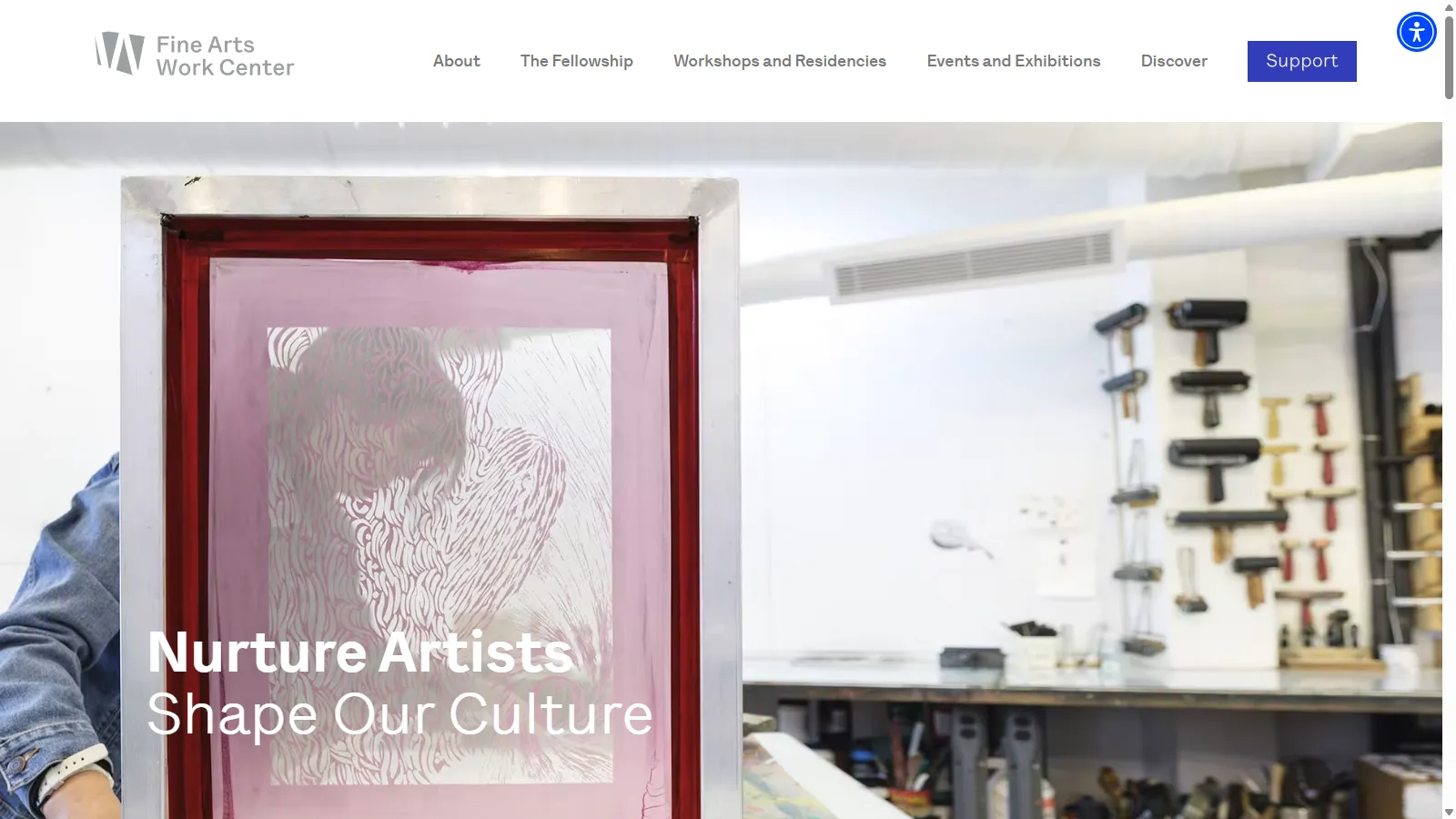
Artists and writers who want a structured, social residency with built-in mentorship contact, and who can either win a full fellowship or afford the partial fee. If you need everything covered, Yaddo, MacDowell, or the Fine Arts Work Center are better targets. If you want the highest-volume residency community in American art, this is the one.