MacDowell: America's Most Storied Artists' Colony
MacDowell is the oldest and most prestigious artists' residency program in the United States. Founded in 1907 by composer Edward MacDowell and his wife Marian MacDowell in Peterborough, New Hampshire, the colony was created with a vision that remains as relevant today as it was over a century ago: artists produce their best work when given uninterrupted time, dedicated space, and a community of serious creative peers.
Over its 117-year history, MacDowell has hosted more than 9,000 artists across every creative discipline—visual arts, literature, music composition, film, theatre, architecture, and interdisciplinary work. The colony welcomes approximately 300 artists annually, providing each with a full fellowship covering private studio space, private bedroom, and three chef-prepared meals daily. The estimated value of this support exceeds $1,000 per week per artist, and it is provided entirely free of charge. There is no residency fee, no tuition, and no expectation of payment.
In 2024, MacDowell was awarded the National Medal of Arts, the highest honor the United States government bestows on artists and arts organizations—a recognition of the colony's extraordinary contribution to American culture over more than a century.
The Setting and Facilities
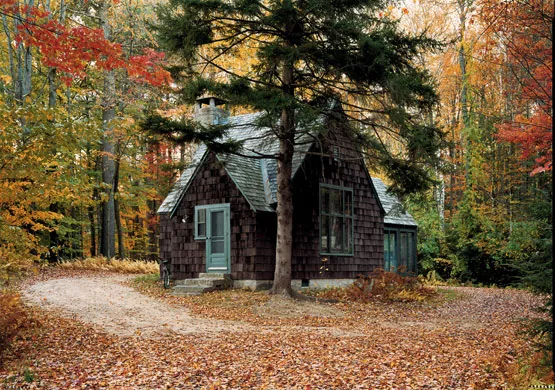
MacDowell occupies 450 acres of wooded land in southern New Hampshire, approximately 90 minutes from Boston. The property includes walking trails, meadows, ponds, and the kind of quiet, natural beauty that has drawn artists to rural New England for generations.
The colony's 32 studios are scattered across the property, each designed for a specific discipline and situated to provide maximum privacy and minimal distraction. Visual arts studios feature large windows for natural light and ample floor space for painting, sculpture, and installation work. Music studios are soundproofed. Writing studios are small, quiet, and deliberately simple. Each studio is a self-contained workspace where the artist can focus entirely on their creative practice.
Artists receive a private bedroom in one of the colony's residential buildings—restored colonial-era structures that provide comfortable, simple accommodations. Three meals daily are prepared by a professional chef and served in the communal dining hall, which functions as the colony's primary social space. Lunch is delivered to each artist's studio in a basket, preserving the uninterrupted work time that is central to the MacDowell experience.
This combination of private workspace and communal living creates a distinctive rhythm. During the day, artists work in solitude. In the evening, they gather for meals, conversation, and optional presentations. The balance between isolation and community is carefully calibrated—enough solitude for deep creative work, enough social interaction to prevent the loneliness that can undermine extended creative retreats.
The Daily Experience
The MacDowell experience is structured around a single principle: protecting the artist's time. There are no mandatory activities, no required presentations, no scheduled critiques, and no administrative obligations. The colony handles all logistics—meals, housekeeping, maintenance—so that artists can devote their entire attention to their work.
A typical day begins with breakfast in the dining hall, followed by a walk to the studio. The morning and afternoon are devoted to uninterrupted creative work. Lunch arrives at the studio door in a basket, eliminating the need to break concentration for a midday meal. The afternoon continues with work until dinner, which is served communally and provides the day's primary opportunity for social interaction.
Evenings are informal. Some artists attend optional presentations by fellow residents—readings, screenings, studio visits, or performances. Others continue working, take walks, or simply rest. The absence of structured programming is intentional: MacDowell trusts that artists know how to use their time and does not impose external schedules on the creative process.
This structure—or rather, this deliberate absence of structure—is what makes MacDowell transformative for many artists. In their normal lives, most artists juggle creative work with teaching, day jobs, family responsibilities, administrative tasks, and the constant interruptions of daily life. At MacDowell, all of these competing demands are temporarily removed. The result, for many residents, is a period of sustained, focused creative production that would be impossible under normal circumstances.
The Cross-Disciplinary Community
At any given time, MacDowell hosts up to 32 artists working across multiple disciplines. A typical cohort might include painters, sculptors, novelists, poets, composers, filmmakers, architects, and interdisciplinary artists. This cross-disciplinary mix is one of the colony's most distinctive and valuable characteristics.
Artists working in different disciplines bring different perspectives, vocabularies, and creative approaches to communal conversations. A visual artist might find unexpected inspiration in a composer's description of musical structure. A writer might discover new narrative possibilities through conversations with a filmmaker. These cross-pollinations are not programmed or forced—they emerge naturally from the daily interactions of creative people living and eating together.
Many MacDowell alumni cite these cross-disciplinary connections as among the most valuable outcomes of their residency. Collaborations that began over dinner at MacDowell have resulted in operas, films, illustrated books, multimedia installations, and other works that would not have existed without the colony's interdisciplinary environment.
The Alumni Legacy
MacDowell's alumni list is a catalog of American cultural achievement. Composers Aaron Copland and Leonard Bernstein created some of their most important works at MacDowell. Writers James Baldwin, Willa Cather, Thornton Wilder, and Alice Walker found the time and space to develop major literary works. Visual artists including Georgia O'Keeffe and Milton Avery used MacDowell residencies to advance their practices. Filmmaker Mira Nair and architect Michael Graves are among the colony's distinguished alumni in other disciplines.
This legacy creates a sense of creative lineage that many residents find inspiring. Working in a studio where significant art has been created for over a century connects the current resident to a tradition of creative ambition and achievement that extends across generations.
The alumni network of more than 9,000 artists also provides practical professional value. Relationships formed at MacDowell frequently lead to lasting collaborations, exhibition opportunities, publishing connections, and mutual support that extends far beyond the residency period.
The Application Process
MacDowell accepts applications on a rolling basis with review periods aligned to seasonal residency sessions. Spring applications are typically due in September, fall applications in February, and winter sessions have rolling deadlines. Notification arrives 8-10 weeks after the review deadline.
The application requires work samples demonstrating artistic excellence in the applicant's discipline, a project proposal describing the work the applicant intends to pursue during the residency, a professional resume, and two to three professional references. The application fee is $30, with fee waivers available for applicants with financial need.
The selection process is based on peer review—panels of artists and arts professionals in each discipline evaluate applications and select residents based on artistic merit, the quality and feasibility of the proposed project, and the applicant's potential to benefit from and contribute to the MacDowell community.
The acceptance rate is approximately 20%, with roughly 1,500 applications received annually for 300 available positions. This is selective but not impossibly competitive. Strong work samples, a clear and compelling project proposal, and thoughtful references from individuals who know the applicant's work well significantly strengthen an application.
Who Should Apply
Professional artists at any career stage are eligible. MacDowell welcomes both emerging artists with promising early work and established artists with extensive track records. There is no minimum exhibition history, publication record, or career length required. International artists are welcome and encouraged to apply.
Artists working in all disciplines are eligible: visual arts, literature, music composition, film and video, theatre, architecture, and interdisciplinary practices. Collaborative teams may also apply, though the colony's structure is primarily designed for individual creative work.
The Bottom Line
MacDowell is the most historically significant and comprehensively supported artists' residency in the United States. Its combination of private studios, full fellowship support, chef-prepared meals, a cross-disciplinary community of serious artists, and a 117-year legacy of cultural achievement creates an environment that is genuinely transformative for creative practice. For artists who need uninterrupted time and space to pursue ambitious work, MacDowell represents the gold standard of residency programs.