Arts Midwest Grants: What's Actually Funded in 2026
After 22 years of touring international musicians to small Midwestern towns, Arts Midwest wrapped up its flagship World Fest program in spring 2025. The program reached over 750,000 people across 300+ public performances and 3,000 educational events, but it is done. If you are reading older coverage that talks about World Fest as a current opportunity, that information is outdated. What remains is the GIG Fund, and it is the primary reason most Midwest organizations interact with Arts Midwest today.
Arts Midwest is one of six US regional arts organizations funded through the National Endowment for the Arts and state arts agencies. Based in Minneapolis since 1985, it serves a nine-state region: Illinois, Indiana, Iowa, Michigan, Minnesota, North Dakota, Ohio, South Dakota, and Wisconsin. Unlike state arts councils that fund individual artists directly, Arts Midwest funnels money to organizations that then program work. If you are an individual visual artist looking for a grant you can apply to personally, this is not your funder. If you run a small nonprofit or community arts space, keep reading.
The GIG Fund: What It Actually Covers
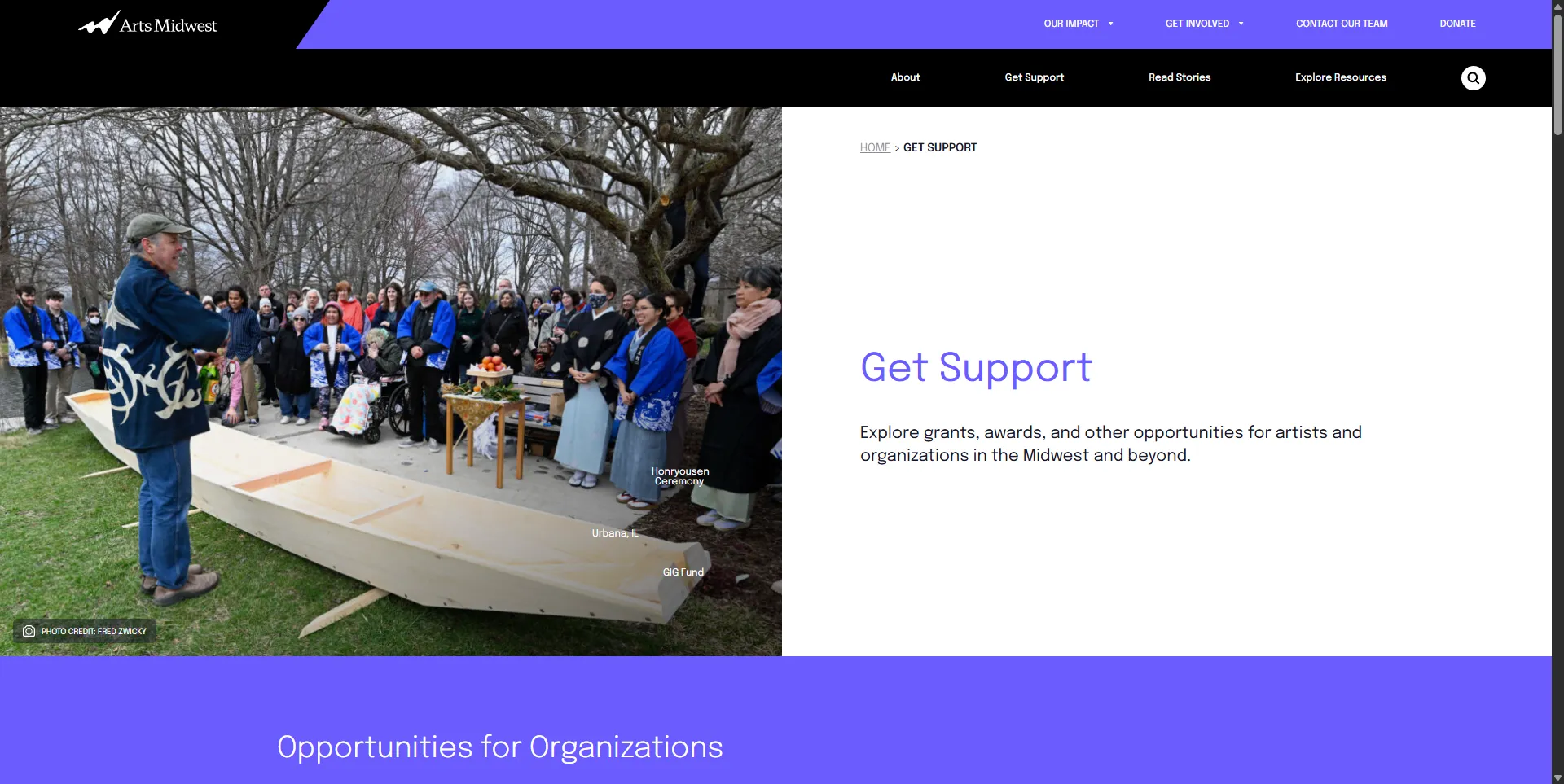
The GIG Fund is the current core grant program. It provides $2,000 to $15,000 to nonprofit organizations to host public-facing arts activities featuring professional artists. There are two tracks:
Standard GIG Fund: For organizations with annual budgets under $2 million. The project must reach an underserved audience, which Arts Midwest defines broadly enough that most small-town and rural organizations qualify. Eligible activities include performances, exhibitions, workshops, and community art projects that bring a professional artist into the community.
GIG Fund: Arts and Wellness: Open to organizations of any budget size. This track funds projects at the intersection of arts and health, including creative aging programs, arts in clinical settings, veteran engagement programs, and similar initiatives. The same $2,000 to $15,000 range applies.
The 2025 deadline passed in September 2025 (Intent to Apply was due September 15, with full applications due September 29). In August 2024, Arts Midwest distributed over $3 million through the GIG Fund across 87 organizations. Expect a similar cycle structure for 2026, with the application window opening in late summer.
What Happened to World Fest
World Fest ran from 2003 to 2025, partnering with one community in each of the nine Midwest states per cycle. Over multiple cycles, it brought ensembles from across the globe to towns like Fairmont, Minnesota; Oskaloosa, Iowa; and Hot Springs, South Dakota. The program was supported by the NEA, 3M, Hearst Foundations, BNSF Railway Foundation, and Margaret A. Cargill Philanthropies.
Arts Midwest has signaled that it is exploring what comes next, potentially including more flexible grants that let communities design their own residency-style programs. As of mid-2026, no replacement program has been announced. Check the Arts Midwest updates page for the latest.
How Arts Midwest Compares to Other Regional Arts Organizations
Arts Midwest sits alongside five siblings: Arts Midwest, Mid-America Arts Alliance (Arkansas, Kansas, Missouri, Nebraska, Oklahoma, Texas), Mid Atlantic Arts Foundation (DC, DE, MD, NJ, NY, PA, VA, WV, USVI), New England Foundation for the Arts, South Arts, and Western States Arts Federation. Each operates differently.
Compared to South Arts, which runs the Southern Prize and state fellowship programs for individual artists, Arts Midwest is more organization-focused. Compared to NEFA, which has built strong programs around public art and creative economy work, Arts Midwest leans toward presenting and touring. The GIG Fund is narrower in scope than some sibling programs, but its focus on underserved audiences and small-budget organizations makes it more accessible to rural and community-based groups that larger funders often overlook.
The NEA Big Read Connection
Arts Midwest administers the NEA Big Read program, which provides grants of $5,000 to $20,000 to organizations hosting community-wide reading programs. This is a separate application from the GIG Fund and has its own deadline cycle. If your organization wants to combine a literary event series with broader community programming, the Big Read is worth investigating alongside the GIG Fund.
Insider Tips for Applicants
- Start with the Intent to Apply: The GIG Fund requires a brief Intent to Apply before the full application. This is not a competitive screening step, but missing it disqualifies you. Set a calendar reminder for early September.
- Underserved audience is broadly defined: Do not self-select out because you think your audience is not "underserved enough." Rural communities, small towns, and populations with limited arts access all qualify. Read the current guidelines carefully.
- Budget realism matters: Arts Midwest reviewers flag budgets that seem inflated or that request 100% of project costs without any matching funds. Show in-kind support and other revenue sources even if they are modest.
- Contact program staff before applying: Arts Midwest staff are accessible and willing to discuss project ideas before you submit. A 15-minute call can save you from proposing something that does not fit the guidelines.
Who This Is For (and Who It Is Not For)
This is for: Small to mid-size nonprofit arts organizations, community centers, libraries, and rural arts presenters in the nine-state region. If your organization wants to bring a professional artist to your community for a public event, the GIG Fund is designed for you.
This is not for: Individual artists seeking direct grants. Arts Midwest does not fund individuals. If you are an artist, you need to partner with an eligible organization that can apply on your behalf. For individual artist grants in the Midwest, look to your state arts council instead.
Final Verdict: Who Is This Actually For?
Arts Midwest fills a specific niche: it funds organizations, not individuals, and it prioritizes underserved communities over major urban centers. The GIG Fund is modest in dollar terms ($15,000 max) but has low barriers to entry and a straightforward application. If you run a small arts nonprofit in the Midwest and want to program professional art in your community, this should be on your shortlist. If you are an individual artist, skip it and head to your state arts council or check out the Creative Capital Award instead.
Visit the Arts Midwest GIG Fund page for current deadlines and guidelines.