Watercolor Painting Blog: Tutorials From 8 Artists Who Actually Show You What to Do
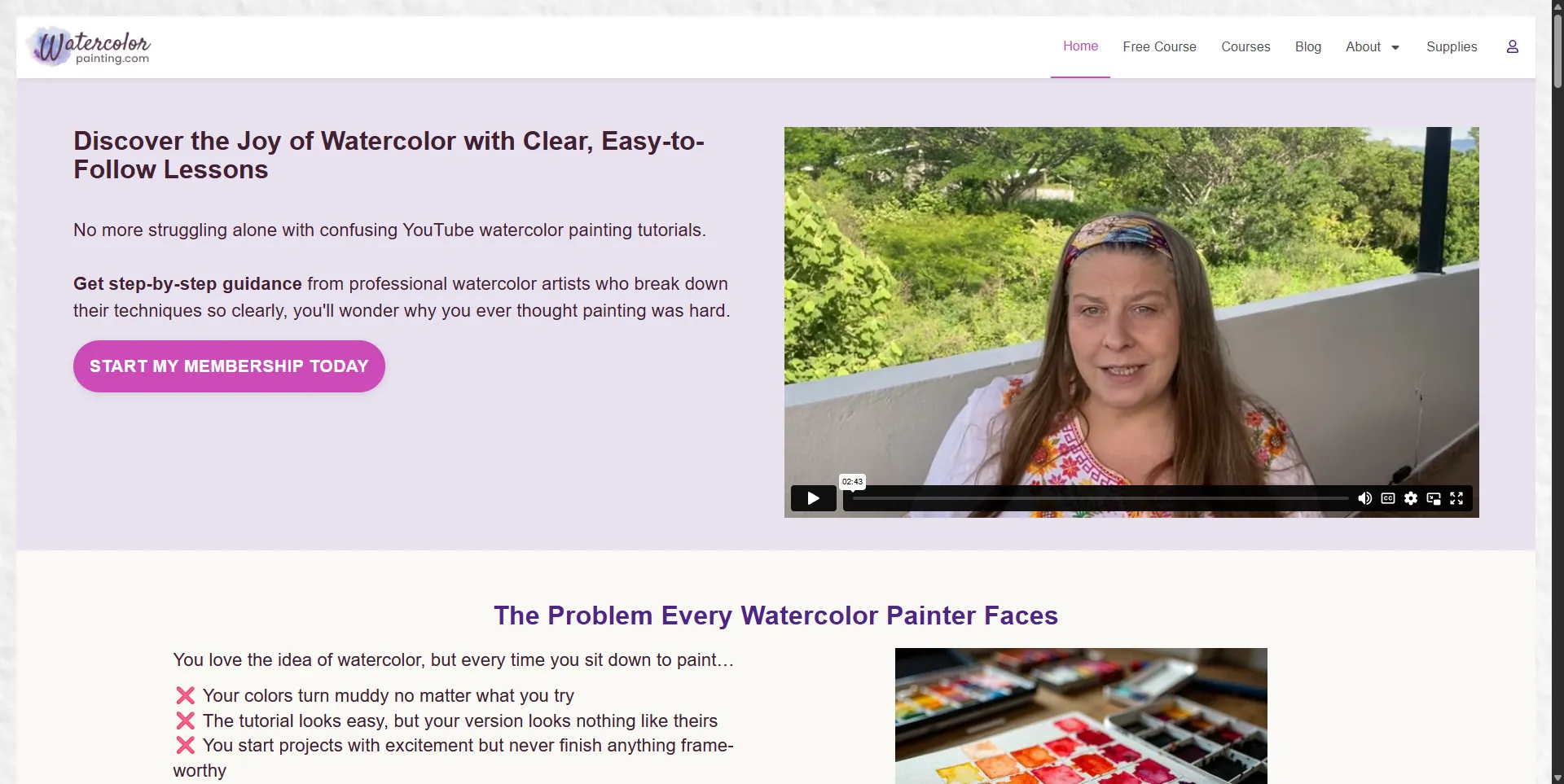
Most watercolor websites either give you vague technique descriptions with no practical application or sell you a course without letting you see what you are buying. WatercolorPainting.com does neither. It publishes free, step-by-step tutorials from 8 different contributing artists, each with their own style and approach, organized into collections that let you pick a project and follow it from start to finish.
The site's exclusive focus on watercolor is its defining feature. Unlike general art blogs that cover multiple media, WatercolorPainting.com is dedicated entirely to the watercolor medium. Every tutorial, every technique article, and every supply guide is written specifically for watercolor painters. This depth of focus makes it one of the most comprehensive watercolor-specific resources available online.
The Tutorial Format: Step-by-Step With Real Artists
The tutorials are the core of the site. Each one walks you through a complete painting from initial sketch to finished artwork, with detailed instructions and accompanying video. The tutorials are organized into collections by subject and skill level: "Creatures in Watercolor," "Waterscape Essentials," "Tree and Forest Fundamentals," "Nature Scene Fundamentals," "Fur, Fluff, and Fuzz: Expert Animal Tutorials," "Essential Watercolor Skills," and "Beyond Essential Watercolor Skills."
The 8 contributing artists bring different strengths. William Dunn handles loose, expressive animal paintings and sunset skies. Isabella Kung tackles complex, detailed subjects like animal fur with precision. Steve Curl specializes in granulating paints and seascape compositions. Vinita Pappas covers landscapes and atmospheric effects. Mari Evenson writes technique articles on color theory and jewel tones. The multi-artist approach means you get different perspectives on the same medium, which is more useful than a single instructor's viewpoint.
Insider tip: If you are a beginner, start with the "Essential Watercolor Skills" collection. It covers the foundational techniques (wet-in-wet, wet-on-dry, glazing, lifting) that every other tutorial on the site assumes you know. Jumping straight into a project tutorial without these fundamentals will lead to frustration.
The Technique Articles
Beyond the project tutorials, the site publishes technique articles that explain specific watercolor concepts in depth. These cover:
- Wet-in-wet technique: applying wet paint to wet paper for soft, flowing effects, including how to manage water content and timing
- Wet-on-dry technique: applying wet paint to dry paper for sharp, controlled edges, and how to combine it with wet-in-wet in a single painting
- Glazing: building complex color and tonal effects through multiple transparent layers, including drying time management between layers
- Lifting: removing wet or dry paint to create highlights and texture effects
- Granulation: understanding how and why certain pigments granulate, and which styles of art benefit from granulating colors
- Jewel tones: achieving rich, saturated colors through specific pigment choices and application techniques, including the stained glass technique
The technique articles are grounded in direct painting experience. They do not just describe what a technique is. They explain when to use it, what can go wrong, and how to fix it when it does.
Insider tip: The article on watercolor paint granulation includes links to 4 practice tutorials where you can apply granulating paints in real projects. Reading the technique article and then immediately doing a tutorial that uses it is the most effective way to learn from this site.
Supply Guides and Materials Content
The site publishes supply guides that help watercolor artists make informed purchasing decisions. These cover watercolor paints, papers, and brushes with specific, practical information:
- Paper guides address the differences between hot-pressed, cold-pressed, and rough papers, and which situations each type is most appropriate for
- Paint guides cover professional and student watercolor ranges, including transparency, granulation, lightfastness, and handling characteristics
- Brush guides address the differences between natural hair and synthetic brushes and which brushes are most useful for different techniques
- Beginner supply guides help new painters assemble a functional starter kit without overspending
The supply content is practical rather than promotional. The site does include some affiliate product links, but the recommendations are based on actual painting experience, not just listing the most popular products on Amazon.
How It Compares to Other Watercolor Resources
WatercolorPainting.com is not the only watercolor resource online, but its combination of free tutorials, multiple contributing artists, and exclusive watercolor focus makes it distinctive.
r/Watercolor is the largest watercolor community online with 920,000 members, but it is a discussion forum, not a tutorial site. It is better for troubleshooting and supply research than for structured learning. The two resources complement each other well: use r/Watercolor for community and problem-solving, and WatercolorPainting.com for structured tutorials.
The Virtual Instructor offers structured watercolor courses as part of its paid membership, with live classes and member critiques. It is more comprehensive and more expensive. WatercolorPainting.com is free and project-focused, making it a better starting point for beginners who want to try watercolor before committing to a paid platform.
WetCanvas has an active watercolor forum with decades of archived discussions, but it is a community forum, not a tutorial site. It is better for peer feedback and technical discussions than for step-by-step instruction.
For free, project-based watercolor tutorials from multiple artists, WatercolorPainting.com is the best option available. The quality of the instruction is high, the range of subjects is broad, and the collection organization makes it easy to find tutorials at your skill level.
The Blog Posts and Categories
The site's blog posts section organizes content by category: Painting Ideas, Painting Lessons, Step By Step Lessons, Watercolor Practice for Beginners, Watercolor Tips and Techniques, and Tutorial Spotlight. The tagging system is extensive, with tags ranging from "beginner watercolor wash methods" to "advanced watercolor portrait eye skills" to "stained glass technique."
This organization makes the site searchable by specific need. If you want to learn how to paint a galaxy, search for "night sky painting." If you want to understand color theory, search for "color theory." If you want a quick 15-minute technique exercise, search for "quick tutorials." The content library is large enough that most watercolor questions have a corresponding article or tutorial.
Final Verdict: Who Is This Actually For?
WatercolorPainting.com is for watercolor painters who want free, structured, project-based tutorials from multiple artists. If you learn best by following along with a complete painting from start to finish, this site is built for you. The collection organization makes it easy to find tutorials at your skill level, and the multi-artist approach means you are not locked into one instructor's style.
It is not for you if you want interactive feedback or community discussion. The site is a tutorial library, not a community platform. For community, r/Watercolor is the better choice. And if you want a full structured curriculum with live instruction and critiques, The Virtual Instructor offers that as a paid membership.
Start with the Essential Watercolor Skills collection for foundational technique tutorials, or browse the blog posts to find a project that matches your interests. For related resources, see our profiles on r/Watercolor, The Virtual Instructor, and Urban Sketchers.