Magma: The Browser Where Artists Actually Draw Together
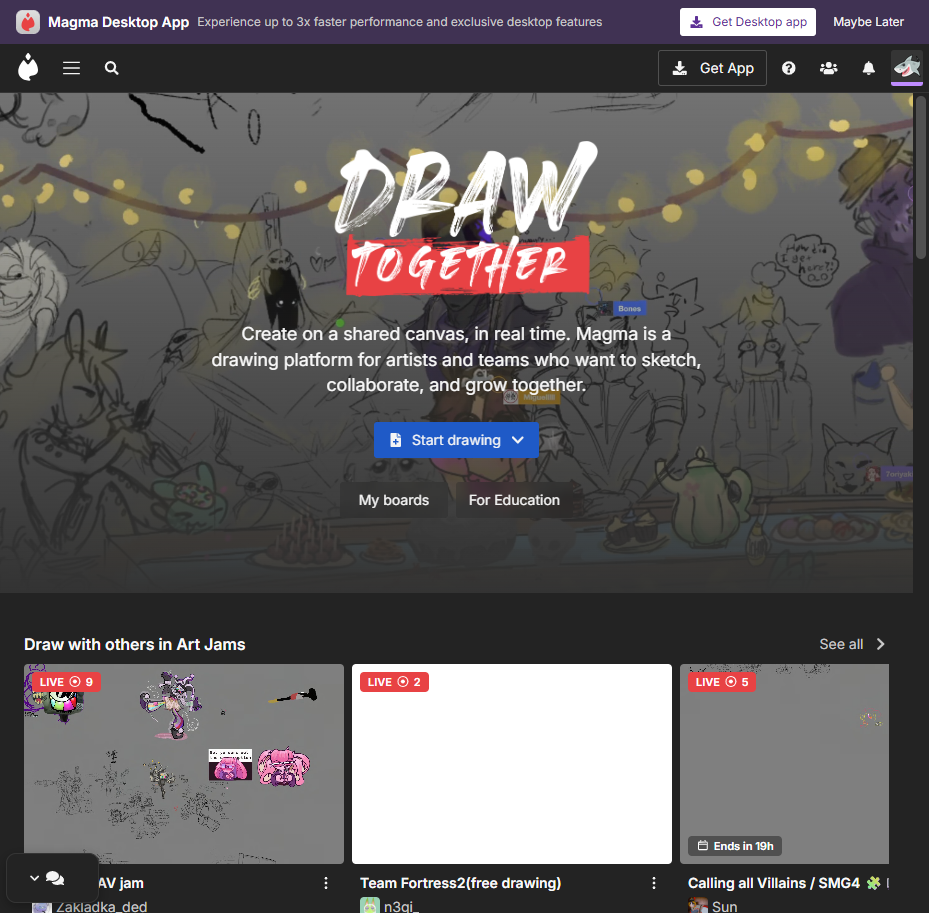
Magma is what happened when the old Aggie.io grew up. It is the leading browser-based platform where multiple artists draw on the same canvas at the same time, each on their own layers, while talking over built-in voice chat. Up to 30 artists share one canvas on the free plan, and the experience is the closest thing the internet has to a shared studio table.
The concept is deliberately simple. You create a canvas, share the link, and everyone who opens it lands on the same picture, drawing live in real time with pen pressure, blend modes, and proper painting tools. You see each brush stroke as it happens. Every artist works on their own layers, so nobody wrecks anyone else's lines unless they want to. There is a chat panel, a reference image window, and version history so you can step back through what happened. It runs on Windows, Mac, Chromebook, Linux, and tablets; the desktop app exists for Windows and Mac but the browser version is the primary experience.
The Tool and the Community
Magma is simultaneously a tool and a community. The tool side is legitimately strong: on the free Spark plan you get 4K canvases, 60 layers, 1GB of cloud storage, 25MB imports, and 7 days of version history. Brushes blend like real paint and support pressure and tilt. You can export layered PSDs, which means a Magma canvas is a real working file, not a toy export. The paid Blaze plan at $9.99/month lifts the ceiling to 8K canvases, 200 layers, 50 users, 10GB storage, and unlimited version history. Fusion tiers are custom-priced for studios and schools, with SSO, admin panels, and education certification.
The community side comes through Art Jams, organized public drawing sessions where strangers join themed canvases and paint together, and through the Multiboard feature that lays many canvases side by side on an infinite board for large group projects. Art Jams are the best onboarding: you show up, you paint alongside people at various skill levels, you talk in voice chat, and by the end you have made something with people you met that afternoon.
How It Compares
The historical alternatives were Drawpile (desktop, open-source, free but requires setup) and Draw.Chat (browser-based but more primitive). Magma is the one that got the UX right for the mainstream. Compared to sitting alone in Procreate or Krita, it solves the loneliness problem of digital art: you are not painting in isolation, you are painting with other people in the room.
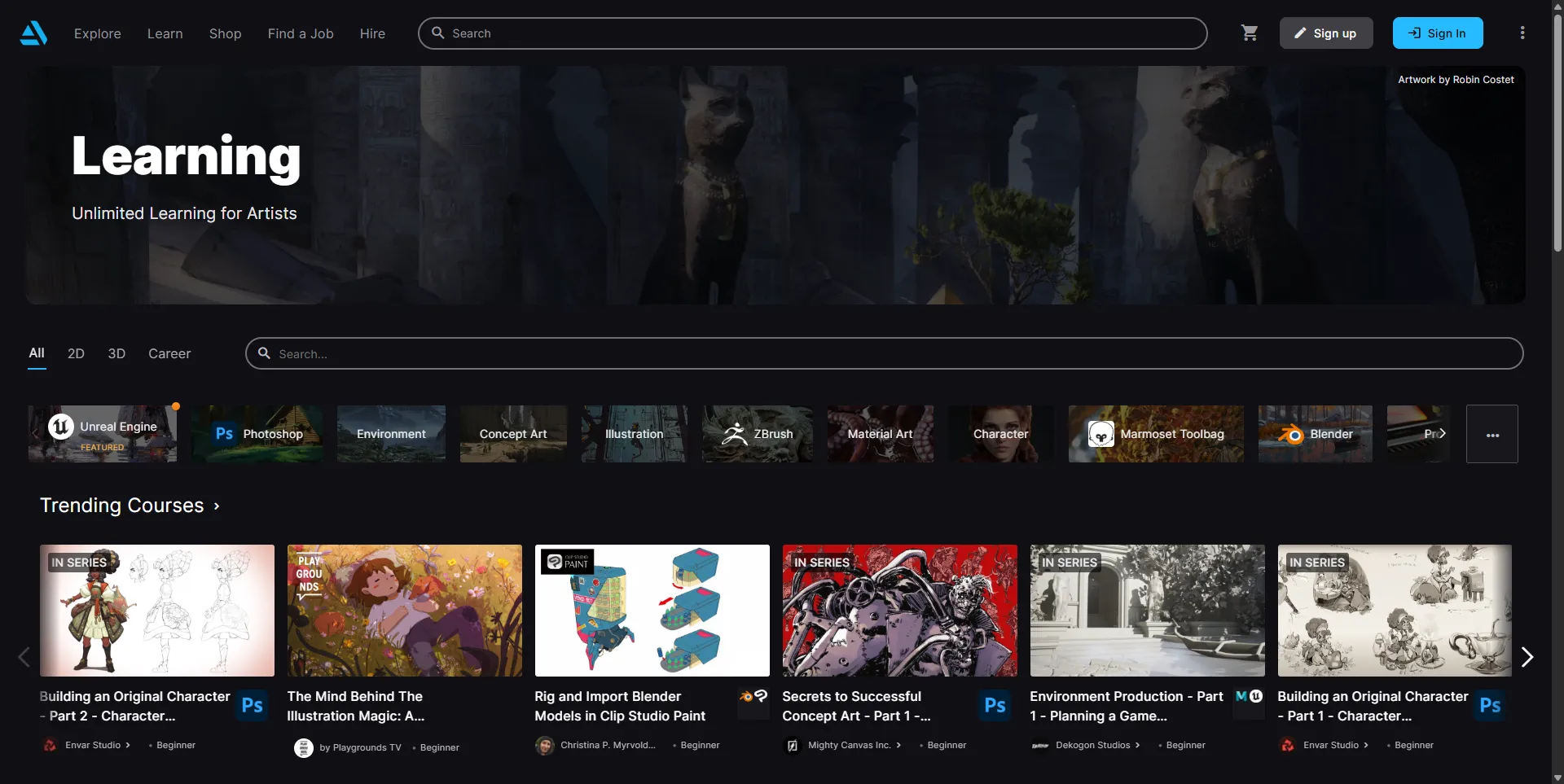
Against general community platforms, it is not a portfolio site and it is not trying to be. It is a tool that produces community as a side effect. You will not build a following here; you will make art with people. For discovery and career exposure use ArtStation or The Rookies; for actually drawing together, Magma is the standard.
Jamtober and the Studio Tier
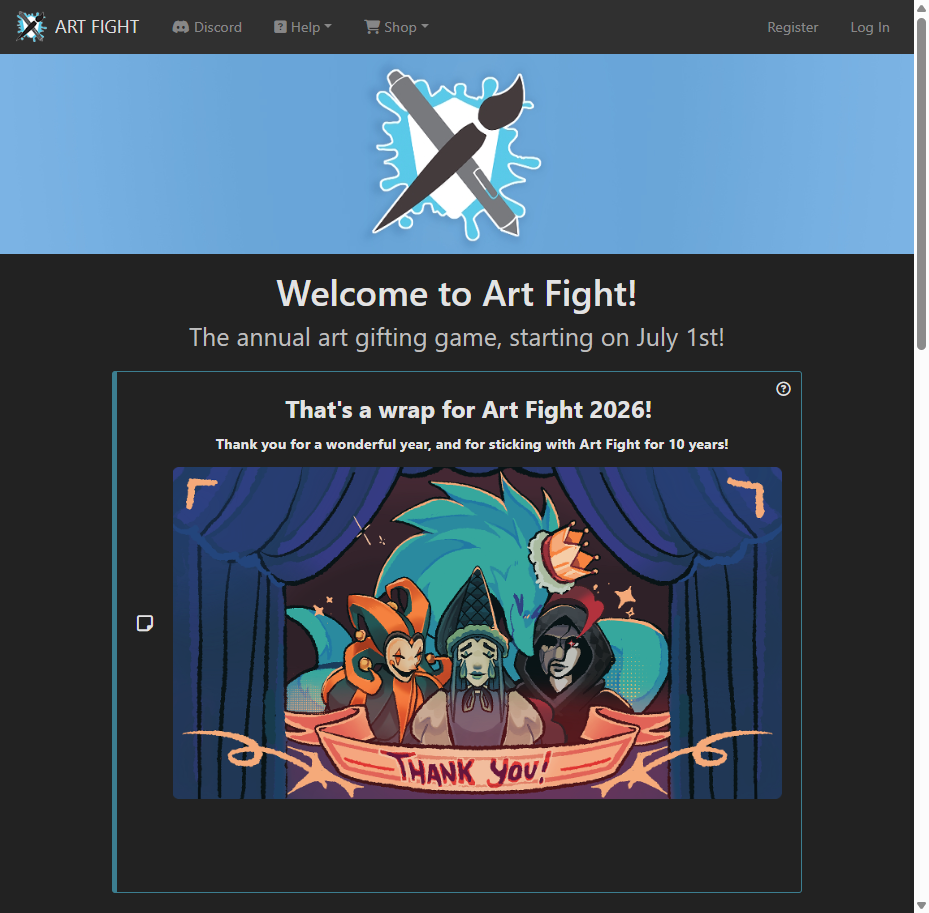
The community calendar's biggest event is Jamtober, the October drawing marathon Magma runs each year where thousands of artists jam on themed canvases through the month. It is the collaborative counterpart to Art Fight's competitive one, and the event has become the platform's main community ritual. On the professional side, the Fusion for Education tier is the fastest-growing part of the business: art schools and career-training programs use it as a shared digital classroom where every student's canvas is visible to the instructor in real time, with built-in certification paths and Chromebook support that work in actual classrooms. That institutional adoption is what funds the free tier for everyone else.
Who Should Use It
Any artist who wants to draw with friends who are not in the same room, any art teacher running a classroom of digital artists, and any studio that needs a shared visual sketchpad for remote brainstorming. The free plan is genuinely usable for hobbyists and small groups; Blaze is worth it if you run regular Art Jams or work on projects that need the bigger canvas and storage. If you only ever draw alone and never want company, there is no reason to sign up, but for the large population of artists who miss the studio table experience, this is the closest thing the internet has built. The free tier is enough for almost everyone; there is no reason not to open a canvas today and find out whether shared drawing is the thing your practice was missing. The community aspect is what keeps people coming back long after the novelty of the technology wears off. The Art Jams in particular are the best free creative events on the internet right now, and they are also the fastest way to learn how the platform actually works before you commit to a paid plan.