
"You literally can't keep up with everything. So, first, pick your top two or three or four. Then, decide what you kind of care about. And, honestly, most importantly, get clear on what you do not care about at all." That is the advice from njoysalon, and it is the only advice that works. The art world is not one thing. It is criticism, market reporting, exhibition announcements, artist profiles, auction results, fair coverage, museum news, gallery openings, studio visits, and social media, all happening simultaneously, all the time, across every continent. No one can follow all of it. The attempt produces anxiety, not knowledge. The solution is not to follow more. It is to follow less, but follow it well.
For many artists today, the most effective combination is: one serious criticism source (Artforum or e-flux), one market/trend source (Artsy or ARTnews), one inspiration/discovery source (Colossal or Juxtapoz), and one community platform (Instagram or ArtConnect), according to Eric Maisel. That mix gives a balanced sense of both the institutional art world and the living creative culture outside it. Four sources. Not forty. Four. The art world rewards depth over breadth. Knowing one field deeply, whether Impressionism, contemporary sculpture, or Japanese ceramics, is more valuable than knowing everything shallowly. "Developing taste takes time. It grows through exposure, curiosity and conversations with people whose judgment one trusts. Or as he puts it, collectors should embrace the idea of slow looking. Markets rise and fall. What endures is the pleasure of discovering work that continues to reward attention over time," writes Audrey Kavanagh-Dowsett. Slow looking. Not fast scrolling. This guide covers the four-source system, the key publications, the key voices, the podcasts and newsletters, how to use Instagram without drowning, how to narrow your focus, and the principle of slow looking. For more on building a foundation, see our guide to teaching yourself art history.
Art publications. "For many artists today, the most effective combination is: one serious criticism source (Artforum or e-flux), one market/trend source (Artsy or ARTnews), one inspiration/discovery source (Colossal or Juxtapoz), and one community platform (Instagram or ArtConnect). That mix gives a balanced sense of both the institutional art world and the living creative culture outside it" (Eric Maisel). Image via Wikimedia Commons
The Four-Source System: Criticism, Market, Discovery, Community
The principle is simple. One source from each of four categories. Read them regularly. Ignore the rest. The signal is in the depth, not the breadth. For criticism, choose Artforum or e-flux. Artforum is one of the most influential contemporary art magazines in the world, excellent for exhibition reviews, essays, interviews, and awareness of what serious curators, critics, and institutions are discussing internationally. E-flux is essential for serious contemporary artists who want to know what museums, biennials, residencies, curators, and international institutions are doing, particularly valuable for opportunities, theory, calls for participation, and major exhibition announcements.
For market, choose Artsy or ARTnews. Artsy is a hybrid platform combining gallery listings, auction data, artist profiles, editorial content, and global art fair coverage, very good for tracking emerging artists, galleries, and market trends worldwide. ARTnews is one of the oldest art publications, useful for staying current on major museum developments, auctions, collectors, biennials, legal issues, and global art-business news. For discovery, choose Colossal or Juxtapoz. Colossal covers art, design, and visual culture with an emphasis on craft, illustration, and extraordinary making. Juxtapoz covers contemporary, street, and underground art. For community, choose Instagram or ArtConnect. ArtConnect lists opportunities, residencies, grants, and networking. Instagram is still arguably the fastest-moving real-time global art network despite its limitations. Four sources, not forty. One from each category. For more on building your knowledge, see our guide to art for beginners.
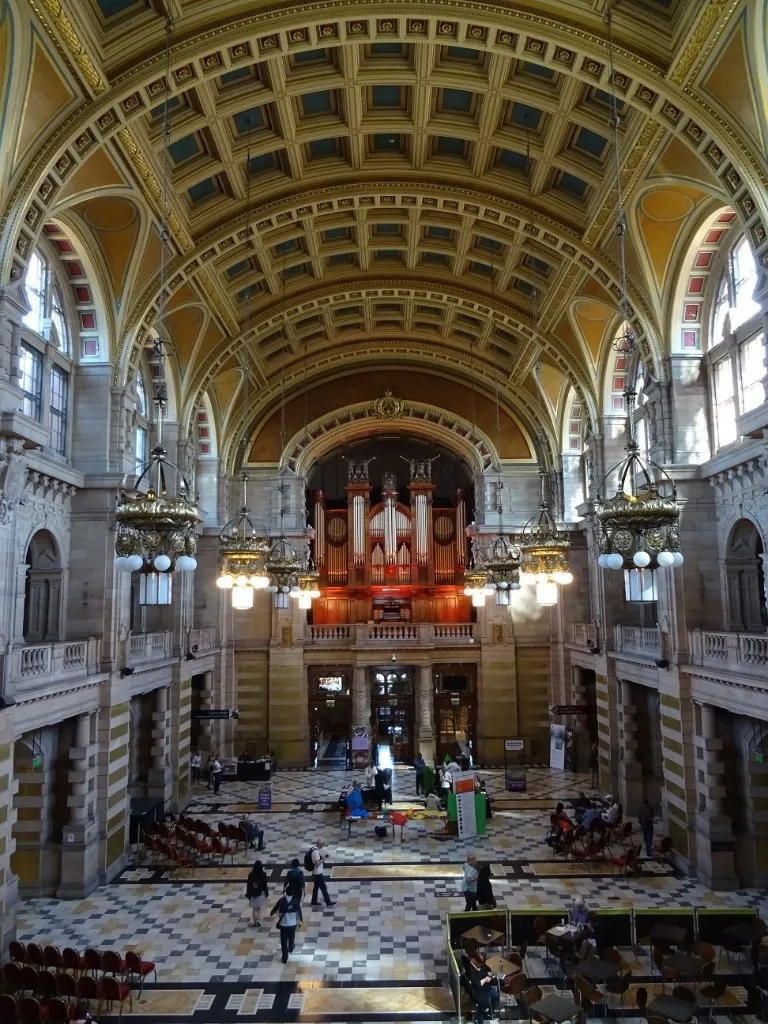
A museum gallery. "Developing taste takes time. It grows through exposure, curiosity and conversations with people whose judgment one trusts. Or as he puts it, collectors should embrace the idea of slow looking. Markets rise and fall. What endures is the pleasure of discovering work that continues to reward attention over time" (Audrey Kavanagh-Dowsett). Image via Wikimedia Commons
The Key Publications: What Each One Does Best
Artforum is the flagship of serious art criticism. Dense, long-form, sometimes impenetrable, but the conversations that shape the art world start here. It is excellent for exhibition reviews, essays, interviews, and awareness of what serious curators, critics, and institutions are discussing internationally. Useful especially for painters, conceptual artists, installation artists, and academically engaged artists. E-flux is the announcement board of the global art world. If a major exhibition opens, it is on e-flux. If a biennial announces its curators, it is on e-flux. It is essential for serious contemporary artists who want to know what museums, biennials, residencies, curators, and international institutions are doing.
Artsy is the best platform for tracking the market side of the art world without subscribing to auction databases. It combines gallery listings, auction data, artist profiles, editorial content, and global art fair coverage. ARTnews is the trade paper of the art world, one of the oldest art publications, useful for staying current on major museum developments, auctions, collectors, biennials, legal issues, and global art-business news. The Art Newspaper offers strong international reporting on museums, cultural policy, art fairs, repatriation debates, and institutional developments across Europe, Asia, the Middle East, and the Americas. It is the closest thing the art world has to a general newspaper. ArtRabbit is especially useful for tracking exhibitions, openings, and events in major art cities worldwide, helpful for artists who travel or want to know what is actively being shown right now. Substack is increasingly important because many curators, critics, and artists now publish independently there. The decentralization of art writing means independent voices, paid subscriptions, and no editorial filter. For more on getting started, see our guide to art for beginners.
The Key Voices: Critics to Follow
Jerry Saltz is the senior art critic at New York Magazine, a Pulitzer Prize winner, and the most followed art critic on social media. His writing is passionate, accessible, and unafraid of strong opinions. He is the rare critic who writes for the general public without dumbing down. Waldemar Januszczak is the Sunday Times art critic, known for his television documentaries and combative style. Critics are not gatekeepers. They are guides. You do not have to agree with them. You have to find ones whose writing makes you think. Saltz and Januszczak are starting points, not endpoints. Find the critic whose voice resonates with your taste, then follow them. One or two critics, not twenty. For more on approaching art, see our guide to how to look at art.
Podcasts and Newsletters
Podcasts are for commuting, walking, doing dishes. They are not for deep study. They are for exposure, hearing artists talk about their work, hearing critics debate, hearing curators explain their choices. For our recommendations, see our guide to the best art podcasts and the best art history YouTube channels.
Gallery newsletters are the most underused resource in the art world. They are free, they announce openings before they are public, and they provide context for the exhibitions. Subscribe to gallery newsletters so you know when there is an opening. Follow your favorite writers and artists on social media. Look up interviews or podcasts or articles featuring them to learn more about them. Substack is where the conversation is moving, away from institutional publications and toward individual voices. The Rose Period, by Rose Florence, is one example. As she puts it: "My goal in starting The Rose Period was simple: art should feel accessible. No art history degree required. Learning about art shouldn't be a chore. Let's make it fun!" according to The Rose Period. The See Saw app lists gallery openings, exhibitions, and art fairs, a practical way to keep track of the art world's calendar.
How to Use Instagram Without Drowning
Instagram is where the art world lives in real time. Artists post studio shots, galleries announce shows, museums share installation views, critics react, collectors show off acquisitions. It is still arguably the fastest-moving real-time global art network despite its limitations. Instagram is also where the art world performs. The pressure to post, to be seen, to appear active, produces a constant stream of content that is more about visibility than substance. Scrolling through art Instagram produces the same anxiety as scrolling through any other Instagram. The feeling that everyone else is doing more, seeing more, buying more.
The solution is to curate ruthlessly. Follow 20 to 30 accounts, a mix of your favorite artists, a few galleries, a few museums, one or two critics. Unfollow the rest. Turn off notifications. Check once a day, not every hour. Instagram is a tool, not a lifestyle. "Buy with your eyes, not your ears. In other words, resist the hype and focus on works that genuinely resonate," writes Audrey Kavanagh-Dowsett. For more on how art interacts with public life, see our guide to art and society.
"You literally can't keep up with everything. So, first, pick your top two or three or four. Then, decide what you kind of care about. And, honestly, most importantly, get clear on what you do not care about at all" (njoysalon). Image via Wikimedia Commons
How to Narrow Your Focus
The principle: "You literally can't keep up with everything. So, first, pick your top two or three or four. Then, decide what you kind of care about. And, honestly, most importantly, get clear on what you do not care about at all." Step one is to decide what you care about. Is this something you want to try for yourself? Is this something you want to experience actively or in person weekly? Daily? Do you care more about the craft itself? Are you more interested in the people making the thing? Maybe you are a nerd about the industry and commerce side, the business of art.
Step two is to get narrow. What genre or aspect of the art form do you enjoy? Specificity helps you tune out the noise so that you do not feel FOMO. It is kind of like finally talking to your crush and realizing they are much cooler when they do not open their mouth. Step three is to let information come to you. Let the information come to you as much as possible. Subscribe to gallery newsletters so you know when there is an opening. Follow your favorite writers and artists on social media. The result: instead of trying to follow the entire art world, you follow your corner of it, deeply, attentively, without anxiety. The rest of the art world will still be there if you want it. But your corner is where you will learn, grow, and develop taste. For more on getting started, see our guide to art for beginners.
The Principle of Slow Looking
"Developing taste takes time. It grows through exposure, curiosity and conversations with people whose judgment one trusts. Or as he puts it, collectors should embrace the idea of slow looking. Markets rise and fall. What endures is the pleasure of discovering work that continues to reward attention over time." Slow looking means spending more time with fewer works. Instead of scrolling through 100 images on Instagram, spend 10 minutes with one painting in a museum. Instead of reading 20 exhibition reviews, read one review carefully and then go see the show. Instead of following 50 galleries, follow 5 and visit their exhibitions in person.
"Buy with your eyes, not your ears. In other words, resist the hype and focus on works that genuinely resonate." The art world generates hype, auction records, fair buzz, Instagram virality. Hype is noise. Slow looking is signal. The advice is to spend as much time as possible looking at art in person. In person. Not on a screen. The art world is physical. Paintings, sculptures, installations, performances. They exist in space, in light, in time. They cannot be fully experienced through a phone. Slow looking means going to galleries, museums, studios, fairs, and looking. Not photographing. Not posting. Looking. For more on approaching art, see our guide to how to look at art.
Final Thoughts
Following the art world without being overwhelmed requires a system: one serious criticism source (Artforum or e-flux), one market/trend source (Artsy or ARTnews), one inspiration/discovery source (Colossal or Juxtapoz), and one community platform (Instagram or ArtConnect). That mix gives a balanced sense of both the institutional art world and the living creative culture outside it. Four sources, not forty. Key publications: Artforum ("one of the most influential contemporary art magazines in the world"), e-flux ("essential for serious contemporary artists"), Artsy (gallery listings, auction data, artist profiles), ARTnews ("one of the oldest art publications"), The Art Newspaper (strong international reporting on museums, cultural policy, art fairs, repatriation debates), ArtRabbit (tracking exhibitions, openings, and events in major art cities), Substack (many curators, critics, and artists now publish independently there). Key voices: Jerry Saltz and Waldemar Januszczak. Gallery newsletters are the most underused resource in the art world. The See Saw app lists gallery openings, exhibitions, and art fairs. Instagram: curate ruthlessly, follow 20 to 30 accounts, unfollow the rest. Narrowing focus: "You literally can't keep up with everything. So, first, pick your top two or three or four." The principle of slow looking: "Developing taste takes time. It grows through exposure, curiosity and conversations with people whose judgment one trusts. Markets rise and fall. What endures is the pleasure of discovering work that continues to reward attention over time."
Pick your four sources. One criticism, Artforum or e-flux. One market, Artsy or ARTnews. One discovery, Colossal or Juxtapoz. One community, Instagram or ArtConnect. Subscribe to them. Unsubscribe from everything else. Then pick one artist, one gallery, one museum, and go deep. Follow that artist's career. Visit that gallery's shows. Go to that museum's exhibitions. Spend time with the work. Not scrolling time. Looking time. "Learning about art shouldn't be a chore. Let's make it fun!" Start with one artist and go down the rabbit hole. Build your own mental museum. The art world is not something you follow. It is something you build, one artwork at a time, in your own mind. For more on what is current, see our guide to contemporary art trends.


