
Frida Kahlo kept a diary so raw and strange that her husband Diego Rivera refused to let anyone see it for years after her death. When it was finally published in 1995, it was nothing like what people expected from the woman who had painted such composed, controlled self-portraits. The diary was fractured, associative, full of half-formed images and stream-of-consciousness writing, pages soaked in color that served no aesthetic purpose except to let her pour something out. That is the actual function of an art journal: not to produce beautiful work, but to create a space where you can think without self-censorship.
Leonardo da Vinci filled over 7,000 pages of notebooks. Picasso accumulated 178 sketchbooks over his lifetime. Neither of those facts means you need to be a genius to keep one. An art journal is simply a book where you make visual marks: drawings, paintings, collages, photographs, pressed leaves, receipts, written observations, or any combination. There is no correct format. There is no audience. The point is to build a private creative practice that belongs entirely to you.
This guide explains what art journaling is, why the research behind it is surprisingly robust, what materials you need to start, and how to build a habit that actually sticks. Whether you are a working artist looking for a low-pressure outlet or someone who has not picked up a pencil since school, there is a workable approach here.
What Is an Art Journal?
An art journal sits somewhere between a sketchbook, a diary, and a scrapbook. Unlike a traditional sketchbook (which typically focuses on drawing practice) or a written diary (which uses words exclusively), an art journal combines visual and written elements in whatever way feels natural to its creator.
Art journals can take many forms:
Visual diary — Daily or regular entries that record your life through sketches, colors, and images rather than (or alongside) words.
Experimental sketchbook — A place to try new techniques, test materials, and play without worrying about the result.
Collage journal — Pages built from found images, magazine clippings, fabric, paper scraps, and other materials.
Travel journal — Visual records of places visited, combining sketches, photographs, maps, and souvenirs.
Therapeutic journal — A private space for processing emotions through color, imagery, and mark-making.
Prompt-based journal — Each page responds to a creative prompt (draw something blue, paint your mood, sketch what you ate today).
Why Keep an Art Journal?
It Takes the Pressure Off
One of the biggest barriers to making anything is the fear of making something bad. An art journal dissolves this because it is private. Nobody sees it unless you choose to share it. No grade, no critique, no social media judgment. That privacy creates a specific kind of freedom: you can experiment, fail, make ugly pages, and discover what happens when you stop performing competence and just make marks. The ugly pages are not failures. They are the whole point.
It Builds Visual Thinking Over Time
Regular art journaling trains your eye. You start noticing colors, light, textures, and compositions in the world around you because you are constantly looking for things worth capturing. This visual attentiveness is the same skill that helps you get more from looking at art in galleries. It develops slowly, without you necessarily noticing it happening.
The Mental Health Case Is Solid
A 2016 study published in the journal Art Therapy (Kaimal et al.) found that 45 minutes of art-making significantly reduced cortisol levels in participants regardless of their prior artistic experience. Beginners benefited as much as trained artists. More recent research published in Frontiers in Psychology (2025) positions art-making as an intervention that reconfigures brain networks associated with self-reflection, emotional regulation, and stress response. You do not need to be skilled for this to work. The benefit comes from the act of making, not from the quality of what you make. For a full breakdown of what the science says, see the art therapy guide.
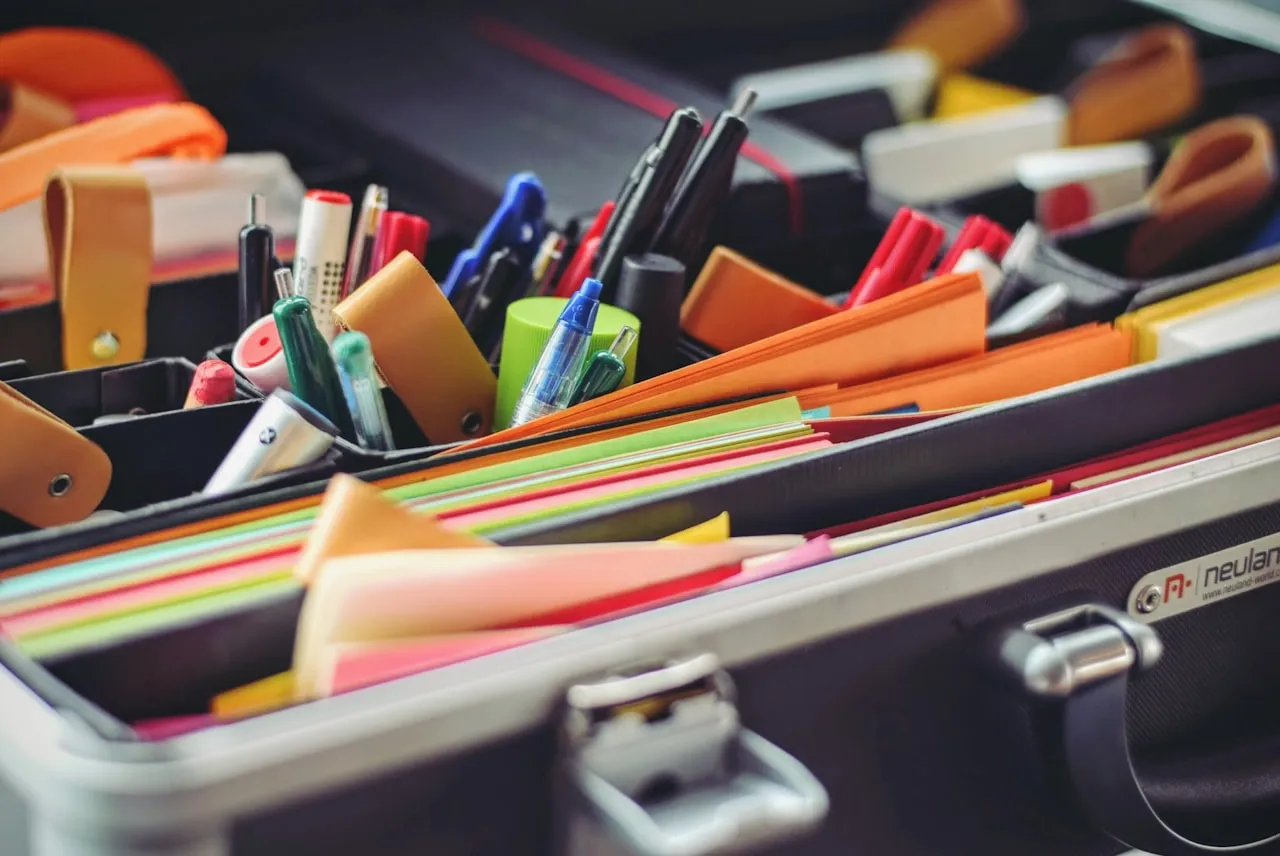
All you need to start art journaling is a blank book and a few simple supplies. The practice rewards consistency over perfection. Photo by Estée Janssens on Unsplash
It Creates a Personal Archive That Actually Surprises You
Over time, an art journal becomes a visual record you did not know you were keeping. Looking back through old pages reveals patterns you were not aware of in the moment: recurring colors, obsessive subjects, periods of wild experimentation followed by silence. It is more revealing than a written diary because visual choices are harder to control consciously. You learn things about yourself through the images you chose to make.
Getting Started: Materials
One of the beautiful things about art journaling is that you need very little to begin. Here is a basic starter kit:
The Journal Itself
For beginners — A simple hardbound sketchbook with medium-weight paper (around 120–160 gsm). Brands like Canson, Strathmore, and Moleskine offer affordable options.
For mixed media — A journal with heavier paper (200+ gsm) that can handle watercolor, acrylic, and collage without warping. Strathmore Visual Journal (Mixed Media) and Hahnemühle are popular choices.
For travelers — A pocket-sized hardcover journal that fits in a bag. Moleskine and Leuchtturm1917 make durable travel journals.
Budget option — A composition notebook or even a stack of printer paper stapled together. The journal does not need to be precious. In fact, a cheap journal can reduce the pressure of "ruining" expensive pages.
Basic Supplies
Pencils — A regular HB pencil is fine to start. Add a 2B or 4B for darker marks if you want variety.
Pens — A waterproof fine-liner (like Micron or Staedtler) for line work that will not bleed when you add water-based media.
Color — Watercolor pencils (combine drawing and painting), a small watercolor set, or colored markers. Even a single set of children's crayons works.
Glue and scissors — For collage. A glue stick is simpler and less messy than liquid glue.
Washi tape — Decorative tape that adds color and pattern without requiring any artistic skill.
Techniques for Non-Artists
If you genuinely believe you cannot draw, these approaches bypass traditional drawing skills entirely:
Collage
Cut or tear images from magazines, newspapers, junk mail, and old books. Arrange them on a page in ways that feel interesting to you. Add color, text, or marks on top. Collage requires no drawing ability — just an eye for interesting images and the willingness to experiment with arrangement.
Color Exploration
Fill pages with color. Paint swatches that capture a mood. Mix colors and see what happens. Create gradients from one color to another. Record the colors you see in your environment — the specific blue of the sky today, the green of a particular plant. Understanding color theory is not required — just paying attention to what you see is enough.
Doodling and Mark-Making
Doodling is art journaling's most underrated technique. Repetitive patterns, spirals, hatching, dots, and abstract marks fill pages with visual interest without requiring any representational skill. Zentangle — a structured doodling method that builds complex patterns from simple, repeated strokes — is particularly good for beginners because it provides structure while remaining creative.
Text and Lettering
Write words, quotes, lists, or stream-of-consciousness text on your pages. Vary the size, color, and style of your lettering. Write in circles, diagonals, or spirals. Layer text over images or color. Words and images together create a richer visual language than either alone.
Found Object Inclusion
Glue in ticket stubs, receipts, labels, stamps, pressed leaves, fabric swatches, or any small flat objects that have personal meaning. These found elements add texture, color, and narrative to your pages without requiring any artistic skill.
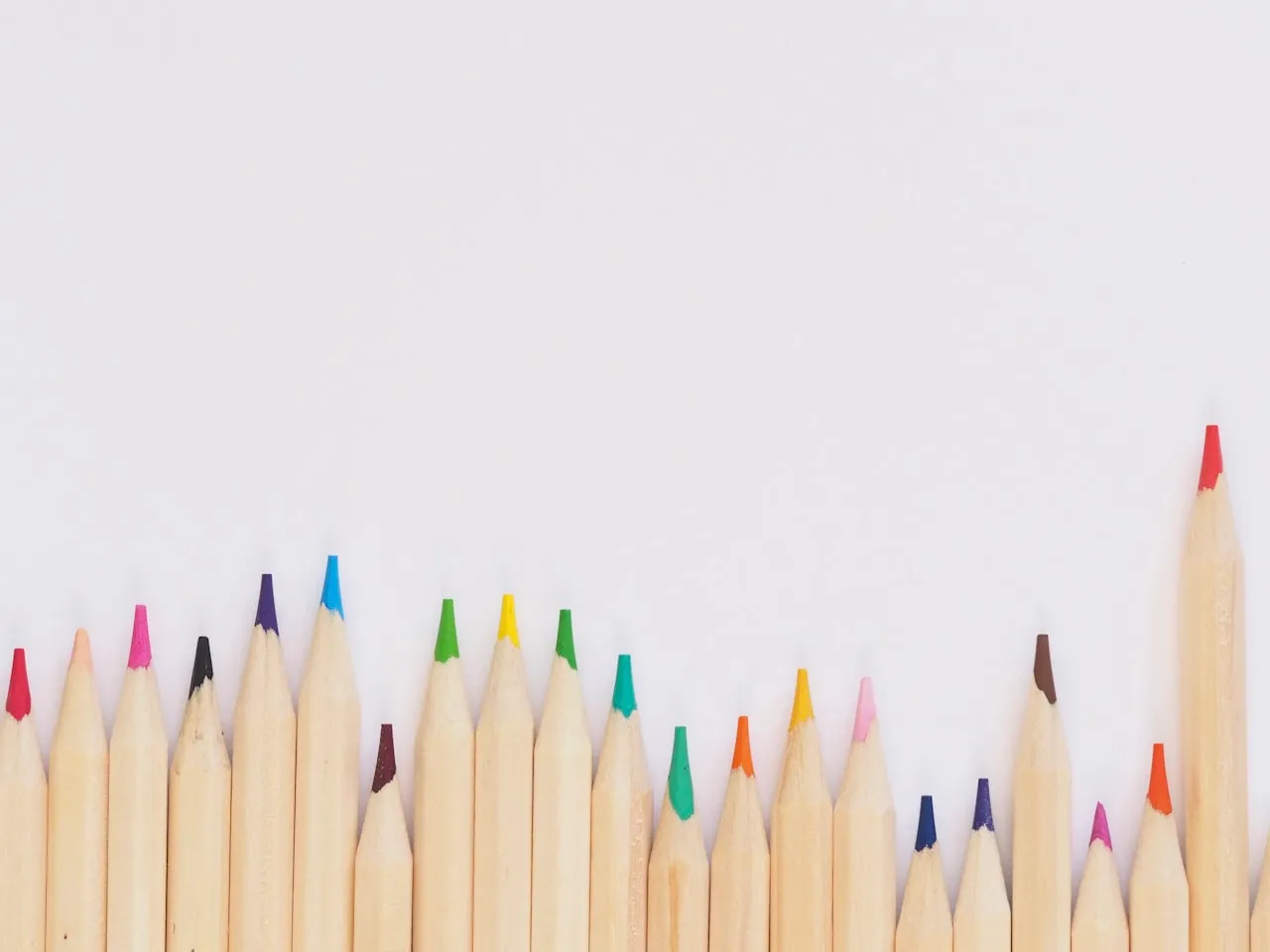
Art journaling combines text, image, and material in ways that are personal and process-oriented. There is no wrong way to fill a page. Photo by Thought Catalog on Unsplash
Building a Regular Practice
Consistency matters more than quality. Here are strategies for making art journaling a habit:
Start small — Commit to five minutes a day. Set a timer. When it goes off, you can stop. Often, you will not want to.
Keep supplies accessible — If your journal and pens are buried in a drawer, you will not use them. Keep them on your desk, your nightstand, or your kitchen table.
Use prompts when stuck — "Draw something in your pocket." "Paint today's weather." "Collage three images that make you happy." Prompts short-circuit the paralysis of the blank page.
Accept ugly pages — Not every page will be beautiful. Some pages will be experiments that fail, emotional dumps, or technical tests. This is normal and necessary. The ugly pages teach you as much as the beautiful ones.
Do not compare — Social media is full of gorgeous art journals. Remember that you are seeing curated highlights, not daily practice. Your journal is for you, not for likes.
Art Journals and Mandala Practice
Drawing mandalas in an art journal combines the meditative benefits of repetitive pattern-making with the creative freedom of art journaling. Start with a circle (trace a cup), add a center point, and build outward with repeated shapes and patterns. The symmetry and repetition are inherently calming, and the results are often surprisingly beautiful even for complete beginners.
Getting Started Is the Hard Part
An art journal is not a product. It is a practice, and the value is entirely in the doing: the slowing down, the paying attention, the translating of a feeling into a mark on a page. You will not always know what you are making while you are making it. That is fine. That is the point.
You do not need talent, training, or expensive materials. You need a blank book, something to make marks with, and the willingness to fill pages without judging them too quickly. Skill, confidence, and visual thinking develop through the act of doing this regularly. They do not arrive first.
Ready to go deeper? Read about how the creative process actually works, or explore how to start appreciating art if you don't consider yourself an art person. The science behind why making things is good for you is covered in detail in the art therapy guide. Open a blank page and see what comes out.


