Sharpe-Walentas: A Free Year of Brooklyn Studio Space, If You Can Win It
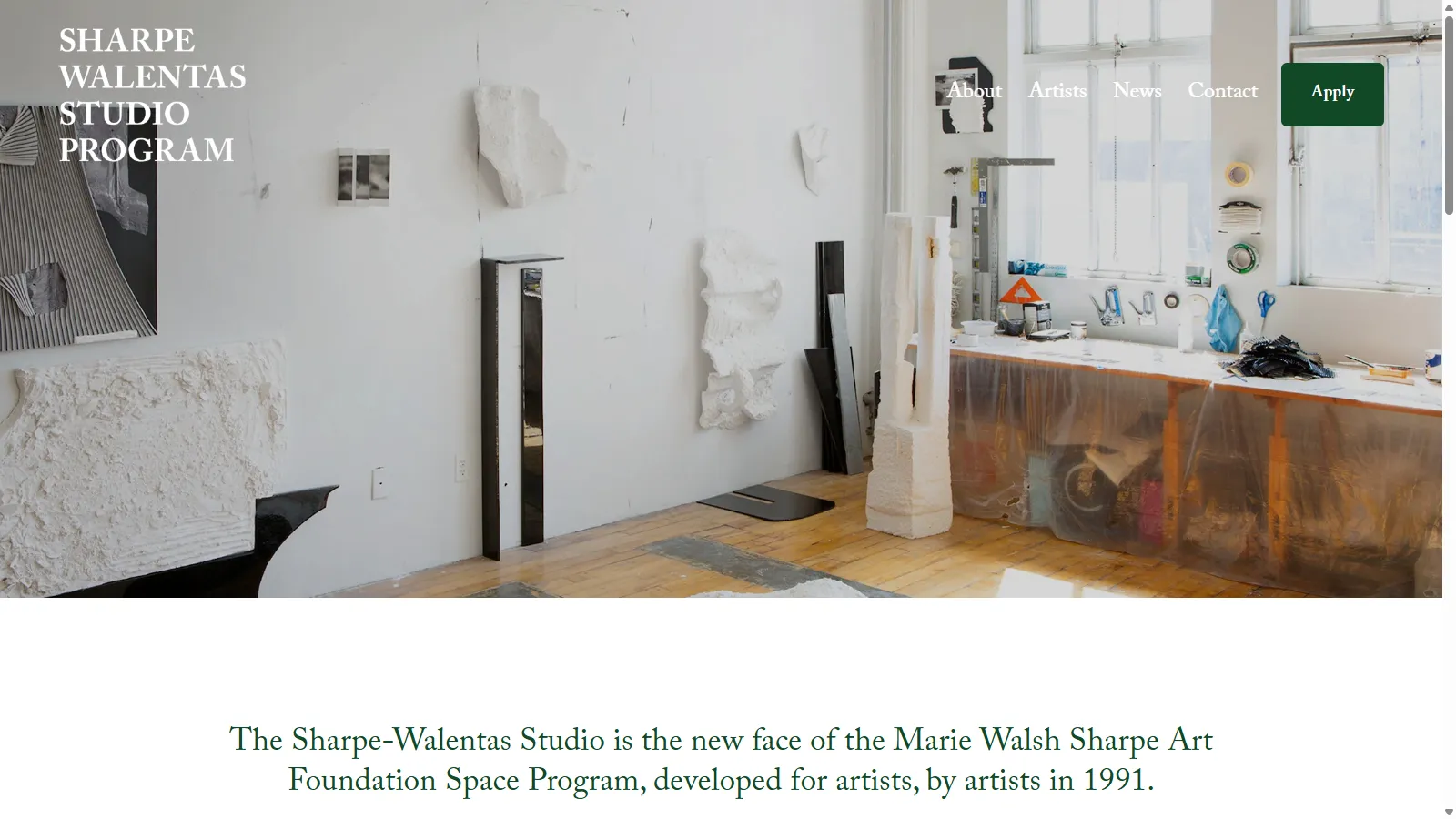
For a working artist in New York, the scarcest resource is not inspiration, it is square footage. The Sharpe-Walentas Studio Program addresses exactly that: 17 rent-free studios in DUMBO, Brooklyn, for a full year, selected by a jury of contemporary artists from a national pool of more than 2,000 applicants.
The program began in 1991 as the Marie Walsh Sharpe Art Foundation Space Program and was renamed in 2014 for the Walentas Family Foundation, which owns the DUMBO building at 20 Jay Street. The studios sit in the middle of Brooklyn's gallery district, with freight elevator access, high ceilings, and 24/7 entry.
What You Actually Get
A working studio, nothing more and nothing less: no housing, no stipend, no materials budget. The award is the space itself, which in Brooklyn terms is worth roughly $15,000 to $25,000 over the year. Communal areas include a kitchen, slop sinks, and a sitting area with wi-fi.
The obligations are equally concrete. Residents must work at least 20 hours a week in the studio, help plan the spring DUMBO Open Studios event, maintain shared spaces, and file reports at six and twelve months. Work involving heavy noise, machinery, fumes, or fire risk is banned, so painters, drawers, photographers, and quiet sculptors fit; welders do not.
The Competition Reality
The 2026-2027 cohort drew 2,059 applicants for 17 studios, under a 1 percent acceptance rate. That is more selective than most top MFA programs, and the jury is built from working artists plus an advisory committee that has included Deborah Kass, Jennifer Packer, Phong Bui, and alumni like Tara Donovan and Didier William.
Eligibility is tight: professional visual artists 21 or older, living in the US (or US citizens and permanent residents abroad), not enrolled in degree programs, not in another residency, and not keeping a separate studio during the term. The "no other studio" rule matters; the program wants artists who genuinely need the space, not collectors of residencies.
The Application
The window is short: SlideRoom opens December 15 and closes January 14 at 11:59 PM Eastern. The application is just five images of recent work and a statement about why you need the studio. No fee, no letters, no CV gymnastics.
That minimalism is deliberate and deceptive. With 2,000-plus applicants, the five images and the statement of need carry the entire decision. Juries read the statement for authenticity, so a real description of your space problem outperforms a polished artist bio.
The Space Requirements Fine Print
The restrictions deserve a careful read. Residents must be the primary studio user; you cannot sublet or share the space, and you cannot hold another studio simultaneously. The 20-hour weekly minimum is enforced in spirit rather than by timesheet, but chronic absence breaches the terms. Materials restrictions are about building safety rather than aesthetics, so painters and photographers should have no issue while ceramicists needing kilns and large-scale welders should look elsewhere.
Reports are required at six and twelve months, and the program expects participation in the Open Studios planning rather than optional attendance. Treat those as the rent.
DUMBO and the Visibility Payoff
The DUMBO location does quiet work on your career. The building sits blocks from the neighborhood's gallery cluster and minutes from Manhattan, so the spring Open Studios weekend pulls curators, writers, and dealers through the floor in numbers a distant residency cannot match. Alumni describe the program's organized studio visits, where curators and museum professionals are scheduled to walk through, as the point where the year converted into shows.
The cohort matters too. Seventeen artists sharing one floor for a year produces a professional network with unusual density, and the alumni list runs deep into the current New York gallery scene.
Insider Tips
Apply for the reason the program exists: you cannot afford or access adequate space. Statements that treat the studio as a career stepping stone read weaker than ones that describe an actual practice squeezed out of a kitchen table. The spring Open Studios event is a real showcase; curators and gallerists walk through, and the program organizes studio visits with museum and gallery professionals throughout the year.
Former residents note the community of 17 peers in one building is a hidden benefit, closer to a co-working cohort than a retreat. If you need housing plus stipend, look at Fine Arts Work Center; if you need New York space specifically, nothing else offers a free year at this scale.
Who Should Apply
Working US visual artists whose practice is genuinely constrained by space, and who can commit 20-plus hours a week in a shared Brooklyn building. The application costs nothing but an hour of your time; the math on that trade is obvious.