
Run your eyes across a Van Gogh painting, even in a photograph, and you can almost feel the thick ridges of paint swirling across the canvas. Now look at a Vermeer, where the surface appears impossibly smooth, as if light itself were trapped beneath a sheet of glass. Both artists were masters of paint on canvas, yet the textures they created could not be more different. That difference is not accidental. Texture is one of the most powerful tools an artist has, shaping how we experience a work physically and emotionally before we even register what the painting depicts.
Texture in art refers to the surface quality of a work: how it looks and, in many cases, how it actually feels. It is one of the seven core visual elements of art, alongside line, shape, color, value, space, and form. Yet it is often the least discussed, which is a shame because texture is what gives art its tangible, sensory presence. It turns a flat image into something you want to reach out and touch.
A 2025 study published in Frontiers in Psychology examined the multisensory dimension of painting, finding that artists exploit haptic perception, the integration of touch and proprioception, to create particular textures on the canvas. The study used Van Gogh as a primary example, noting that his thick brushes and impastos create rough, palpable surfaces that invite the viewer to mentally touch his art through a mechanism the researchers called "reverse imagination." The viewer sees the mark on the canvas and mentally reconstructs the movement that generated it. This is not a metaphor. The brain's motor and planning areas activate when we observe textured brushwork, particularly when we have personal familiarity with the technique.
What Is Texture in Art?
At its simplest, texture describes the surface quality of an artwork. Art historians and educators typically divide texture into two categories: actual texture (also called tactile texture) and visual texture (also called implied texture).
Actual Texture
Actual texture is the physical surface you could touch. The thick, raised paint in a Van Gogh cypress tree has actual texture. You can see the ridges casting tiny shadows. A woven tapestry has actual texture. A collage made from sandpaper, fabric, and corrugated cardboard has actual texture. Sculptors work almost entirely in actual texture, since three-dimensional objects have real surfaces that respond to light and touch.
Visual Texture
Visual texture is an illusion created on a flat surface. When a painter renders the grain of a wooden table so convincingly that you want to run your fingers across it, that is visual texture. The surface of the canvas itself remains smooth, but your eyes perceive roughness, softness, or glossiness based on how the artist has manipulated color, value, and brushwork. Dutch Golden Age painters like Johannes Vermeer and Willem Claesz. Heda were extraordinary at this. Their still lifes depict velvet, pewter, lemon peel, and glass so convincingly that the paintings function as exercises in sensory deception.
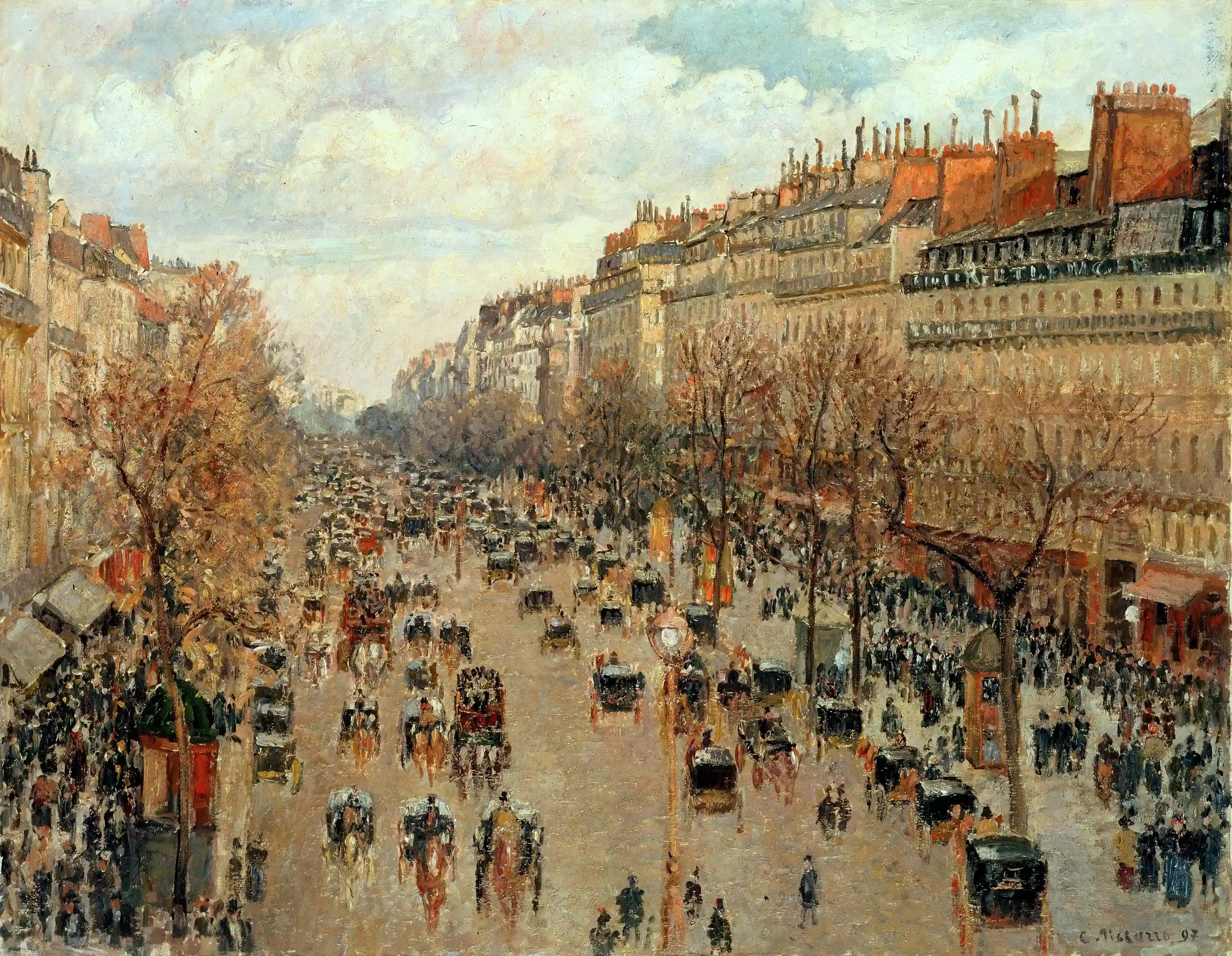
Camille Pissarro, "Boulevard Montmartre, Spring Morning" (1897), oil on canvas. The Hermitage Museum, Saint Petersburg. Pissarro's broken brushwork creates visual texture that captures the energy of the Parisian boulevard. Image: Public domain, via Wikimedia Commons
Techniques for Creating Physical Texture
Artists have developed dozens of methods for building actual texture into their work. Here are the most important ones you will encounter in galleries and museums.
Impasto
Impasto is the technique of applying paint so thickly that it stands up from the surface in three-dimensional ridges. Vincent van Gogh is the most famous practitioner. In paintings like "The Starry Night" (1889) and "Wheat Field with Cypresses" (1889), his brushstrokes are thick enough to cast shadows. The paint itself becomes sculptural, adding physical energy that mirrors the emotional intensity of the image.
Rembrandt used impasto selectively in the 17th century, building up highlights on noses, jewelry, and armor to catch the light while leaving shadows relatively smooth. This contrast between thick and thin paint creates a powerful sense of depth. In the 20th century, artists like Frank Auerbach took impasto to extremes, layering paint so heavily that his portraits become almost relief sculptures.
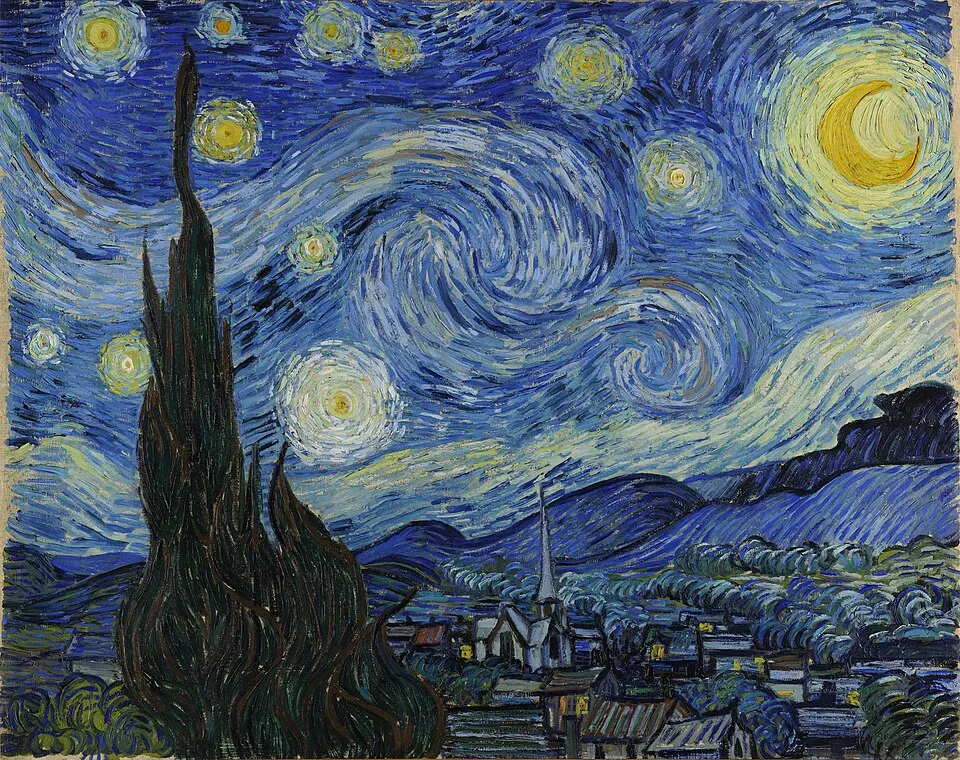
Vincent van Gogh, "The Starry Night" (1889), oil on canvas, 73.7 by 92.1 cm. Museum of Modern Art, New York. The thick, swirling impasto brushwork gives the night sky a turbulent, almost sculptural quality. Image: Public domain, via Wikimedia Commons
Collage and Mixed Media
Pablo Picasso and Georges Braque invented collage around 1912 by gluing newspaper clippings, wallpaper, and fabric directly onto their Cubist paintings. This introduced real-world texture into the traditionally smooth domain of painting. The technique exploded in the 20th century. Robert Rauschenberg incorporated everything from bed pillows to Coca-Cola bottles in his "Combines." Anselm Kiefer adds straw, lead, ash, and dried flowers to his monumental canvases about German history, creating surfaces that feel ancient and scarred. For a deeper look at how collage developed from those early Cubist experiments into a major art form, see our guide to collage as art.
Carving and Incising
Sculptors create texture through carving, chiseling, and incising. Michelangelo's unfinished "Slaves" sculptures at the Galleria dell'Accademia in Florence are a masterclass in textural contrast. Polished, smooth skin emerges from rough, chisel-marked marble, creating a dramatic visual tension between the finished and unfinished. Woodcut printmakers like Albrecht Durer exploited the natural grain of the wood block to add organic texture to their prints.
Techniques for Creating Visual Texture
Creating convincing visual texture on a flat surface requires mastery of several painting and drawing techniques.
Hatching and Cross-Hatching
In drawing and printmaking, artists build texture through patterns of parallel lines (hatching) or intersecting lines (cross-hatching). The density, direction, and spacing of these lines create different surface effects. Albrecht Durer's engravings demonstrate this brilliantly. In "Melencolia I" (1514), you can distinguish rough stone, polished metal, feathered wings, and woven fabric, all rendered through variations in line work alone.
Stippling and Pointillism
Stippling uses dots rather than lines to build up tonal areas and surface texture. Georges Seurat's Pointillist technique, placing tiny dots of pure color side by side, creates a shimmering, granular texture that is unique in art history. In "A Sunday Afternoon on the Island of La Grande Jatte" (1886), the dotted surface gives the entire scene a soft, luminous quality quite different from the smooth blending of academic painting or the energetic dashes of Impressionism.
Glazing and Layering
Old Masters like Jan van Eyck built visual texture through multiple transparent layers of oil paint called glazes. Each layer modifies the one beneath it, creating a luminous depth that makes surfaces appear to glow from within. This is how van Eyck rendered the astonishing fabrics, jewels, and skin tones in the Ghent Altarpiece (1432). Dozens of thin glazes built up over months, creating texture through translucency rather than physical buildup. You can read more about this technique in our guide to oil painting.
How Texture Affects Meaning and Emotion
Texture is not merely decorative. It actively shapes how viewers interpret and feel about an artwork. Smooth, polished surfaces tend to convey calm, refinement, and control. Rough, uneven surfaces suggest energy, raw emotion, or decay. Artists make deliberate textural choices based on the mood and message they want to communicate.
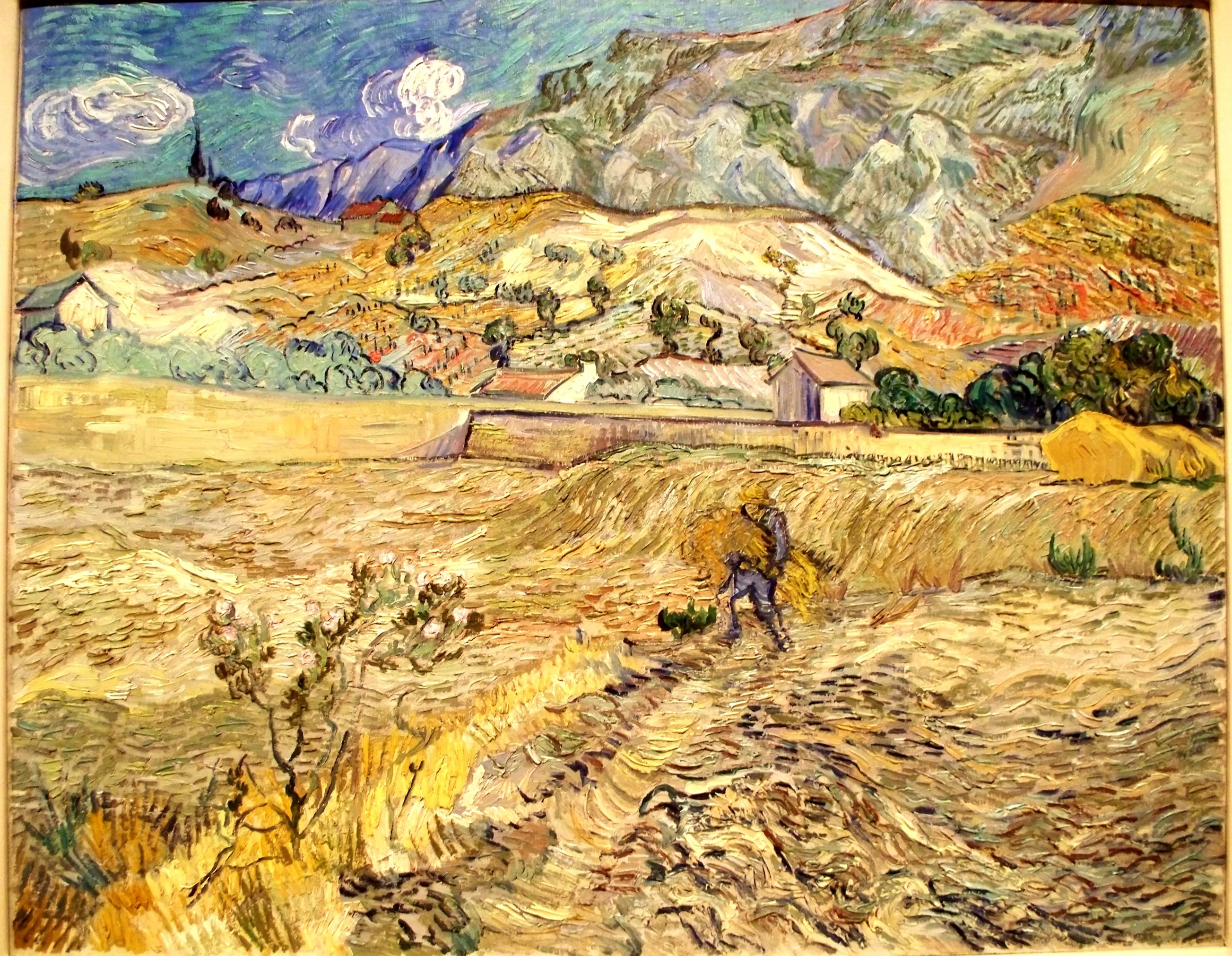
Detail of Van Gogh's brushwork showing how heavy impasto creates physical texture that carries emotional weight. The thick paint ridges are visible even in photographs. Image: Public domain, via Wikimedia Commons
Consider the difference between Ingres and Van Gogh. Jean-Auguste-Dominique Ingres polished his surfaces to a glass-like smoothness, which reinforced the idealized, timeless quality of his portraits and historical scenes. Van Gogh's thick, agitated brushwork makes his paintings vibrate with nervous energy and emotional urgency. Neither approach is superior. They simply communicate different things.
In contemporary art, texture often carries political or conceptual meaning. Anselm Kiefer's encrusted, scarred canvases about the Holocaust use physical deterioration to evoke historical trauma. El Anatsui's shimmering works, made from thousands of recycled bottle caps, transform discarded materials into something that comments on consumption, waste, and transformation. His 2023 Tate Modern commission "Behind the Red Moon," now on global tour through 2025, uses crumpled metal bottle tops stitched into massive abstract fields that catch light differently depending on where you stand.
Texture Across Different Art Forms
Texture plays a role in virtually every visual art form, not just painting and sculpture.
Photography: Photographers capture texture through careful lighting. Side lighting (raking light) emphasizes surface texture, which is why photographers often shoot during golden hour when low-angle sunlight makes every ridge and groove visible.
Ceramics: Potters create texture through carving, stamping, sgraffito (scratching through a surface layer), and glaze application. A rough, unglazed exterior next to a smooth, glossy interior creates a satisfying tactile contrast. See our guide to ceramics and pottery for more.
Textiles: Weaving, knitting, and embroidery are fundamentally textural arts. Fiber artists like Sheila Hicks create monumental textile sculptures where texture is the primary subject.
Architecture: Frank Lloyd Wright understood that the texture of building materials, whether rough stone, smooth concrete, or polished wood, profoundly affects how people experience interior spaces.
Digital Art: Even in digital art, texture matters. Digital painters use custom brushes that simulate the texture of oil paint, charcoal, watercolor, and other traditional media. The absence of physical texture in digital work is itself a textural quality that distinguishes it from traditional media. A 2025 study in the journal Computer Graphics Forum demonstrated a new method for digitising impasto and gloss in oil paintings using spatially varying bidirectional reflectance distribution functions, allowing virtual exhibitions to reproduce the nonhomogeneous surface qualities of physical paintings more accurately than ever before.
The Science of Touching Art (Without Touching It)
Museums have started using 3D-printed tactile reproductions to make paintings accessible to visually impaired visitors. A 2025 study published in Frontiers in Computer Science used high-resolution imaging and computer vision algorithms to identify and separate color surface features in Edvard Munch's "The Scream" (c.1910), then 3D-printed those areas as relief structures that visitors could touch. Participants reported that interacting with the physical replicas stimulated their interest and increased their satisfaction when learning about the painting's color characteristics. The Munch Museum in Oslo evaluated the system and found that multisensory experiences significantly enhanced accessibility and engagement for diverse audiences.
This research confirms something artists have always known intuitively. Texture is not just a visual phenomenon. It is a full-body experience that involves motor imagery, haptic memory, and the brain's mirror neuron system. When you look at thick impasto, your brain simulates the gesture that created it. When you look at a smooth glaze, your brain registers the controlled, slow movement that produced it. Texture is the most physical of the visual elements, and the one that connects us most directly to the artist's hand.
How to Appreciate Texture in Art
Next time you visit a gallery, pay attention to texture with these strategies:
Get close, then step back: Viewing a painting from six inches away reveals the physical surface. Stepping back shows how that texture contributes to the overall image. Both perspectives matter.
Look for shadows on the surface: In impasto paintings, the raised paint casts actual shadows. Gallery lighting is designed to enhance this effect.
Compare textures within a single work: Many artists use contrasting textures. Look for smooth areas next to rough ones, or flat passages next to heavily built-up sections.
Consider the emotional effect: Ask yourself how the texture makes you feel. Does the rough surface create anxiety? Does the smooth surface feel calming? Artists choose texture deliberately to shape your response.
Notice material choices: In mixed media and sculpture, the actual materials (wood, metal, fabric, found objects) carry their own textural associations that add layers of meaning.
Final Thoughts
Texture is one of art's most primal qualities. It connects visual experience to physical sensation in a way that color, line, and composition alone cannot. Whether an artist builds up thick impasto or renders the illusion of satin so convincingly you want to touch it, texture invites you into a deeper, more sensory relationship with the artwork.
Understanding texture also helps you see why artists make the technical choices they do. Van Gogh did not paint thickly because he was sloppy. He used impasto because the physical energy of the paint matched the emotional energy he wanted to convey. Vermeer did not paint smoothly because he lacked ambition. He polished his surfaces because the stillness and clarity of his domestic scenes demanded it.
Want to deepen your understanding of visual elements? Explore our guide to the essential art toolkit, or learn about color theory for art appreciation. For more on Van Gogh specifically, see our guide to Van Gogh and emotional brushwork. The more tools you have for looking, the richer every museum visit becomes.


