The Portrait of the Boy Eutyches, painted in encaustic on a thin wooden panel around 100-150 CE and now in the Metropolitan Museum of Art in New York, is 38 centimeters tall and 19 centimeters wide. The boy looks directly at you. His brown eyes are large, his hair is curly, and the wax surface still carries the physical marks of the brush strokes that placed it there. The pigment has not faded. The wax has not oxidized. Nearly two thousand years separate you from the person who made this, and the painting is in better condition than most works completed in the last century.
That durability is not an accident. Beeswax does not rot, does not become water-soluble, and does not oxidize under normal conditions. The Fayum mummy portraits, a large body of encaustic work produced in Roman-occupied Egypt between roughly 100 BCE and 300 CE, survive in colors vivid enough to look almost garish against the muted tones of contemporary oil paintings that are a fraction of their age. Encaustic is the most durable painting medium in the Western tradition. It is also one of the least used, because working with molten wax at 160 to 200 degrees Fahrenheit requires equipment and discipline that oil and acrylic painting do not demand.
This guide covers how encaustic works technically, what the Fayum portraits tell us about the medium's possibilities, how Jasper Johns revived it in the 1950s for reasons that had nothing to do with antiquarianism, and what painters working in encaustic are doing with it today.
How Encaustic Paint Is Made and Applied
Encaustic paint has three components: beeswax, damar resin, and dry pigment. The damar resin is not optional. Pure beeswax is too soft, scratches easily, and has a melting point low enough that a warm room can affect a finished painting. Damar resin, a natural tree resin from Southeast Asia, hardens the wax and raises its melting point to a range where the finished surface behaves like a proper painting medium. The ratio is typically around four to eight parts wax to one part damar resin by weight, though practitioners adjust this based on climate and the desired surface quality.
The three components are melted together and poured into metal tins or cups that sit on a heated palette. The palette is typically an electric griddle or a purpose-built encaustic unit that maintains a consistent temperature. The working range is 160 to 200 degrees Fahrenheit (70 to 93 degrees Celsius). Below that range the paint thickens and does not flow properly; above it, the wax begins to smoke and produces fumes that should not be inhaled.
Paint is applied to the support with natural-bristle brushes, palette knives, or metal tools while molten. It cools within seconds of leaving the heat source. This is the fundamental discipline of the medium: you have a very short working time, you cannot blend wet paint as you would with oil or acrylic, and every mark is essentially permanent once cool. After applying a layer, you fuse it with a heat gun or propane torch passed quickly across the surface, which bonds the new layer to the previous one. Without fusing, layers do not adhere and will eventually delaminate. The fuse-after-each-layer requirement is not a technicality. It is the process.
Rigid supports are mandatory. Canvas flexes, and encaustic paint cracks when the support moves. Cradled wood panel, birch plywood, and Encausticbord (a clay-coated board made for the medium) are the standard options. The support can be coated with clear encaustic medium as a ground or left bare if its texture is part of the work.
The Fayum Portraits: Two Thousand Years of Evidence
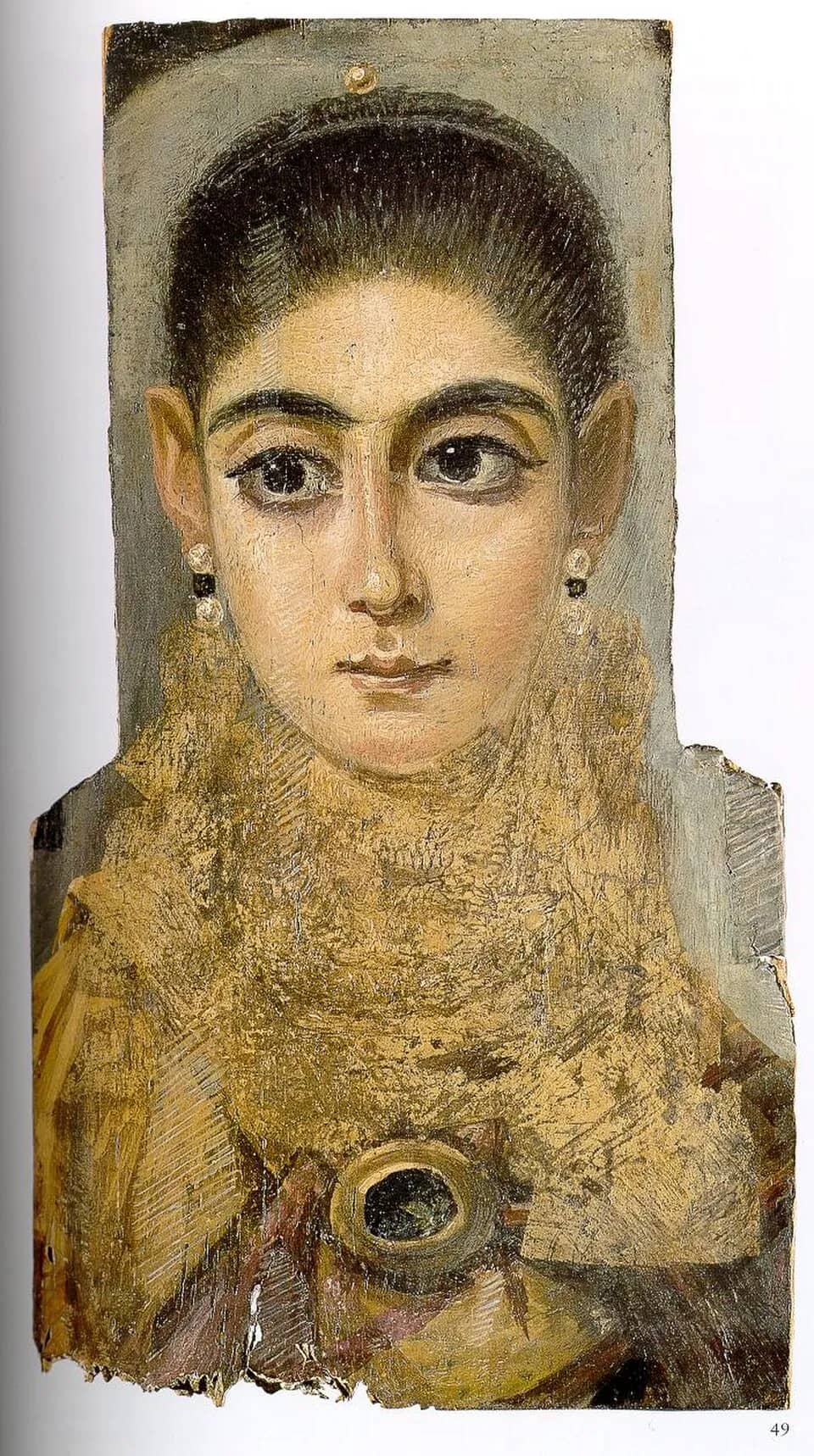
The Fayum mummy portraits are the largest surviving body of ancient encaustic work, and they are extraordinary by any standard of judgment. Produced in Roman Egypt between roughly 100 BCE and 300 CE, they show individual people: young, middle-aged, and old, in the dress and jewelry of their time, looking directly at the viewer with a specificity that feels nothing like the idealized faces of classical sculpture. The portraits were placed over the faces of mummies as part of burial practices that combined Egyptian and Roman traditions, and the dry conditions of the Faiyum region preserved them in a state that oil-based work of the same age could not survive.
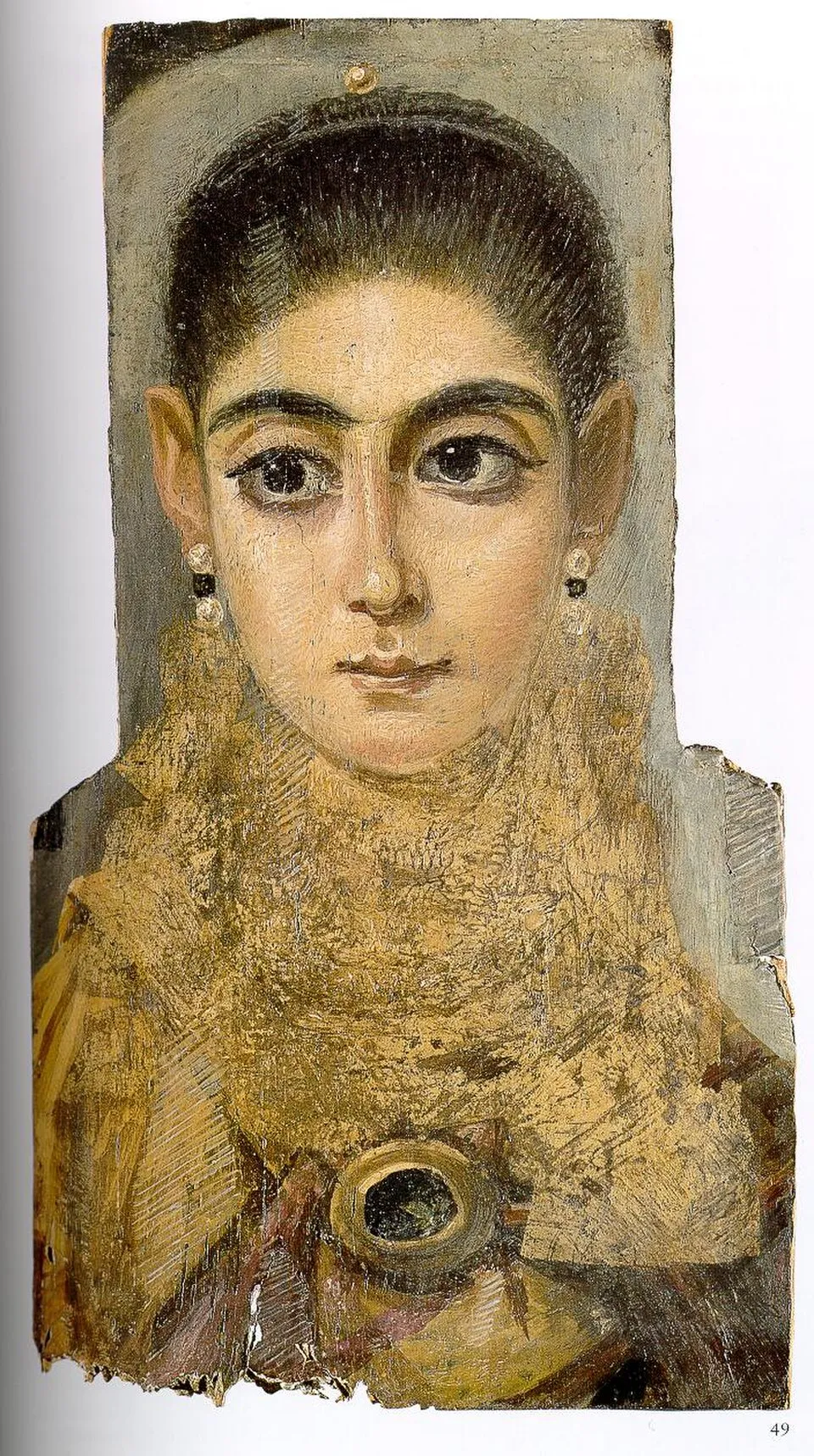
Fayum mummy portrait, Roman-period Egypt (1st-3rd century CE), encaustic on wood. These portraits were placed over the faces of mummies and represent some of the oldest surviving paintings in the Western tradition. The encaustic medium has preserved their colors and psychological presence for nearly two thousand years. Image: Public domain, via Wikimedia Commons
Pliny the Elder described encaustic in his "Natural History" (77 CE) as a Greek technique used for two primary purposes: painting on ivory panels and coating ships, where the wax resisted seawater. He also mentions encaustic portraits, confirming the practice was well-established in Mediterranean art by the 1st century CE. The Greek painters Apelles and Nicomachus are mentioned in ancient sources as encaustic practitioners, though none of their work survives.
What survives, in the Fayum portraits, is the evidence of what the medium can do when used by a skilled practitioner. The British Museum, the Metropolitan Museum of Art, and the Egyptian Museum in Cairo all hold significant collections. Seeing them in person is worth prioritizing if you have any interest in what paint on a panel can accomplish. The wax surface catches light differently at different angles, giving the faces a quality of presence that flat oil paintings rarely achieve at this scale.
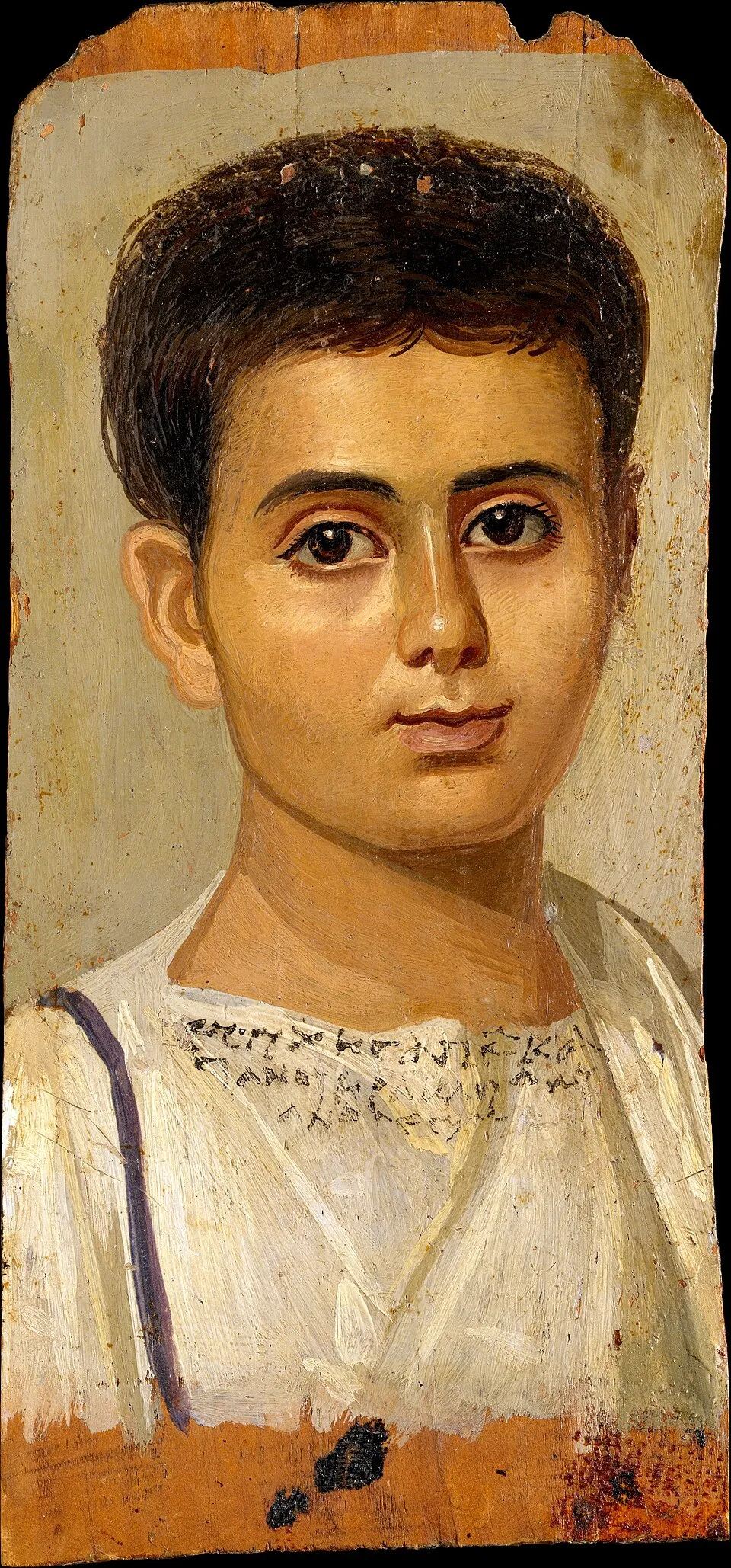
Portrait of the Boy Eutyches (100-150 CE), encaustic on wood, 38 x 19 cm. The Metropolitan Museum of Art, New York. The name "Eutyches" is inscribed on the back. The surface texture of the wax preserves brushstroke marks from nearly two thousand years ago. Image: Public domain, via Wikimedia Commons
Jasper Johns and the 20th-Century Revival
After the ancient period, encaustic disappeared from Western practice for roughly a millennium. Medieval and Renaissance painters worked in tempera, oil, and fresco. The medium was occasionally revived as a curiosity, but it had no continuous tradition. That changed in 1954 when Jasper Johns began his flag paintings, and his choice of encaustic was not nostalgic. It was practical in a way that directly served his conceptual concerns.
Johns wanted to make paintings that were simultaneously images and objects: not pictures of things but things that were also pictures. Encaustic let him do this because the wax is both transparent and physically present. In "Flag" (1954-1955), he embedded layers of newspaper and other collaged materials into the wax surface. You can see the newsprint through the translucent layers. The individual brushstrokes are preserved in three-dimensional relief, the wax having hardened around each mark. The painting is both a flag and very obviously not a flag, a surface that shows all of its own construction while simultaneously depicting something else entirely. No other medium available to Johns in 1954 could have achieved this combination of transparency, physical relief, and collage integration.
When Johns showed these works at the Leo Castelli Gallery in 1958, they attracted serious critical attention and introduced encaustic to a generation of painters who had never considered working with it. By the 1990s and 2000s, a substantial community of encaustic practitioners existed in the United States, supported by workshops, dedicated suppliers like R&F Handmade Paints, and eventually the Encaustic Art Institute. Joanne Mattera's book "The Art of Encaustic Painting" (2001), the primary technical reference for the contemporary revival, remains the most thorough practical guide to the medium.
Building an Encaustic Practice
The surface qualities encaustic produces are not achievable through any other medium. Layers of translucent wax create a depth that is literal rather than illusionistic: you are looking through actual physical material. Areas can be scraped back to reveal lower layers, creating a history of the painting's construction that oil painting can only approximate through glazing. Linear marks engraved into the surface with a pointed tool stay sharp and clean. Built-up impasto areas have a sculptural quality that differs from oil impasto because the surface is dry and hard immediately rather than remaining wet for weeks or months.
If you are considering working in encaustic, the essential safety considerations are ventilation and temperature control. Work in a well-ventilated studio with air moving away from your face. Maintain your palette temperature below 200 degrees Fahrenheit; above this threshold, wax smokes and produces fumes. A simple thermometer and a fan are the minimum equipment for safe practice. Do not use a propane torch indoors without understanding fire safety. The R&F Handmade Paints website provides detailed technical resources and safety guidelines that are more comprehensive than most books on the subject.
Final Thoughts
Encaustic connects the oldest surviving tradition of Western portraiture with a medium that painters working today find genuinely useful for concerns that have nothing to do with history. The Fayum portrait makers used it because wax lasts and because the molten medium let them work quickly and intuitively in ways that other ancient techniques did not allow. Jasper Johns used it because the translucency and physical relief solved specific problems he was working on in the mid-1950s. Contemporary painters use it because a surface built from actual layers of wax simply looks different from anything else, and because the medium's constraints, the short working time, the fusing requirement, the rigid support demand, produce a way of working that forces decisions and resists second-guessing.
If you want to explore related painting traditions, the guide to oil painting's glazing technique covers the closest analogue to encaustic's approach to building translucent layers, and the guide to collage as art addresses how embedded materials within a painted surface have been used as a formal strategy across different traditions and periods.