
The History of Yellow: Van Gogh, Chrome, and a Color That Drove People Mad
Chrome yellow gave Van Gogh his sunflowers but it contained lead and darkened on exposure to light. Discover the history of yellow in art, from Indian yellow to madness.
Your cart is empty
Browse the store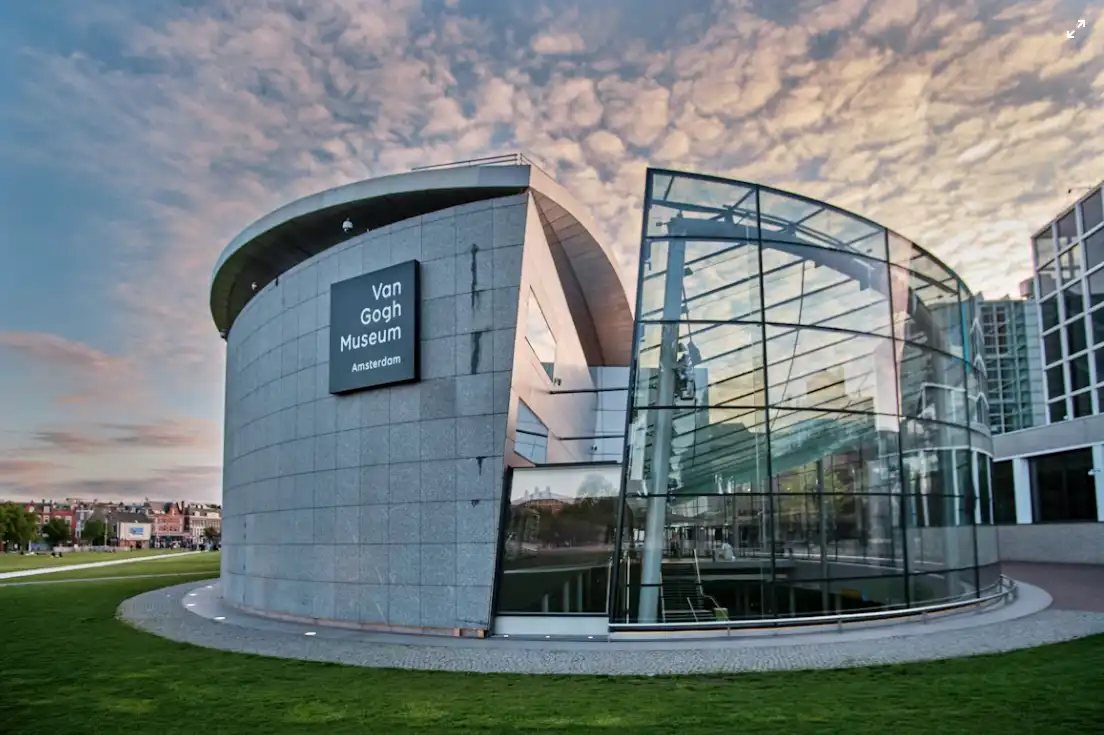
The world's largest Van Gogh collection: 200 paintings, 500 drawings, 700 letters. Tickets 25 euros. Book weeks ahead.
Discover other museums and cultural institutions you might be interested in
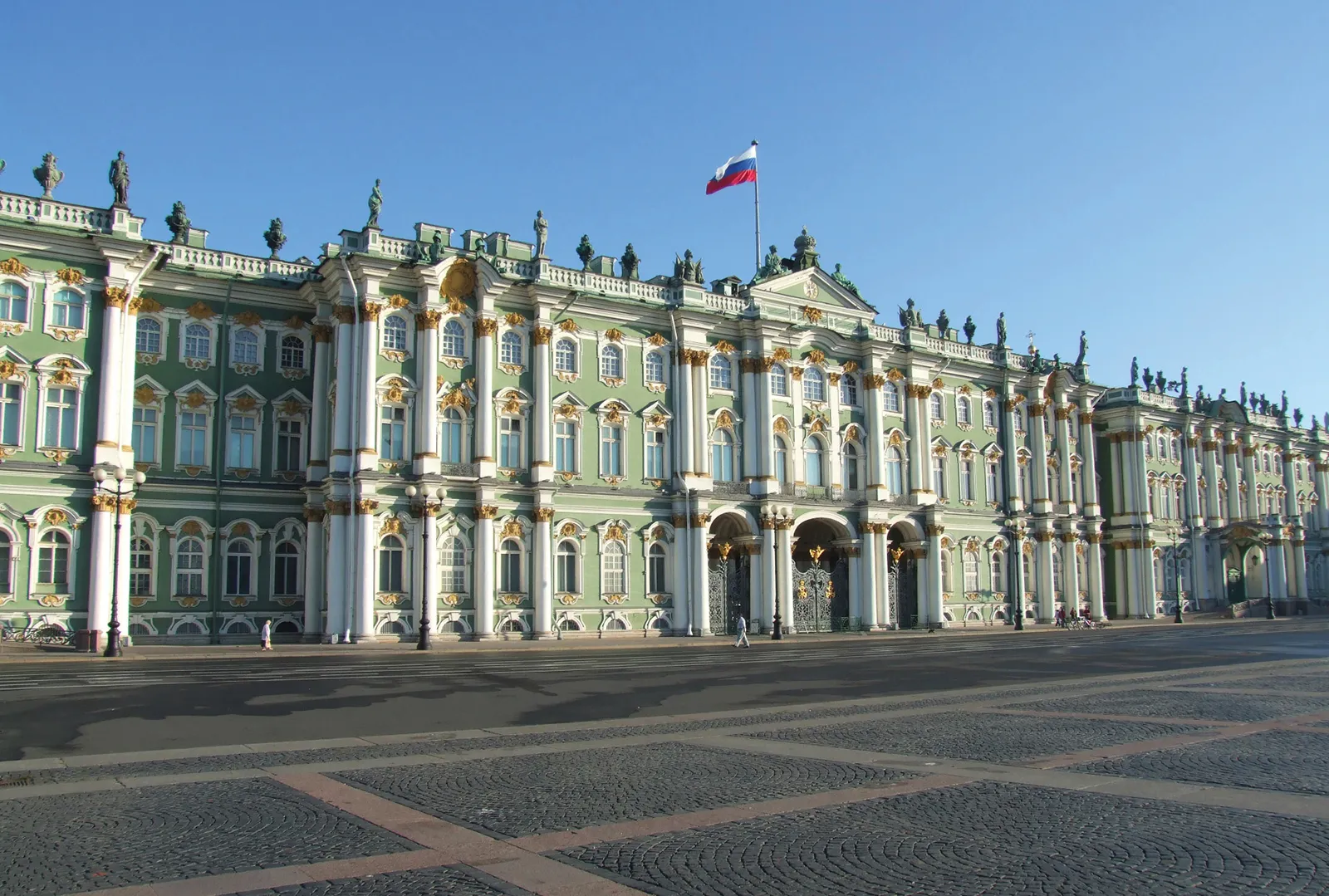
Saint Petersburg's Winter Palace museum with 3 million objects and two Leonardos. Director Piotrovsky now EU-sanctioned; loans frozen.
View details
Tokyo's national modern art museum holds 14,000 works tracing Japanese art from Meiji to today. At 500 yen for the collection gallery, it is the cheapest major museum visit in Tokyo.
View detailsExplore definitions from our glossary that connect to this museum
Broken color places pure, unmixed strokes side by side to blend in the eye. Learn how Monet, Van Gogh, and Seurat used this technique for brighter, vibrating color.
Cadmium pigments produce the most vibrant yellows, oranges, and reds in painting. Learn their history from 1818 to today, why they degrade, and how artists from Van Gogh to Pollock used them.
Read more about this topic on our blog
Chrome yellow gave Van Gogh his sunflowers but it contained lead and darkened on exposure to light. Discover the history of yellow in art, from Indian yellow to madness.

The Starry Night is one of the most recognised paintings ever made. But few people know what Van Gogh was actually looking at, how the swirling sky connects to his mental state, and why the village in the painting is imagined.

Explore the life, techniques, and masterworks of Vincent van Gogh. From Starry Night to Sunflowers, discover how he transformed personal struggle into revolutionary art.
The Van Gogh Museum holds 200 paintings, 500 drawings, and 700 letters by Vincent van Gogh. That is the largest collection of his work in one place, by a wide margin. It is also one of the most visited museums in the world, pulling 2.1 million visitors annually into a Gerrit Rietveld-designed building on Amsterdam's Museumplein. Tickets cost €25, you must pre-book a timed slot online, and walk-up tickets are rarely available. None of that is the interesting part.
The interesting part is that in summer 2025, director Emilie Gordenker publicly warned that the museum faces the risk of closure if the Dutch government does not increase its structural subsidy. The museum has a €114 million renovation plan called "Masterplan 2028" covering climate control, fire safety, elevators, and sustainability systems. The government provides roughly €10 million per year and rejected the museum's request for a €2.9 million annual increase. The Van Gogh family foundation, which owns the collection, backed Gordenker and warned the state of its legal obligations under a 1962 agreement. An independent commission confirmed the building's urgent repair needs. The museum filed a legal complaint against the Dutch state. If you are planning a visit before 2028, this does not affect you. If you are planning one after 2028, check whether the building is actually open.
The permanent collection is organized chronologically across four floors, each covering a period of Van Gogh's 10-year artistic career. This biographical structure is what makes the museum different from every other major art museum. You are not seeing a curator's greatest-hits selection. You are watching a self-taught painter develop from clumsy beginner to revolutionary master in real time.
Start on the ground floor with the early works. The Potato Eaters (1885) is the centerpiece. It is dark, coarse, and deliberately ugly compared to what came later. Van Gogh painted it in Nuenen, living among peasant farmers, trying to convey the weight of their labor through earth-toned palette and rough brushwork. Most visitors walk past it quickly to get to the colorful paintings upstairs. That is a mistake. The Potato Eaters is the painting that proves Van Gogh was not a naive savant who picked up a brush and produced Sunflowers. He spent five years learning to draw, studying anatomy, and failing repeatedly before he could compose a multi-figure scene like this one.
The second floor shows the transformation. Van Gogh moved to Paris, discovered Impressionism, Neo-Impressionism, and Japanese woodblock prints, and his palette exploded from browns and grays into blues, yellows, and reds. The museum pairs his Paris paintings with works by artists he studied alongside, including Gauguin, Toulouse-Lautrec, and Emile Bernard, so you can see the cross-pollination directly.
The third floor is where the crowds gather. This is where you find Sunflowers (one of the versions), The Bedroom, Irises, and Almond Blossom. These are the paintings that made Van Gogh into a global brand, and seeing them in person reveals what reproductions cannot: the physical thickness of the impasto. Van Gogh applied paint in ridges and mounds that cast shadows on the canvas. On Sunflowers, the yellow petals are built up in layers that give the flowers a sculptural presence. On The Bedroom, the perspective is deliberately wrong (the walls lean inward) in a way that creates psychological unease rather than spatial coherence.
The 700 letters, primarily to his brother Theo, are the museum's most underappreciated holding. Most are displayed in digital format rather than physically, but the museum's online archive lets you read them alongside the paintings they describe. Van Gogh was a gifted writer, and the letters reveal an artist of sharp intelligence who thought systematically about color theory, composition, and the relationship between art and labor. If you have time, read a few letters before visiting. It changes how you see the paintings.
The museum's summer 2026 program includes two temporary exhibitions running alongside the permanent collection. Vincent's Path to Fame (through September 6, 2026) traces how Van Gogh went from an unknown painter who sold almost nothing during his lifetime to one of the most famous artists in the world, focusing on the role his family played in building his posthumous reputation. The ReFramers present: In Search of an Anchor (through September 20, 2026) brings contemporary perspectives onto Van Gogh's work, exploring themes of religion, relationships, and daily rituals.
On Friday evenings, the museum runs Vincent on Friday, an evening program with live music, performances, and drinks from 7:30 PM. The July 31, 2026 edition is created in collaboration with The Queer Agenda Amsterdam. These Friday evening sessions are included in your ticket and are one of the better museum after-hours programs in Europe.
The Van Gogh Museum is fundamentally different from the Rijksmuseum, which sits 300 meters away on the same square. The Rijksmuseum covers 800 years of Dutch art and history. The Van Gogh Museum covers one artist's 10-year career. If you only have time for one, the Rijksmuseum gives you Rembrandt, Vermeer, Hals, and the full breadth of Dutch Golden Age painting. The Van Gogh Museum gives you depth on a single artist that no other museum can match. Most visitors do both in a single day, which is possible but exhausting. Better to split them across two days.
The Musee d'Orsay in Paris has a significant Van Gogh collection (including Starry Night Over the Rhone and self-portraits) within the broader context of Post-Impressionism. The Orsay gives you Van Gogh among his peers. The Van Gogh Museum gives you Van Gogh alone, in depth, with the letters and drawings that the Orsay cannot match.
The Kroller-Muller Museum in Otterlo, Netherlands, holds the second-largest Van Gogh collection (about 90 paintings and 180 drawings) and is worth the trip if you want to see works not on display in Amsterdam, but it is a 90-minute drive from the city.
Book 2 to 4 weeks ahead for peak season. The museum sells out daily. Same-day tickets are sometimes available in the off-season (November through February, excluding holidays) but are virtually nonexistent from April through September.
Friday evening is the best time to visit. The museum stays open until 9 PM on Fridays, and the Vincent on Friday programming makes it a genuinely different experience from a daytime visit. The permanent collection is quieter after 6 PM, and the atmosphere is more relaxed.
Budget 2 to 3 hours. That is the average visit length, including the permanent collection and one temporary exhibition. If you want to read letters and look slowly, plan for 3.5 hours.
The museum shop is exceptional. It carries one of the best selections of art books and design objects of any museum shop in Europe. The reproduction prints are high quality and reasonably priced. If you are going to buy a museum souvenir anywhere in Amsterdam, do it here.
Students get a discount. EU/EEA students pay €16 instead of €25 with a valid student card. Select the Student option when booking online. There are no senior discounts.
The Museumkaart works here. If you hold a Dutch Museumkaart, admission is free, but you still need to reserve a timed ticket online. Same applies to ICOM card holders and Vincent's Friends members.
Admission: €25 for adults, €16 for EU/EEA students, free for visitors under 18. Museumkaart, ICOM card, and Rembrandt card holders enter free but must reserve a timed ticket. All tickets include admission to the permanent collection and temporary exhibitions.
Hours: Daily 9 AM to 6 PM. Fridays until 9 PM (except May 29, July 31, and September 25, 2026, when the museum closes at 6 PM). Hours vary during holiday periods; check the website before visiting.
Getting there: The museum is on Museumplein, a 15-minute walk from Amsterdam Centraal station or a 10-minute tram ride (trams 2, 5, and 12). The Rijksmuseum and Stedelijk Museum are on the same square.
Book tickets: tickets.vangoghmuseum.com
Anyone who has ever felt something looking at a Van Gogh painting. The museum's chronological structure makes it the best single-artist museum in the world, because it shows you how the art was made rather than just showing you the finished results. You watch Van Gogh learn to draw, learn color, learn composition, and produce some of the most emotionally powerful paintings in Western art, all within a decade. The €25 ticket is steep, and the crowding in the Arles galleries can be uncomfortable. But the depth of the collection, the letters, and the temporary exhibition program make this the one museum in Amsterdam you should not skip. Just book ahead.
Quiet Canvas is a space for artists and art lovers: essays, glossary terms, tools, and curated directories to support your creative practice.
Learn more →


