Museum of Fine Arts, Boston: 450,000 Works, a New Director, and a $30 Ticket That Stings
The MFA Boston is the kind of museum where you go looking for one painting and lose three hours. With over 450,000 works spanning ancient Egypt to contemporary installation, it is one of the most encyclopedic art museums in the United States. It is also one of the most expensive to enter at $30 for adults, up from $25 in recent years. That price tag is the first thing you need to know, because it shapes the entire visit.
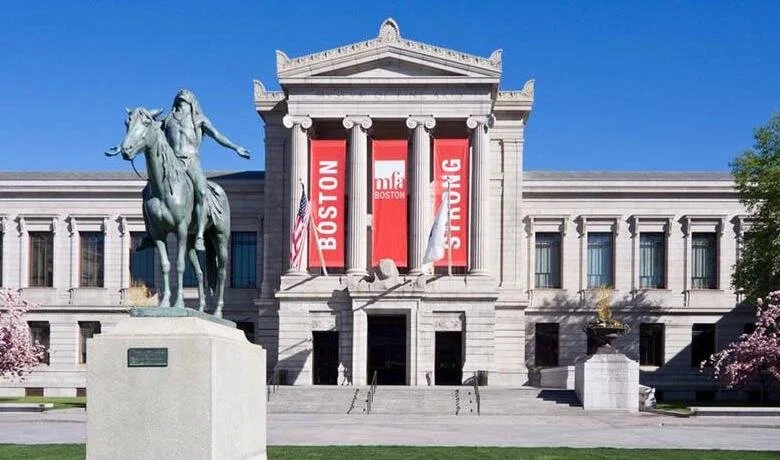
Founded in 1870 and located in the Fenway neighborhood since 1909, the MFA combines a grand Beaux-Arts building designed by Guy Lowell with the Art of the Americas Wing designed by Norman Foster and opened in 2010. The museum welcomes roughly 1.2 million visitors annually and is in the middle of a leadership transition: longtime director Matthew Teitelbaum is retiring, with Pierre Terjanian appointed as his successor in 2026. That transition comes alongside a major reinstallation of the 18th-century Art of the Americas galleries, which reopened on June 19, 2026, just ahead of the 250th anniversary of American independence.
Japanese Art: The Best Collection Outside Japan
This is the MFA's secret weapon. The Japanese collection is the finest outside Japan, built largely through the efforts of Ernest Fenollosa and Okakura Kakuzō, two figures who recognized the artistic significance of Japanese art when Western museums were ignoring it.
The ukiyo-e woodblock print holdings are extraordinary. Hokusai, Hiroshige, Utamaro are all represented with multiple impressions. These prints influenced French Impressionism directly, and seeing them in the same museum as the Monet collection lets you trace that influence across galleries.
The Japanese collection extends well beyond prints: paintings, ceramics, lacquerwork, textiles, and sculpture spanning ancient to modern. If you have any interest in Japanese art, the MFA deserves a dedicated visit for these galleries alone. The Tenshin-en Japanese Garden outside provides a contemplative complement to the indoor collection.
American Art: The Newly Reinstalled Galleries
The MFA reopened its 18th-century Art of the Americas galleries on June 19, 2026, the first reinstallation since the wing opened in 2010. The new displays integrate art from across North, Central, and South America, and the Caribbean, including works by Native American and Indigenous makers. Over 400 objects are on view, ranging from icons of the collection to long-unseen works and new acquisitions.
John Singleton Copley's colonial portraits capture pre-Revolutionary Boston with a directness that makes the faces feel contemporary. Gilbert Stuart's unfinished Washington portrait, the image on the one-dollar bill, is here. Winslow Homer's seascapes and Maine coast paintings are some of the most powerful American works of the 19th century. John Singer Sargent's murals in the rotunda are an ambitious decorative program that most visitors walk past on their way to the paintings galleries. Stop and look up.
The MFA also has a major Homer exhibition coming: Of Light and Air: Winslow Homer in Watercolor runs November 2, 2025 through January 19, 2026, displaying light-sensitive watercolors that are rarely shown.
French Impressionism: Strong but Not the Strongest
The MFA's Impressionist collection is excellent, with multiple Monets from his Water Lilies, Haystacks, and Rouen Cathedral series, plus Renoir, Degas, Pissarro, Cézanne, and Van Gogh. But here is the honest comparison: the MFA's Impressionist holdings are not as deep as the Musée d'Orsay in Paris or the National Gallery in London. They are comparable to the Metropolitan Museum in New York.
What the MFA does better than most is contextualize Impressionism alongside its Japanese influences and American responses. The proximity of the Japanese print galleries to the Impressionist galleries makes the cross-influence visible in a way that museums organized by national school cannot achieve.
Ancient Art: Dug Up by the Museum Itself
The MFA's Egyptian collection was built largely through the museum's own archaeological excavations at Giza and other sites, conducted in partnership with Harvard University. This means the museum has provenance information that many other museums with Egyptian collections acquired through purchase cannot match. Mummies, sarcophagi, sculptures, jewelry, and everyday objects provide a comprehensive picture of ancient Egyptian civilization.
The Nubian collection is one of the finest outside Sudan. Most visitors skip it. Do not. The Nubian galleries document a civilization that produced art and architecture rivaling Egypt's, and the collection here is unusual in its depth.
$5 Third Thursdays and Other Ways to Save
$30 is steep. Here is how to pay less:
- $5 Third Thursdays: On the third Thursday of every month, admission drops to $5 minimum (pay-what-you-wish) after 5 PM, with the museum open until 10 PM. This includes special programming like Latinx Heritage Night, Diwali celebrations, and Lunar New Year events. This is the best deal at any major US museum.
- Free community days: The MFA offers free admission on certain holidays and community days, including Mother's Day (sponsored by Highland Street Foundation).
- Youth pricing: Ages 7-17 are $14, and free on weekdays after 3 PM on school days. Under 7 is always free.
- Membership: If you plan to visit more than twice, membership pays for itself and includes free special exhibition tickets.
How It Compares
The MFA is Boston's answer to the Metropolitan Museum in New York. Both are encyclopedic. Both charge $30. But the Met is larger, has broader European holdings, and has a more iconic collection overall. The MFA wins on Japanese art, period. The Met has nothing comparable to the Fenollosa-Okakura collections.
Against the Museum of Modern Art in New York, the comparison is apples to oranges. MoMA is modern art only. The MFA covers everything. But if you are choosing between the two and your interest is pre-1900 art, the MFA is the clear pick.
Against the Art Institute of Chicago, the MFA is comparable in scope and quality. The Art Institute has better Post-Impressionist works (Seurat's La Grande Jatte). The MFA has better Japanese art and a stronger American collection.
Insider Tips for Visiting
- Go on Thursday or Friday evening. The museum is open until 10 PM, and after 5 PM the crowds thin dramatically. You can have entire galleries to yourself.
- $5 Third Thursday is the best time to visit. Cheap admission, special programming, and a lively atmosphere. Check the schedule at mfa.org for which cultural celebration is happening.
- Start with the Japanese galleries. They are the MFA's greatest strength and are often less crowded than the European painting galleries.
- Do not skip the Nubian collection. It is tucked away but worth finding.
- Budget four hours minimum. The collection is too large for a quick visit. If you only have two hours, pick two departments and focus.
- Combine with the Isabella Stewart Gardner Museum. The Gardner is a 5-minute walk away and offers a completely different museum experience: a single collector's vision in a 15th-century Venetian-style palace. Do both in one day.
- The Tenshin-en Japanese Garden is best in spring and fall. It is small but beautifully designed, a good place to sit between galleries.
- Check gallery closures before visiting. The museum notes that galleries may be closed temporarily without notice.
What Is Coming Up
The MFA's 2026-2027 exhibition schedule includes Picasso, Miró, Dali: Unbound (August 2026 through January 2027), Maverick Kings: Three Visionary Pharaohs of Egypt's Golden Age (September through December 2026), and Renoir and Love (February through June 2027). The museum is also unveiling new galleries for modern art, which will significantly expand the display of the 20th-century collection.
Final Verdict: Who Is This Actually For?
The MFA is for visitors who want depth across multiple civilizations and periods. It is not a one-trick museum. If you care about Japanese art, American painting, ancient Egypt, or any combination of those, the MFA delivers more than almost any museum in the country.
It is not for someone on a tight budget who only has time for one museum in Boston. At $30, you need to commit to a half-day minimum to get your money's worth. If you only have two hours, go to the Gardner Museum instead and pay $22 for a more focused, more atmospheric experience.
But if you have the time and the budget, the MFA is one of the great encyclopedic museums of the world. The Japanese collection alone justifies the trip. The new Art of the Americas reinstallation gives the American galleries fresh life. And the $5 Third Thursday program is the best discount deal at any major US art museum.
Plan your visit at mfa.org. For more on American art and art education, explore our art schools directory or browse courses on art history.