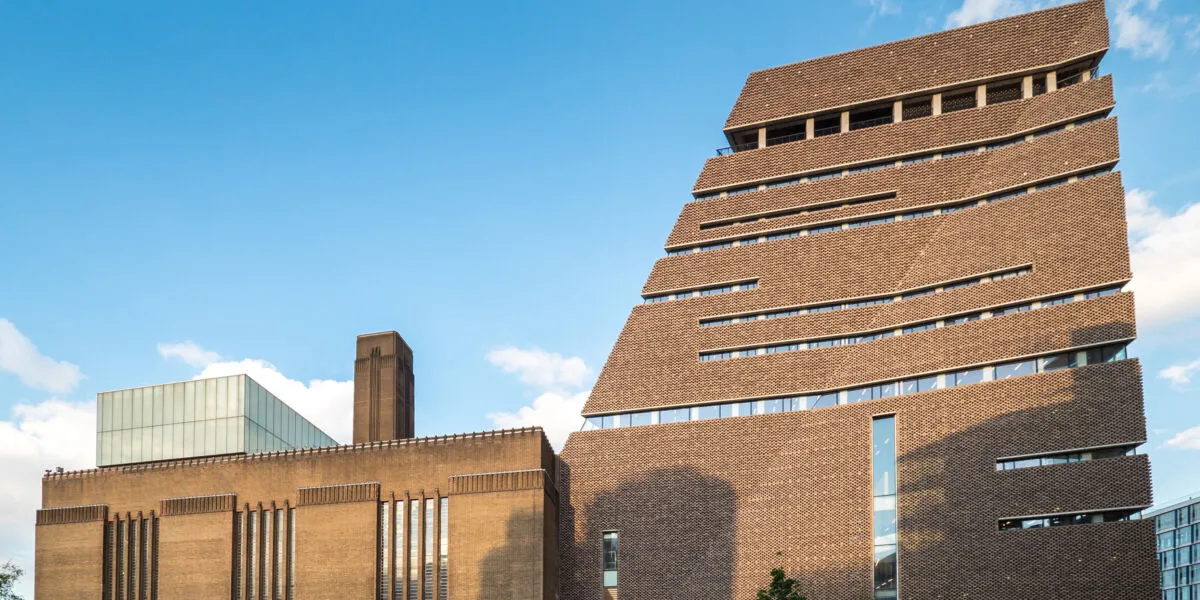

The Guggenheim Bilbao: When the Building Is the Artwork
The Guggenheim Bilbao is the building that launched the Bilbao Effect, the idea that a museum can transform a city. Discover Gehry's titanium masterpiece and what is inside.
Your cart is empty
Browse the store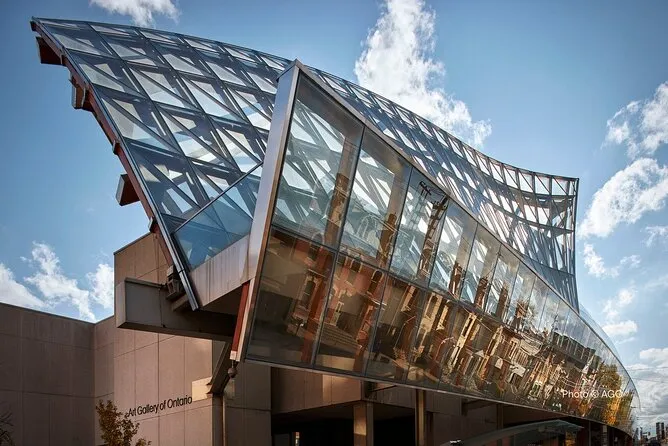
Toronto's Frank Gehry-redesigned art museum with Canada's best Group of Seven collection, free entry for under-25s, and a new wing opening 2027.
Discover other museums and cultural institutions you might be interested in
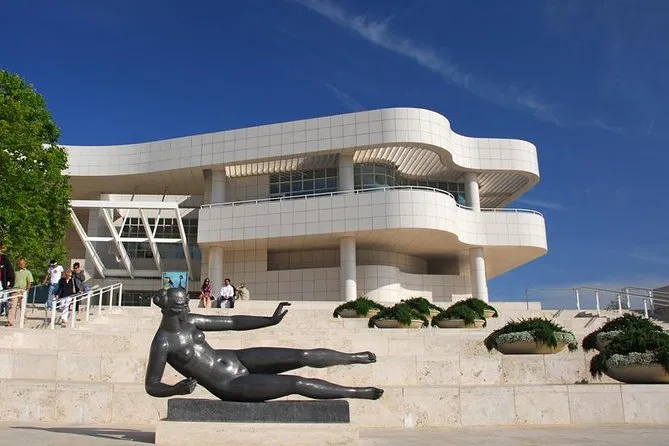
Free hilltop museum in LA with European masterworks, a Richard Meier campus, and a Getty Villa showing Egyptian Book of the Dead scrolls through Nov 2026.
View details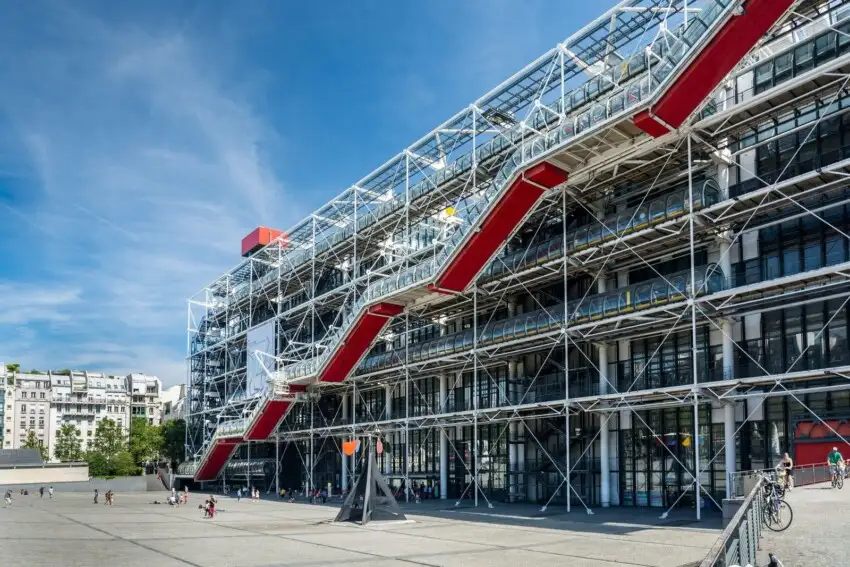
Paris's inside-out modern art museum, closed for renovation until 2030. Its collection tours globally via the Constellation program.
View detailsExplore definitions from our glossary that connect to this museum
Dreamtime is the Aboriginal Australian concept of creation, when Ancestral Beings shaped the land. From rock art to Papunya paintings, learn how Dreaming stories become images.
Pre-Columbian art spans 3,000 years of Indigenous visual culture across the Americas. Learn about Maya ceramics, Aztec sculpture, Inca textiles, and the science of color.
Read more about this topic on our blog
The Guggenheim Bilbao is the building that launched the Bilbao Effect, the idea that a museum can transform a city. Discover Gehry's titanium masterpiece and what is inside.

Explore the deep relationship between art and architecture, from the Parthenon to the Guggenheim Bilbao. Discover how buildings became visual statements, how architects borrowed from painters, and what separates structure from sculpture.
Frank Gehry grew up on Beverley Street in Toronto, a five-minute walk from the Art Gallery of Ontario. When he redesigned the museum in 2008, he used Douglas fir and glass to create the Galleria Italia, a 600-foot promenade along Dundas Street that floods the interior with natural light. It is the most personal building in Gehry's portfolio, and it shows. The scale is grand but the materials are warm, and the connection between street and gallery is seamless in a way that most museum architecture fails to achieve.
The AGO holds over 120,000 works spanning from the first century to the present. Its identity rests on three pillars: the world's most comprehensive collection of Canadian painting, a growing Indigenous art program, and the largest public collection of Henry Moore sculpture on the planet. In 2027, a new wing, the Dani Reiss Modern and Contemporary Gallery, will open, significantly expanding space for modern and contemporary art and giving the museum room to display works that have been sitting in storage.
If you want to understand how Canada sees itself, start in the Group of Seven galleries. These painters, working in the early 20th century, set out to create a distinctly Canadian art by painting the wilderness of Ontario, Quebec, and the Arctic. Lawren Harris's abstract Arctic landscapes reduce mountains and ice to geometric forms that feel almost spiritual. Tom Thomson's Algonquin Park studies capture the Canadian shield with a rawness that still resonates. Emily Carr's British Columbia forest paintings, hung nearby, bring a different energy, dense and dark and alive.
The AGO holds the definitive collection of these works. No other museum comes close. If you are Canadian, these galleries are a pilgrimage. If you are not, they are the fastest way to understand why landscape painting matters so much to Canadian cultural identity.
The AGO has been building its Indigenous art collection with increasing seriousness, presenting both historical and contemporary works by First Nations, Metis, and Inuit artists. The collection is presented with cultural context and community collaboration, which sounds like boilerplate until you realize how rare that approach actually is in major North American museums.
In 2026, the AGO partnered with the Toronto Biennial of Art to present Dawoud Bey: Material Histories, Living Landscapes (opening July 24, 2026), an installation of 23 photographs and a film exploring relationships between North American landscapes and Black diasporic experiences. It runs through Spring 2027.
The AGO houses the world's largest public collection of Henry Moore sculptures, over 900 works donated by the British sculptor himself. The dedicated Henry Moore Sculpture Centre is an immersive space that lets you trace Moore's career from early carvings to late monumental bronzes. Moore chose the AGO over British institutions because he wanted his work to be accessible to the public in a dedicated space, and the result is one of the most generous gifts any artist has given to a North American museum.
The AGO's 2026 exhibition lineup is strong: Paul McCartney Photographs 1963-1964: Eyes of the Storm (February 18 to June 7, 2026) brings 250 intimate photographs from McCartney's personal archive, capturing the Beatles' touring schedule and the energy of the era. The Impressionist Revolution: Monet to Matisse from the Dallas Museum of Art (June 24 to late 2026) offers 50 artworks tracing the experimental techniques of the Impressionist movement. Melissa Auf der Maur: My '90s Photographs opens September 2026, and Sunday Best, an exploration of Black style and self-fashioning, opens October 2026.
But the AGO has also been in the news for less flattering reasons. In early 2026, the gallery was rocked by resignations after a collections committee narrowly voted (11-9) not to acquire a video work by Nan Goldin over accusations regarding the photographer's political views on Israel. The museum's modern and contemporary curator, John Zeppetelli, resigned in connection with the incident. Director Stephan Jost ordered a governance review and a "reset" on acquisition discussions. The controversy highlighted the tension between artistic merit and political debate that publicly funded museums increasingly face. Then in March 2026, chief curator and deputy director Julian Cox stepped down after eight years, leaving a significant leadership gap.
The AGO is the largest art museum in Toronto and one of the largest in Canada, but it is not the only game in town. The National Gallery of Canada in Ottawa holds the national collection and has stronger European holdings, while the National Gallery of Victoria in Melbourne offers a useful comparison as another Gehry-era institution with a major regional focus.
Against US peers, the AGO sits between the Art Institute of Chicago and the Philadelphia Museum of Art in scale and ambition. It is smaller than the Art Institute but more accessible, thanks to the free Annual Pass for visitors 25 and under and free admission for Indigenous peoples.
Wednesday and Friday evenings are the quietest times. The AGO is open until 9 PM on Wednesdays and Fridays, and the late hours attract far fewer crowds than weekends.
The Galleria Italia is best photographed in the morning. The east-facing glass facade catches morning light, and the Douglas fir glows. By afternoon, the light flattens.
Check what is closed before you go. With the Dani Reiss wing under construction, some galleries may be temporarily inaccessible. Check the AGO website for current closures.
Restaurant FRANK is good but overpriced. The food is competent but the prices assume you are eating at the Four Seasons. Walk five minutes west to Kensington Market for better food at a fraction of the cost.
Admission: $25 CAD adults, $16 CAD students. Free for Ontarians under 25, Indigenous peoples, AGO Members, and Annual Passholders.
Hours: Closed Mondays. Tuesday to Sunday, 10:30 AM to 5:30 PM (Wednesdays and Fridays until 9 PM).
Getting there: 317 Dundas Street West. Nearest subway is St. Patrick Station (Line 1), a 3-minute walk.
Book tickets: ago.ca
Anyone who wants to understand Canadian art. The Group of Seven galleries are the reason to visit, and the Henry Moore collection is an unexpected bonus that would justify the trip on its own. The Gehry architecture gives the museum a physical identity that most institutions would kill for. The AGO is not in the same league as the Met or the Art Institute of Chicago for encyclopedic breadth, but it does not need to be. It is a national museum with a clear point of view, and the new wing opening in 2027 should make it even stronger.
Quiet Canvas is a space for artists and art lovers: essays, glossary terms, tools, and curated directories to support your creative practice.
Learn more →


