
The Tate Modern: London's Industrial Cathedral for Contemporary Art
Tate Modern is the world's most-visited modern art museum inside a former power station on the Thames. Discover the Turbine Hall, the Rothko room, and how to navigate it.
Your cart is empty
Browse the store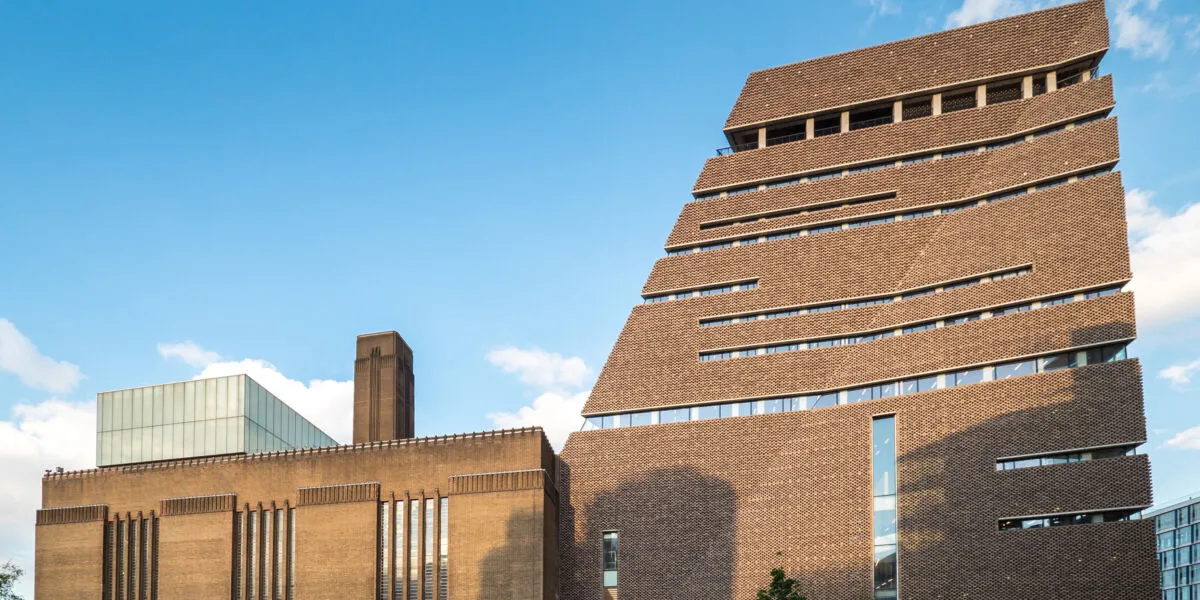
Tate Modern is free, open late on Fridays and Saturdays, and hosting Frida Kahlo, Ana Mendieta, and Julio Le Parc in 2026. The Rothko Room is still the best free art experience in London.
Discover other museums and cultural institutions you might be interested in
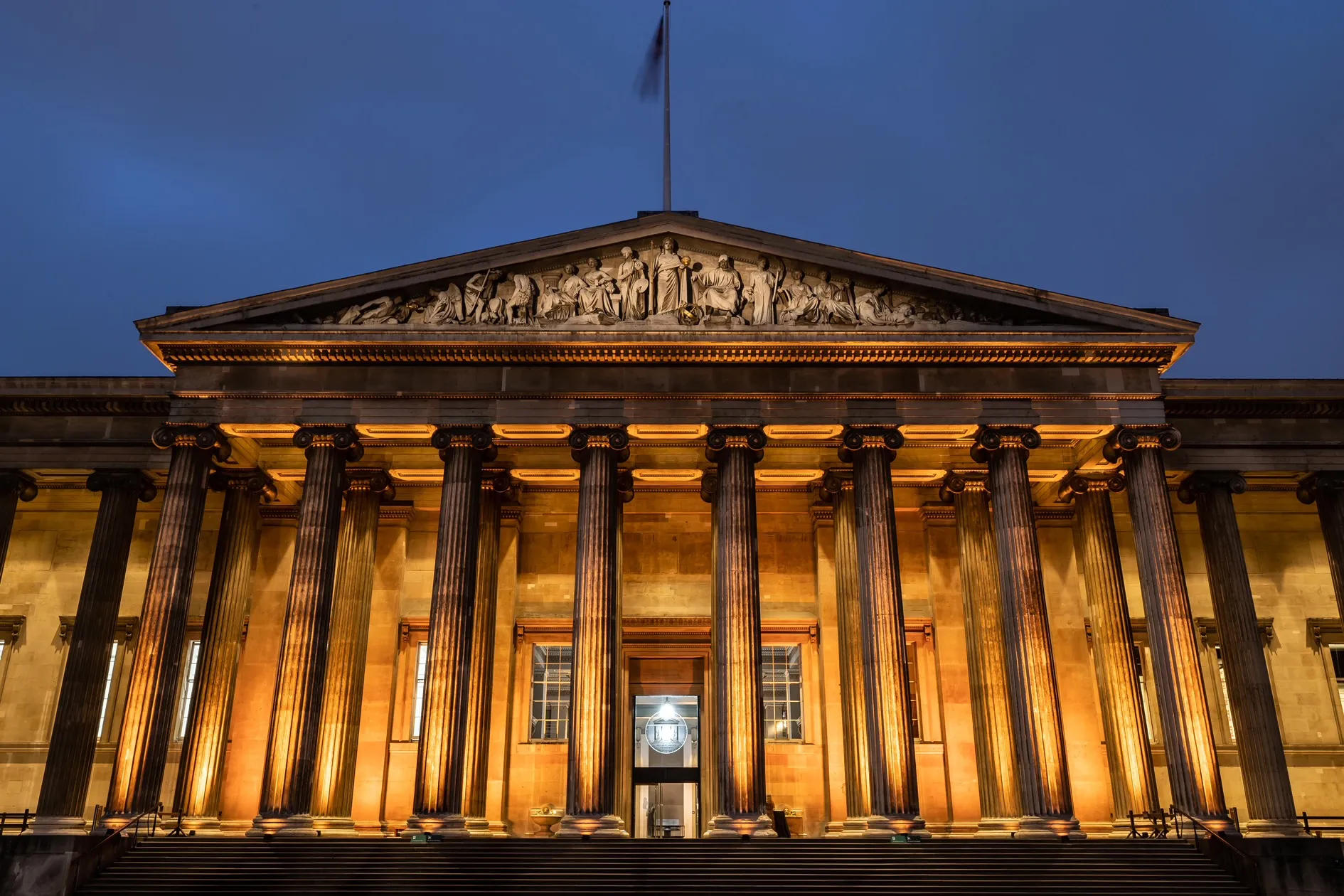
London's free museum of human civilization, home to the Rosetta Stone and Parthenon Sculptures, now navigating theft scandals and label controversies.
View details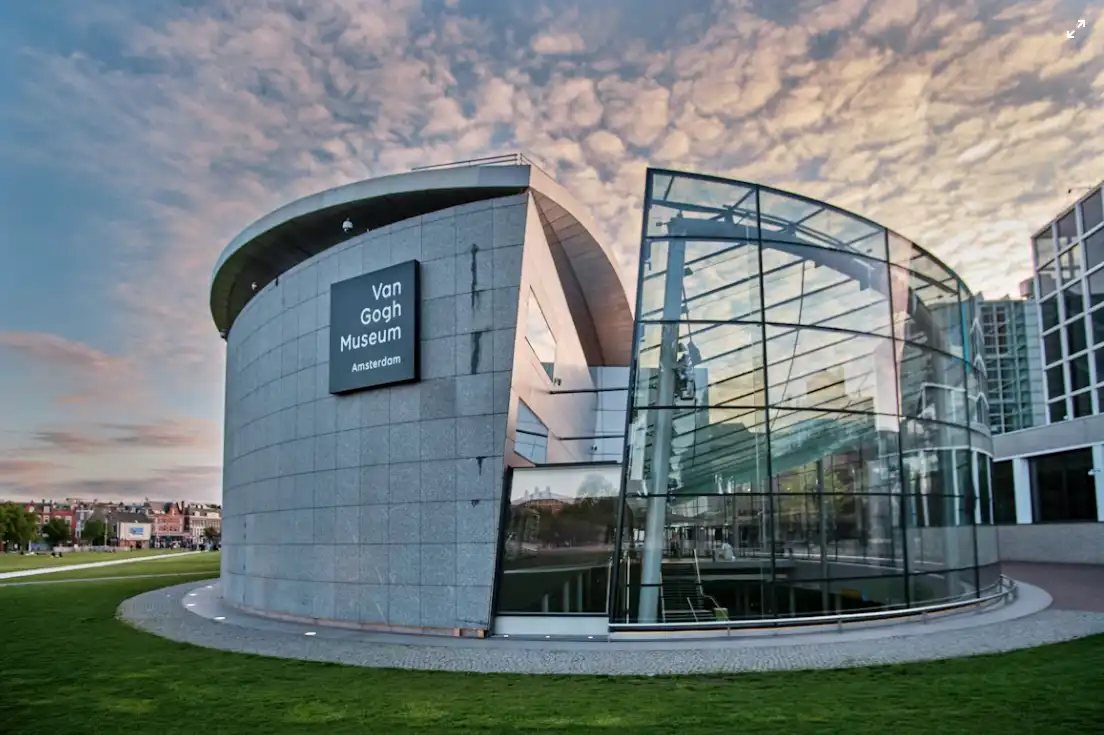
The world's largest Van Gogh collection: 200 paintings, 500 drawings, 700 letters. Tickets 25 euros. Book weeks ahead.
View detailsExplore definitions from our glossary that connect to this museum
Appropriation art borrows existing images and gives them new meaning. From Sherrie Levine to Richard Prince, learn how this strategy reshaped art and copyright law.
Art Deco combined luxury materials with geometric forms to define the look of the 1920s and 1930s. Learn how it shaped skyscrapers, jewelry, and design.
Read more about this topic on our blog
Tate Modern is the world's most-visited modern art museum inside a former power station on the Thames. Discover the Turbine Hall, the Rothko room, and how to navigate it.

Your complete guide to art movements from ancient Egypt to contemporary practice. Understand every major period, its defining ideas, and the artists who shaped it, all in one place.

Understand the distinct eras of Modern vs. Contemporary art — covering timelines, defining movements, key artists, and how each era reflects its historical moment. A practical guide for art enthusiasts.
Tate Modern occupies the former Bankside Power Station on the South Bank, a building designed by Sir Giles Gilbert Scott and transformed by architects Herzog & de Meuron into the most visited modern art museum in the world. The permanent collection is free. No booking required. You can walk in off the street at any time during opening hours and see Picasso, Warhol, Rothko, and Dalí without paying a penny.
Since September 2025, the museum has been open until 9 PM every Friday and Saturday, following a record-breaking 25th birthday weekend that drew 76,000 visitors in three days, 70% of whom were under 35. Director Karin Hindsbo called the late openings a response to the huge demand for gallery access outside regular hours, especially among young Londoners. The last Friday of every month also hosts Tate Modern Lates, with artist talks, workshops, film screenings, live music, and DJ sets.
In 2026, the exhibition program is dominated by three major shows: Frida: The Making of an Icon, Ana Mendieta, and Julio Le Parc, plus the recently opened Tracey Emin: A Second Life.
The permanent collection is spread across two connected buildings: the Boiler House (the original power station conversion) and the Blavatnik Building (the Switch House extension, opened 2016). Both have free displays. Most visitors spend two hours and leave without finding the Rothko Room. Do not be most visitors.
The Rothko Room is in the Boiler House, on Level 3. It houses the Seagram Murals, a series of dark, brooding canvases that Mark Rothko originally created for the Four Seasons restaurant in New York. He withdrew from the commission and eventually gave the paintings to Tate. The room is dimly lit, intentionally, to approximate the viewing conditions Rothko intended. It is the most powerful free art experience in London. Go here first.
From the Rothko Room, explore the thematic galleries on Levels 2 and 4. Unlike most museums that organize chronologically, Tate Modern arranges its collection thematically, grouping works from different periods that share conceptual connections. A Cubist painting might sit alongside a contemporary installation exploring similar questions about representation. This curatorial approach creates unexpected juxtapositions that purely chronological displays cannot.
If time permits, cross to the Blavatnik Building (Levels 0, 3, and 4 have free displays). The Tanks, on Level 0, are a striking space dedicated to live performances and video art, housed in the power station's former oil tanks. The 10th floor viewing gallery offers a 360-degree panorama of London for free.
Tracey Emin: A Second Life (open now through August 31, 2026) is the largest exhibition of Emin's career, with over 100 works including paintings, video, textiles, neon, and sculpture. Admission is £20, £5 for ages 12 to 18, free for members. The show has been widely discussed and marks a significant moment for the British artist.
Frida: The Making of an Icon (June 25, 2026 to January 3, 2027) is the first major Kahlo show in London in over 20 years. Over 30 Kahlo works are displayed alongside approximately 200 works by Diego Rivera and the Mexican muralists. Adult tickets are £25, £5 for Tate Collective members (ages 16 to 25), free for Tate Members. Timed entry is enforced. Book direct on the Tate website. Tickets are already selling fast.
Ana Mendieta (July 15, 2026 to January 17, 2027) presents the powerful work of the Cuban-American artist whose legacy changed the course of contemporary art. Her body art and earth-body sculptures, created in the 1970s and early 1980s, remain radical and influential.
Julio Le Parc (June 8, 2026 to May 3, 2027) is a major survey of the Argentinian-born kinetic artist, a leading figure in contemporary art whose playful, immersive works explore perception, light, and movement.
Theatre Picasso closed in April 2026 after a successful run exploring Picasso's theatrical work.
Tate Modern is the most visited modern art museum in the world, drawing over 5.8 million visitors annually. Against the Museum of Modern Art in New York, it has two advantages MoMA cannot match: free permanent collection admission and a more adventurous thematic curatorial approach. MoMA charges $30 and organizes its collection in a more conventional chronological sequence. Tate Modern lets you walk in for free and confronts you with unexpected juxtapositions.
Against the Centre Pompidou in Paris, Tate Modern has a more dramatic building and a stronger post-1960 collection. The Pompidou has a better collection of early modernism (Cubism, Futurism, Constructivism) and a broader mandate including design and industrial design.
Against SFMOMA in San Francisco, Tate Modern is larger, free for the permanent collection, and has a more international collection. SFMOMA has a deeper photography collection and the Fisher Collection of postwar American art. Both are essential modern art museums, but Tate Modern's free admission gives it an accessibility advantage that SFMOMA cannot match, even with its free public galleries.
The closest parallel is the Guggenheim Museum in Bilbao: both are housed in spectacular converted or purpose-built industrial-scale buildings, both draw massive tourist crowds, and both use architecture as a primary attraction. But Tate Modern's collection is deeper and broader, and its free admission policy makes it a fundamentally different kind of institution.
Use the Blavatnik Building entrance on Park Street, not the Turbine Hall entrance. On weekends, the main Turbine Hall entrance has long queues. The Blavatnik Building entrance on Park Street is usually quieter and gets you in faster.
Tuesday through Thursday mornings are the quietest times. The museum opens at 10 AM. Arrive by 10:15 and you will have the Rothko Room to yourself. Friday and Saturday evenings from 6 PM are also quiet, as the daytime crowds leave and the late-night visitors have not yet arrived.
Free guided tours run daily. Check the board at the information desk on arrival. Free 45-minute permanent collection tours depart several times a day, no booking required.
Tate Collective is free to join for ages 16 to 25. Sign up on the Tate website and you get £5 exhibition tickets. This is the best deal in London museum-going if you are in the age range.
Up to four children aged 11 and under go free per parent or guardian. Children 12 to 18 pay £5 for exhibitions. The permanent collection is free for everyone.
Relaxed hours run on the third Tuesday of every month from 10 to 11 AM. These are quieter sessions for all exhibitions, designed for visitors who prefer a calmer environment.
Getting there: The nearest tube stations are Southwark (Jubilee line) and Blackfriars (District and Circle lines), both about a 10-minute walk. The Tate Boat runs from Tate Britain to Tate Modern every 30 minutes. The Millennium Bridge provides a scenic pedestrian crossing from St Paul's Cathedral directly to the museum's entrance.
Admission: Permanent collection free for everyone, no booking required. Special exhibitions: £20 to £25 for adults, £5 for ages 12 to 18 and Tate Collective members (16 to 25), free for Tate Members and children under 12 (up to 4 per parent). Timed entry for all exhibitions. Last entry is one hour before closing.
Hours: Sunday through Thursday 10 AM to 6 PM. Friday and Saturday 10 AM to 9 PM. Closed December 24 to 26.
Book tickets: tate.org.uk
Everyone. The permanent collection is free, the building is spectacular, and the 2026 exhibition program (Frida Kahlo, Ana Mendieta, Julio Le Parc, Tracey Emin) is the strongest in London. If you have even a passing interest in modern or contemporary art, Tate Modern is not optional. The Rothko Room alone justifies the trip. The Friday and Saturday late openings make it one of the best evening destinations in London. Skip it only if you are morally opposed to free things, in which case you should reconsider your priorities.
Quiet Canvas is a space for artists and art lovers: essays, glossary terms, tools, and curated directories to support your creative practice.
Learn more →


