
The History of Yellow: Van Gogh, Chrome, and a Color That Drove People Mad
Chrome yellow gave Van Gogh his sunflowers but it contained lead and darkened on exposure to light. Discover the history of yellow in art, from Indian yellow to madness.
Your cart is empty
Browse the store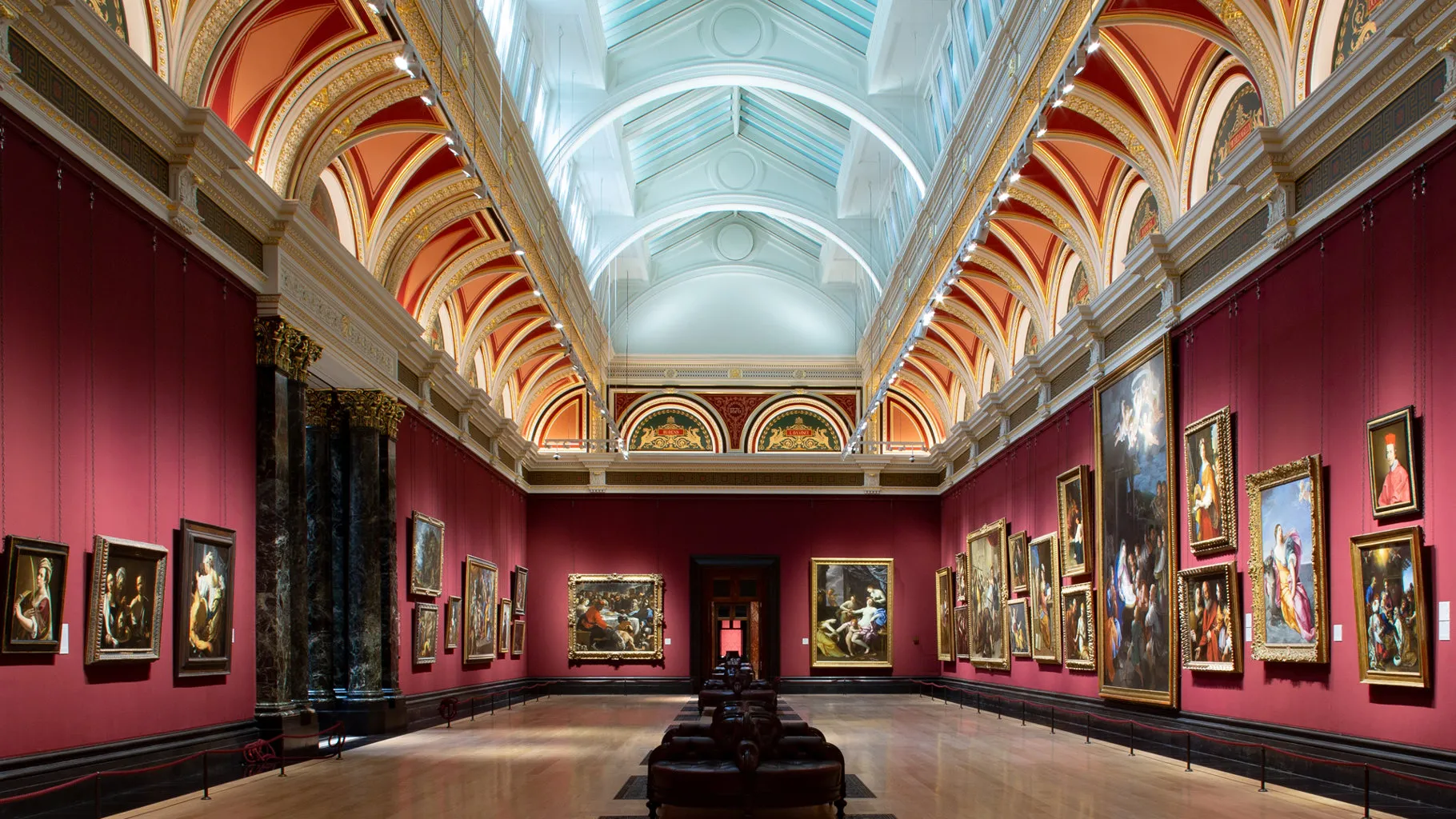
London's National Gallery holds 2,600 Western European paintings from the 13th to early 20th century. Free admission, paid special exhibitions. 2026 features Van Gogh's Poets and Lovers and After Impressionism. Director Gabriele Finaldi.
Discover other museums and cultural institutions you might be interested in
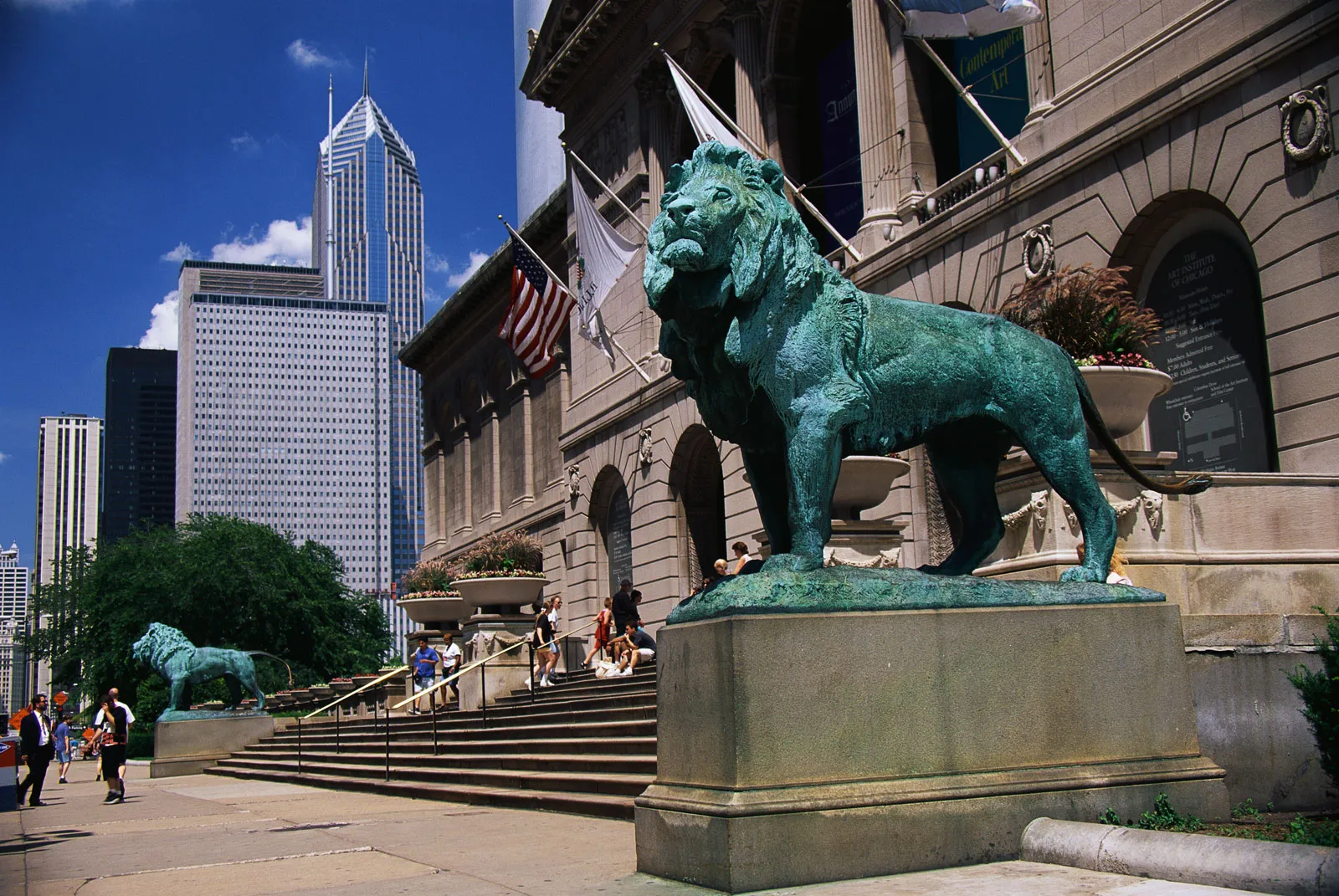
Chicago's encyclopedic art museum with world-class Impressionist holdings, American Gothic, and a planned $50M conservation center opening 2027.
View details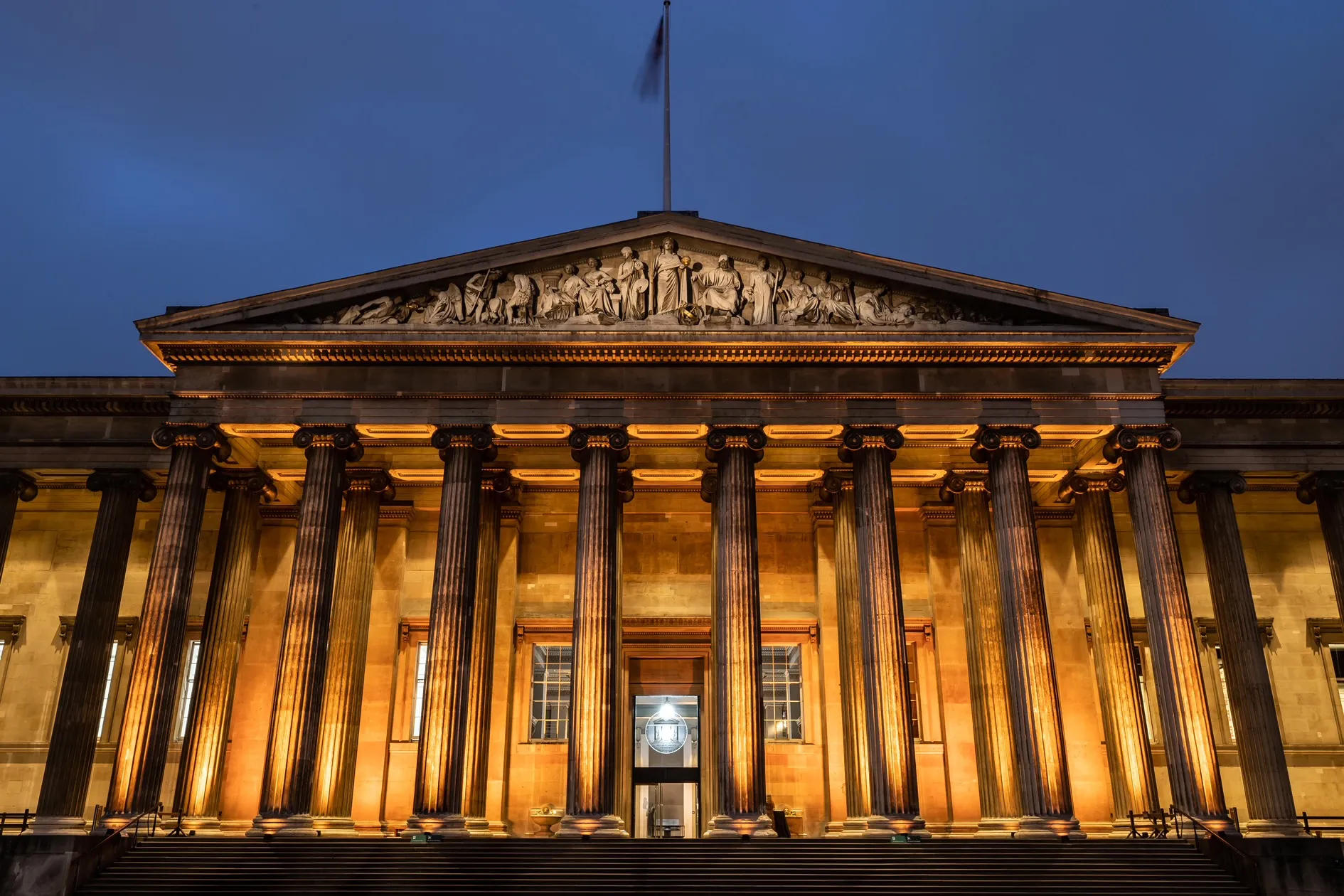
London's free museum of human civilization, home to the Rosetta Stone and Parthenon Sculptures, now navigating theft scandals and label controversies.
View detailsExplore definitions from our glossary that connect to this museum
Complementary colors sit opposite each other on the color wheel and create maximum contrast. From Monet to Van Gogh, learn how artists use this powerful pairing.
Warm colors are reds, oranges, and yellows. From Turner's sunsets to Matisse's red interiors, learn how warm colors advance, energize, and command attention in art.
Read more about this topic on our blog
Chrome yellow gave Van Gogh his sunflowers but it contained lead and darkened on exposure to light. Discover the history of yellow in art, from Indian yellow to madness.

Dürer painted himself as Christ. Rembrandt painted himself 40 times. Cindy Sherman photographed herself as 70 characters. Discover why artists have always painted themselves.

Goya's deafness gave him the Black Paintings. Monet's cataracts turned his water lilies red. Discover how illness has shaped the work of history's greatest artists.
The National Gallery sits in Trafalgar Square at the center of London, exactly where the founders intended it to be: not hidden in an exclusive neighborhood but at the heart of public life. Founded in 1824 when the British government purchased 38 paintings from banker John Julius Angerstein's collection, it now holds over 2,600 paintings spanning the mid-13th century to the early 20th century. Admission to the permanent collection is free. Special exhibitions are paid.
Director Gabriele Finaldi has overseen a period of major transformation. In 2024, the gallery completed the Bicentenary celebrations marking 200 years since its founding, including the opening of Sainsbury Wing improvements and new learning facilities. The gallery welcomes roughly 6 million visitors annually, making it one of the most visited art museums in the world.
The headline exhibition for 2026 is Van Gogh: Poets and Lovers, a major loan exhibition examining Van Gogh's imaginative transformations of literature, friendship, and romance in his paintings. The show brings together works from the National Gallery's own Van Gogh holdings (including Sunflowers and Van Gogh's Chair) with major loans from the Van Gogh Museum in Amsterdam, the Musée d'Orsay in Paris, and other collections worldwide.
The exhibition runs from February 14 to June 7, 2026. Tickets are paid, with timed entry. Book in advance at nationalgallery.org.uk. Expect sellout weekends.
Running from June 25 to September 20, 2026, this exhibition explores how artists in the early 20th century built on and broke from Impressionism. The show connects Cézanne, Van Gogh, and Gauguin to the generation that followed: Picasso, Matisse, Mondrian, Kandinsky. It is a companion piece to the gallery's 2023 exhibition After Impressionism: Inventing Modern Art, expanded with new loans and a fresh curatorial framework.
The National Gallery's collection defines Western European painting. These are the works that shaped how we understand art history.
Van Gogh's Sunflowers is one of the most beloved paintings in the world. The golden flowers in a simple vase seem to glow with inner light. Van Gogh painted sunflowers multiple times, but this version captures his emotional intensity and his unique way of seeing color.
Jan van Eyck's The Arnolfini Portrait (1434) is a masterpiece of Northern Renaissance art. A wealthy merchant and his wife in their home, every detail carrying symbolic meaning. The mirror reflects the artist's signature. The dog symbolizes fidelity. The single candle represents divine presence. The painting is a puzzle that has kept art historians arguing for 600 years.
Turner's The Fighting Temeraire depicts the HMS Temeraire being towed to its final berth for scrapping. The golden sunset against the industrial tugboat is a meditation on the passage of time and the end of an era. Turner voted this Britain's greatest painting in a 2005 BBC poll.
Leonardo da Vinci's Virgin of the Rocks shows the artist's mastery of light, shadow, and psychological depth. Raphael's Madonna of the Pinks combines perfect composition with tender emotion. Titian's Bacchus and Ariadne is a masterpiece of color and movement.
The Dutch Golden Age galleries are exceptional. Rembrandt's self-portraits, Vermeer's domestic interiors, Frans Hals' portraits. The Impressionist and Post-Impressionist galleries include Monet, Renoir, Cézanne, Degas, and multiple Van Goghs.
The Sainsbury Wing, opened in 1991, houses the early Renaissance collection. The Bicentenary improvements completed in 2024 included a reimagined ground-floor entrance, new learning centers, and improved gallery circulation. The project also created a new dedicated space for the gallery's research and conservation programs.
The Sainsbury Wing's early Renaissance galleries are the best place to start a chronological visit. Begin with the 13th-century Italian primitives and walk forward through the centuries to the early 20th-century works on the main floor.
Crowds are intense. Six million visitors a year means the galleries are rarely quiet. The Van Gogh and Impressionist galleries are the worst. Visit at 10 AM when the gallery opens or after 4 PM for smaller crowds. Thursday late opening until 9 PM is the best time.
The building is a patchwork. The gallery combines the original Wilkins Building (1838), the Sainsbury Wing (1991), and various additions. Navigation between sections can be confusing. Pick up a floor plan at the entrance.
The café is expensive. The National Café and National Restaurant are good but pricey. The Espresso Bar is more reasonable. Or step outside to Trafalgar Square where there are cheaper options.
Special exhibition tickets sell out. The Van Gogh exhibition will be extremely popular. Book weeks in advance. Same-day tickets are sometimes available but unreliable.
Against the Thyssen-Bornemisza in Madrid, the National Gallery has fewer paintings (2,600 vs nearly 1,000 but arranged chronologically) but deeper holdings in individual masters. The Thyssen covers a broader chronological range. The National Gallery has more individual masterpieces.
Against the Kunsthistorisches Museum in Vienna, the National Gallery is broader in scope (Western European vs Habsburg collection) but less deep in specific areas. The KHM has the best Bruegel collection in the world. The National Gallery has the best Van Gogh collection outside Amsterdam and Paris.
Against the Museum of Fine Arts, Boston, the National Gallery is free and focused on Western European painting. The MFA charges $30 and is encyclopedic. If you want European painting, the National Gallery is better and cheaper. If you want Japanese, American, and ancient art, the MFA is the choice.
Against the National Gallery of Canada, the comparison is almost unfair. The National Gallery in London has the deepest Western European painting collection in the world. The NGC has a stronger Canadian and Indigenous collection. Both are free (NGC on Thursday evenings, NG London always).
The National Gallery is for anyone who wants to see the canon of Western European painting in one building, for free. The collection is not the largest in the world, but it is the most concentrated. Room after room contains paintings that defined movements, that appear in every art history textbook, that shaped how we understand visual art.
It is not for someone looking for contemporary art. The collection ends at roughly 1900. For contemporary art, go to Tate Modern. And it is not for someone who dislikes crowds. Six million visitors a year means the popular galleries are busy, especially the Van Gogh and Impressionist rooms.
But the free admission, the depth of the collection, the Trafalgar Square location, and the 2026 Van Gogh blockbuster make this one of the great museum experiences in the world. Director Finaldi has used the Bicentenary to reassert the gallery's role as a democratic institution: great art for everyone, at the center of public life, without a ticket fee.
Plan your visit at nationalgallery.org.uk. For more on European art and art education, explore our art schools directory or browse courses on European art history.
Quiet Canvas is a space for artists and art lovers: essays, glossary terms, tools, and curated directories to support your creative practice.
Learn more →


