
The Prado: Spain's National Collection and Why It Matters
The Prado has the world's finest collection of Spanish painting. Discover Velázquez's Las Meninas, Goya's Black Paintings, Bosch's Garden of Earthly Delights, and why it matters.
Your cart is empty
Browse the store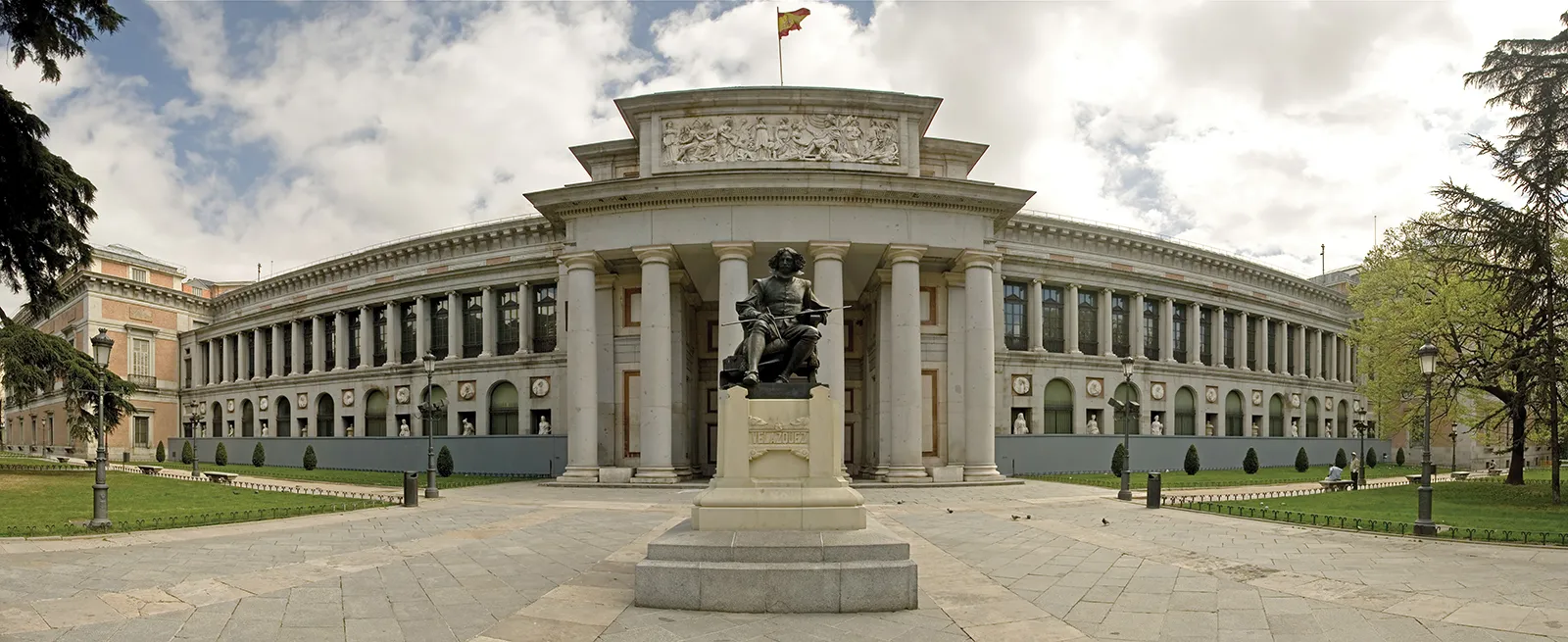
Madrid's Prado Museum holds 8,600 paintings including the world's best Velazquez and Goya collections. In 2026 it celebrates 25 years of transformation with Prado. 21st Century and a major Gothic exhibition.
Discover other museums and cultural institutions you might be interested in

Canada's national art museum in a Moshe Safdie glass building overlooking Parliament Hill. $20 admission, free Thursday evenings. 2026 exhibitions include Qillaniq circumpolar art and Helen McNicoll Impressionism. Director Jean-François Bélisle.
View details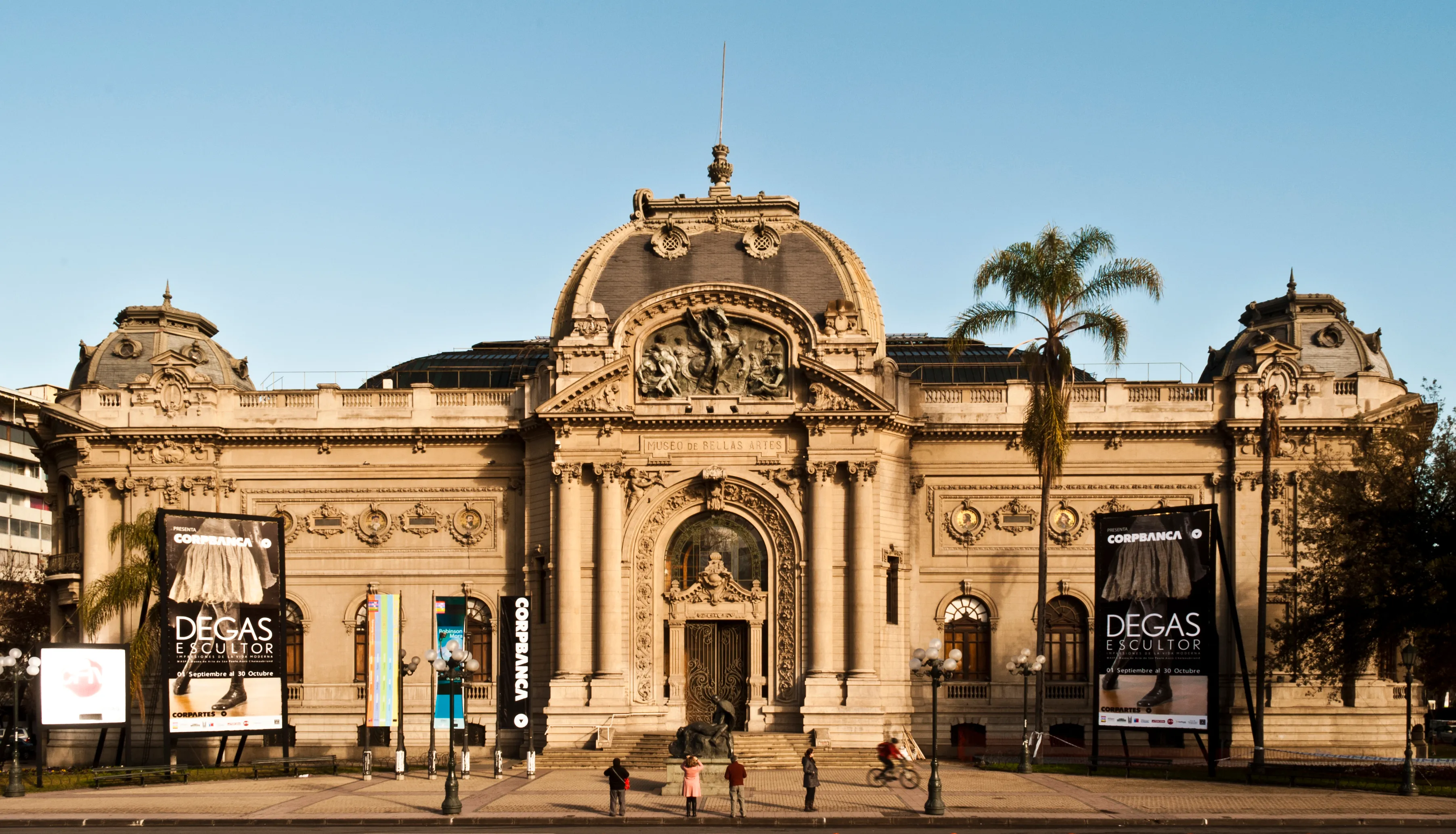
Chile's national art museum had a record 567,000 visitors in 2025 under director Varinia Brodsky, but a cancelled Leon Ferrari exhibition under Kast's government exposes the budget crisis. Free admission. Here is what to see.
View detailsExplore definitions from our glossary that connect to this museum
Old Master refers to European painters of exceptional skill who worked before 1800. From Leonardo to Rembrandt to Velazquez, learn what the term means and why it matters.
Aquatint is an etching technique that produces tonal areas using powdered resin and acid. From Goya's Caprichos to modern printmakers, learn how it works.
Read more about this topic on our blog
The Prado has the world's finest collection of Spanish painting. Discover Velázquez's Las Meninas, Goya's Black Paintings, Bosch's Garden of Earthly Delights, and why it matters.

El Greco moved from Crete to Venice to Toledo and invented a style unlike anything else in Western art. Discover the Greek-born master who became Spain's most visionary painter.

Las Meninas is the most discussed painting in Western art. This guide unpacks what is actually happening in the scene, who everyone in the room is, what the mirror shows, and why Velázquez painted himself into the composition.
The Prado Museum in Madrid holds 8,600 paintings, 700 sculptures, and thousands of drawings and prints. Its strengths are Spanish and Italian art from the 16th through 19th centuries, with the world's finest collections of Diego Velázquez, Francisco de Goya, and Hieronymus Bosch. General admission is €15, but the last two hours before closing are free every day, which means you can see one of the world's great art collections for nothing if you time it right.
In 2026, the Prado is marking 25 years since its most consequential transformation: the 1996-2007 modernization that doubled its exhibition space, created the Jerónimos Building extension, and turned a dusty state institution into one of the most visited museums in Europe. The anniversary exhibition, Prado. 21st Century (June 9 to September 27, 2026), curated by Alfonso Palacio and Elena Cenalmor, traces this transformation through a representative selection of works acquired over the past quarter-century, arranged chronologically and thematically. It is not a victory lap. It is a critical self-assessment of what the museum has become.
Start with Velázquez. The Prado holds over 40 paintings by Diego Velázquez (1599-1660), the largest collection in the world. Las Meninas (1656) is the museum's most famous painting and one of the most analyzed works in Western art history. Velázquez depicts the Infanta Margarita Teresa with her maids of honor, while painting himself into the composition, creating a complex meditation on representation, reality, and the status of the artist that still generates scholarly debate 360 years later. The painting hangs in Room 12, and it draws crowds all day. Arrive at 10 AM if you want to see it without elbowing through a tour group.
Move to Goya. The Prado's Goya collection is the most comprehensive in existence, spanning his entire career from early tapestry cartoons to the harrowing Black Paintings. The Third of May 1808 (1814), depicting the execution of Spanish civilians by Napoleon's troops, is one of the most powerful anti-war paintings ever created. The Black Paintings (1819-1823), painted directly on the walls of Goya's house and later transferred to canvas, are the most disturbing works in the museum: visceral, dark, and psychologically raw, they were never meant for public display, which makes their presence here all the more extraordinary.
Do not skip Bosch. The Garden of Earthly Delights (c. 1490-1510) is the Prado's most enigmatic painting, a triptych depicting Paradise, Earth, and Hell with hallucinatory imagery that has been interpreted as everything from a moral allegory to a psychedelic vision. There is nothing else like it in European painting. It hangs in Room 56A, and it rewards extended viewing. Bring binoculars or use the zoom on your phone camera to see details in the panels that are invisible from the viewing distance enforced by the crowd barrier.
El Greco is also well represented, with works spanning his career in Toledo. The Nobleman with His Hand on His Chest (c. 1580) is a masterpiece of psychological intensity and Mannerist elongation.
The Prado's 2026 program is unusually strong.
Prado. 21st Century (June 9 to September 27, 2026, Rooms C and D, Jerónimos Building) is the headline show, examining the museum's transformation over the past 25 years through recently acquired works, restored paintings, and a review of the museum's publishing, training, restoration, and education departments.
In the Italian Manner: Spain and the Mediterranean Gothic, 1320-1420 (May 26 to September 20, 2026) reveals the impact of Italian art on Spanish Gothic before the Renaissance, a period often overlooked in standard art history narratives.
The Famine Painting (April 27 to September 13, 2026) presents a recently restored work examining famine and its representation in Spanish art.
Valeriano D. Bécquer (1834-1870): The Genre Paintings is currently on view, bringing attention to a painter who is virtually unknown outside Spain but whose genre scenes offer a vivid window into 19th-century Spanish life.
The Prado also hosts El Prado de Noche (Prado by Night) on the first Saturday of each month, with free admission from 8 PM to 11:30 PM. The July 2026 edition has been moved to Saturday July 11, opening the two current summer exhibitions with free entry and limited capacity.
The Prado is one of the three great Old Master galleries of Europe, alongside the Louvre and the Alte Pinakothek. It is smaller than the Louvre (8,600 paintings versus the Louvre's 48,000) but more focused. Where the Louvre attempts to cover all of Western art plus antiquities, the Prado concentrates on Spanish, Italian, and Flemish painting from roughly 1500 to 1800. That narrowness is its strength. No museum in the world can match the Prado's depth in Spanish painting specifically.
Against the Rijksmuseum in Amsterdam, the Prado has a broader European range (Italian and Flemish art alongside Spanish) while the Rijksmuseum is overwhelmingly focused on Dutch art. The Rijksmuseum has Rembrandt and Vermeer; the Prado has Velázquez and Goya. Both are essential.
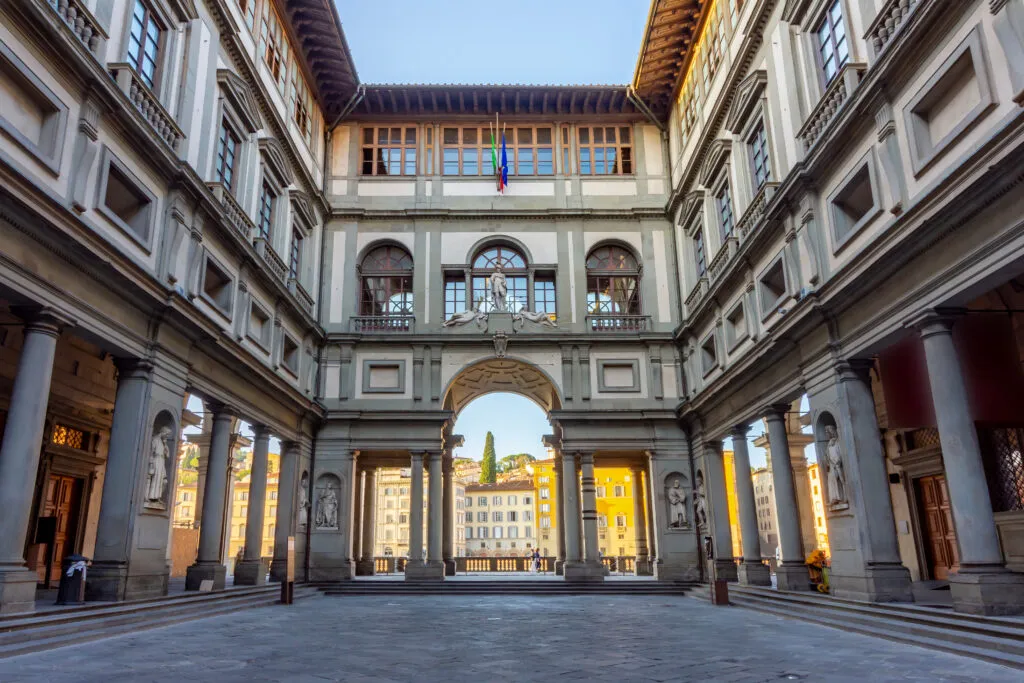
Against the Uffizi Gallery in Florence, the Prado has a later chronological range. The Uffizi is the definitive museum for Italian Renaissance art; the Prado is the definitive museum for Spanish Baroque. If you are doing a European art tour, both are mandatory.
Use the free final two hours. Every day, the last two hours before closing are free. That means 6 to 8 PM Monday through Saturday, and 5 to 7 PM on Sundays. This is the single best free museum opportunity in Madrid. The galleries are quieter in the evening, particularly in summer when the heat has driven day-trippers home.
Book online to skip the queue. The ticket queue at the Velázquez entrance can take 30 to 45 minutes during peak season. Booking online through museodelprado.es costs the same €15 and lets you walk straight in. Audio guides are an additional €5 and cover over 250 works in 15 languages.
Room 12 is the most crowded room in the museum. Las Meninas draws every tour group. Visit it first at 10 AM or last in the final hour before closing. Midday is the worst time.
The Jerónimos Building extension is easy to miss. Connected to the main building by a cloister, the Jerónimos Building hosts temporary exhibitions and has its own entrance. If you are visiting for a special exhibition, check which entrance you need before arriving.
The café is overpriced. There are better options within a 5-minute walk on Calle de Ruiz de Alarcón or in the Retiro Park, which is directly behind the museum.
Getting there: The nearest metro station is Banco de España on Line 2, or Atocha on Line 1. Both are about a 5-minute walk. The museum is on Paseo del Prado, Madrid's central boulevard, within walking distance of the Thyssen-Bornemisza Museum and the Reina Sofía.
Admission: €15 general, €7.50 reduced. Free during the last two hours before closing every day (6 to 8 PM Mon-Sat, 5 to 7 PM Sun). Free for museum members, children under 18, and students 18-25 with ID. Audio guide: €5 additional.
Hours: Monday through Saturday 10 AM to 8 PM. Sundays and public holidays 10 AM to 7 PM. Closed January 1, May 1, and December 25. Reduced hours (10 AM to 2 PM) on January 6, December 24, and December 31.
Book tickets: museodelprado.es
Anyone interested in European painting. The Prado is not optional for a Madrid trip. The Velázquez and Goya collections alone are worth a transatlantic flight, and the Bosch triptych is a once-in-a-lifetime object that no reproduction can prepare you for. The 2026 exhibition program, particularly Prado. 21st Century, adds a layer of institutional self-reflection that regular visitors will appreciate. At €15, admission is mid-range for a European mega-museum, and the free final two hours make it accessible to anyone willing to plan their schedule around it. Skip it only if you have zero interest in pre-1900 painting, in which case the Reina Sofía across the boulevard is your better bet.
Quiet Canvas is a space for artists and art lovers: essays, glossary terms, tools, and curated directories to support your creative practice.
Learn more →


