
Rococo: Frills, Pleasure, and the Art of the French Aristocracy
Rococo was the art of pleasure, intimacy, and aristocratic leisure in 18th-century France. Discover Watteau, Boucher, Fragonard, and the style the Revolution destroyed.
Your cart is empty
Browse the store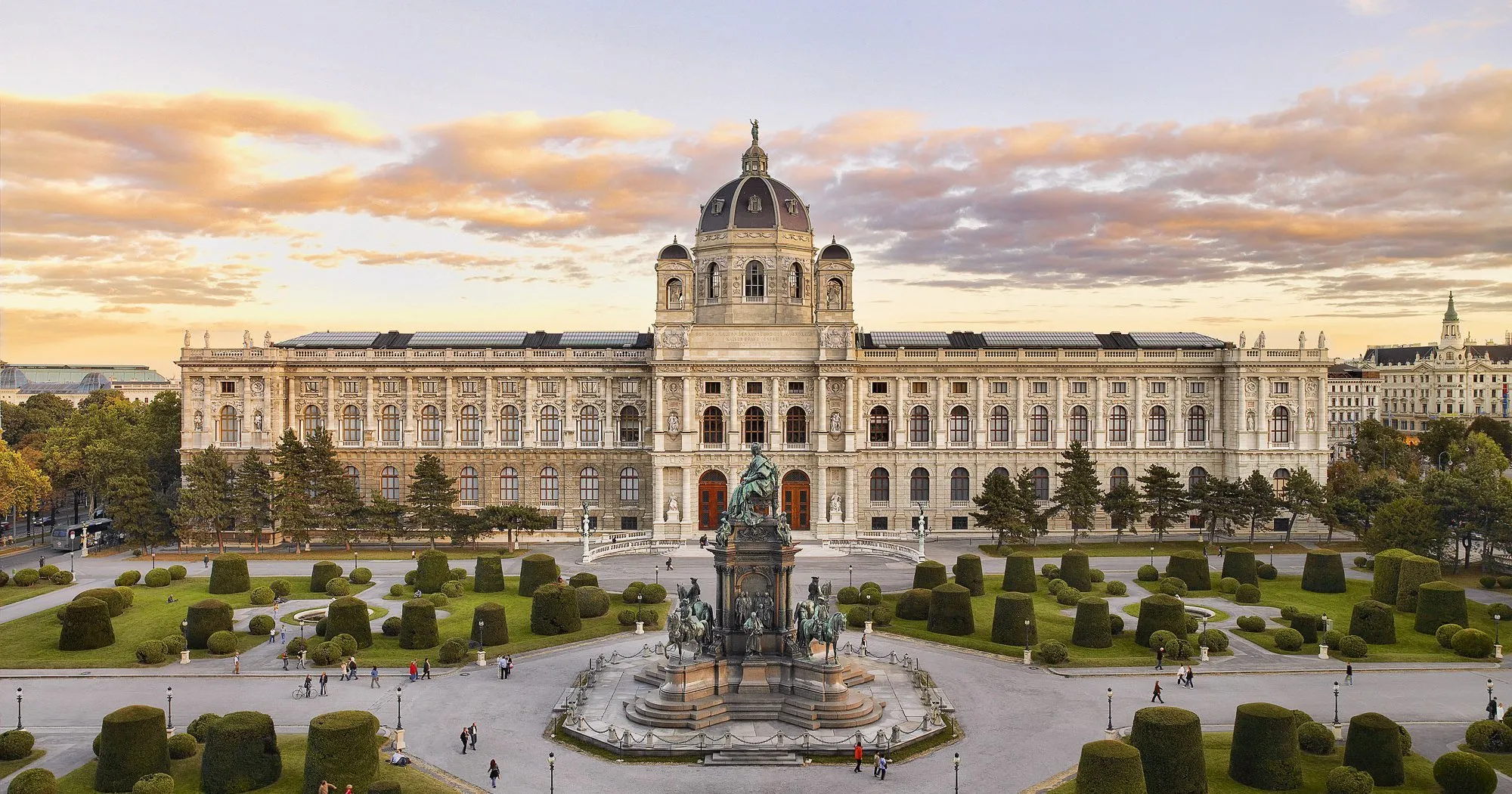
Vienna's imperial art museum holds the world's finest Bruegel collection and Renaissance treasures assembled by the Habsburg dynasty, but recent leadership changes and rising ticket prices make timing your visit more important than ever.
Discover other museums and cultural institutions you might be interested in
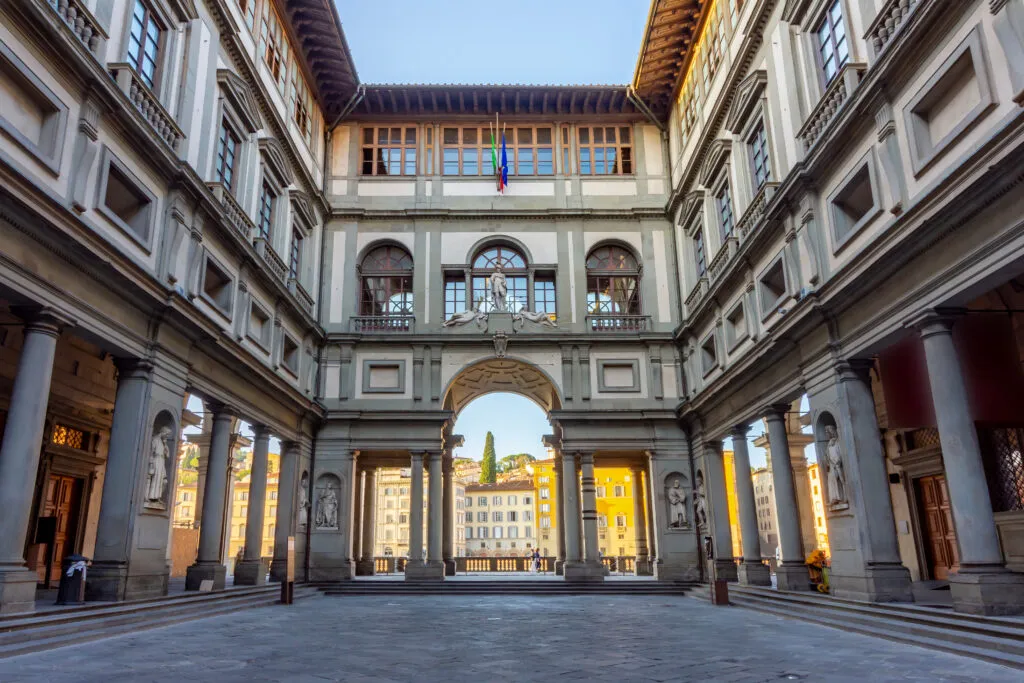
Home to Michelangelo's David and 550 works of Florentine Renaissance art. Tickets cost 20 euros. Book the 8:15 AM slot.
View details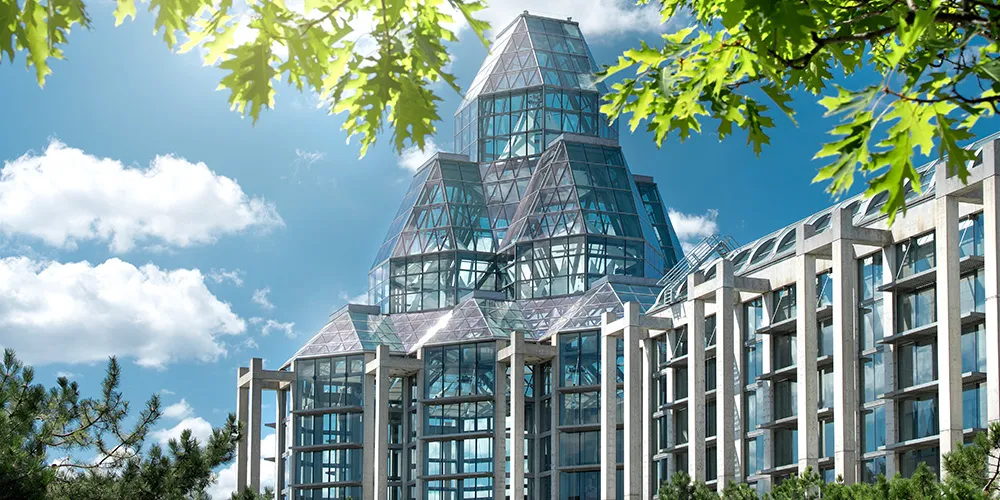
Canada's national art museum in a Moshe Safdie glass building overlooking Parliament Hill. $20 admission, free Thursday evenings. 2026 exhibitions include Qillaniq circumpolar art and Helen McNicoll Impressionism. Director Jean-François Bélisle.
View detailsExplore definitions from our glossary that connect to this museum
The Aesthetic Movement rejected moral messaging in art, pursuing beauty for its own sake. Learn how Whistler, Rossetti, and Wilde reshaped Victorian art and design.
Art Deco combined luxury materials with geometric forms to define the look of the 1920s and 1930s. Learn how it shaped skyscrapers, jewelry, and design.
Read more about this topic on our blog
Rococo was the art of pleasure, intimacy, and aristocratic leisure in 18th-century France. Discover Watteau, Boucher, Fragonard, and the style the Revolution destroyed.

The Arts and Crafts Movement rejected Victorian mass production and championed handmade craft. Explore William Morris, John Ruskin, and the movement that reshaped design.

Embroidery has always been a serious art form. This guide covers its history from medieval ecclesiastical work to contemporary artists using needle and thread on gallery walls, the key figures including Tracey Emin and Ghada Amer, and how embroidery became one of the most politically charged crafts in use today.
Twelve paintings by Pieter Bruegel the Elder. That is what separates the Kunsthistorisches Museum from every other art museum on the planet. You can go to the Prado for Velazquez, the Rijksmuseum for Rembrandt, the Uffizi for Botticelli. But if you want to understand why Bruegel matters, you have to come to Vienna. No other institution holds more than a handful of his works. The KHM has twelve, including the painting that every art historian agrees is one of the greatest landscapes ever made.
The Kunsthistorisches Museum (Museum of Art History) sits on Maria-Theresien-Platz in a Renaissance Revival palace designed by Gottfried Semper and Karl Hasenauer, completed in 1891 to house the imperial art collections. The building faces its twin, the Naturhistorisches Museum, across the square in a symmetrical arrangement that screams Habsburg imperial planning. The KHM welcomed roughly 1.1 million visitors in recent years, which means you can actually get close to the paintings without fighting through the crowds you would face at the Louvre or the Uffizi.
As of 2025, the museum is under new leadership. Jonathan Fine took over as Director General of the KHM-Museumsverband, bringing a fresh curatorial vision to an institution that had been guided by Sabine Haag for years. The transition signals new energy, though some traditionalists are watching carefully to see how the collection is recontextualized.
The KHM's Bruegel Room (Room X on the second floor) is the single greatest concentration of work by Pieter Bruegel the Elder anywhere. Twelve paintings span his career, and several are canonical works that appear in every art history textbook.
Hunters in the Snow (1565) is the one that stops people in their tracks. Hunters returning with tired dogs through a snow-covered village, skaters gliding across frozen ponds below, jagged Alpine peaks in the distance. The painting captures winter so precisely that you can almost feel the cold radiating from the canvas. The combination of panoramic scope and tiny human detail is something no other painter achieved in the 16th century.
The Tower of Babel gives you Bruegel as architectural fantasist: a colossal spiral tower rising above a Flemish harbor, painted with a level of construction detail that suggests he studied masonry firsthand. Peasant Wedding and Peasant Dance show Bruegel observing ordinary people with a warmth and humor that was genuinely radical for his time.
Here is the insider tip: go to the Bruegel Room first. Most visitors start on the ground floor with the Egyptian and classical antiquities and work their way up. If you head straight upstairs when the museum opens at 10 AM, you will often have the Bruegels nearly to yourself for 20 to 30 minutes. By noon, the room fills with tour groups.
The Gemaldegalerie (Picture Gallery) holds one of Europe's finest collections of 15th to 18th century painting. The Italian Renaissance strengths include Raphael's Madonna of the Meadow, a composition so serene it practically defines the High Renaissance ideal. Vermeer's The Art of Painting is here too, one of the largest and most complex works by a painter who produced barely 35 canvases in his entire career.
Caravaggio's David with the Head of Goliath and Madonna of the Rosary show the revolutionary chiaroscuro that upended European painting around 1600. The KHM also holds Velazquez portraits of the Spanish Habsburg royal family, painted when the Spanish and Austrian branches of the dynasty were politically intertwined. You will find major works by Titian, Tintoretto, Veronese, Durer, Cranach, Rubens, Van Dyck, and Rembrandt as well.
Compared to the Prado in Madrid, the KHM's collection is smaller but more intimate. The Prado has roughly 8,000 paintings. The KHM has around 760 in the permanent gallery. But the quality-to-square-foot ratio is staggering. You can see every masterpiece in the Picture Gallery in a single focused three-hour visit, something impossible at the Louvre or the Met.
The Kunstkammer (Chamber of Art and Wonders) reopened in 2013 after a decade-long renovation, and it is unlike anything else in the museum world. This is where the Habsburgs stored the objects they collected to demonstrate their mastery over both nature and human craft.
The star piece is Benvenuto Cellini's Saliera, a gold and enamel salt cellar worth roughly $60 million. It was stolen in 2003 and recovered three years later, a story that adds a layer of notoriety to an already extraordinary object. Beyond the Saliera, you will find carved ivory, rock crystal vessels, scientific instruments, automata, and natural curiosities that reflect the Renaissance obsession with cataloging the wonders of the world.
If you have visited the British Museum or the Met, you have seen encyclopedic collections organized by civilization. The Kunstkammer is different. It is organized by the logic of a single ruling family that wanted to own examples of everything: art, nature, science, and technology. It is a museum of a mindset.
The KHM building is worth your attention even if you never enter a gallery. The grand staircase features paintings by Hans Makart and early decorative work by a young Gustav Klimt in the spandrels above the stairs. These Klimt paintings from the 1880s predate his golden period by two decades and show him working in an academic mode that will surprise anyone who only knows The Kiss.
The octagonal domed hall at the center of the building, with its marble columns and painted ceiling, is one of the most beautiful museum interiors in Europe. The cafe on the first floor, the Cafe im KHM, serves decent Viennese coffee and pastries in a setting that makes you feel like you are dining inside a palace.
The KHM runs an active temporary exhibition program alongside its permanent collection. Recent and current shows include Canaletto and Bellotto (running through 2026), exploring the Venetian view painters whose cityscapes documented 18th century Europe with topographic precision. The museum also presented a special exhibition of works by contemporary digital sculptor Oliver Laric in the Collection of Classical Antiquities, part of a new initiative under Jonathan Fine's directorship to bring contemporary art into dialogue with historical collections.
Admission is €22 if you book online, €24 at the door. Buy online. The €2 savings is small, but the real benefit is skipping the ticket line, which can take 30 minutes on busy days. A reduced ticket is €19 online / €20 on-site. Children and teens under 19 enter free, which is one of the most generous policies among major European museums.
If you plan to visit multiple KHM locations (the main building plus the Weltmuseum Wien, Imperial Treasury, and others), the 7 Museums Pass at €53 for a year is excellent value. The combined ticket for the Treasures of the Habsburgs (KHM plus Imperial Treasury) is €32.
Hours: Tuesday through Sunday, 10 AM to 6 PM. Closed Mondays. Thursday evenings sometimes have extended hours for special exhibitions.
Getting there: The KHM is a 5 minute walk from the Volkstheater U-Bahn station (U2 and U3 lines). The Museumsquartier station (U2) is equally close.
Nearby: The Naturhistorisches Museum across the square is worth a visit if you have time, particularly for its meteorite collection and the Venus of Willendorf. The Hofburg Palace, Vienna State Opera, and the Museumsquartier complex are all within a 10 minute walk.
The KHM is for anyone who wants to see Old Master painting at its absolute peak without the overwhelming scale of the Louvre or the Met. It is the best museum in the world for Bruegel, one of the best for Vermeer, and the Kunstkammer is a singular experience. If you are a painter studying composition, color, or narrative painting, the Bruegel Room alone justifies the trip to Vienna.
The downside? The museum's interpretive materials are still heavily text-based and sometimes only in German. Pick up an audio guide (€4) or use the free KHM app. And if you are looking for modern or contemporary art, this is not the place. The collection stops at the 18th century. For modern art in Vienna, head to the Albertina Modern or the Mumok in the Museumsquartier.
Book your tickets and plan your visit at khm.at.
Quiet Canvas is a space for artists and art lovers: essays, glossary terms, tools, and curated directories to support your creative practice.
Learn more →


