Museo Nacional de Bellas Artes: Free Admission, World-Class Argentine Art, and a Building That Used to Pump Water
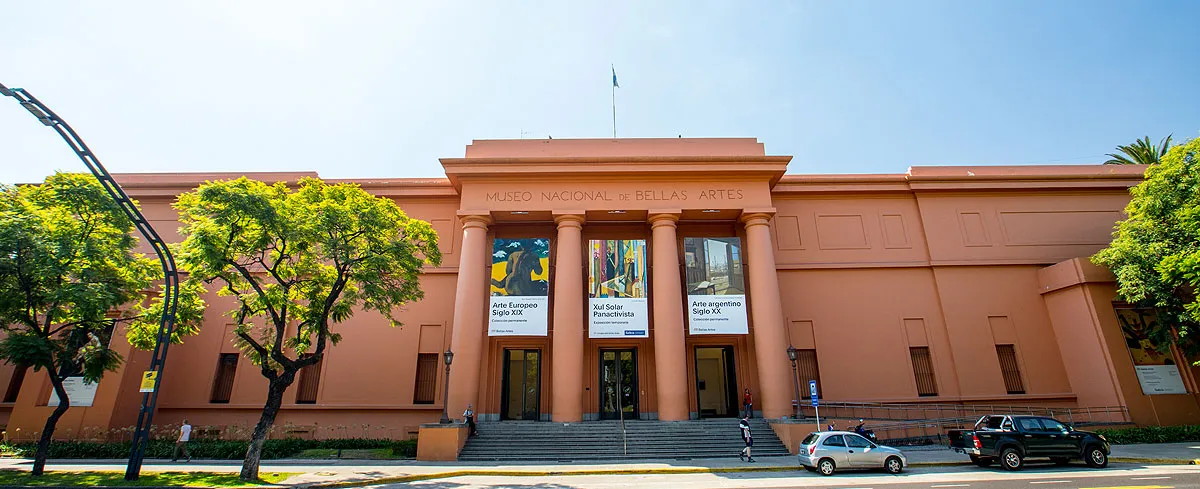
Walk past the MNBA on Avenida del Libertador and you might mistake it for a municipal office building. The structure was originally a water pumping station designed by Julio Dormal, converted into a museum in 1933. That industrial origin explains the low ceilings on the ground floor and the somewhat awkward gallery flow. But step inside and you will find the most comprehensive collection of Argentine art anywhere, plus European paintings that would make many European regional museums jealous. And you will pay exactly nothing to see all of it.
The museum turned 130 in 2025 and marked the occasion with a commissioned drawing by Adriana Bustos titled Carta natal del Museo Nacional de Bellas Artes, on view through November 2026. The anniversary also brought a major exhibition tracing artistic exchanges between Argentina and Spain from 1880 to 1930, running through August 2026. These shows signal an institution trying to reassert its relevance after years of budget constraints and staffing challenges that have left some galleries feeling stuck in time.
Argentine Art: The Real Reason to Visit
The MNBA's Argentine collection is unmatched. If you want to understand how this country developed its visual identity, this is the place.
Antonio Berni's Manifestación (1934) hits you the moment you enter the Argentine galleries. A massive crowd of workers fills the canvas, their faces individually rendered rather than treated as a mass. Berni later invented the character Juanito Laguna, a boy from the shantytowns, and built collages using actual scrap materials from those neighborhoods. The Juanito Laguna series alone is worth the trip.
Xul Solar painted watercolors that look like they came from a parallel universe. Invented alphabets, floating architectures, cosmic symbols. His friend Jorge Luis Borges considered him a kindred spirit. The MNBA holds enough of his work to trace his entire trajectory, and the small scale of the watercolors means you need to get close and spend time with them.
Lucio Fontana is represented by his Spatial Concept series. The slashed canvases are exactly what they sound like: a knife through the picture plane. Born in Argentina to Italian parents, Fontana split his career between Buenos Aires and Milan. Seeing these works in the country of his birth adds a layer that the Fontana collection at Tate Modern cannot match.
The European Collection: Better Than You Expect
Here is where most visitors get surprised. The European holdings include Rembrandt, El Greco, Rubens, Tiepolo, Goya, Manet, Monet, Renoir, Degas, Cézanne, Van Gogh, and Toulouse-Lautrec. Buenos Aires in the late 19th and early 20th centuries was one of the wealthiest cities in the world, and the cultural elite bought accordingly.
The Impressionist and Post-Impressionist galleries are the strongest section. You will find multiple Monets, a Van Gogh, and several Cézannes. Are they the best examples of those artists' work? No. The Van Gogh is minor. But the breadth is genuine, and for a free museum in South America, the depth is remarkable.
What Is Missing and What Needs Work
Here is the honest part. The MNBA has problems that its collection deserves to not have.
Signage is poor. Labels are often in Spanish only, with no English translations. If you do not read Spanish, download the museum's app or bring a guidebook. The audio guide exists but coverage is spotty outside the permanent collection highlights.
Climate control is inconsistent. On hot summer days, some galleries feel stuffy. The building's industrial past limits what can be done with HVAC without major structural work.
Temporary exhibition spaces are limited. The museum has one main temporary exhibition gallery on the first floor, which means it cannot run multiple major shows simultaneously. Compare this to the Museo Nacional de Colombia in Bogota, which has a similar budget profile but has invested heavily in gallery modernization.
The café is basic. Skip it and walk five minutes to Plaza Francia, where the weekend artisan market has food stalls, or head to a café in Recoleta proper.
How It Compares
Against other major South American museums, the MNBA holds its own on collection quality but falls behind on visitor experience. The Museo de Arte Moderno in Mexico City has a smaller collection but a better-designed building and more engaging temporary exhibitions. The Museo Nacional de Colombia offers a stronger historical narrative. But neither of those museums has the MNBA's European holdings, and neither is completely free.
Against European museums, the comparison is less favorable. The National Gallery in London has better European paintings, better facilities, and is also free. But the MNBA's Argentine and Latin American collections are things you simply cannot see in London.
Insider Tips for Visiting
- Go on a Tuesday or Wednesday morning. Weekends bring families and school groups. Weekday mornings are quiet enough to have galleries nearly to yourself.
- Start on the second floor. The Argentine collection is the museum's strength and is displayed upstairs. Work your way down to the European collection on the ground floor.
- Budget two hours minimum. The collection is not huge by international standards, but the density of significant Argentine works means you will spend more time than expected.
- Combine with Recoleta Cemetery. The cemetery is a two-minute walk and is one of Buenos Aires' top attractions. Do both in the same morning.
- Check the exhibition schedule at bellasartes.gob.ar before visiting. Temporary shows can be excellent and are also free.
- The museum closes at 7:30 PM. Last entry is at 7:00 PM. Plan accordingly if you are coming from another attraction.
Final Verdict: Who Is This Actually For?
The MNBA is for anyone who wants to understand Argentine art beyond Botero and Kahlo. It is for travelers who have already hit the major sights in Buenos Aires and want depth. It is not for someone expecting a polished, fully digitized museum experience on par with the Museum of Fine Arts, Boston or the Getty. The facilities are dated, the signage needs work, and the café is not worth your time.
But the collection is real, the admission is free, and the Argentine art on display exists nowhere else in this concentration. If you care about art, skip the café and spend that time in the Berni and Xul Solar galleries. You can get coffee in Recoleta afterward.
Plan your visit at bellasartes.gob.ar. For more on Argentine and Latin American art, explore our art schools directory or browse courses on Latin American art history.