Museo de Arte Moderno, Mexico City: Kahlo, Rivera, and the Muralist Legacy in Chapultepec Park
The Museo de Arte Moderno (MAM) sits inside Chapultepec Park, one of the largest urban parks in the Western Hemisphere, surrounded by trees and walking paths. The building was designed by Pedro Ramírez Vázquez and Rafael Mijares Alcérreca in 1964, the same team responsible for the National Museum of Anthropology nearby. From the outside it looks like a bunker. Inside, the circular gallery layout creates a natural flow that takes you through Mexican modernism in a single loop.
The museum holds over 3,000 works spanning the 1930s through the present, with the core collection focused on the Mexican modernist movement: the muralists, the Surrealists, the abstractionists, and the generations that followed. Admission is 90 MXN (roughly $5 USD) for adults, 45 MXN for students, and free on Sundays. That Sunday free entry is both a blessing and a warning: the museum fills with families, and lines can stretch to 30 minutes.
Frida Kahlo and Diego Rivera: The Headliners
The MAM's most celebrated work is Frida Kahlo's Las dos Fridas (1939), the large double self-portrait depicting two versions of Kahlo seated side by side with exposed hearts connected by a single artery. It is one of the most iconic paintings in modern art history. But the MAM offers more than just this single hit. Kahlo's work here is displayed alongside her contemporaries, so you see her not as an isolated icon but as part of a generation of Mexican painters grappling with identity, politics, and the legacy of revolution.
Diego Rivera is represented with easel paintings rather than murals. The murals are elsewhere: the Secretariat of Public Education, the Palacio Nacional, the Hospital de Jesús. But the Rivera canvases at MAM show his range beyond the monumental wall works, including portraits and landscapes that reveal his technical skill as a painter independent of his political program.
The muralist legacy is the backbone of the collection. David Alfaro Siqueiros, José Clemente Orozco, and Rivera defined Mexican art in the first half of the 20th century. The MAM does not have their murals, but it has their easel work, preparatory drawings, and the work of artists who followed them. If you want to see the actual murals, plan separate visits to the Palacio de Bellas Artes and the Secretariat of Public Education.
Beyond the Muralists: Surrealism and Abstraction
Remedios Varo and Leonora Carrington are the two names most visitors do not expect to find here. Both were European Surrealists who settled in Mexico and produced some of their best work there. Varo's paintings, with their alchemical imagery and meticulous technique, are among the most distinctive works in the collection. Carrington's fantastical compositions draw on Celtic mythology, Mexican folk traditions, and her own Surrealist imagination.
Rufino Tamayo bridges the gap between the muralist generation and the abstractionists. His mix of Mexican subject matter with European and American modernist techniques created a style that is instantly recognizable. The MAM holds enough Tamayo to trace his development from figurative work through his mature fusion of pre-Columbian forms and modernist color.
Gunther Gerzso is the abstractionist worth seeking out. His geometric paintings, influenced by the landscape of Cuernavaca and the legacy of Constructivism, represent a side of Mexican modernism that the muralist narrative tends to overshadow.
What Needs Work
The MAM has problems that its collection deserves better.
The building is showing its age. The concrete exterior has water stains. The skylights leak during heavy rain. Climate control is inconsistent, which is a real problem for a collection that includes light-sensitive works on paper.
Temporary exhibitions are infrequent. The museum runs a limited program of temporary shows, often drawn from its own collection rather than bringing in international loans. Compare this to the MUAC (Museo Universitario Arte Contemporáneo) at UNAM, which has a dynamic temporary exhibition program, or the Museo Jumex, which brings major international contemporary shows to Mexico City. The MAM feels like a permanent collection museum that occasionally remembers to do a temporary show.
Labeling is Spanish-only. No English translations. If you do not read Spanish, bring a translation app or download the museum's information before visiting.
The gift shop is minimal. A few postcards and books, mostly in Spanish. The shop at the nearby Museo Nacional de Antropología is far better.
How It Compares
Within Mexico City, the MAM is one of several art museums competing for attention. The Museo Nacional de Antropología is next door in Chapultepec Park and is the must-see museum in Mexico City, full stop. The Museo Jumex and MUAC have stronger contemporary programs. The Frida Kahlo Museum in Coyoacán has more Kahlo. The Museo Dolores Olmedo has more Rivera and Kahlo in a single collection.
So why visit the MAM? Because it is the one museum that puts Mexican modernism in one place. The Anthropology Museum covers pre-Columbian through colonial. The Jumex covers contemporary. The MAM covers the 20th century, the period when Mexican art was at its most internationally influential. If you want to understand the muralist movement and its aftermath, this is the museum.
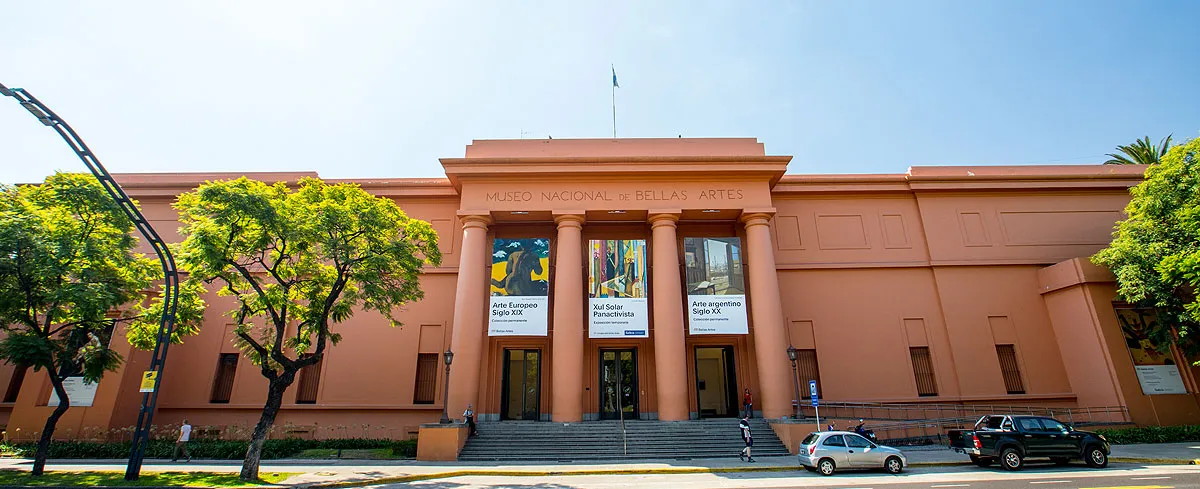
Against the Museo Nacional de Bellas Artes in Buenos Aires, the MAM is smaller and more focused. The MNBA covers a broader chronological range. The MAM goes deeper into a specific period.
Against the Museum of Modern Art in New York, the comparison is almost unfair. MoMA has 200,000 works and a $30 ticket. The MAM has 3,000 works and a $5 ticket. But the MAM has something MoMA does not: the actual Mexican modernist works in the country that produced them, in a building designed by Mexican architects, in a park that has been a cultural site since the Aztec empire.
Insider Tips for Visiting
- Go on a Tuesday or Wednesday. Weekends and Sundays (when admission is free) are the most crowded. Weekday mornings are quiet.
- Budget 90 minutes. The collection is not large. The circular layout means you will naturally see everything without backtracking.
- Combine with the Museo Nacional de Antropología. The Anthropology Museum is a 10-minute walk through Chapultepec Park. Do the MAM first (90 minutes), then the Anthropology Museum (3 hours minimum). That is a full day of museum-going.
- Do not come on Sunday expecting a quiet visit. Sunday is free admission day, and Mexican families take advantage of it. The atmosphere is lively but crowded.
- Bring pesos. The ticket counter may not accept cards, though this has improved in recent years. Better to be safe.
- Visit the Chapultepec Castle while you are in the park. The castle sits on the hill above the museums and offers panoramic views of Mexico City plus historical exhibits.
- Eat outside the museum. The café here is basic. Chapultepec Park has food vendors, and the Condesa and Roma neighborhoods are a 15-minute walk away with excellent restaurants.
Final Verdict: Who Is This Actually For?
The MAM is for visitors who want to understand 20th-century Mexican art in one focused visit. It is not the biggest museum in Mexico City, not the most modern, and not the one with the most famous single artworks. But it is the one that tells the story of Mexican modernism most efficiently.
It is not for someone looking for cutting-edge contemporary art. Go to MUAC or Jumex for that. It is not for someone who only wants to see Frida Kahlo. Go to the Casa Azul in Coyoacán for that. And it is not for someone who only has time for one museum in Mexico City. That museum is the Anthropology Museum, and nothing else comes close.
But if you have already done the Anthropology Museum and want to understand what happened in Mexican art after the revolution, the MAM is the right next stop. At $5 (or free on Sunday), the value is hard to beat. Just bring a translation app and manage your expectations about the building.
Plan your visit at inba.gob.mx. For more on Mexican art and culture, explore our art schools directory or browse courses on Latin American art history.