Art Institute of Chicago: America's Most Underrated Encyclopedic Museum
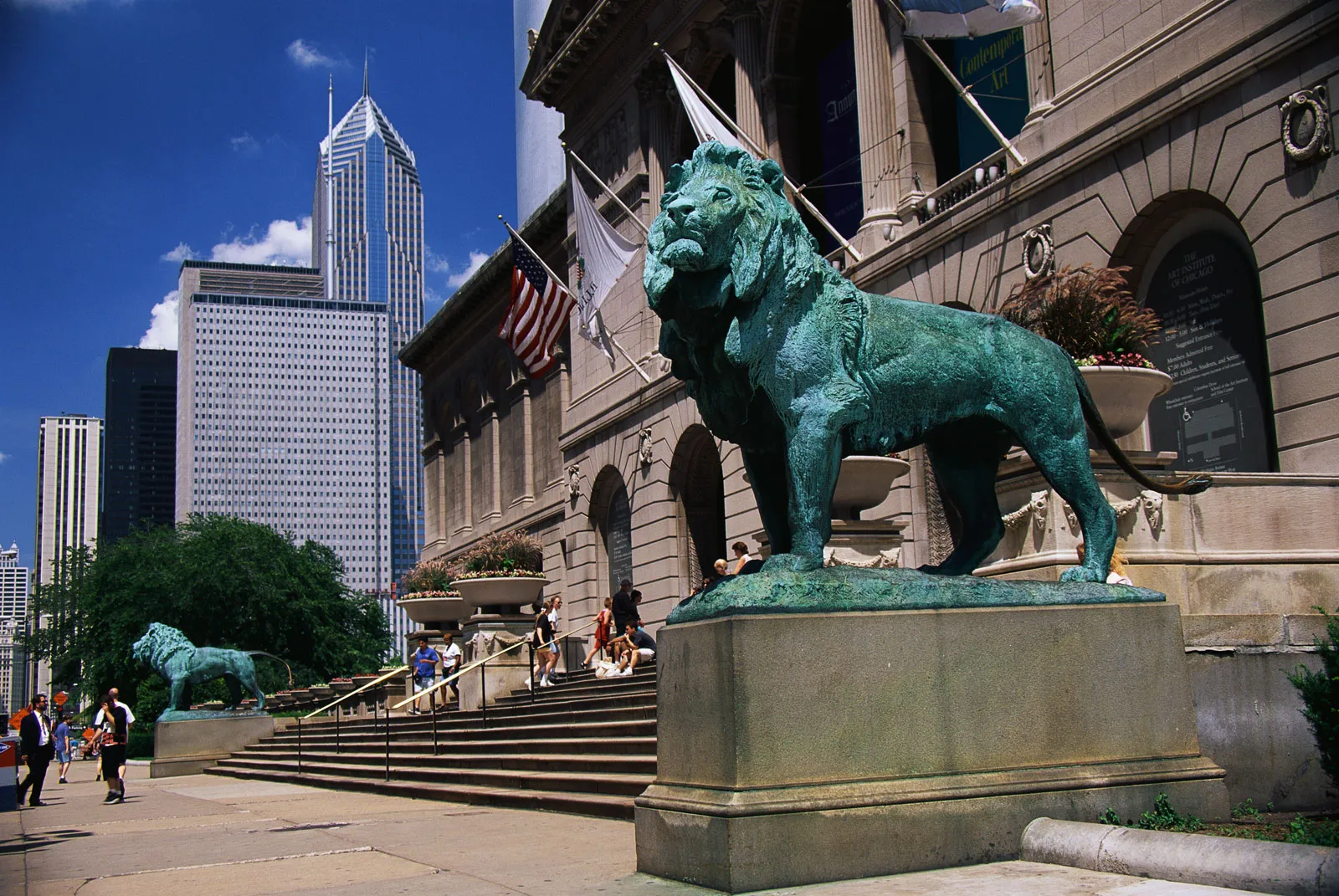
The bronze lions out front have guarded the entrance since 1894, and they are the first thing every visitor photographs. But what is inside the Art Institute of Chicago is more impressive than any exterior sculpture. With over 300,000 works spanning 5,000 years, 11 curatorial departments, and an endowment of $1.12 billion, the Art Institute is the second largest art museum in North America. It consistently ranks among the top museums in the world, and yet it does not get the international visitor numbers of the Met or the Louvre. That is their loss and your gain, because the crowds here are manageable and the collection is extraordinary.
Director James Rondeau marked 10 years at the helm in January 2026, and he is using the moment to push a major expansion agenda. The most visible project is a projected $50 million art conservation center, designed by Barozzi Veiga and set to open in fall 2027. Rondeau has also hinted at a further building expansion, noting that only about 15% of the museum's modern and contemporary collection is currently on view. The museum acquired approximately 1,000 new works per year during his tenure, including a major gift of 200 paintings, 50 sculptures, and nearly 2,000 drawings from collectors Jeffrey and Carol Horvitz in early 2025.
The Impressionist Collection: Better Than the Met's
That is a bold claim, but the Art Institute's French Impressionist and Post-Impressionist holdings can go toe-to-toe with any museum outside Paris. The collection includes multiple Monet Water Lilies paintings, his haystacks, and works from every period of his career. Georges Seurat's A Sunday on La Grande Jatte is the standout, a 7-by-10-foot canvas painted entirely in tiny dots of pure color that you need to see up close to fully appreciate. The painting sits in its own gallery and draws crowds that rival those around the Mona Lisa at the Louvre, though the atmosphere here is calmer.
Renoir, Degas, Pissarro, and the rest of the Impressionist pantheon are represented with major works. The collection traces the movement from its radical beginnings in the 1860s through its mature phase and into Post-Impressionism, where Cezanne, Van Gogh, and Gauguin pushed the boundaries further.
American Gothic and Nighthawks: Two Paintings That Define America
The Art Institute holds two of the most reproduced paintings in American art. Grant Wood's American Gothic (1930) hangs in the American galleries, and seeing it in person is a different experience from seeing it on a coffee mug. The painting is smaller than you expect, and the facial expressions are sharper. Wood's original intent was more complex than the popular reading as a straightforward celebration of rural American values. The painting has been read as satire, as homage, and as both simultaneously, and the ambiguity is part of what makes it endure.
Edward Hopper's Nighthawks (1942) is in the same wing. Four figures in a brightly lit diner on a dark street corner, painted with a precision that makes the loneliness palpable. If you have ever felt alienated in an American city, Hopper painted your experience 80 years before you lived it.
Georgia O'Keeffe's monumental flower paintings round out the American collection, along with works by John Singer Sargent, Mary Cassatt, and Winslow Homer.
The Thorne Miniature Rooms: Weird and Wonderful
The Thorne Miniature Rooms are the Art Institute's most unexpected attraction. Sixty-eight miniature room settings, built at a scale of one inch to one foot by Narcissa Niblack Thorne in the 1930s and 1940s, recreate European and American interiors from the 13th century to the 1930s. The craftsmanship is obsessive. Tiny furniture, miniature paintings, scaled-down wallpaper. Kids love them. Adults love them. They are the kind of thing you would never seek out but cannot stop looking at once you find them.
The Modern Wing and What Is Missing
Renzo Piano's Modern Wing, opened in 2009, provides naturally lit galleries for modern and contemporary art. The flying-carpet roof canopy filters light into the galleries below, creating one of the best viewing environments for 20th-century art in any American museum. Picasso, Matisse, Pollock, Rothko, and Warhol are all represented.
But here is the problem Rondeau has been vocal about: only 15% of the modern and contemporary collection is on view. The museum's Surrealist holdings are barely represented. This is why a further expansion is under discussion, and why the conservation center is only the first step in a larger master plan by Barozzi Veiga, the Spanish firm Rondeau hired in 2017 to rethink the entire museum.
The 2026 Exhibition Schedule
The Art Institute's 2026 program spans ancient to contemporary. Matisse's Jazz: Rhythms in Color (March 7 to June 1, 2026) explores the artist's celebrated paper cut-out technique. Korean National Treasures: 2,000 Years of Art (March 7 to July 5, 2026) is a rare chance to see Korean cultural heritage outside Korea. Willem de Kooning Drawing (June 14 to September 20, 2026) is the first major exhibition to examine the artist's drawing practice and his first solo show at the Art Institute since 1969.
In the second half of 2026, the museum presents a Mary Cassatt exhibition exploring her most innovative compositions, a Jill Mulleady painting show, and the first retrospective of Beatriz Gonzalez, one of Latin America's most renowned contemporary artists. Embroidered Traditions from Morocco to Afghanistan (May 2, 2026 to January 25, 2027) is the museum's first exhibition devoted to Southwest Asian and North African textile traditions.
How It Compares
The Art Institute is the second largest art museum in North America after the Metropolitan Museum of Art. It has a stronger Impressionist collection than the Met and a more cohesive American art holding. Where the Met wins is breadth: its global scope across 17 departments dwarfs the Art Institute's 11. The Museum of Modern Art has deeper 20th-century holdings but a narrower time range.
Against the Getty Museum in Los Angeles, the Art Institute wins on collection depth but loses on setting. The Getty's hilltop campus and free admission are hard to beat. But the Art Institute's location on Michigan Avenue, flanked by Grant Park and Millennium Park, puts it at the center of Chicago's cultural life in a way that the Getty's relative isolation cannot match.
Insider Tips
Go on a Tuesday or Friday evening. The museum is open until 8 PM on both days, and the late hours are significantly less crowded than daytime weekends.
Free Winter Weekdays for Illinois residents. Through late February, Illinois residents get in free on weekdays. If you live in Chicago, this is the best deal in the city.
The Thorne Miniature Rooms are in the lower level. They are easy to miss if you do not look for them. Ask a guard for directions if you get lost.
The Modern Wing has the best natural light. If you are photographing art (without flash), the Renzo Piano galleries give you the most even illumination.
Eat at the Terzo Piano. The third-floor restaurant in the Modern Wing is run by Tony Mantuano, a James Beard Award winner. It is better than museum food has any right to be. Reservations recommended.
Practical Information
Admission: $32 adults, $26 students and teens (14-17), free under 14. Chicago residents pay $20. Free Winter Weekdays for Illinois residents through February 27.
Hours: Monday to Sunday, 10:30 AM to 5 PM. Tuesdays and Fridays until 8 PM. Saturdays and Sundays from 10 AM.
Getting there: 111 South Michigan Avenue. The museum is across from Millennium Park. Nearest CTA stations are Adams/Wabash (Brown/Green/Orange/Pink lines) and Monroe (Blue/Red lines).
Book tickets: artic.edu
Final Verdict: Who Is This Actually For?
Anyone who cares about Impressionist painting, American art, or encyclopedic museums. The Art Institute has the best Impressionist collection in North America, two of the most iconic American paintings ever made, and a Renzo Piano wing that is worth the visit on its own. It is less overwhelming than the Met and more comprehensive than MoMA. If you are in Chicago and you skip it, you have wasted your trip.