The Egyptian Museum, Cairo: What Is Left After the Gold Moved Out
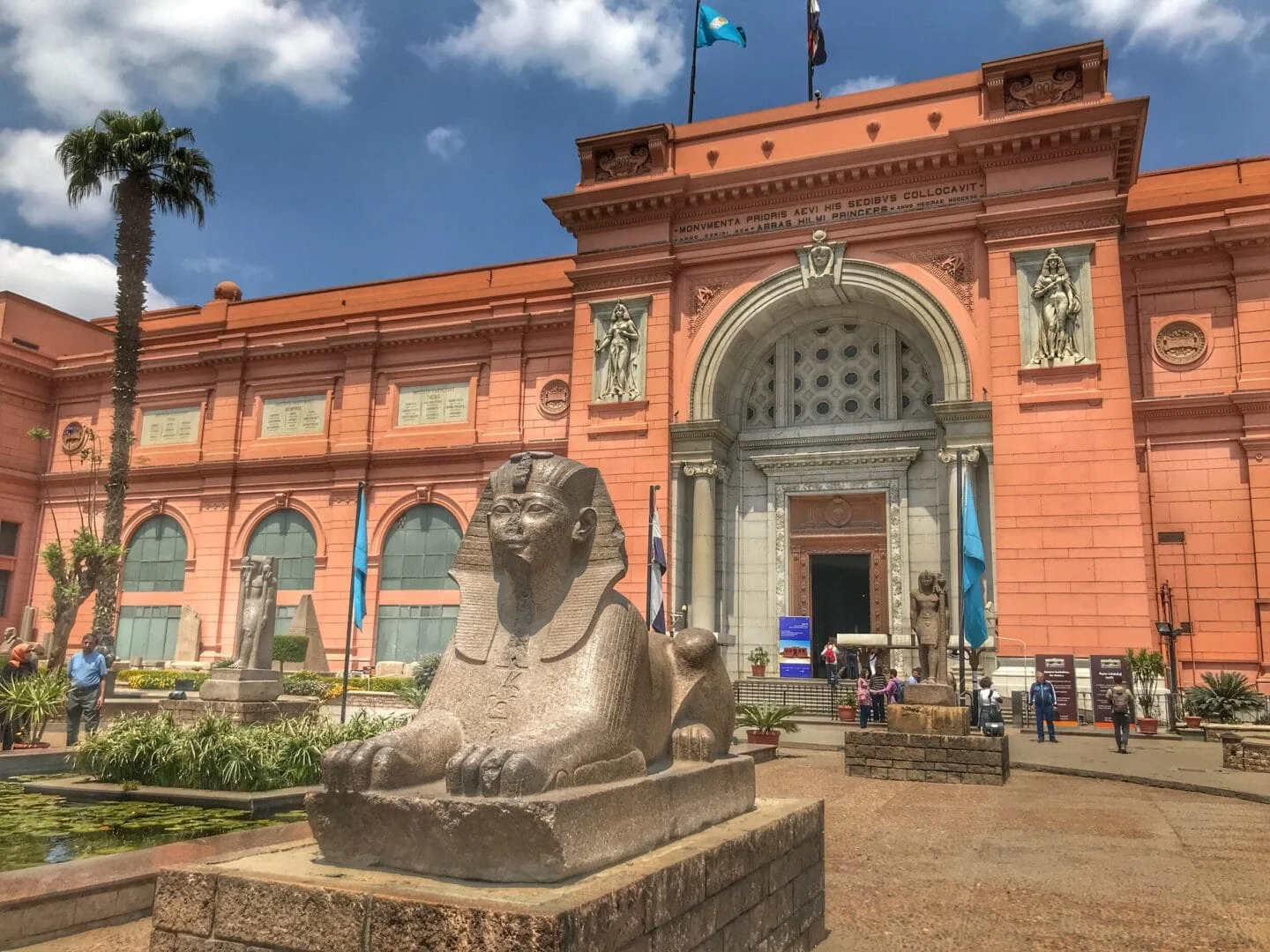
The Egyptian Museum in Tahrir Square opened in 1902, a beaux-arts building designed by French architect Marcel Dourgnon to house the world's largest collection of ancient Egyptian artifacts. For over a century, it was the undisputed champion of Egyptology. If you wanted to see the gold mask of Tutankhamun, the royal mummies, or the Narmer Palette, you came here.
Then the Grand Egyptian Museum (GEM) opened on November 4, 2025, 2 kilometers from the Giza pyramids, and everything changed.
The GEM now holds the complete Tutankhamun collection: all 5,398 objects from the tomb, displayed together for the first time since Howard Carter discovered them in 1922, in a 7,500-square-meter gallery that is six times the size of the old Tutankhamun hall at the Tahrir museum. The 3,200-year-old, 11.36-meter statue of Ramesses II that once greeted visitors at Cairo's main train station, then stood in the museum's entrance, has been relocated to the GEM's entrance courtyard. The 4,500-year-old funerary boat of Khufu is at the GEM too.
So what is left at the Egyptian Museum in Tahrir? And is it still worth visiting?
What Remains in Tahrir
The short answer is: a lot. The museum still holds over 120,000 artifacts, though the most famous pieces have migrated to Giza. What remains includes:
The Royal Mummy Collection was relocated to the National Museum of Egyptian Civilization (NMEC) in 2021, so do not come to Tahrir expecting mummies. This is the most common visitor disappointment. If mummies are your priority, go to NMEC in Fustat instead.
Pre-dynastic and early dynastic artifacts remain, including the Narmer Palette (circa 3100 BC), a shield-shaped stone carved on both sides that depicts the unification of Upper and Lower Egypt under King Narmer. This is one of the most important single objects in Egyptian archaeology, a political document, an artistic masterpiece, and a historical record all in one.
Old Kingdom artifacts from the pyramid age, including statues of Khafre and Menkaure, give you a sense of the artistic sophistication of the pyramid builders. The Meidum Geese fresco, dating to around 2600 BC, is one of the earliest surviving examples of Egyptian painting and shows three species of geese rendered with a naturalism that still feels modern.
Middle Kingdom and New Kingdom objects that were not part of the Tutankhamun collection remain, including statuary, jewelry, and everyday objects that give you a picture of Egyptian life that the GEM's focus on kingship and monumental art does not always capture.
The Building Itself
The 1902 building is worth appreciating on its own terms. The central atrium, surrounded by two floors of galleries, was designed to impress visitors with the scale of Egyptian civilization. The architecture is solid, formal, and slightly faded, which gives it a certain authenticity that the GEM's high-tech spaces cannot replicate. There is something to be said for seeing ancient objects in a building that is itself over 120 years old, with dust motes in the afternoon light and wooden display cases that look like they have not been changed since the 1930s.
But that authenticity cuts both ways. The air conditioning is inconsistent, the labeling is often minimal or outdated, and the layout can be confusing. The GEM was designed to solve all of these problems, and it does. The question is whether you value polished presentation over historical atmosphere.
The Transition Period
The Egyptian Museum in Tahrir is in the middle of a redefinition. With the GEM absorbing the blockbuster artifacts, the Tahrir museum is being repositioned as a museum of pre-dynastic, Old Kingdom, and Middle Kingdom art, with a focus on objects that complement rather than compete with the GEM's collection. The transition is ongoing, and some galleries may be closed or reorganized as artifacts continue to be transferred.
Director Ali Abdel Halim announced in late 2025 that the Tutankhamun Hall was permanently closed, with remaining items being transferred to the GEM. The canopic chest, the gilded wooden shrine of Anubis, and the golden throne have all been moved. The gold mask was one of the last items to go.
How It Compares
The Egyptian Museum in Tahrir is now the second most important Egyptian archaeology museum in Cairo, after the GEM. But it is not the only alternative. The National Museum of Egyptian Civilization (NMEC) in Fustat holds the royal mummy collection, including the mummies of Ramses II, Hatshepsut, and Thutmose III, displayed in climate-controlled galleries that give them the dignity they deserve.
If you are choosing between the three, here is the hierarchy: the GEM for Tutankhamun, monumental sculpture, and the full sweep of Egyptian civilization. NMEC for mummies and the cultural context of Egyptian life. The Egyptian Museum in Tahrir for pre-dynastic art, Old Kingdom statuary, and the experience of seeing Egyptian artifacts in a historic museum building.
Against international peers, the British Museum in London holds significant Egyptian artifacts, including the Rosetta Stone, but the GEM has now surpassed both institutions for the depth and quality of its Egyptian collection. The Istanbul Archaeology Museum holds Egyptian artifacts from the Ottoman-era collection, though on a much smaller scale.
Insider Tips
Go to the GEM first, then come here. If you see the GEM first, you will appreciate the Tahrir museum for what it is rather than being disappointed by what it is not. If you come here first, you will spend the whole visit wondering where the Tutankhamun treasures are.
The upper floor has the best objects that remain. The jewelry collection, in particular, is extraordinary and often overlooked by visitors who head straight for the empty Tutankhamun hall.
Hire a licensed guide. The labeling is inconsistent, and a good guide will tell you which objects are still here and which have been moved. Without one, you may waste time looking for things that are now at the GEM.
Combine with a visit to NMEC. If you want the full Cairo Egyptology experience, you need three museums: GEM, NMEC, and Tahrir. Budget a full day for the GEM, a half day for NMEC, and a half day for Tahrir.
Practical Information
Admission: 400 EGP (approximately $8 USD) for the main museum. Additional tickets for the mummy room at NMEC.
Hours: Daily 9 AM to 5 PM. Last entry at 4 PM.
Getting there: Tahrir Square, Cairo. Nearest metro station is Sadat (Lines 1 and 2), directly beneath the square.
Book tickets: egyptianmuseum.org
Final Verdict: Who Is This Actually For?
People who have already been to the GEM and want more. People who prefer historic museum buildings over purpose-built modern facilities. People who want to see the Narmer Palette, the Meidum Geese, and Old Kingdom statuary. If you only have time for one Egyptian museum in Cairo, go to the GEM. If you have time for two, add NMEC for the mummies. If you have time for three, come here. The Egyptian Museum in Tahrir is no longer the main event, but it is still worth a visit for anyone who understands what they are walking into: a 120-year-old museum in the middle of a transition, holding some of the most important artifacts from the first civilization on Earth.