
The Complete Guide to Art Movements: A Timeline from Ancient to Now
Your complete guide to art movements from ancient Egypt to contemporary practice. Understand every major period, its defining ideas, and the artists who shaped it, all in one place.
Your cart is empty
Browse the store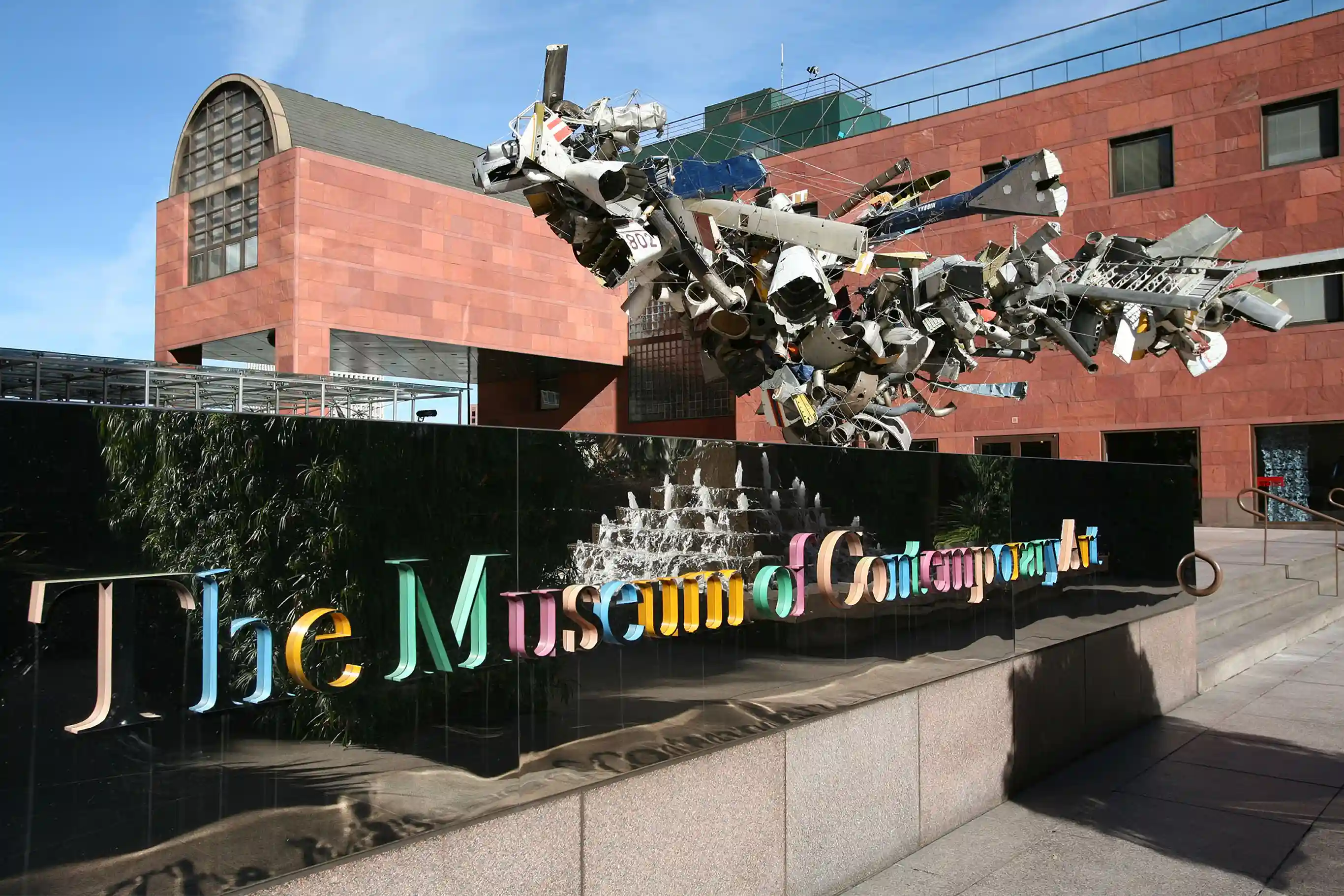
LA's only museum dedicated exclusively to contemporary art is free, in leadership transition after Johanna Burton's 2025 departure, and running the most talked-about exhibition in America: MONUMENTS, a confrontation with Confederate statues.
Discover other museums and cultural institutions you might be interested in
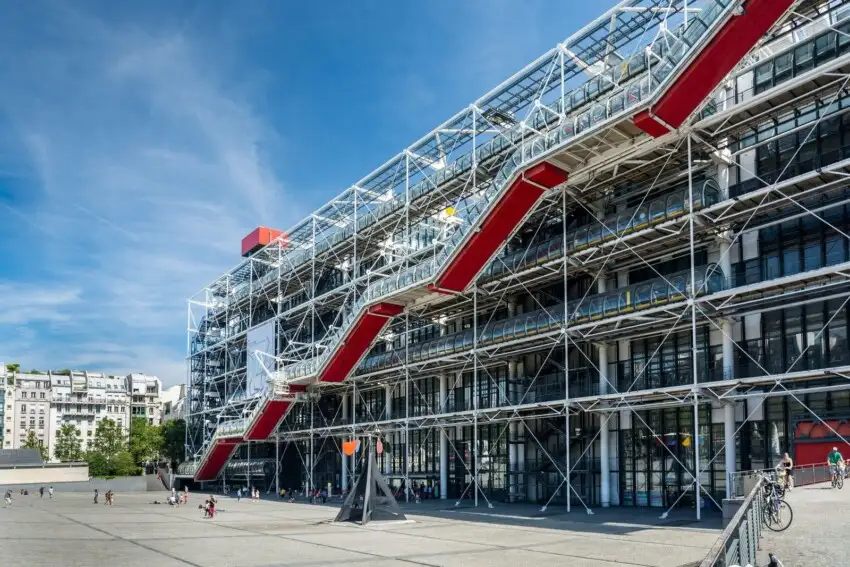
Paris's inside-out modern art museum, closed for renovation until 2030. Its collection tours globally via the Constellation program.
View details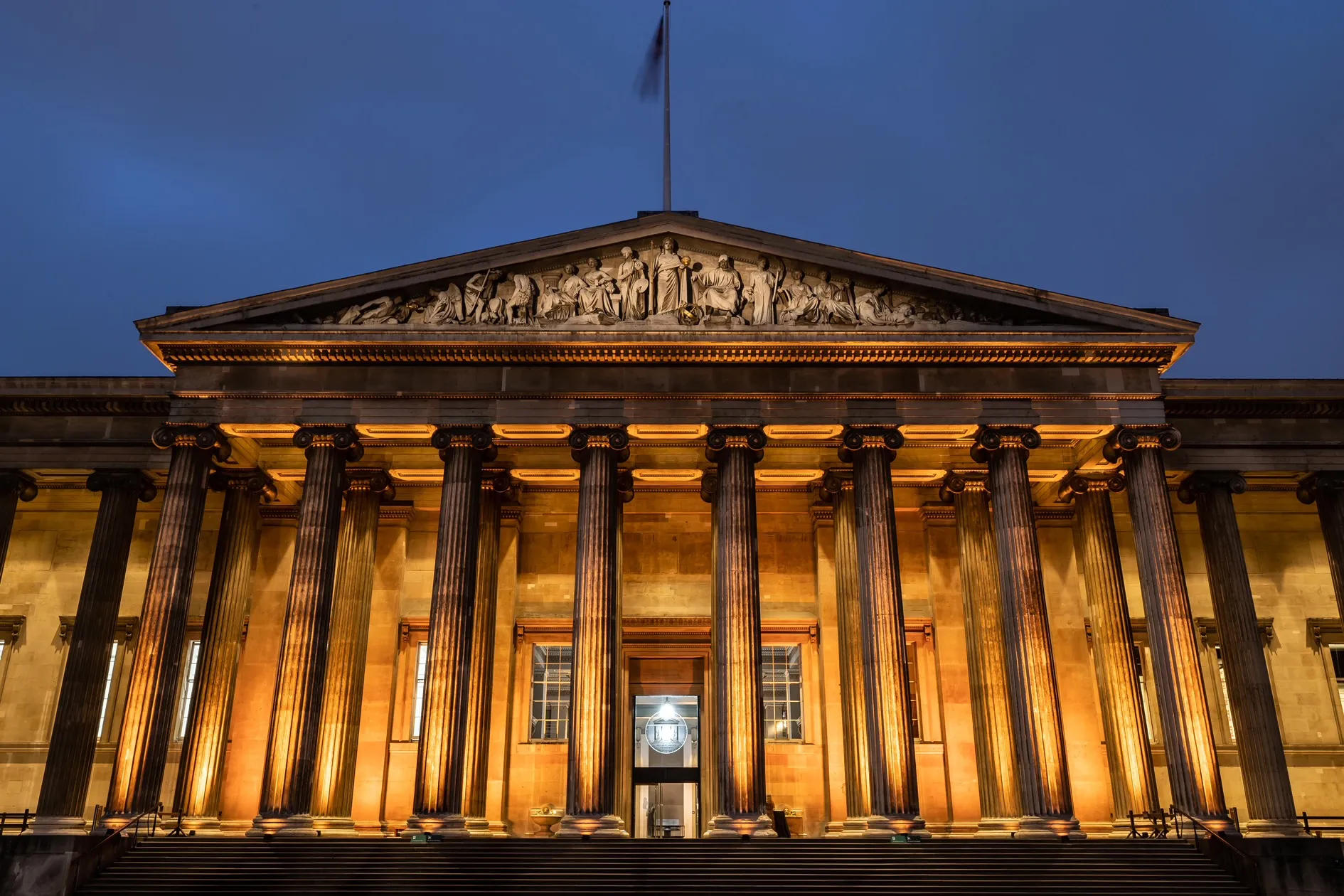
London's free museum of human civilization, home to the Rosetta Stone and Parthenon Sculptures, now navigating theft scandals and label controversies.
View detailsExplore definitions from our glossary that connect to this museum
Appropriation art borrows existing images and gives them new meaning. From Sherrie Levine to Richard Prince, learn how this strategy reshaped art and copyright law.
Art Deco combined luxury materials with geometric forms to define the look of the 1920s and 1930s. Learn how it shaped skyscrapers, jewelry, and design.
Read more about this topic on our blog
Your complete guide to art movements from ancient Egypt to contemporary practice. Understand every major period, its defining ideas, and the artists who shaped it, all in one place.

Understand the distinct eras of Modern vs. Contemporary art — covering timelines, defining movements, key artists, and how each era reflects its historical moment. A practical guide for art enthusiasts.

David Hockney at 88 is still one of the most original painters alive. From Bradford to LA pools to iPad paintings in Normandy, here is his story.
The Los Angeles Times called it "the most significant show in an American art museum right now." MONUMENTS, running at The Geffen Contemporary at MOCA through May 3, 2026, brings together decommissioned Confederate monuments with contemporary artworks by 19 artists including Kara Walker, Stan Douglas, and Titus Kaphar. Co-organized with The Brick (formerly the ICA LA), the exhibition confronts the legacy of post-Civil War monument removal with a directness that no other major American museum has attempted. It is exactly the kind of show MOCA should be making.
The museum is also in transition. Director Johanna Burton left in August 2025 to lead the ICA Philadelphia at the University of Pennsylvania. Ann Goldstein, who joined MOCA in 1983 and rose to senior curator over 26 years before leading the Stedelijk Museum in Amsterdam and working at the Art Institute of Chicago, returned as Interim Director. The board has launched a comprehensive international search for the next permanent director. Goldstein's deep institutional knowledge makes her the ideal steward during this period, but the question of who takes the permanent role will shape MOCA's direction for the next decade.
MOCA is Los Angeles's only museum dedicated exclusively to contemporary art, defined as work made from 1940 to the present. The permanent collection holds over 7,500 works spanning painting, sculpture, photography, video, installation, and performance. General admission is free for all visitors at MOCA Grand Avenue, courtesy of board chair Carolyn Clark Powers. This has been the policy since 2020, and it transformed MOCA from a ticketed institution into a genuinely public resource.
MOCA operates across two main venues (the third, the MOCA Store on Sunset Boulevard, is a retail presence). MOCA Grand Avenue is the main building, designed by Pritzker Prize-winning architect Arata Isozaki and opened in 1986. The Geffen Contemporary at MOCA in Little Tokyo is a converted police car warehouse renovated by Frank Gehry, offering 55,000 square feet of exhibition space for large-scale installations and ambitious temporary exhibitions.
MOCA's collection is particularly strong in the movements that defined American art from the 1950s through the 1980s: Abstract Expressionism, Pop Art, Minimalism, and Post-Minimalism. Major holdings include works by Mark Rothko, Willem de Kooning, Robert Rauschenberg, Claes Oldenburg, Dan Flavin, and Donald Judd. The museum also holds significant works by Cindy Sherman, Barbara Kruger, Jeff Koons, Jean-Michel Basquiat, and Kerry James Marshall, providing a serious survey of the most influential artists of the late 20th century.
Under recent leadership, MOCA has expanded its collection to include more works by artists of color, women artists, and artists from underrepresented communities. This is not tokenism. The acquisitions reflect a genuine curatorial commitment to representing the full range of contemporary artistic practice, and the collection is stronger for it.
The LA art scene is well represented. MOCA holds works by Light and Space artists, street artists, and figures from the city's Chicano and Black arts movements. If you want to understand Los Angeles as an art capital, MOCA is the place to start.
MONUMENTS (October 23, 2025 through May 3, 2026) is the exhibition that makes MOCA essential viewing in 2026. Co-curated by Hamza Walker (Director of The Brick), Bennett Simpson (Senior Curator at MOCA), and artist Kara Walker, the show presents decommissioned public monuments, many of them Confederate, alongside newly commissioned and borrowed contemporary works.
The monuments are shown in their varying states: some unmarred, some heavily vandalized. Removed from their original outdoor context and placed in a museum, they become objects for examination rather than objects of veneration. The contemporary works, by artists including Stan Douglas, Jacqueline Stewart, and others, create a dialogue about how public monuments shape national identity and historical memory.
The exhibition is accompanied by a robust public programs series. First Fridays offer free admission to MONUMENTS with extended hours until 8 PM, special tours, and guest DJs. Programs feature conversations with scholars and artists including Claudia Rankine, Patrisse Cullors, and esperanza spalding. If you can make a First Friday, do it. The energy is different from a regular museum day.
Beyond MONUMENTS, MOCA's 2026 programming is ambitious:
The Isozaki building is one of the finest purpose-built contemporary art spaces in the United States. The sunken courtyard entrance, barrel-vaulted galleries with natural skylighting, and intimate gallery proportions create viewing conditions that serve contemporary art well. The building sits in Downtown LA's cultural corridor, walking distance from Walt Disney Concert Hall and The Broad museum.
The Geffen is where MOCA does its most ambitious exhibitions. The converted warehouse space provides the kind of expansive, flexible volume that conventional galleries cannot match. The industrial character, preserved and enhanced by Gehry, creates an atmosphere that complements contemporary art's often raw and experimental character. MONUMENTS uses this space perfectly: the scale of the warehouse makes the Confederate monuments feel both physically present and historically contained.
The Broad, directly across the street from MOCA Grand Avenue, is the obvious comparison. The Broad is free, newer, and has the Broad Foundation's collection of postwar stars. But The Broad is a single-collection museum with a narrower curatorial program. MOCA has a deeper collection, a more ambitious exhibition program, and a longer institutional history. If you have time for only one, go to MOCA during MONUMENTS. Otherwise, do both: they are 30 seconds apart.
Compared to the Museum of Modern Art in New York, MOCA is smaller and more focused on West Coast and LA artists. MoMA has the deeper historical collection. MOCA has the more adventurous exhibition program and the advantage of being free.
Compared to the Getty, MOCA is the anti-Getty: scrappy, urban, contemporary, and free instead of perched on a hill with classical antiquities. They serve completely different purposes, and LA is lucky to have both.
Admission: Free at both MOCA Grand Avenue and The Geffen Contemporary. Reservations can be made in advance online but are not required for general admission. MONUMENTS requires a timed entry reservation.
Hours: MOCA Grand Avenue is open Tuesday through Sunday, 11 AM to 5 PM (Thursday until 8 PM). The Geffen Contemporary has variable hours depending on exhibitions, so check the website before going.
Getting there: MOCA Grand Avenue is at 250 South Grand Avenue in Downtown LA. The nearest Metro station is Civic Center/Grand Park (Red and Purple lines). The Geffen Contemporary is at 152 North Central Avenue in Little Tokyo, a 10 minute walk from Grand Avenue.
First Fridays at The Geffen: Free admission from 11 AM to 8 PM on the first Friday of each month, with special programming and tours. Advance reservations recommended.
MOCA is for anyone interested in contemporary art, particularly the art being made in and about Los Angeles. The free admission makes it the most accessible major art museum in the city. MONUMENTS alone is worth a trip to LA if you care about how American museums are grappling with history and race.
The leadership transition is a risk. MOCA has had financial and governance troubles in the past, and the next permanent director needs to stabilize the institution while maintaining the curatorial ambition that makes exhibitions like MONUMENTS possible. But with Ann Goldstein as interim director and a strong 2026 program, the museum is in good hands for now.
If you are visiting LA for art, pair MOCA with The Broad and the Getty. If you live in LA, MOCA should be a regular destination, not a one-time visit. The exhibition program changes frequently, and the free admission means there is no barrier to dropping in for an hour.
Plan your visit and reserve tickets at moca.org.
Quiet Canvas is a space for artists and art lovers: essays, glossary terms, tools, and curated directories to support your creative practice.
Learn more →


