The Guggenheim Museum: The Building Competes With the Art, and Often Wins
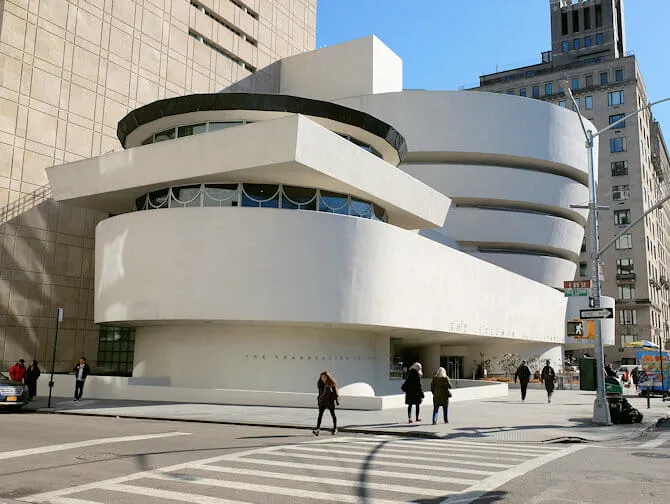
Frank Lloyd Wright's spiral on Fifth Avenue is the only building in New York that makes you stop walking before you reach the door. The continuous ramp, the white curves widening as they ascend, the skylight at the top flooding the rotunda with natural light. Wright died in April 1959, six months before the museum opened. It was his final masterwork, and it became a UNESCO World Heritage Site in 2019.
The Guggenheim charges $30 for admission, which is steep for a museum with a relatively small permanent collection. But pay-what-you-wish hours exist (Sundays and Tuesdays, 4 to 5:30 PM, minimum $1), and the building alone is worth the price of entry if you have never been inside.
In April 2026, the Solomon R. Guggenheim Foundation announced that Dr. Melissa Chiu will become Director of the Guggenheim Museum in New York on September 1, 2026. Chiu comes from the Smithsonian's Hirshhorn Museum, where she doubled attendance in three years and increased fundraising by 75 percent. Foundation CEO Mariet Westermann called the appointment part of building "an agile, collaborative leadership team" across the Guggenheim constellation, which includes museums in Venice, Bilbao, and the forthcoming Abu Dhabi location. Naomi Beckwith, who had been serving as Deputy Director and Chief Curator, cocurated the acclaimed Rashid Johnson exhibition before Chiu's appointment was announced.
The Spiral: How to Actually Experience It
Wright designed the building so visitors take the elevator to the top and walk down the ramp, experiencing art as a continuous descent. Most people ignore this and walk up instead, which is harder on the legs but gives you the full ascending view of the rotunda. Either way, the slope of the floor is noticeable, and the curved walls make hanging flat paintings awkward. This has been debated since the museum opened. Some critics argue the architecture fights the art. Others say the constant motion and shifting perspectives make you see paintings differently than you would in a rectangular gallery.
Both are right. The Guggenheim is a better building than it is a gallery, but that does not stop it from being one of the most memorable museum experiences in the world.
The 2026 Exhibition Schedule
The Guggenheim's 2026 program is built around the US semiquincentennial, celebrating American artists:
Carol Bove (March 5 to August 2, 2026) is the first museum survey and largest exhibition to date of the American artist, filling the entire rotunda with sculptures, installations, paintings, and works on paper spanning 25 years. Bove debuted two new bodies of work for the show: monumental steel "collage sculptures" conceived for the space and wall-mounted aluminum panel works. The exhibition is curated by Katherine Brinson.
Taryn Simon (opens September 18, 2026, running into March 2027) takes over the rotunda after Bove. The museum is keeping details under wraps, but Simon is known for photo-based projects examining the circulation of images and ideas. The museum says visitors will "choose their own pathways through the whirlwind Simon has assembled," which sounds like it will either be brilliant or chaotic.
Guggenheim Pop runs concurrently with the Bove show, featuring works by Roy Lichtenstein, Andy Warhol, Claes Oldenburg, and other Pop artists alongside contemporary inheritors like Maurizio Cattelan, Lucia Hierro, and Josh Kline.
The year opens with three monographic exhibitions still on view: Robert Rauschenberg: Life Can't Be Stopped, Gabriele Munter: Contours of a World, and Rashid Johnson: A Poem for Deep Thinkers (through January 19, 2026), plus collection highlights in Modern European Currents and the Thannhauser Collection.
The Thannhauser Collection: The Real Reason to Go
The Justin K. Thannhauser Collection, permanently installed in the tower galleries, is the best single reason to visit the Guggenheim if you are not there for a specific exhibition. It includes works by Cezanne, Degas, Gauguin, Manet, Picasso, and Van Gogh that trace the revolutionary developments in European painting from the 1860s through the early 20th century. The Thannhauser galleries are conventional rectangular spaces, which means you can actually look at the paintings without tilting your head.
The Guggenheim also holds one of the world's most important collections of Wassily Kandinsky, tracing his development from early figurative work through pure abstraction. Brancusi, Chagall, Klee, Miro, Mondrian, and Pollock round out the modern collection.
The Global Network
The Guggenheim Foundation operates museums in Venice (Peggy Guggenheim Collection), Bilbao (designed by Frank Gehry, opened 1997), and is developing Guggenheim Abu Dhabi with Gehry on Saadiyat Island. The Bilbao museum is credited with transforming the economic fortunes of the Basque city, the so-called "Bilbao Effect." The Abu Dhabi project has been delayed repeatedly but is now expected to open soon.
This network allows the Guggenheim to mount collaborative exhibitions drawing on collections across multiple institutions. It also means the New York museum can send works on tour when the rotunda is being used for a major solo show.
How It Compares
The Guggenheim is the smallest of the major New York art museums. The Metropolitan Museum of Art dwarfs it in scale and scope. MoMA has a deeper and broader modern art collection. The Whitney Museum has a stronger focus on American art. What the Guggenheim has that none of them have is the building.
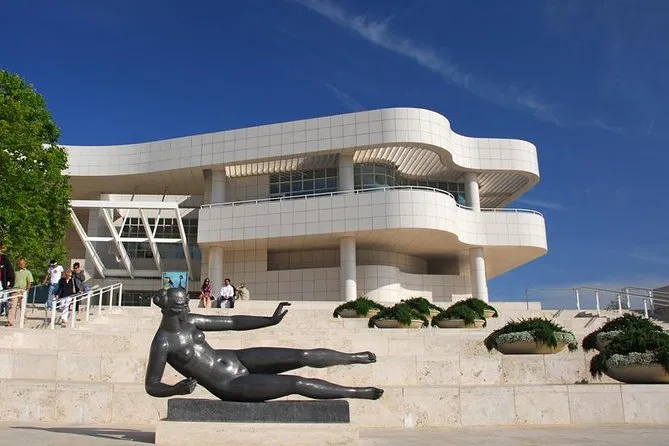
Against the Getty Museum in Los Angeles, the Guggenheim charges $30 while the Getty is free. The Getty's collection is broader and better displayed. But the Getty does not have a Frank Lloyd Wright spiral, and architecture is a legitimate reason to choose one museum over another.
The Centre Pompidou in Paris was the closer international peer for modern and contemporary art, but it is closed until 2030. With the Pompidou dark, the Guggenheim and MoMA are the two most important modern art museums currently operating in the Western world.
Insider Tips
Pay-what-you-wish is on Sundays and Tuesdays, 4 to 5:30 PM. The suggested donation is $10, minimum is $1. Advance reservations sell out quickly, but additional tickets are available at the door during pay-what-you-wish hours. Arrive by 3:45 PM to get in line.
Start at the top and walk down. This is how Wright intended the building to be experienced, and it is easier on the legs than walking up. Take the elevator to the top of the rotunda and descend the ramp.
The Thannhauser galleries are in the tower. Do not miss them. They are the most conventional galleries in the building and the best place to actually look at paintings.
The cafe is overpriced and mediocre. You are on Fifth Avenue at 89th Street. Walk two blocks east to Yorkville for better food at lower prices.
Check the rotunda exhibition before you go. The rotunda shows are site-specific and can be spectacular or sparse. If the current show does not interest you, the Thannhauser collection alone may not justify $30.
Practical Information
Admission: $30 adults, $19 seniors and students, free under 12. Pay-what-you-wish Sundays and Tuesdays 4 to 5:30 PM (minimum $1).
Hours: Daily 10:30 AM to 5:30 PM. Closed Thanksgiving and Christmas.
Getting there: 1071 Fifth Avenue at 89th Street. Nearest subway is 86th Street (4/5/6 lines), a 3-minute walk north.
Book tickets: guggenheim.org
Final Verdict: Who Is This Actually For?
People who care about architecture. People who want to see Kandinsky and the Thannhauser Collection. People who want to experience what it feels like to walk down a Frank Lloyd Wright spiral while looking at art. The Guggenheim is not the best art museum in New York, but it is the most singular. If you have been to the Met and MoMA and want something different, this is where you go. With Melissa Chiu arriving as director in September 2026, the programming is likely to shift toward a more global, accessible direction. Worth watching.