
Orphism: Color, Light, and the Painting That Almost Became Music
Orphism was the movement that tried to make painting sing. Discover Robert and Sonia Delaunay, Kupka, and the color theory that turned Cubism into pure abstraction.
Your cart is empty
Browse the store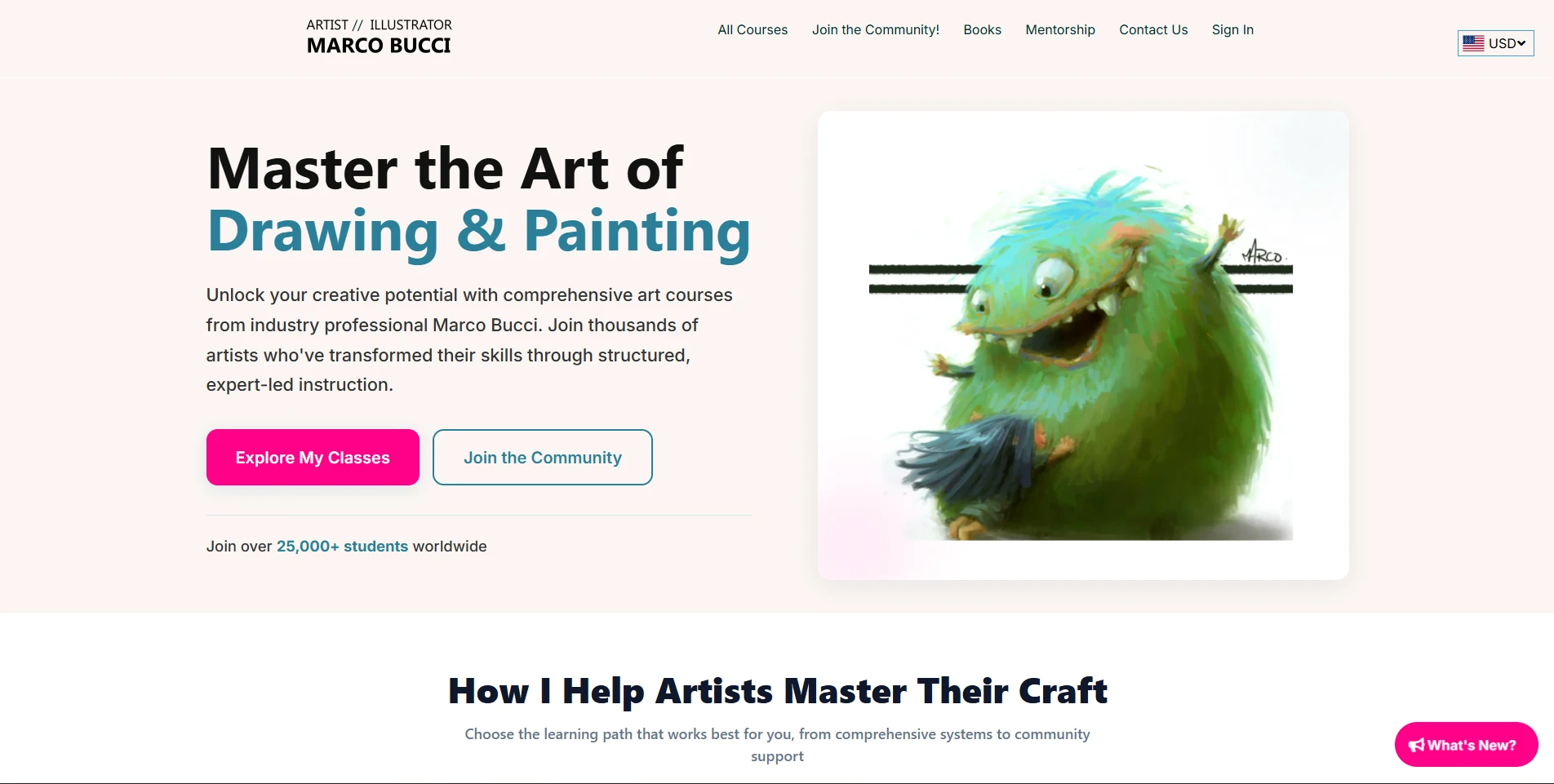
Premium painting courses from one of YouTube's most respected art educators, offering deep-dive instruction on color, light, rendering, and professional painting techniques.
Discover other art courses you might be interested in
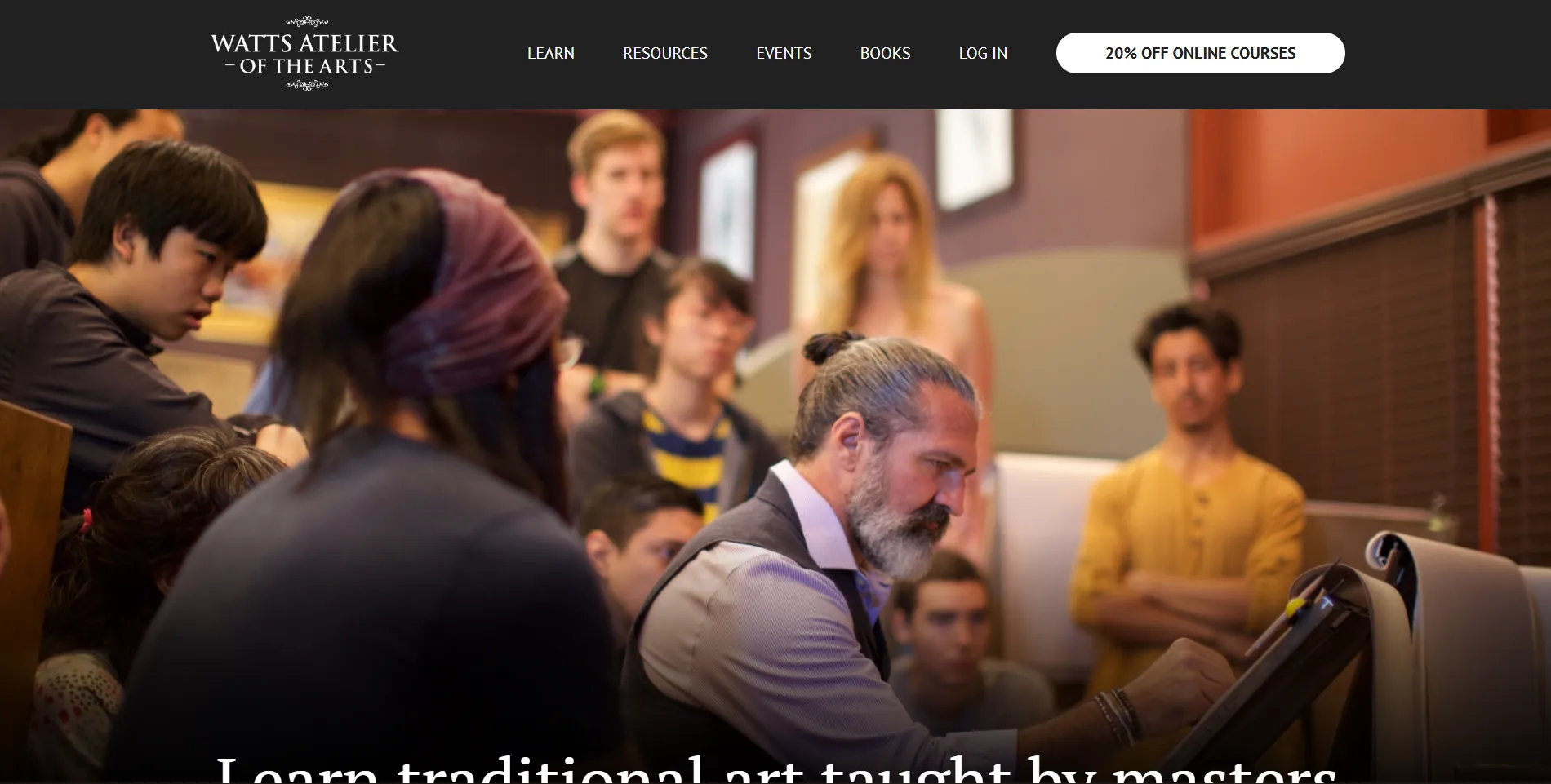
Watts Atelier Online offers 60+ classical art courses at $79-129/month. Structured atelier training with critiques. Honest review of value.
View details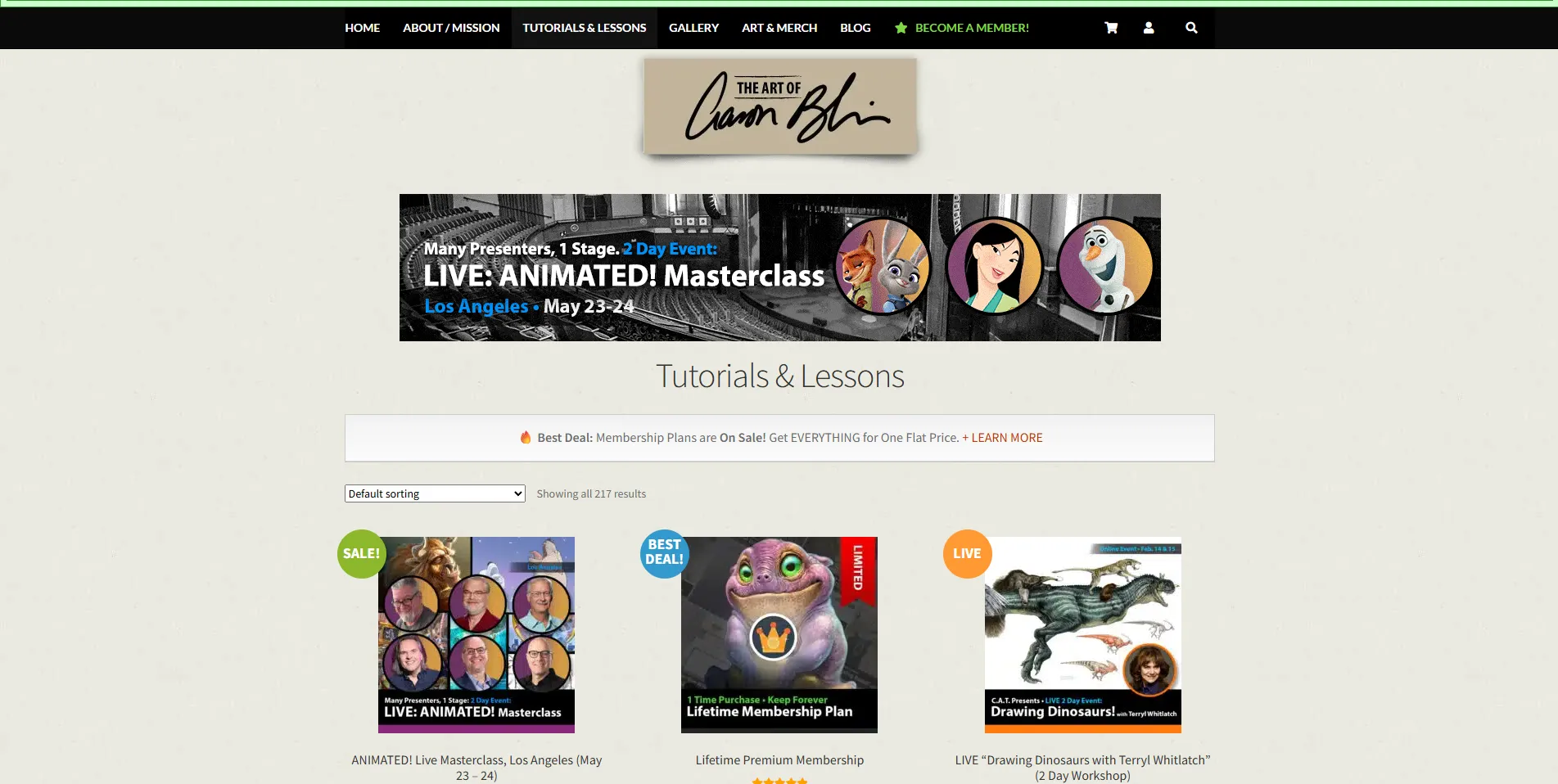
Disney veteran Aaron Blaise teaches animal drawing and creature design through 800+ hours of video courses. Pricing starts at $9.99/month.
View detailsExplore definitions from our glossary that connect to this course
Halation is the optical glow that appears where light meets dark in a painting. Learn how Baroque painters used dark halos and warm edges to make light appear to radiate.
Analogous colors sit next to each other on the color wheel, creating natural harmony. From Monet's water lilies to autumn landscapes, learn how artists use them.
Read more about this topic on our blog
Orphism was the movement that tried to make painting sing. Discover Robert and Sonia Delaunay, Kupka, and the color theory that turned Cubism into pure abstraction.

Georges Seurat invented Pointillism by treating painting as a science. Discover how he applied color theory to canvas and why his work still looks unlike anything else.

Georges Seurat spent two years painting A Sunday on La Grande Jatte using a technique built on the science of color perception. This guide covers how pointillism works, who the people in the painting are, what critics said when it was first shown, and why the painting changed the course of modern art.
Marco Bucci's free YouTube channel has over 25,000 students and millions of views, and his "10 Minutes to Better Painting" series is widely considered one of the best free art education resources on the internet. So why would anyone pay for his courses? Because the free videos are the appetizer. The paid courses are the full meal: multi-hour deep dives into color, light, rendering, and professional workflow that go far beyond what a 10-minute video can cover.
Bucci is a working professional with 15+ years in the entertainment industry. His credits include Disney, Dreamworks, and various game development studios. He is not a full-time educator who stopped making art to teach. He is a concept artist and illustrator who teaches on the side, and his instruction reflects current professional practice.
Bucci sells courses through his website with lifetime access and a 15-day money-back guarantee. Here is the current catalogue as of 2026:
Individual courses:
Bundles:
Community:
1-on-1 sessions:
The pricing is transparent and the bundles offer real savings. The Complete Mastery System at $249 is the best value if you want the full digital painting curriculum. Individual courses at $79 each are fairly priced for the depth of content.
Bucci's core teaching philosophy is principle-based instruction. Instead of showing you how to paint a specific subject, he teaches the underlying visual principles: value structure, color temperature, edge control, shape design. These principles apply to every subject and every painting situation.
A lesson on color temperature might include demonstrations in portraiture, landscape, and still life, proving that the same principle works across subjects. This approach produces artists who can solve painting problems independently rather than artists who can only replicate specific tutorials.
This is the key difference between Bucci and tutorial-style educators. A tutorial teaches you to paint an apple. A principle teaches you to paint anything.
This is Bucci's signature course and the one most students should start with. It covers complementary palettes, color temperature, spectrum transitions, color vibrations, diverse palettes, and practice methods across 17 lessons and 6 chapters. Each chapter includes theory explanations and painting demonstrations.
If you have ever looked at your digital paintings and felt that the colors were "off" but could not diagnose why, this course gives you the diagnostic framework. You learn to identify whether a color problem is a value problem, a temperature problem, or a saturation problem, and you learn specific strategies for fixing each.
At $250 for 45+ hours of content, the Art Mentorship Video Package is Bucci's most comprehensive offering. It is structured as an 8-week curriculum covering values, light, composition, and more. The content is drawn from real mentorship sessions with artists at various skill levels, so you watch Marco guide students through critiques, problem-solving, and skill breakthroughs.
The Video Package + 1:1 Live Session option costs $375 (regularly $500) and includes one hour of personal coaching with Marco. For artists who want direct feedback on their work, this is the most affordable way to get it from a professional of his caliber.
Bucci's free YouTube channel serves as both a standalone resource and a preview of the paid courses. The YouTube videos establish core concepts: simplified values, controlled edges, temperature management. The paid courses develop those concepts into comprehensive understanding with sustained depth that short videos cannot provide.
If you have watched the free content and want more, the paid courses deliver. If you have not watched the free content, start there first. The free videos will tell you quickly whether Bucci's teaching style clicks for you.
Against Paintable, which offers a subscription model for digital painting education, Bucci sells lifetime-access courses. Paintable offers more structured learning paths and community features. Bucci offers deeper instruction on color and light specifically from a single expert voice.
Against Ctrl+Paint, which is the other major name in free-to-paid digital art education, Bucci is more focused on painting principles (color, light, rendering) while Ctrl+Paint covers a broader range including software basics and workflow. Both are excellent. Bucci goes deeper on the visual principles that make paintings work.
Against Proko, which focuses on figure drawing and anatomy, Bucci covers painting and color theory. Proko teaches you to draw the figure. Bucci teaches you to paint anything. They complement each other well.
Bucci's courses do not include structured feedback on your work. The Art Mentorship program includes recorded critiques of other students' work, which is valuable for learning by observation, but you do not get personal critique unless you book a 1:1 session at $250/hour.
The community is small (189 members at $12/month) and functions more as a sharing space than a structured critique environment. If you need accountability and regular feedback, the Paintable academy model or CGMA cohorts may serve you better.
Marco Bucci's courses are for self-taught digital painters who know the tools but lack the conceptual understanding of color and light that makes paintings work. They are for traditional painters transitioning to digital who need to understand how the same visual principles apply across media. And they are for any artist who has watched the free YouTube videos and wants the full, structured deep dive.
They are not for absolute beginners who have never used digital painting software. They are not for artists who need instructor feedback and structured assignments. And they are not for anyone looking for software-specific tutorials.
Start with the free YouTube channel. If the teaching style resonates, buy the Color Survival Guide at $79. If that delivers value, consider the Complete Digital Painting Mastery System at $249 for the full curriculum.
Quiet Canvas is a space for artists and art lovers: essays, glossary terms, tools, and curated directories to support your creative practice.
Learn more →


