Pencil Kings: A Community-First Art Training Hub for $20/Month
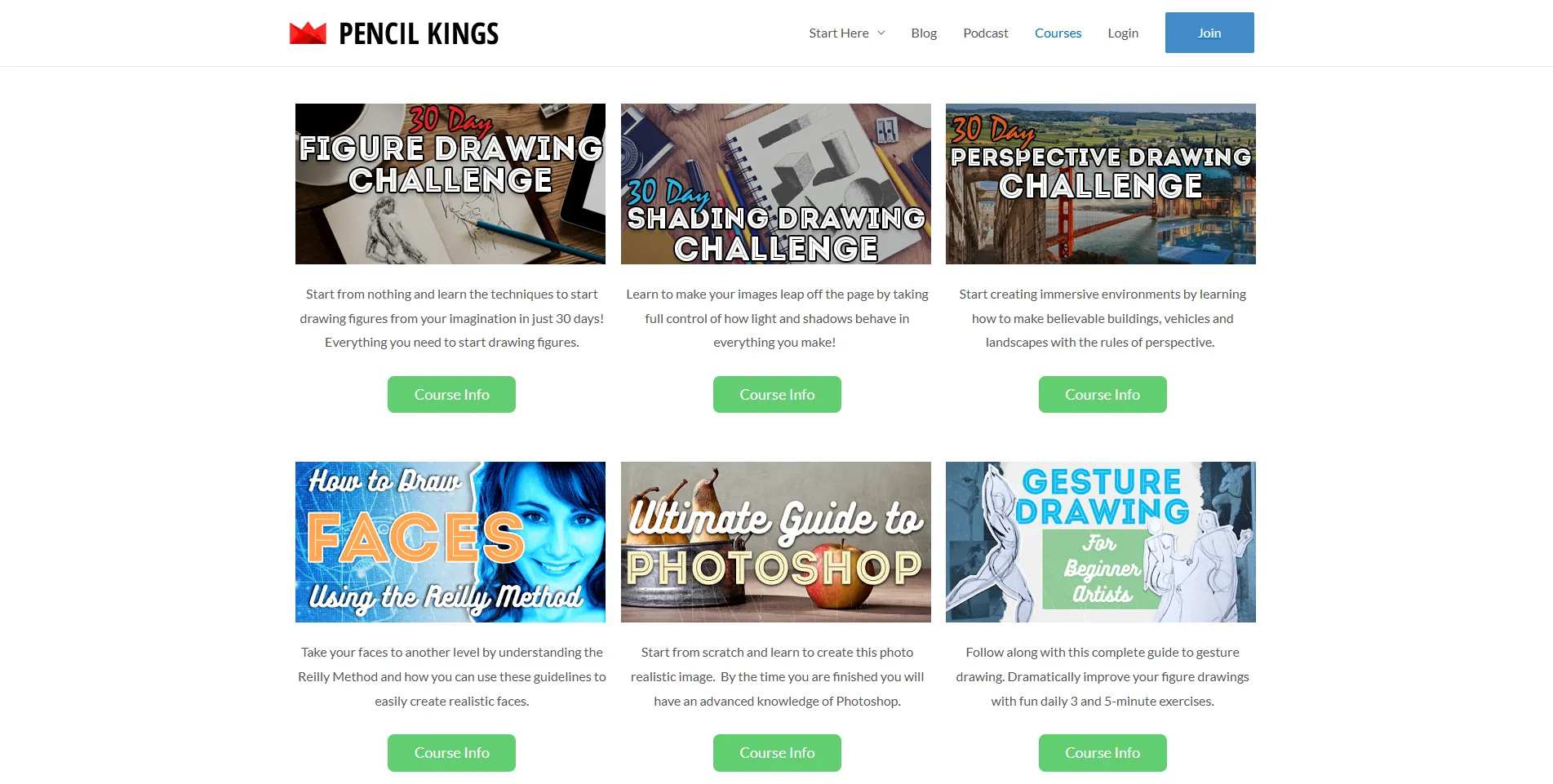
Pencil Kings occupies a specific niche in the online art education market: it is not a course platform, it is a membership community that includes courses. The distinction matters. When you subscribe to Pencil Kings, you are not buying access to a library of video lessons. You are joining a private community where the courses are one benefit among several, alongside live workshops, coaching programs, challenges, and a social network of artists at various stages of their careers.
At $19.95/month or $199.95/year, it is one of the most affordable art education subscriptions available. The question is whether the community-first model delivers enough value to justify the ongoing cost, or whether you would be better served by a course library like New Masters Academy at $49/month or standalone purchases from Proko or Marco Bucci.
What You Pay
- Monthly: $19.95/month, cancel anytime
- Annual: $199.95/year (effectively $16.66/month, saving $40 compared to monthly billing)
- 3-day trial for $1
Both plans include access to all current and future Pencil Kings courses, the private artist community, private chat room and online hangouts, and live training workshops with coaching programs delivered online.
There are no contracts. The model is pay-as-you-go on a month-to-month basis, with the annual plan offering a discount for upfront commitment. Content is not available for download, but anything you purchase remains accessible through your account.
The Community Model
The community is the product here, not just an add-on. Pencil Kings has built a private space where members interact, share work, get feedback, participate in challenges, and record their art journey progress. The community includes artists at all levels, from complete beginners to working professionals.
The challenges are structured as month-long programs with weekly focuses on specific subjects. This format promotes steady, consistent learning without overwhelming students. Challenges run live during certain parts of the year, and participants join Facebook groups to submit work and view others' progress.
The community also has a mentorship element. More experienced members help newer ones, and the private chat rooms and online hangouts create opportunities for real-time interaction that most course platforms do not offer.
The Course Library
Pencil Kings courses are taught by working industry professionals from studios including Disney, Dreamworks, Cartoon Network, and major game studios. The curriculum covers:
Drawing fundamentals for artists building foundational skills. Character design for artists targeting animation, game, or illustration work. Digital painting techniques for artists working in Photoshop, Procreate, and other digital tools. Traditional art skills for artists working in pencil, ink, and paint. Career development content covering portfolio building, job applications, freelancing, and the business of art.
The course library is smaller than what you find on subscription platforms like New Masters Academy or Gnomon Workshop. Pencil Kings compensates with the community element: live workshops, coaching, and peer interaction that those platforms do not offer at this price point.
The Podcast and Free Content
Pencil Kings also runs a podcast (published as PK episodes, e.g. PK 243: Launching A Board Game on Kickstarter, PK 239: Mentorship and Education for Creative Careers) that covers art career topics, creative career ideas, and interviews with working artists. The podcast is free and serves as a preview of the community's focus on career development alongside technical skills.
If you are considering subscribing, listen to a few podcast episodes first. The tone and focus of the podcast reflect the community's culture.
How Pencil Kings Compares
Against New Masters Academy at $49/month, Pencil Kings is less than half the price but has a smaller course library and less master-level instruction. NMA gives you Glenn Vilppu and 1,000+ hours of traditional art training. Pencil Kings gives you a community, career development content, and industry-focused courses at a lower price.
Against Skillshare, which offers a similar low-cost subscription with community features, Pencil Kings is more focused on art specifically while Skillshare covers a broad range of creative topics. Pencil Kings courses are taught by industry artists with named credits. Skillshare courses vary widely in quality.
Against Schoolism, which offers courses from named industry instructors, Pencil Kings is a community model while Schoolism sells individual courses. Schoolism has higher-profile instructors. Pencil Kings has a more active community.
What Is Missing
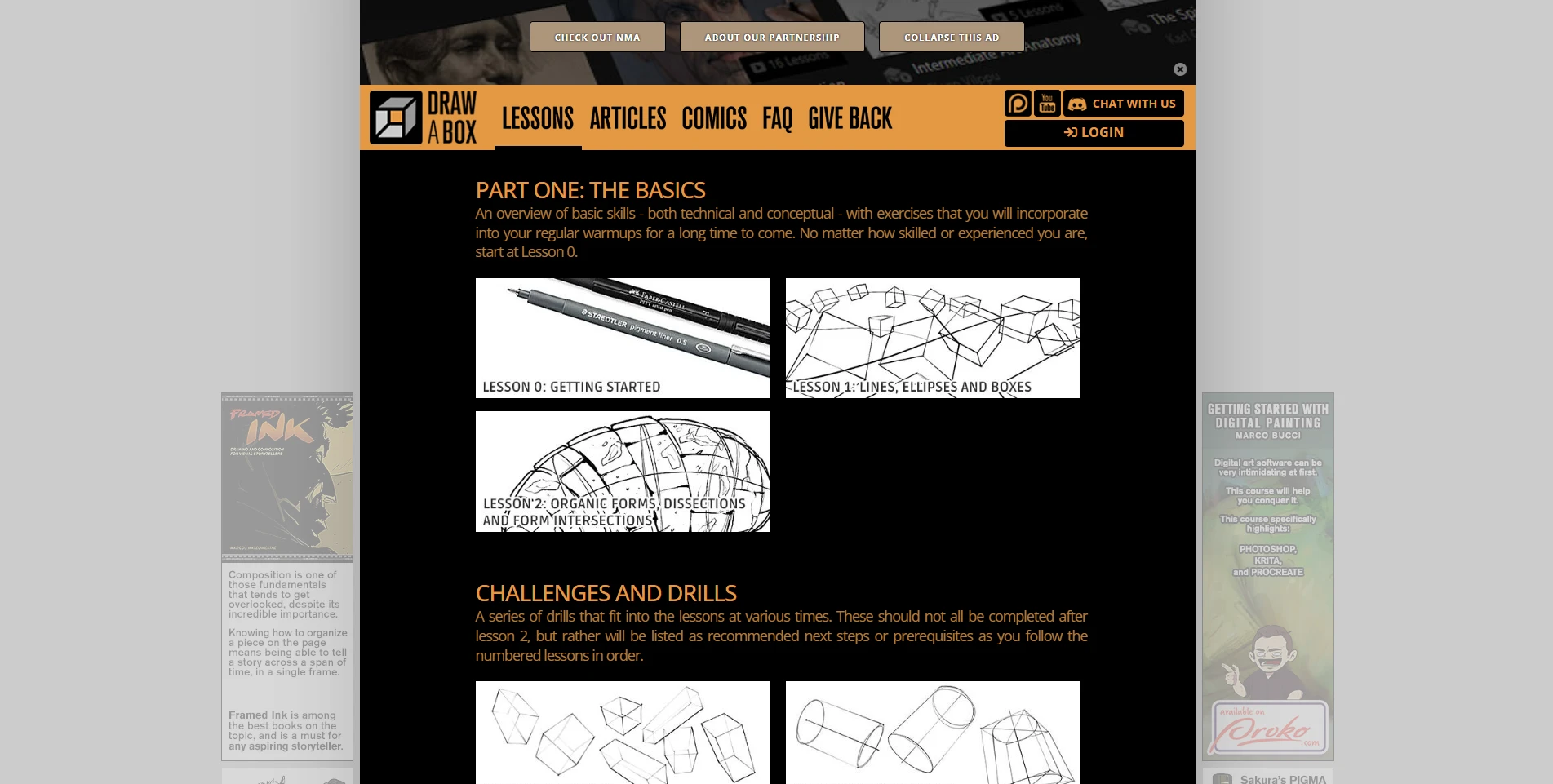
The course library is not as deep or as polished as what you find on higher-priced platforms. The production quality varies between courses, and the curriculum is not as systematically structured as Drawabox or as professionally produced as Marco Bucci.
The community activity level varies. Challenges are more active during certain times of the year, and the Facebook group model means engagement depends on who is participating at any given time.
There is no personalized feedback system. The community provides peer feedback, but there is no structured instructor critique like you would get from London Art College or Evolve Artist.
Final Verdict: Who Is This Actually For?
Pencil Kings is for artists who want a community alongside their courses and value peer interaction, challenges, and career development content. It is for budget-conscious learners who want ongoing access to art training for under $20/month. And it is for aspiring industry artists who want insight into how working professionals built their careers.
It is not for artists who want the deepest, most master-level instruction available (look at NMA or Proko). It is not for anyone who needs structured, personalized feedback. And it is not for artists who prefer owning courses permanently over subscribing.
Start at pencilkings.com. Try the $1 3-day trial. If the community feels active and the courses match your goals, $19.95/month is a low-risk investment. If the community is quiet or the courses do not meet your needs, you are out one dollar.