
Canon Formation: Who Decides Which Artists Get Into the History Books
Vasari decided who mattered in 1550. The canon he created excluded women, people of color, and non-Western artists for 400 years. Discover who decides what art history remembers.
Your cart is empty
Browse the store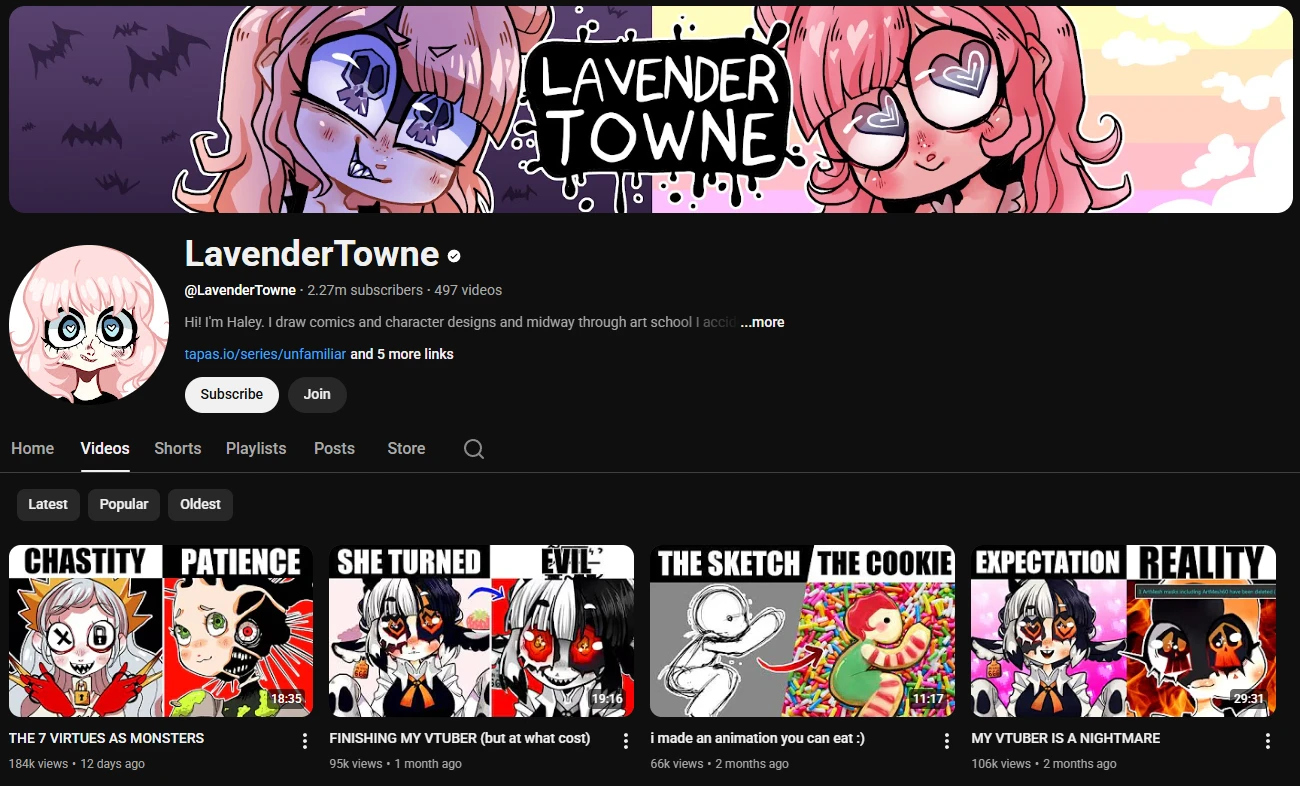
LavenderTowne blends creepy-cute illustration with art history deep dives and character redesigns for 2.3 million subscribers on YouTube.
Discover other art channels you might be interested in
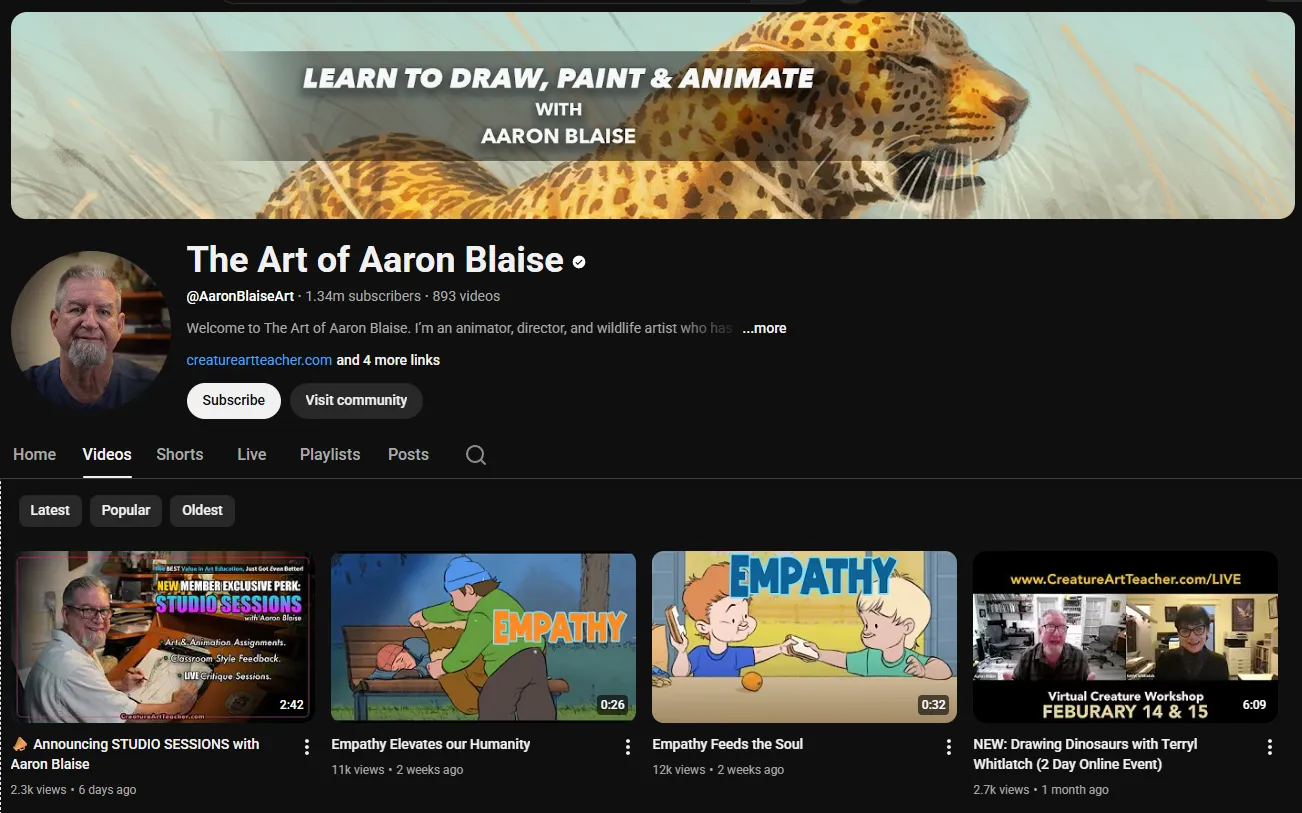
Former Disney animator Aaron Blaise teaches wildlife painting, creature design, and animation principles to 1.36M subscribers. 21 years at Disney on Lion King, Beauty and the Beast, and Brother Bear.
View details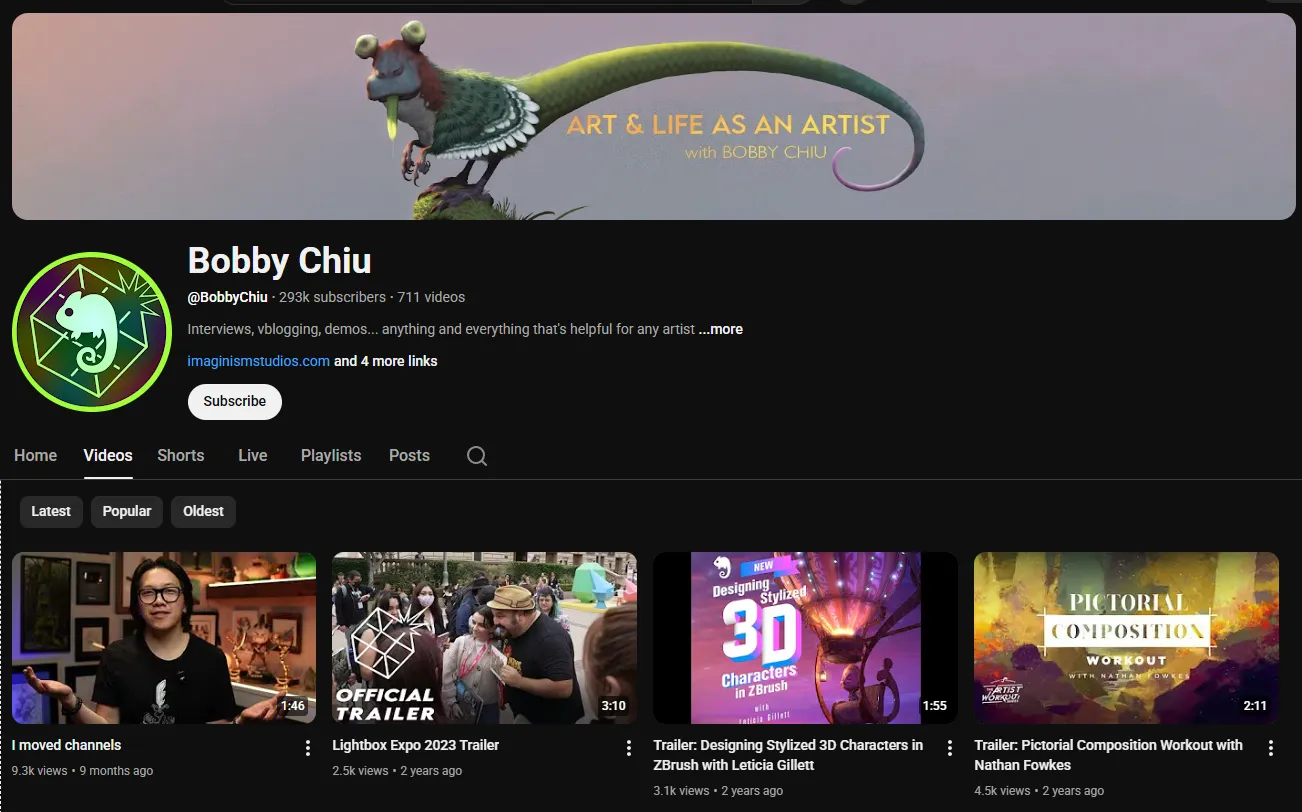
Emmy-winning creature designer and Schoolism founder with credits on Tim Burton's Alice in Wonderland, sharing digital painting tutorials, creative mindset advice, and the Imagine Nation podcast.
View detailsExplore definitions from our glossary that connect to this channel
Art academies were official schools and standards bodies that controlled art education and exhibitions. From the Academie royale to the Royal Academy, learn their history.
Action painting is the gestural, physical application of paint pioneered by Pollock and de Kooning. Learn its history, key artists, and how to spot it.
Read more about this topic on our blog
Vasari decided who mattered in 1550. The canon he created excluded women, people of color, and non-Western artists for 400 years. Discover who decides what art history remembers.

Learn what provenance means in art, why it affects value and authenticity, and why the ownership history of artworks raises serious ethical questions from Nazi looting to colonial acquisition. A clear guide for collectors, gallery visitors, and anyone who cares where art comes from.

Learn to estimate when a painting was made by reading its subject matter, technique, palette, and physical signs of age. A practical visual guide for gallery visitors who want to read art history directly from the canvas.
LavenderTowne is what happens when someone goes to art school, accidentally becomes a YouTuber, and decides to use the platform to talk about vampire folklore and poison-themed character design. With 2.28 million subscribers and 447 million total views across 500+ videos, Haley (the creator behind the channel) has carved out a space on YouTube that does not fit neatly into any existing category.
The channel is not a tutorial channel, though it has tutorials. It is not an art history channel, though it covers art history. It is not a commentary channel, though it has opinions. It is a hybrid that treats art as something worth thinking about, not just something worth making, and that combination has resonated with an audience that most art channels never reach.
Haley started the channel in March 2010, originally as an art school outlet. The content evolved over the years from personal illustration and art school experiences into the research-driven, creepy-cute aesthetic the channel is known for today. Her top videos include titles like "if the world's deadliest poisons were people" and "MAKING POISONED ART TO PUNISH AI THIEVES," which give you a sense of the channel's tone: playful, dark, and engaged with contemporary art issues.
LavenderTowne's art history content is among the most accessible and engaging available on YouTube. Videos explore the evolution of fairy tale illustration, the visual language of horror art, the aesthetics of different historical periods, and the cultural context of artistic movements. These are not dry academic lectures. Haley traces the evolution of vampire imagery through folklore illustration, Victorian Gothic art, expressionist cinema, and contemporary media, drawing connections between visual trends and the cultural anxieties that produced them.
The research depth is what elevates this content above typical art commentary. When exploring the visual history of mermaids in art, the video does not just show a few popular examples. It traces the evolution through multiple historical periods, identifies patterns, and connects those patterns to broader cultural shifts. This is genuine art historical knowledge wrapped in an engaging, accessible format.
For comparison, James Gurney brings a scientific perspective to art history. LavenderTowne brings a cultural and aesthetic perspective. Both are valuable, and they complement each other well.
LavenderTowne's distinctive visual style blends soft pastels, rounded forms, and unsettling elements drawn from gothic illustration traditions, Japanese kawaii culture, vintage fairy tale art, and contemporary horror. Characters with too-large eyes, creatures that are adorable and threatening simultaneously, and environments that feel cozy yet vaguely menacing all communicate a worldview that resonates with audiences who find the most interesting things in the space between opposites.
The character redesign videos demonstrate how understanding design principles allows artists to reimagine existing characters in fresh, purposeful ways. These are not just style exercises. They show how silhouette, color palette, proportion, and detail choices communicate character personality and narrative function. For artists learning character design, these videos are more instructive than many explicit tutorials because they show the thinking behind the decisions.
One of LavenderTowne's most notable recent videos is "MAKING POISONED ART TO PUNISH AI THIEVES," which addresses the issue of AI image generation scraping artists' work without consent. The video combines creative practice with advocacy, showing how artists can use tools like Glaze and Nightshade to protect their work from AI training datasets. This is the kind of content that most art channels avoid because it is politically charged, but it reflects Haley's willingness to engage with the issues that actually affect working artists in 2026.
In late 2025, LavenderTowne began producing VTuber content, including a video titled "Finishing My Vtuber (but At What Cost)" in December 2025. This represents the channel's continued evolution and Haley's willingness to experiment with new formats and technologies. The VTuber content ties back to the channel's core interest in character design and digital identity, extending the creepy-cute aesthetic into a new medium.
LavenderTowne has worked with 8 distinct brands including major partners like Skillshare (22 sponsored videos) and Makeship for merchandise. The channel earns an estimated $2,200 to $4,300 per sponsored video based on industry benchmarks. This is a sustainable business model that allows the channel to remain independent while producing content that does not fit the typical YouTube art tutorial format.
The Makeship partnership is particularly relevant because it produces plush toys and collectibles that match the channel's creepy-cute aesthetic, extending the brand into physical products that the audience actually wants.
LavenderTowne does not have direct competitors because no other channel does exactly what she does. Kasey Golden shares some audience overlap as a female illustrator with a distinctive style, but Kasey focuses on supplies and career talk while LavenderTowne focuses on ideas and aesthetics. Jazza shares the entertainment-first approach but targets a broader, more beginner audience. Draw Like a Sir covers art history but with a different tone and focus.
The closest comparison might be Peter Draws for the distinctive personal aesthetic, but the content is fundamentally different. LavenderTowne is alone in combining art history, character design, creepy-cute aesthetics, and cultural commentary into a single channel.
LavenderTowne is not a technical instruction channel. If you want to learn anatomy, perspective, color theory, or digital painting techniques, you will find very little here. The tutorials that exist are beginner-level and focus on character design concepts rather than fundamental drawing skills. For technical instruction, look at Proko for anatomy, ModernDayJames for perspective, or Marco Bucci for painting fundamentals.
The upload schedule has become less consistent over time, with roughly 500 videos across 16 years averaging to about 30 per year. The channel is not dormant, but it is not a reliable weekly resource the way Jazza or Kasey Golden are.
The content also assumes a specific aesthetic sensibility. If you do not respond to the creepy-cute visual style, the channel's appeal will be limited. Haley's personality and research depth carry the content, but the aesthetic is consistent across nearly every video.
LavenderTowne is for artists who want to think about art, not just make it. If you are interested in the cultural context of visual styles, the history of aesthetic movements, and the relationship between art and identity, this channel provides content you will not find anywhere else on YouTube.
It is also for young and emerging artists who are developing their creative identities. By demonstrating that personal style, intellectual engagement, and genuine creative passion matter more than photorealistic rendering ability, LavenderTowne has helped countless young artists give themselves permission to pursue their own distinctive visions.
If you want structured technical instruction, look elsewhere. If you want art content that feeds your imagination and intellectual curiosity alongside your visual development, subscribe to LavenderTowne. Every video rewards the viewing.
Quiet Canvas is a space for artists and art lovers: essays, glossary terms, tools, and curated directories to support your creative practice.
Learn more →


