
Adult Art Classes: What to Expect and How to Find the Right One
Never held a brush? Adult art classes welcome beginners with no experience. Here's what to expect, how to find the right class, and why it's never too late to start making art.
Your cart is empty
Browse the store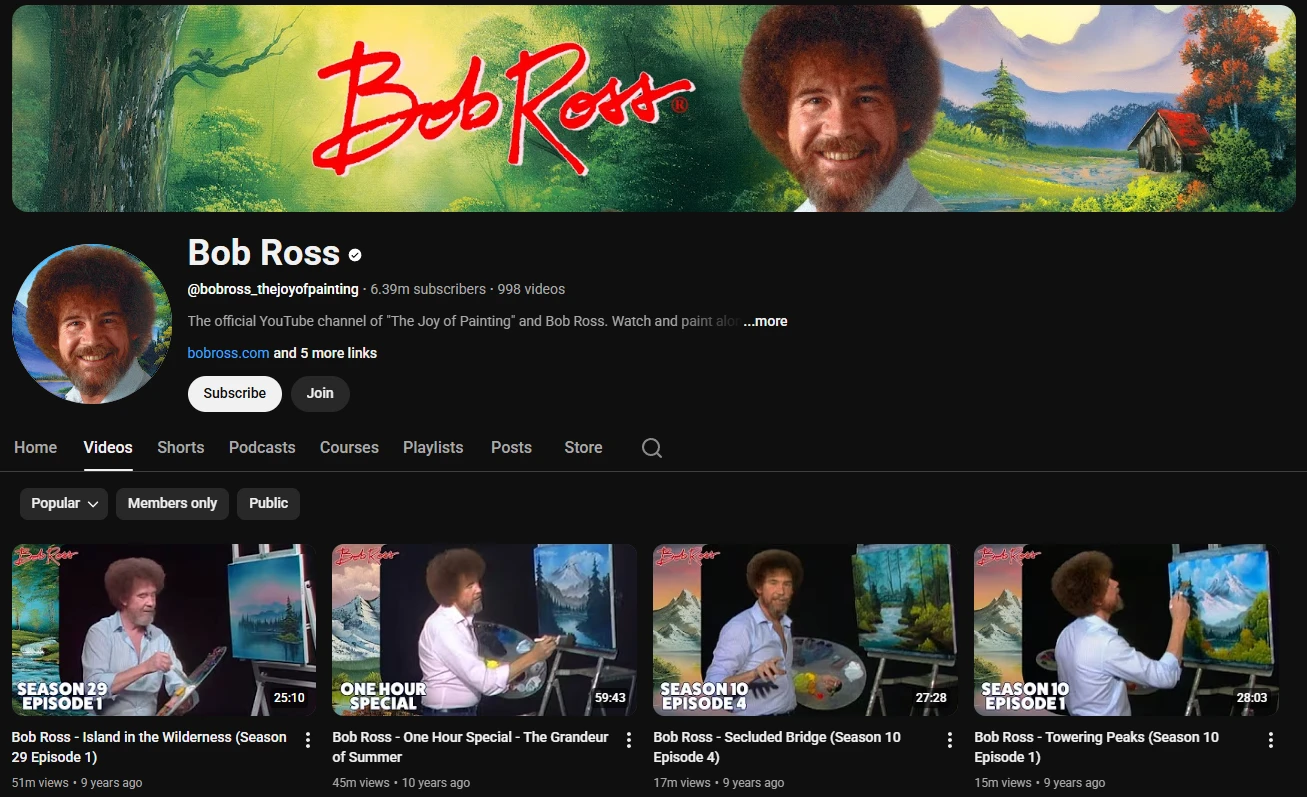
The most beloved art instructor in history, with 6.5 million YouTube subscribers watching complete Joy of Painting episodes that teach wet-on-wet oil painting in 30 minutes.
Discover other art channels you might be interested in
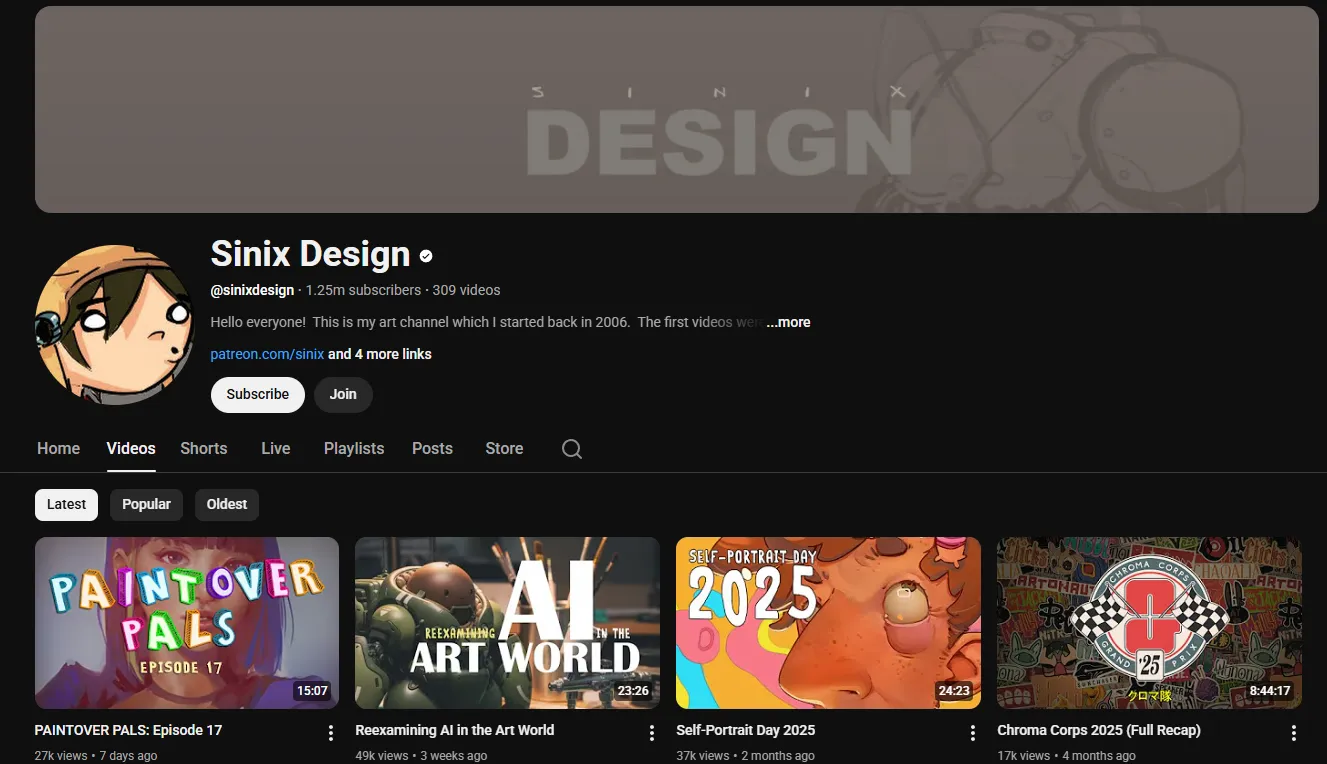
Robert Stacy's Sinix Design teaches visual appeal and design thinking to 1.27M intermediate artists. Known for Paintover Pals critiques and shape language theory that fills the gap Proko leaves open.
View details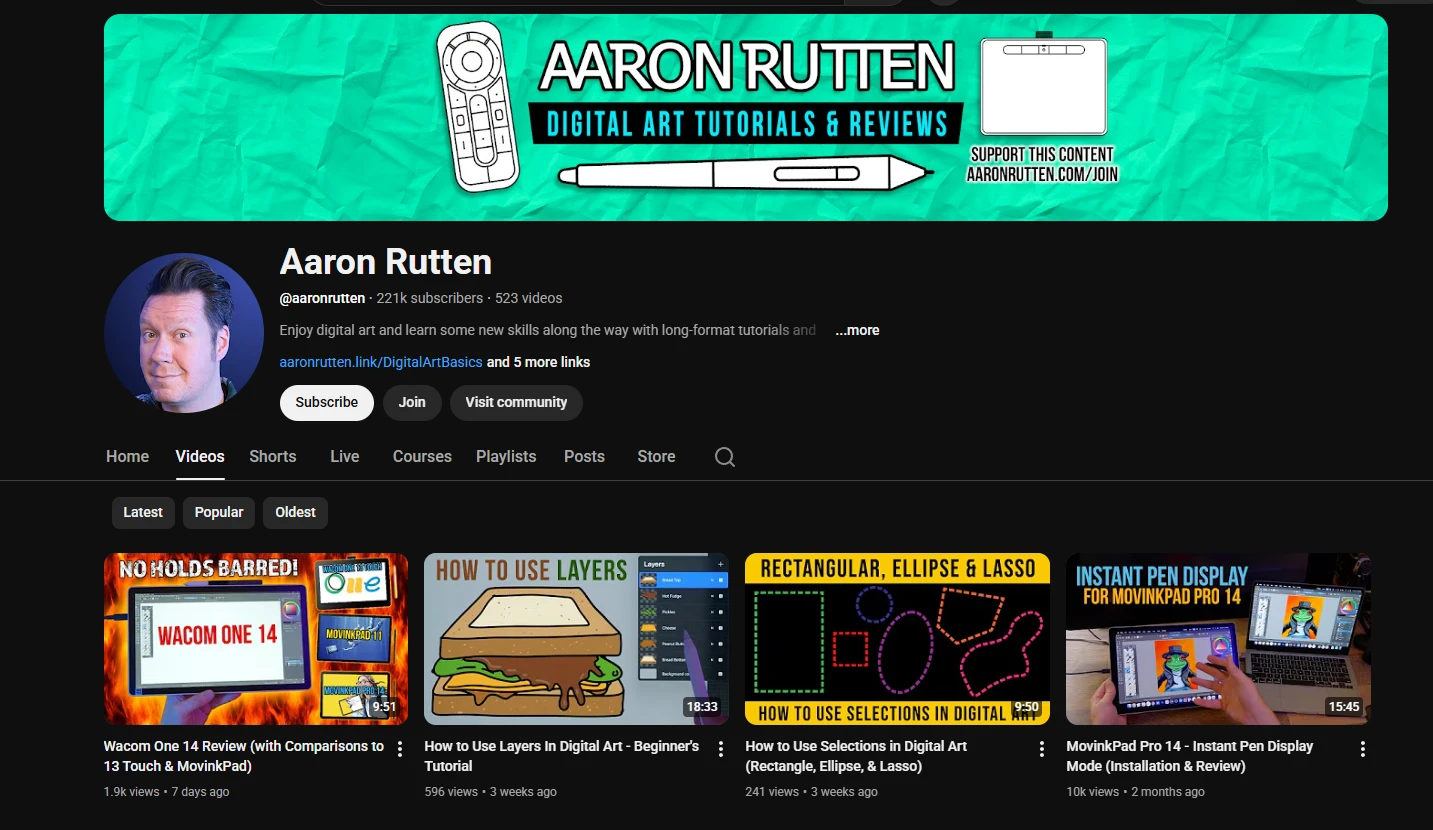
Honest drawing tablet reviews and Corel Painter tutorials from a working artist who tests hardware by actually painting with it, not running benchmarks.
View detailsExplore definitions from our glossary that connect to this channel
Bone black, or ivory black, is a carbon pigment made from charred animal bones. Used since antiquity, it remains one of the oldest and most enduring black pigments in art.
A canvas panel is primed canvas glued to a rigid backing like MDF or hardboard. Learn its history from Impressionist plein air studies to modern mass-produced panels.
Read more about this topic on our blog
Never held a brush? Adult art classes welcome beginners with no experience. Here's what to expect, how to find the right class, and why it's never too late to start making art.

Jenny Saville paints the human body at a scale that makes it impossible to look away. Discover how the British painter became one of the most important figurative artists of the 21st century.

Understand the art of oil painting, from Van Eyck's luminous glazes to Van Gogh's thick impasto. Learn why oil paint has been the dominant medium for five centuries and how its unique properties work.
Bob Ross died in 1995. His YouTube channel, maintained by Bob Ross Inc., has 6.5 million subscribers and 786 million views as of July 2026. He uploads nothing new because he has been dead for three decades, and his channel still gains subscribers faster than most living creators. That is not a marketing success story. It is a cultural phenomenon that says something genuine about what people need from art education.
The Joy of Painting aired on PBS from January 11, 1983 to May 17, 1994. Every episode follows the same format: Bob stands at a canvas, talks softly about what he is about to paint, and builds a complete landscape in 26 minutes using the wet-on-wet oil painting technique he learned from his mentor, Bill Alexander. The official YouTube channel uploads these complete episodes regularly, and people watch them by the millions.
Bob Ross did not invent wet-on-wet oil painting, but he made it accessible to television audiences in a way no one else has. The technique involves applying wet paint directly over wet paint, without waiting for layers to dry. This allows a complete painting to be finished in a single session, which is what makes the 26-minute episode format possible.
The specific techniques he teaches are more sophisticated than they look. Fan brush mountain formations, palette knife snow effects, liner brush tree details, and the 2-inch brush sky gradients are all real oil painting techniques that produce real results. A complete beginner who follows a Bob Ross episode step by step will finish with a recognizable, satisfying landscape painting. That experience of creative success, delivered in under 30 minutes, is something traditional art education often delays for months or years while students work through foundational exercises.
A significant portion of Bob Ross's YouTube audience does not watch to learn painting. They watch for the ASMR effect: his soft, rhythmic voice, the gentle sounds of brush on canvas, and the meditative pace of his demonstrations produce the relaxation response that ASMR listeners seek. This dual appeal as both art instruction and relaxation content gives his channel a reach that extends far beyond the art community.
This is not a criticism. The calming quality of his videos is inseparable from their educational value. The relaxed pace that makes them effective ASMR also makes them effective teaching: nothing is rushed, every step is explained, and the viewer never feels left behind.
Bob Ross developed a branded system of painting materials specifically designed for the wet-on-wet technique. The Bob Ross brand continues to produce these materials, which include the specific brush shapes (fan brush, oval brush, 2-inch brush, liner brush), Liquid White medium that creates the wet base layer essential to the technique, and oil paints formulated for the viscosity and drying characteristics that wet-on-wet painting requires.
Beginners who invest in the Bob Ross branded materials find that the technique works exactly as demonstrated in the episodes. This matters because the wet-on-wet method depends on specific paint consistency and drying times. Using standard oil paints with different viscosities can produce frustrating results that make beginners think they are doing something wrong when the real problem is the materials.
Experienced painters often adapt the technique using other brands, but if you are following along with the episodes for the first time, using the Bob Ross materials removes variables and lets you focus on technique.
No one else on YouTube occupies the same space as Bob Ross. Angela Anderson teaches acrylic painting with a similarly warm, beginner-friendly approach, but acrylic behaves fundamentally differently from oil. Oil stays wet for hours or days, allowing the blending and reworking that Bob Ross's technique depends on. Acrylic dries fast, requiring a different approach.
Will Kemp Art School offers more academically structured oil painting instruction, but without the cultural warmth and accessibility that makes Bob Ross universally appealing. Proko covers figure drawing and anatomy with professional rigor but in a completely different medium and skill level.
Bob Ross is the only YouTube art teacher who is simultaneously a cultural icon, an ASMR phenomenon, and a genuinely effective painting instructor. That combination is not reproducible, which is why his channel continues to grow years after his death.
Bob Ross's technique has real limitations that his videos do not address. The wet-on-wet method produces paintings that look impressive in 26 minutes but can lack the depth and complexity of works built over multiple sessions with drying time between layers. The technique is specifically optimized for the landscapes he paints, and it does not transfer well to portraiture, still life, or figurative work.
The videos are also decades old, recorded in SD quality (though some have been remastered to HD). The production values are lower than any modern YouTube channel, and the color accuracy on some uploads is not perfect. None of this affects the teaching quality, but viewers accustomed to modern 4K content may need to adjust their expectations.
Complete beginners who have never painted before will get the most value from Bob Ross. His technique is designed to produce satisfying results on the first attempt, which is the single most important factor in whether a beginner continues painting.
People seeking relaxation who have no intention of painting will still enjoy the videos. Bob Ross's calming presence is genuine ASMR content, and watching someone create something beautiful in 26 minutes is inherently satisfying.
Experienced painters interested in the wet-on-wet technique can learn specific methods from the episodes, particularly his mountain, water, and tree rendering techniques. However, experienced painters should be aware that the technique has limitations for more complex subject matter.
Bob Ross is for everyone. That sounds like a cop-out, but it is genuinely true. His channel works as art instruction for beginners, relaxation content for stressed viewers, nostalgia for those who grew up watching PBS, and cultural education for anyone who wants to understand why a painter who died in 1995 has 6.5 million YouTube subscribers in 2026.
If you want to learn oil painting specifically, start with his YouTube channel, buy the Bob Ross materials, and follow along with a Season 1 episode. You will finish with a painting, and you will understand why this man is still the most beloved art teacher who ever lived. For acrylic painting alternatives, check out Angela Anderson, and for digital painting, start with Ctrl+Paint.
Quiet Canvas is a space for artists and art lovers: essays, glossary terms, tools, and curated directories to support your creative practice.
Learn more →


