
Orphism: Color, Light, and the Painting That Almost Became Music
Orphism was the movement that tried to make painting sing. Discover Robert and Sonia Delaunay, Kupka, and the color theory that turned Cubism into pure abstraction.
Your cart is empty
Browse the store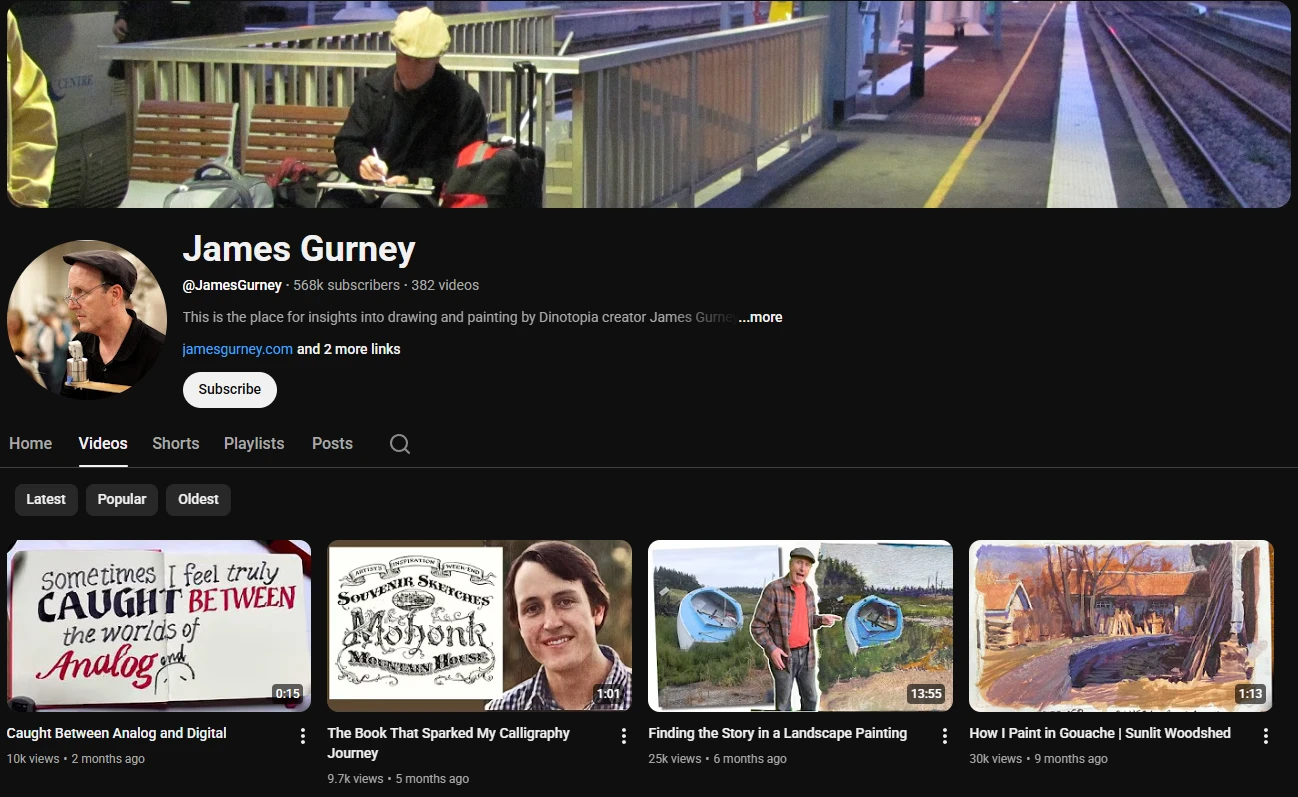
Dinotopia creator James Gurney shares plein air painting demos, color science experiments, and gouache techniques from a 40-year career in imaginative realism.
Discover other art channels you might be interested in
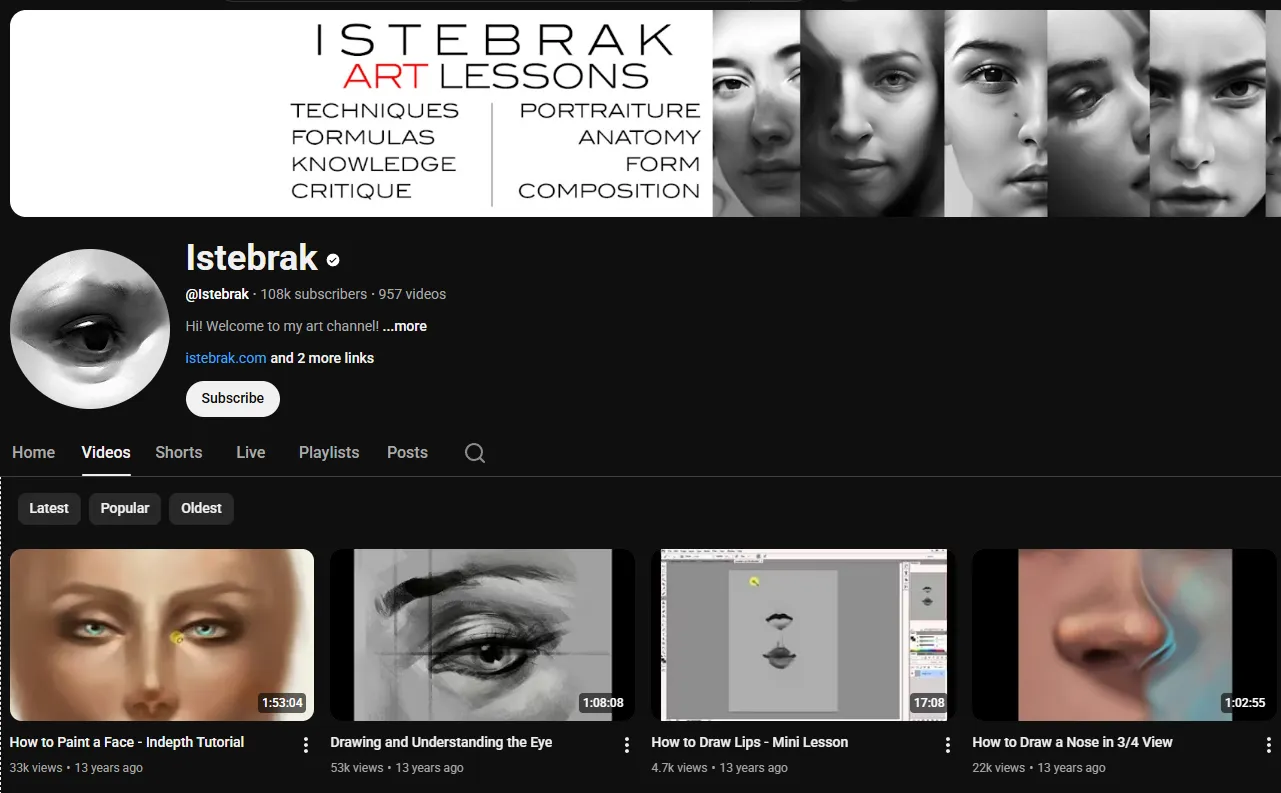
Istebrak delivers YouTube's most brutally honest portrait critique sessions, holding artists to professional standards of likeness and structural accuracy.
View details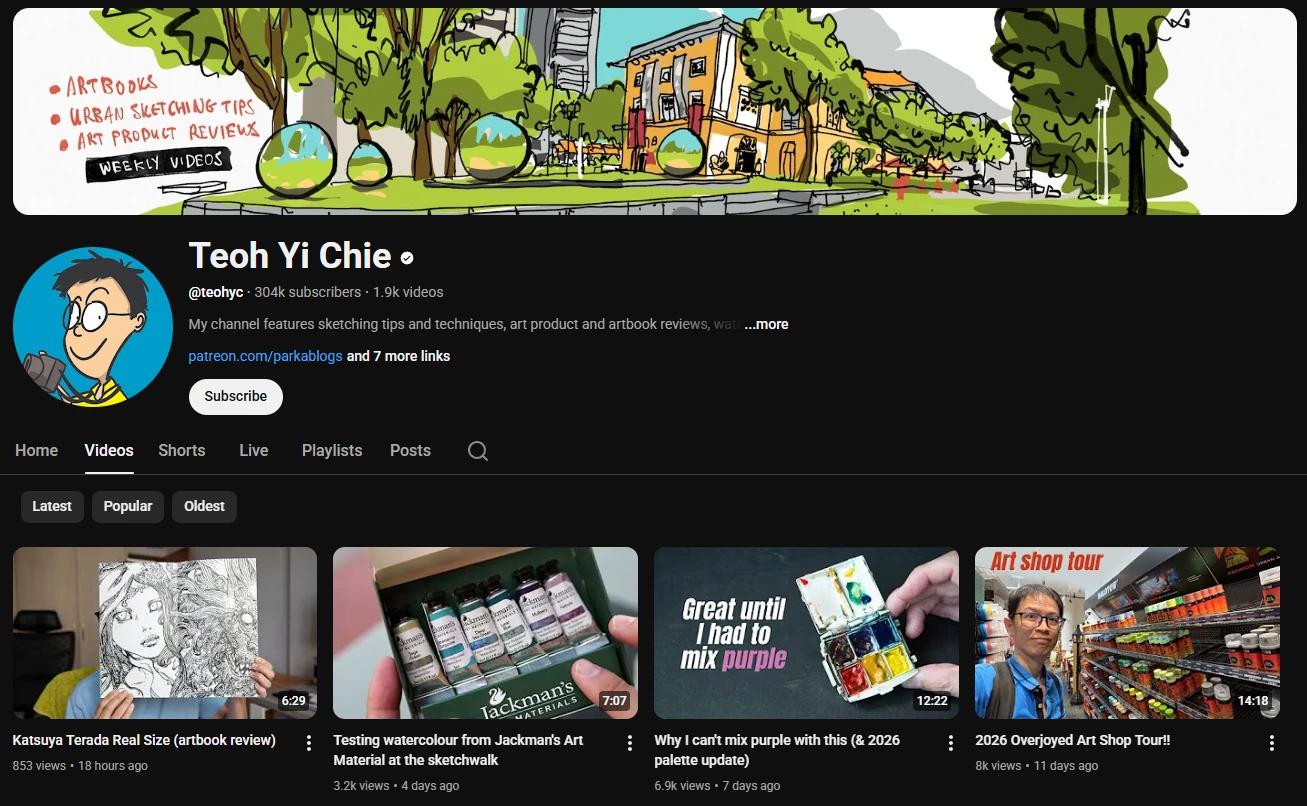
Singapore-based Teoh Yi Chie runs the most methodical art supply review channel on YouTube, testing 1,900-plus products with consistent methodology. His Parkablogs archive covers Asian and Western brands alike.
View detailsExplore definitions from our glossary that connect to this channel
Analogous colors sit next to each other on the color wheel, creating natural harmony. From Monet's water lilies to autumn landscapes, learn how artists use them.
Broken color places pure, unmixed strokes side by side to blend in the eye. Learn how Monet, Van Gogh, and Seurat used this technique for brighter, vibrating color.
Read more about this topic on our blog
Orphism was the movement that tried to make painting sing. Discover Robert and Sonia Delaunay, Kupka, and the color theory that turned Cubism into pure abstraction.

Georges Seurat invented Pointillism by treating painting as a science. Discover how he applied color theory to canvas and why his work still looks unlike anything else.

Georges Seurat spent two years painting A Sunday on La Grande Jatte using a technique built on the science of color perception. This guide covers how pointillism works, who the people in the painting are, what critics said when it was first shown, and why the painting changed the course of modern art.
James Gurney is the rare artist who can paint a convincing dinosaur in a medieval courtyard and then explain the optical physics behind why the shadows look blue. With 572,000 subscribers and nearly 42 million total views across roughly 380 videos, his YouTube channel is the most intellectually curious art education resource on the platform. Where most painting channels focus on technique, Gurney focuses on understanding. He does not just show you how to paint. He shows you how light works, how your brain processes color, and why that matters when you are standing outdoors with a gouache set and twenty minutes before the sun moves.
Gurney is not a YouTuber who happens to paint. He is a professional artist and author with a 40-year career, best known for his illustrated book series Dinotopia, his art instruction books Color and Light: A Guide for the Realist Painter and Imaginative Realism: How to Paint What Doesn't Exist, and his daily blog Gurney Journey. The YouTube channel is an extension of that body of work, not a replacement for it.
Most of Gurney's videos document plein air painting sessions outdoors. He paints in gouache, watercolor, casein, and oil, usually on small panels or sketchbook pages, working quickly from direct observation. The videos show the complete process: selecting a subject, setting up, blocking in, and finishing. You hear his real-time decisions about color mixing, composition adjustments, and when to stop.
The location variety is part of what makes the channel valuable. Gurney paints in the Hudson River Valley, on city streets in New York, at historical sites, on vacation in Europe, and in his own backyard. Each location presents different lighting and compositional challenges, and Gurney narrates his responses to them. Unlike studio tutorials that control every variable, plein air videos show what happens when a cloud covers the sun mid-painting or when a passerby blocks your view for five minutes.
For comparison, Will Kemp Art School offers structured acrylic painting lessons, and Bob Ross provides a wet-on-wet oil method. Gurney is different. He is not teaching a single method. He is demonstrating how a working painter thinks on his feet across multiple media and conditions.
The color and light content is what separates Gurney from every other painting channel on YouTube. These videos explore the physics of light and color perception with a level of rigor you would expect from a science channel, but always grounded in practical painting application.
His videos on color temperature demonstrate how warm light sources create cool shadows and vice versa, with physical demonstrations using colored gels and white objects. His color constancy videos show how your brain automatically corrects for lighting conditions, making it difficult to judge the actual color of objects under different light. This is not abstract theory. Gurney shows you why your shadow color keeps looking wrong when you paint outdoors, and then shows you how to compensate.
He also builds physical models and tools to demonstrate principles. He has constructed a color wheel from painted chips, used a spectroscope to analyze pigment properties, and built maquettes of imaginary architecture to study how light interacts with forms that do not exist. This hands-on, experimental approach is something no other art channel does. Marco Bucci covers color theory from a digital painting perspective, but Gurney covers it from a physical science perspective. Both are excellent. They complement each other.
Gurney has been one of the most visible advocates for gouache on YouTube, long before the medium's recent resurgence among urban sketchers and illustration YouTubers. His gouache demonstrations cover the specific properties that make the medium distinctive: its opacity, its reworkability, its matte finish, and its ability to function as both a transparent and opaque paint depending on water ratio.
He covers practical issues that gouache tutorials often skip: how to manage the paint drying on your palette, how to reactivate dried paint, how to handle the color shift that occurs when gouache dries (dark colors lighten, light colors darken), and how to layer without lifting previous layers. These are the details that make the difference between gouache working for you and gouache fighting you.
The imaginative realism content is where Gurney's career as a fantasy illustrator intersects with his teaching. These videos show how he constructs paintings of subjects that cannot be photographed: dinosaurs in populated cities, ancient civilizations, architectural fantasies. The process involves building physical maquettes, photographing them under specific lighting, and using those references to paint convincing scenes.
The Dinotopia content provides behind-the-scenes looks at the research behind the books, including his studies of dinosaur anatomy, his visits to museum collections, and his process for designing architectural elements that feel historically plausible. For illustrators and concept artists, this is a masterclass in how to make invented subjects feel real. Trent Kaniuga and Marc Brunet cover concept art from a game industry perspective, but Gurney covers it from a classical painting perspective.
The YouTube channel does not exist in isolation. Gurney's daily blog, Gurney Journey, has been running since 2007 and covers many of the same topics in written form with additional detail. His books provide the structured, comprehensive treatment that short videos cannot. Color and Light is the most recommended painting book in online art communities, and for good reason. It covers everything the channel touches, organized systematically with painted examples.
If you are serious about understanding color and light, watch the YouTube videos for the demonstrations and buy the book for the reference. The videos and book together provide a more complete learning experience than either alone.
Gurney's channel is not a structured course. There is no curriculum, no progression from beginner to advanced, no assignments. If you need that structure, look at Ctrl+Paint for digital art fundamentals or Proko for figure drawing. Gurney's content is a library you browse based on what you want to understand, not a course you complete.
The videos are also short, typically 5 to 15 minutes. This is a strength for busy viewers but a limitation if you want extended, real-time painting sessions. The editing is efficient, sometimes to a fault. You will not see every brushstroke. You will see the key decisions and the results.
Gurney's channel is for painters who want to understand what they are doing, not just replicate someone else's technique. If you paint outdoors, work in gouache or watercolor, or struggle with color and light, this channel is essential. If you are a digital painter looking for Photoshop workflows, you will find more relevant content on Ctrl+Paint or Art with Flo.
The channel is also for illustrators and concept artists who want to make invented subjects feel convincing. Gurney's method of building physical references and studying light on real forms is directly applicable to entertainment design, even though his toolset is traditional rather than digital.
Start with his color temperature videos if you paint anything. Then pick up Color and Light and work through the chapters alongside the videos. Your paintings will improve, and you will understand why.
Quiet Canvas is a space for artists and art lovers: essays, glossary terms, tools, and curated directories to support your creative practice.
Learn more →


