
Game Design as Art: Environmental Storytelling and Visual World-Building
Game design is one of the most sophisticated visual arts of the 21st century. Discover how environmental storytelling and visual world-building make games fine art.
Your cart is empty
Browse the store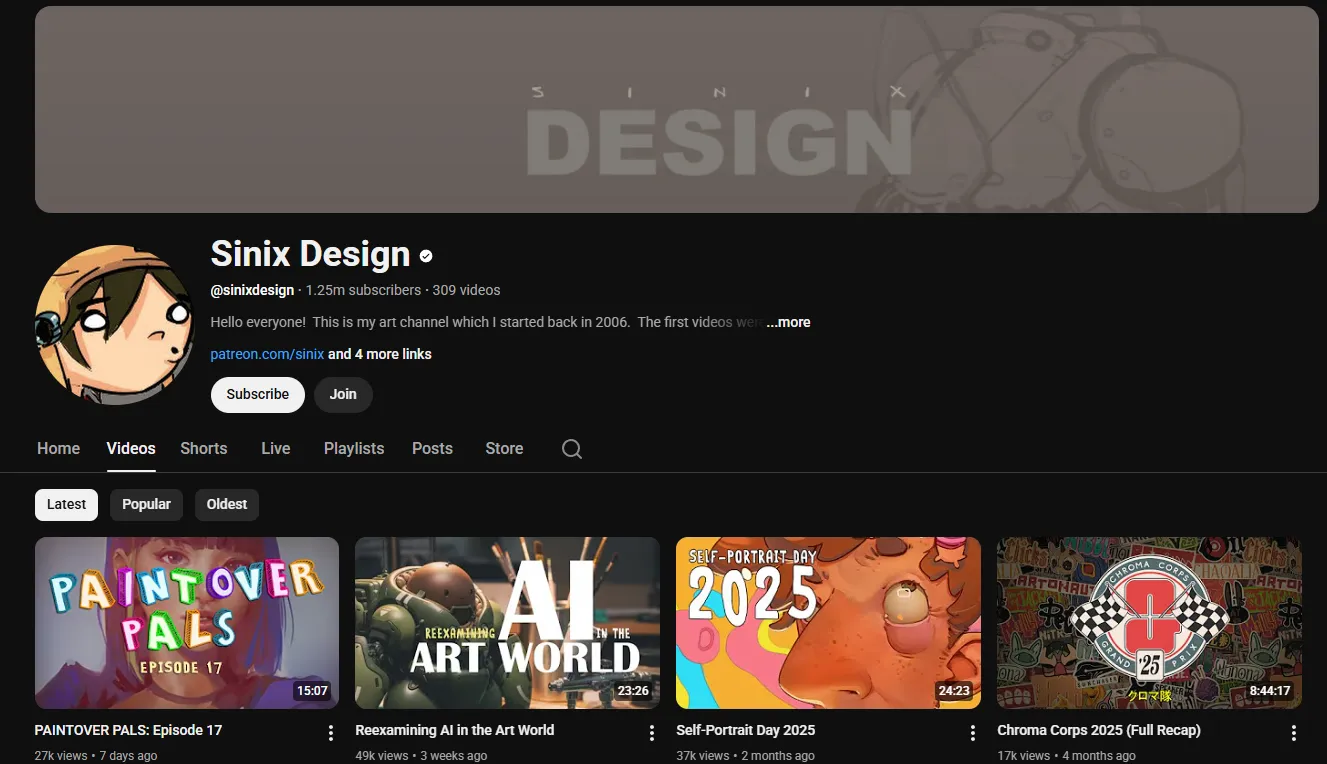
Robert Stacy's Sinix Design teaches visual appeal and design thinking to 1.27M intermediate artists. Known for Paintover Pals critiques and shape language theory that fills the gap Proko leaves open.
Discover other art channels you might be interested in
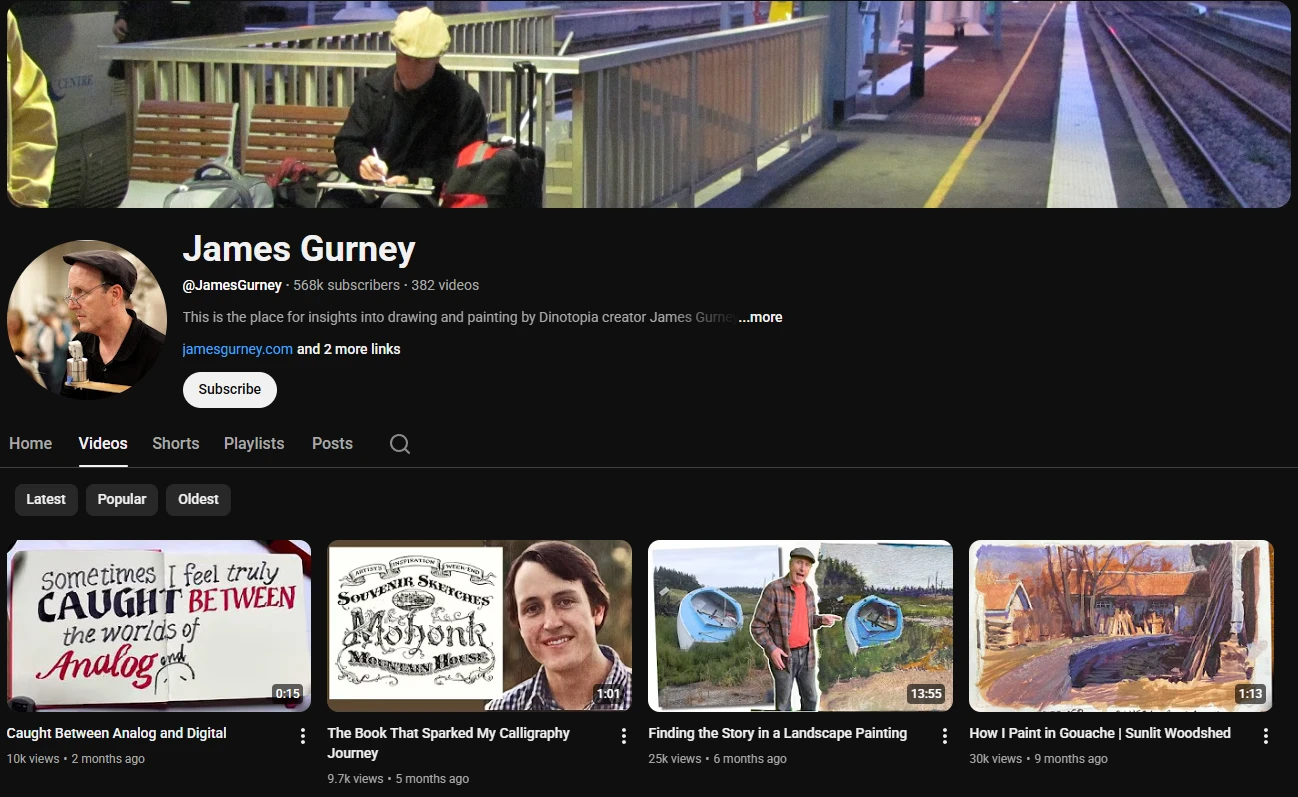
Dinotopia creator James Gurney shares plein air painting demos, color science experiments, and gouache techniques from a 40-year career in imaginative realism.
View details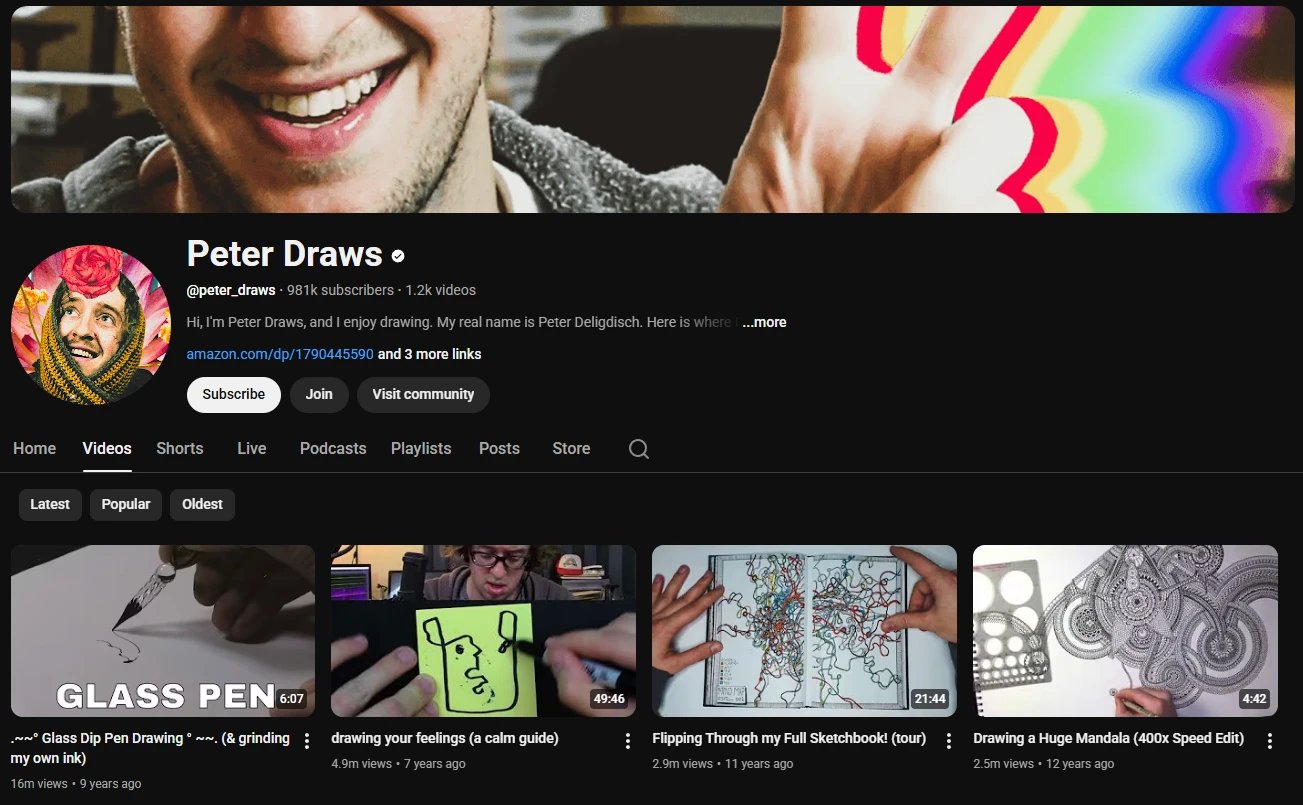
Pen and ink artist Peter Deligdisch draws intricate freehand patterns with zero planning, reviewing fountain pens and discussing creativity in a channel that doubles as ASMR therapy.
View detailsExplore definitions from our glossary that connect to this channel
Pictorial space is the illusion of three-dimensional depth created on a flat surface. Learn how artists from Brunelleschi to Cezanne manipulated space in painting.
Aesthetic experience is the subjective encounter with art that produces pleasure, meaning, and emotional response. From Kant to Dewey to neuroscience, learn the theory.
Read more about this topic on our blog
Game design is one of the most sophisticated visual arts of the 21st century. Discover how environmental storytelling and visual world-building make games fine art.

Learn how artists control positive and negative space to direct attention, create tension, and give compositions their visual energy. From Hokusai to Matisse to Mondrian, discover why empty space is never actually empty.

Discover gouache, the opaque painting medium used by illustrators, designers, and fine artists from medieval manuscript painters to Mary Blair. Learn how it works, how it differs from watercolor, and how to get started.
You can draw anatomically correct figures with perfect proportions and still produce artwork that looks stiff, boring, and amateurish. This is the problem that Robert Stacy, known online as Sinix, has spent nearly two decades solving on YouTube. His channel, started in 2006, has grown to 1.27 million subscribers and 53 million views, and it occupies a niche that no other art education channel fills: teaching you why your technically competent art fails to look professional, and showing you exactly what to change.
Most YouTube art channels teach technique. Sinix teaches design thinking: the cognitive framework that professional concept artists and illustrators use to make creative decisions that result in visually appealing work. If you can already draw but your art lacks polish, this is the channel that explains why.
The format that established Sinix's reputation is Paintover Pals. Viewers submit artwork, and Sinix paints over it in real time while explaining his thought process. He identifies the specific problems: muddy color relationships, weak value structure, unclear focal points, broken silhouettes, stiff poses. Then he fixes them stroke by stroke, narrating not just what he is changing but why the change improves the image.
This format works because it addresses the exact problem that intermediate artists face. Beginners need to learn basic construction and proportion. Advanced artists have already internalized design principles. But intermediate artists, the ones who can draw competently but cannot figure out why their work does not look professional, are stuck because they lack the vocabulary to diagnose their own weaknesses. Sinix provides that diagnostic framework.
The series also trains a skill that art schools emphasize and YouTube rarely covers: the ability to look at a piece of art and quickly identify what is working and what is not. This is the same skill art directors use when reviewing work from their teams. Developing it early gives aspiring professionals a significant advantage in portfolio reviews and studio applications.
Sinix's Anatomy Quick Tips series takes a deliberately different approach from Proko's detailed anatomical breakdowns. Instead of teaching muscle insertion points, Sinix focuses on simplified, stylized forms that capture the essential gesture and appeal of body parts. His approach to drawing faces, treating the head as a three-dimensional mask with planes that catch light in predictable ways, has helped thousands of artists move beyond flat, lifeless facial drawings.
This is not a shortcut for beginners. It reflects how professional concept artists actually work in production environments, where time constraints make detailed anatomical rendering impossible. Artists need to communicate form, gesture, and personality through efficient, appealing shapes. Sinix trains exactly this skill.
Beyond specific tutorials, Sinix produces videos on broader design concepts that are hard to find elsewhere on YouTube. His content on shape language, the idea that circles, triangles, and squares communicate different emotional qualities, is essential viewing for character and environment designers. His videos on color theory go past the standard color wheel to discuss how color relationships create mood, direct attention, and establish visual hierarchy.
His discussions of value structure address one of the most common weaknesses in intermediate artwork: the tendency to use a narrow value range that makes paintings feel flat and unreadable. Sinix demonstrates how expanding your value range and organizing it deliberately transforms a muddy image into one with clear depth and focal points.
He also explores the concept of a visual library, the mental catalog of forms and design solutions that artists accumulate through observation. He argues that deliberate observation of the real world is more valuable than grinding through repetitive drawing exercises, a perspective that challenges the "draw 100 boxes" approach popularized by resources like DrawABox.
Sinix sits in a gap between foundational and advanced content. Proko teaches you how to draw the human body accurately. Marco Bucci teaches you about color and light theory. Sinix teaches you how to make creative decisions that result in artwork people want to look at. These are complementary, not competing, channels.
For digital painters, Sinix's approach to brushwork and texture emphasizes painterly qualities over the smooth, airbrushed look common in much digital art. He works in Corel Painter, Procreate, and Photoshop, and his technique translates across all three. Artists who want to develop a more traditional, painterly digital style will find his approach more useful than the polished digital rendering tutorials on channels like Ctrl Paint.
Intermediate artists who have plateaued will find Sinix's content transformative. If you can draw competently but your work lacks the polish and appeal of professional artwork, the design principles taught here will help you identify and address the specific weaknesses holding you back.
Concept artists and character designers benefit directly from the focus on shape language, silhouette design, and visual appeal, which are the skills that entertainment industry portfolios are evaluated on.
Art students preparing portfolios should watch the Paintover Pals series to understand how art directors evaluate work and what distinguishes portfolio-ready pieces from student exercises.
Beginners who are still learning basic construction, proportion, and perspective will find the content assumes too much. Sinix does not teach fundamentals. Start with Proko or DrawABox first, then come to Sinix when your fundamentals are solid but your work feels stiff.
Artists looking for structured curricula will find Sinix's channel organized more as a collection of standalone essays than a sequential course. The videos are organized by topic, not by difficulty progression, so new viewers need to explore the catalog to find content at their level.
Sinix Design is the channel you watch after you have learned to draw and before you start applying for studio jobs. It fills the gap between technical competence and professional-level visual appeal that most art education resources do not address. If your art is accurate but lifeless, if your portfolios get rejected without feedback, or if you cannot figure out why your work looks different from professional concept art despite having similar technical skills, Sinix will show you what is missing. For beginners, this channel will confuse you. For advanced artists, it will sharpen your diagnostic skills. For the intermediate artist stuck in the gap between ability and appeal, it is essential.
Start with the Paintover Pals playlist and watch how quickly Sinix identifies and fixes problems you have been staring at for hours.
Quiet Canvas is a space for artists and art lovers: essays, glossary terms, tools, and curated directories to support your creative practice.
Learn more →


