Te Papa Tongarewa: New Zealand's National Museum Now Charges International Visitors NZ$35
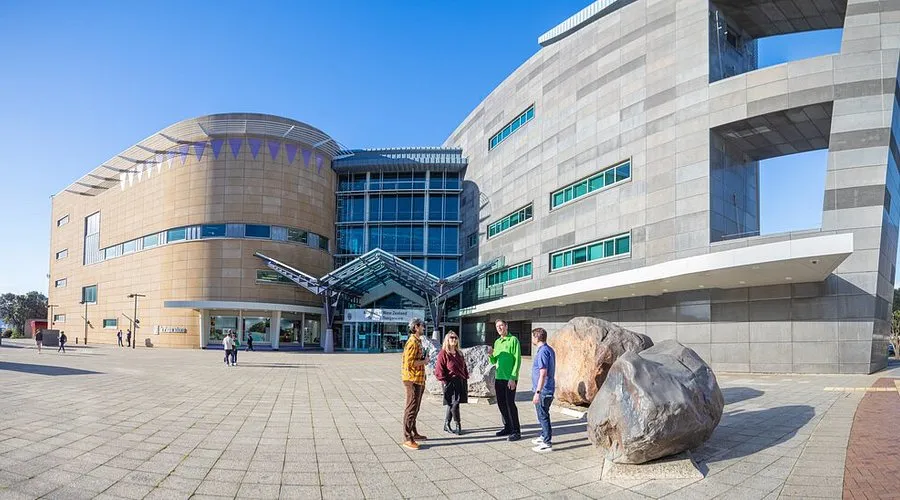
Te Papa sits on Wellington's waterfront at 55 Cable Street, a massive building stretching 240 meters along the harbor. Since opening in 1998, it has welcomed over 35 million visitors. In July 2025, TripAdvisor named it the top tourist attraction in New Zealand and top 1% worldwide. But the museum is also navigating financial pressure: a two-stage restructure was announced to cut rising costs, and visitor numbers were down 15% last year compared to the previous year, partly due to the introduction of international visitor charges in September 2024.
Here is the current admission reality: free for New Zealand residents, NZ$35 for international visitors 16 and over (valid for 48 hours), and free for all children under 16. The 48-hour ticket means you can return the next day, which is smart because the museum is large enough to warrant two visits. Some special exhibitions carry separate charges.
Chief Executive Courtney Johnston and Kaihautū Dr Arapata Hakiwai have been transparent about the challenges. The international visitor charge generated over NZ$2.6 million in its first year, exceeding targets. Domestic visitation remained stable. But the restructure is ongoing, with phase one focused on middle management and phase two extending to the broader team in 2026.
He Toi Whakairo: The Exhibition That Could Reverse the Decline
Opening August 29, 2026, He Toi Whakairo: The Art of Māori Carving is one of the most comprehensive exhibitions of Māori carving in decades. It brings together 147 taonga, including works dating back seven centuries. Senior curator mātauranga Māori Dougal Austin told 1News that many of the taonga have never been publicly displayed before.
The exhibition runs for five years, which means local visitors can return repeatedly while international visitors get a chance to see taonga Māori that have been in storage for generations. Te Papa's own visitor research found that nearly half of overseas tourists wanted to see more exhibitions related to Māori history. This is the museum's response.
If you are visiting Te Papa after August 2026, this is the show to prioritize. It is a five-year installation, so you do not need to rush, but it is the kind of exhibition that defines a museum's reputation.
Slow Burn: Women and Photography
Running from February 28, 2026, Slow Burn: Women and Photography | Ahi Tāmau: Māreikura Whakaahua features over 150 works by 50 artists spanning six decades of women and non-binary photographers in Aotearoa. The exhibition includes work by Fiona Pardington (New Zealand's representative at the 2026 Venice Biennale), Lisa Reihana, Natalie Robertson, and many others.
A photography symposium on February 28, 2026, accompanied the opening, with a keynote from Natalie Robertson and a performance from Ann Shelton's jane says series.
Taonga Māori: The Core Collection
Te Papa's taonga Māori collection is one of the most important in existence. These are not artifacts in the Western museum sense. They are living treasures that maintain active spiritual connections to the iwi (tribes) and whānau (families) from which they originate.
Te Hau ki Tūranga, a carved meeting house dating from the 1840s, is one of the oldest surviving Māori meeting houses and one of Te Papa's most significant taonga. The carved panels tell ancestral stories with a narrative complexity that demonstrates the depth of Māori intellectual and artistic traditions.
The Rongomaraeroa Marae on level four is a living marae within the museum, available for events and welcoming all visitors. It is not a reconstruction. It is a functional communal space built using traditional techniques and materials, and it represents Te Papa's commitment to making Māori culture active rather than display-only.
Natural History: Colossal Squid and More
The colossal squid specimen is the star of the natural history galleries. It is one of the largest and most complete examples ever recovered, and it draws children and adults alike. The natural history galleries also cover New Zealand's unique evolutionary history: 80 million years of isolation produced an ecosystem dominated by birds (including the extinct moa and the iconic kiwi), the ancient tuatara, and plant communities found nowhere else.
The earthquake and geology exhibits are particularly relevant to Wellington, which sits on a major fault line. The interactive earthquake house lets you experience what a significant quake feels like. It is one of the museum's most popular attractions.
New Zealand Art: McCahon and Beyond
The New Zealand art collection traces the development of a distinctive national artistic identity. Colin McCahon is the headline name, widely regarded as New Zealand's greatest painter. His works combine landscape, text, and spiritual questioning in paintings of extraordinary power. Rita Angus, Toss Woollaston, Gordon Walters, and other major New Zealand artists round out the collection.
Contemporary Māori art is a particular strength. Ralph Hotere, Shane Cotton, Lisa Reihana, and Michael Parekowhai have created works that engage with Māori identity, colonial history, and contemporary experience with a directness that makes the collection feel current rather than historical.
What Needs Work
Visitor numbers are down. The 15% decline is real and the museum leadership has acknowledged it. The international visitor charge is part of the cause, but cost-of-living pressures on domestic visitors also play a role. He Toi Whakairo is partly designed to reverse this trend.
The restructure creates uncertainty. Staff morale is a concern during any restructure, and a two-stage process means the uncertainty lasts longer. The museum says visitor operations will continue as usual, but expect some disruption to programming as positions are reviewed.
Some galleries feel dated. The natural history galleries on level two have not been significantly updated in years. The interactive elements work but feel like early-2000s museum design compared to what newer institutions are doing.
The café is adequate but not great. Multiple dining options exist on site, but none of them are worth writing home about. Wellington's food scene is excellent. Eat elsewhere.
How It Compares
Against the National Gallery of Victoria in Melbourne, Te Papa is a different type of institution. NGV is an art museum. Te Papa is a national museum that includes art, natural history, cultural heritage, and contemporary culture. If you want pure art, go to NGV. If you want to understand New Zealand as a country, go to Te Papa.
Against the National Gallery of Canada in Ottawa, the comparison is more apt. Both are national museums with bicultural or multicultural mandates. Both charge admission to non-residents. But Te Papa's bicultural governance model, where Māori culture is an equal partner rather than a subject of study, is more structurally progressive than the NGC's approach to Indigenous art.
Against the Australian Museum in Sydney, Te Papa is more innovative in its exhibition design and bicultural approach, though the Australian Museum has stronger natural history collections overall.
Insider Tips for Visiting
- Use the 48-hour ticket. International admission is NZ$35 but valid for two days. Split your visit: one day for Māori and Pacific collections, one day for natural history and New Zealand art.
- Go on a weekday morning. Weekends and school holidays bring families. Weekday mornings are quieter.
- Thursday late nights until 8 PM. The museum stays open late on Thursdays. This is the best time for international visitors who want to avoid crowds.
- Start on level four. The Māori collections and Rongomaraeroa Marae are on level four. Work your way down through Pacific collections, natural history, and New Zealand art.
- Budget three to four hours minimum. The museum is large. Six floors. 1.5 million collection items (a fraction on display). You cannot do it in less than three hours.
- Do not miss the colossal squid. It is on the natural history floor. Children will want to spend 20 minutes here alone.
- Check exhibition dates at tepapa.govt.nz before visiting. He Toi Whakairo opens August 29, 2026. Slow Burn runs from February 28, 2026.
- Combine with the Wellington waterfront. Te Papa sits on the waterfront walk. Take the cable car to the Botanic Garden, walk down through the city, and end at Te Papa. That is a perfect Wellington day.
Final Verdict: Who Is This Actually For?
Te Papa is for anyone who wants to understand New Zealand as a country, not just see its art. The bicultural philosophy is not a marketing tagline. It is embedded in the governance, the curatorial practice, and the building itself. No other national museum in the world operates this way at this scale.
It is not for someone looking for a traditional European-style art museum. Go to the National Gallery in London for that. And it is not free anymore for international visitors, which changes the value proposition. At NZ$35, you need to commit to a half-day minimum to get your money's worth.
But the taonga Māori collection, the colossal squid, the He Toi Whakairo carving exhibition, and the bicultural approach make Te Papa one of the most distinctive national museums in the world. If you are in Wellington, it is the museum to visit. Just plan for two days, not one.
Plan your visit at tepapa.govt.nz. For more on New Zealand and Pacific art, explore our art schools directory or browse courses on Pacific art history.