The Hermitage Museum: Three Million Masterpieces Behind a Sanctions Wall
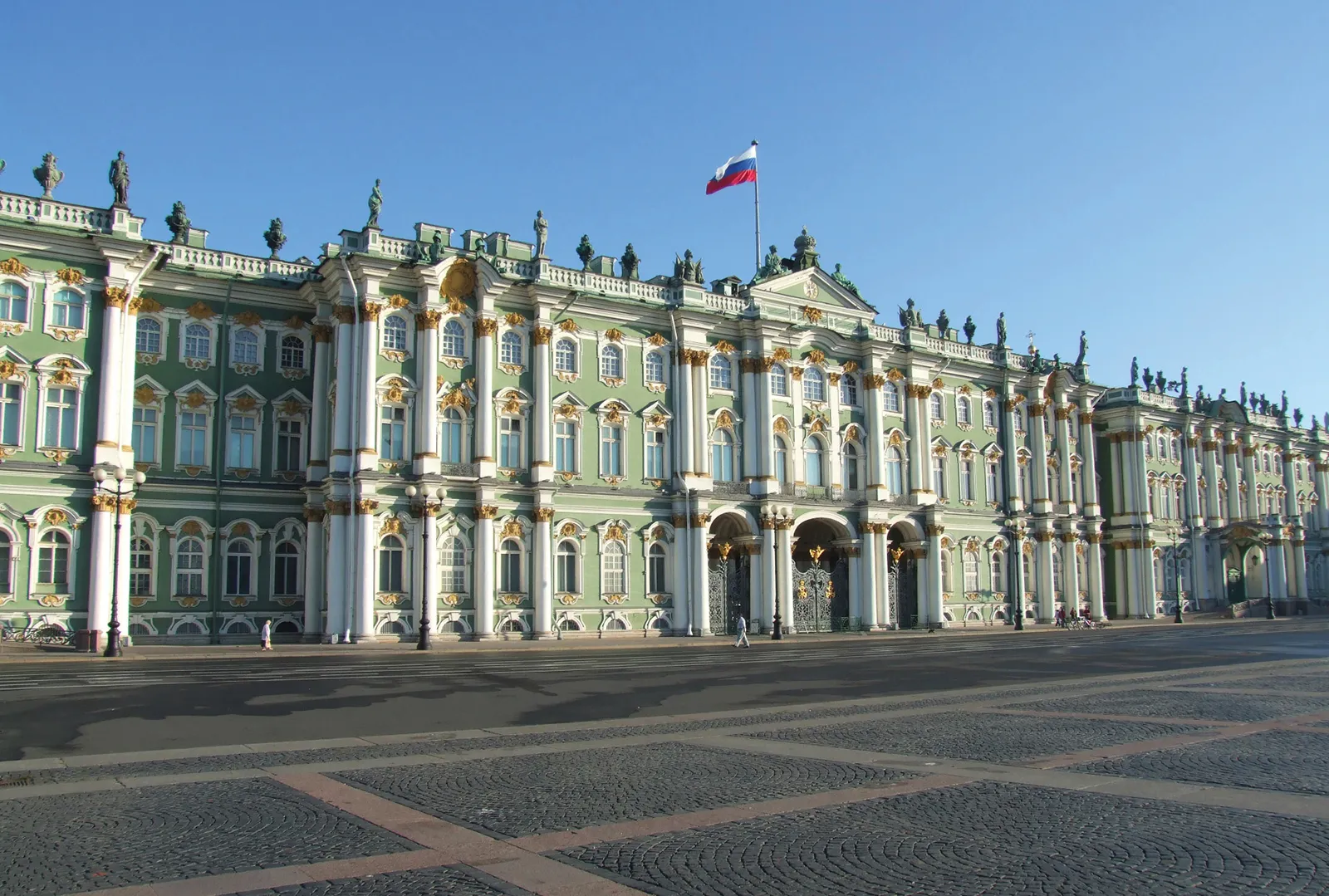
The State Hermitage Museum sits in the Winter Palace of the Romanov tsars, a Baroque building of green and white stone stretching along the Neva River. Catherine the Great founded the collection in 1764, buying entire European collections en bloc and housing them in a private retreat she called her "hermitage." The museum now holds over 3 million objects across five interconnected buildings, with galleries stretching approximately 24 kilometers. You cannot see it all in one visit. You cannot see it all in a week.
The art is extraordinary. Two paintings by Leonardo da Vinci. Rembrandt's Return of the Prodigal Son, one of the most emotionally devastating paintings in existence. Over 40 works by Rubens. Matisse's Dance and Music, commissioned by Sergei Shchukin for his Moscow mansion. Picasso across his Blue Period, Rose Period, and Cubist phases. The collection of French avant-garde art assembled by Shchukin and Ivan Morozov is one of the most important in the world, and it is here because two Russian merchants recognized the genius of Matisse and Picasso before most of the European art world did.
But you cannot write about the Hermitage in 2026 without writing about politics, because the museum and its director are now entangled in the consequences of Russia's war against Ukraine.
The Piotrovsky Sanctions
On April 23, 2026, the European Union placed Mikhail Piotrovsky, director of the Hermitage since 1992, on its 20th sanctions package. The EU document calls Piotrovsky "a close associate of Vladimir Putin" who "has actively supported and justified Russia's war of aggression against Ukraine." It cites his comparison of Russian culture's global role to the "special military operation," the Kremlin's term for the war, and his backing of legislation enabling the incorporation of cultural items from Ukrainian museums into Russia's State Museum Fund.
The sanctions also reference unauthorized archaeological excavations in occupied Crimea conducted under the Hermitage's authority. In a related case, Alexander Butyagin, a Hermitage archaeologist who had worked on excavations in Crimea, was arrested in Poland in December 2025 at Ukraine's request and released in April 2026 as part of a prisoner exchange.
Piotrovsky, who turned 80 in December 2024, had his contract extended for another five years in September 2025. He has run the Hermitage for 33 years. His father, Boris Piotrovsky, directed the museum from 1964 until his death in 1990. In a 2021 interview with The Art Newspaper, Piotrovsky described his relationship with Putin: "It's not that I'm Putin's person since the early 90s. Putin has been my person from the early 90s."
The practical consequences of the sanctions are significant. EU museums cannot collaborate with the Hermitage while Piotrovsky is director. The Hermitage announced a moratorium on all loans to "unfriendly countries" in June 2022, and Russia's Culture Ministry imposed a broader freeze on all Russian museum loans around the same time. Works that were on exhibition in Europe when the war began had to be negotiated back through customs, with some shipments stuck for months.
In June 2026, the Hermitage canceled all archaeological expeditions in annexed Crimea after Kremlin-backed authorities declared a state of emergency due to Ukrainian attacks and fuel shortages.
The Collection: What Is Actually Here
Despite the political isolation, the collection remains one of the finest on Earth.
Leonardo da Vinci's Benois Madonna and Madonna Litta are two of only about 15 surviving Leonardo paintings. The Benois Madonna, with its intimate depiction of the Virgin and Child and its mastery of light and shadow, is worth the trip alone.
Rembrandt's The Return of the Prodigal Son (circa 1668) hangs in a dedicated room with other Rembrandt works. Painted near the end of the artist's life, it depicts the biblical parable with a compassion that transcends its religious subject. The father's embrace of his ragged son, rendered in Rembrandt's golden light emerging from darkness, has been moving viewers to tears for 350 years.
The Rubens collection numbers over 40 paintings, one of the largest anywhere. The Matisse and Picasso holdings from the Shchukin and Morozov collections include Dance, Music, and works from every period of Picasso's early career. Cezanne, Gauguin, Monet, Van Gogh are represented with major works.
The Russian art collection spans medieval icons through the avant-garde, including Kandinsky and Malevich. The Scythian gold and archaeological collections document the ancient civilizations of the Eurasian steppe.
The Winter Palace as Art
The building itself is a primary attraction. The Jordan Staircase, with its white marble steps and gilded banisters, is one of the most photographed interiors in any museum. The Pavilion Hall houses the Peacock Clock, an 18th-century automaton that still functions. The Malachite Room, columns clad in green malachite, was used as a reception room by the tsars. The Gold Drawing Room is covered floor to ceiling in gilded stucco. Walking through these rooms is like walking through the 19th century's idea of power and wealth.
How It Compares
The Hermitage is one of the three or four greatest encyclopedic museums in the world, alongside the Louvre, the British Museum, and the Metropolitan Museum of Art. In terms of collection quality, it holds its own against all three. The Leonardo paintings, the Rembrandt, the Matisse and Picasso holdings from Shchukin and Morozov are individual attractions that justify a trip to Saint Petersburg.
But the political context changes the comparison. The Louvre, British Museum, and Met are active participants in international museum networks, with active loan programs, traveling exhibitions, and scholarly exchange. The Hermitage is increasingly isolated. EU sanctions on its director mean that European museums cannot formally collaborate with the institution. Whether this matters to you as a visitor depends on whether you separate the art from the institution that holds it.
Against the Istanbul Archaeology Museum, the Hermitage is vastly larger and more comprehensive, but both institutions hold artifacts from contested territories and face questions about provenance and cultural heritage.
Insider Tips
Go on Thursday evening. The museum is open until 9 PM on Thursdays, and the evening light in the palace rooms is better than daytime. The crowds are also thinner.
The Rembrandt room is the emotional center. Do not rush through it. The Return of the Prodigal Son alone rewards 15 minutes of quiet looking.
The Impressionist and Post-Impressionist galleries are in the General Staff Building, across Palace Square from the Winter Palace. You need a separate ticket or a combined ticket to access both buildings. Do not assume one ticket covers everything.
The Peacock Clock operates once a week. Check the schedule. Seeing the automaton in motion is a different experience from seeing it static.
Bring comfortable shoes. The galleries stretch for 24 kilometers. You will walk more than you expect.
Practical Information
Admission: 700 rubles for Russian citizens, higher for foreign visitors (check current rates). Free admission on the third Thursday of each month.
Hours: Tuesday through Sunday, 10:30 AM to 6 PM. Thursdays until 9 PM. Closed Mondays.
Getting there: Palace Square, 2, Saint Petersburg. Nearest metro station is Admiralteyskaya.
Website: hermitagemuseum.org
Final Verdict: Who Is This Actually For?
People who want to see one of the greatest art collections ever assembled, housed in one of the most opulent buildings ever constructed. The Leonardos, the Rembrandt, the Matisse and Picasso holdings are worth the journey. But go with full awareness of the context. The museum's director is now EU-sanctioned. The institution is isolated from Western museum networks. Archaeological expeditions in occupied Crimea have been canceled not by choice but by military necessity. The art is magnificent. The institution around it is a product of Russian state power, and that power is currently being used in ways that have made the Hermitage a museum under siege.