The Getty Museum: Free Admission, Billion-Dollar Architecture, and the Best View in Los Angeles
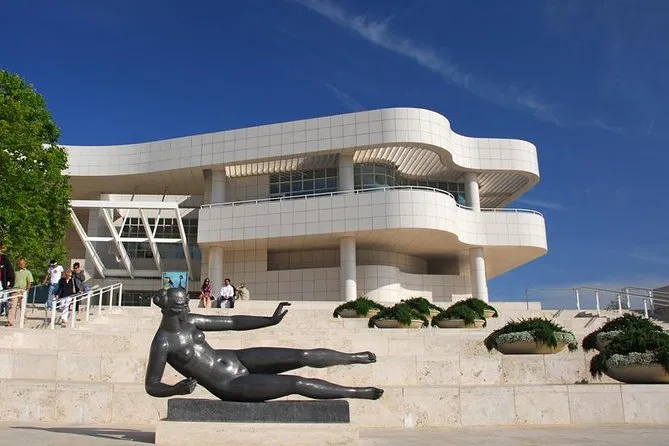
You take a tram up a hillside in Brentwood and arrive at a campus of white travertine buildings glowing in the California sun. The city spreads out below you, the Pacific shimmers to the west, and the art inside is genuinely world-class. Admission is free. Parking is $25. This is the Getty Center, and it remains one of the most generous cultural investments in American history.
The Getty Center opened in 1997 after more than a decade of construction at a cost of approximately $1.3 billion. Richard Meier designed the campus using 1.2 million square feet of Italian travertine, the same stone used in the Colosseum. The result is the most significant late-20th-century museum campus in the United States, and it continues to evolve under director Timothy Potts, who has been acquiring aggressively and programming ambitiously since taking the helm.
The Collection: Focused but Exceptional
The Getty's European paintings collection is not large, but it is curated with a precision that larger museums could learn from. Van Gogh's Irises (1889), painted at the asylum in Saint-Remy-de-Provence, is the museum's most famous painting and one of the most reproduced images in art history. Seeing it in person is different from seeing it on a postcard. The brushwork is thicker, the colors more saturated, and the emotional weight heavier.
Rembrandt's The Abduction of Europa shows the Dutch master rendering a mythological scene with the warmth and psychological complexity he brought to portraits. Monet, Cezanne, Renoir, Mantegna, Rubens, Turner are all represented with carefully chosen works. The collection spans the 13th through 19th centuries and is particularly strong in Italian Renaissance, Dutch and Flemish, and French painting.
The decorative arts galleries hold some of the finest French furniture and Sevres porcelain in the United States, much of it originally created for royal and aristocratic interiors. The manuscripts collection features illuminated books of extraordinary beauty. The sculpture collection spans Renaissance marble through 19th-century bronze.
Photography: The Best Collection You Probably Do Not Know About
The Getty's photography holdings are among the most important in the world, spanning from the 1830s to contemporary practice. In February 2026, the museum acquired 189 Irving Penn photographs from the Irving Penn Foundation, including the entire Cuzco series created while the photographer was traveling in Peru. Combined with the 252 gelatin-silver and platinum-palladium prints from Penn's Small Trades series acquired in 2008, this makes the Getty a key resource for Penn scholarship.
The photography galleries rotate regularly, so check the exhibition schedule before visiting. The collection includes works by virtually every major photographer in the medium's history.
The 2026 Exhibition Schedule
The Getty's 2026 program is strong across both the Center and the Villa:
Photography and the Black Arts Movement, 1955-1985 (through July 2026 at the Getty Center) documents the history of the Black civil rights movement in Los Angeles through documentary, fashion, and everyday photography by Los Angeles-based photographers. The exhibition originated at the National Gallery of Art in Washington, D.C.
Odilon Redon: Otherworldly Visions (July 14 to October 18, 2026, at the Getty Center) features the French Symbolist's noir drawings, pastels, and prints from the Getty's own collection. Potts described Redon as an artist who "dissolved the boundaries between the visible and the imagined."
The Egyptian Book of the Dead (March 4 to November 30, 2026, at the Getty Villa) is a rare opportunity to see 19 ancient Egyptian funerary scrolls from the Getty's collection, including one dating back nearly 3,500 years. These fragile papyri and linen fragments are rarely on display. The gallery is carefully lit and climate-controlled. Four of the papyri belonged to women named Webennesre, Ankhesenaset, and Aset, which is notable because most Book of the Dead materials were reserved for men.
The Getty Villa: Antiquities in Malibu
The Getty Villa in Malibu is a separate museum housed in a recreation of the Villa dei Papiri at Herculaneum. It holds the collection of Greek, Roman, and Etruscan antiquities: sculptures, vases, jewelry, and objects documenting the classical world. The Villa is worth a separate trip from the Center, and the Book of the Dead exhibition running through November 2026 gives you a specific reason to go now.
The Villa requires a separate timed-entry reservation, even though admission is free. You cannot just show up.
How It Compares
The Getty is the wealthiest art museum in the world, with an endowment of approximately $8 billion. That financial independence gives it advantages no other American museum can match: free admission, aggressive acquisition budgets, and the ability to fund conservation and research at scale.
Against the Art Institute of Chicago, the Getty has a smaller but more finely curated European collection. The Art Institute wins on breadth and depth, but the Getty wins on setting and price. Against the Metropolitan Museum of Art, the Getty is a boutique: focused, pristine, and free. The Met is a cathedral: enormous, encyclopedic, and pay-what-you-wish.
The Guggenheim Museum in New York charges $30 for admission. The Getty charges nothing. If you are comparing major American art museums by value, the Getty wins.
Insider Tips
Go on Friday evening. The Center is open until 9 PM on Fridays, and the sunset views over Los Angeles from the West Pavilion terrace are the best in the city. The crowds thin out after 5 PM.
Parking is cheaper after 3 PM. $25 during the day, $15 after 3 PM. If you are coming for the Friday evening session, you save $10.
The Central Garden changes with the seasons. Robert Irwin designed it as a living sculpture, and the plantings rotate. Spring and fall are the best times. The garden is worth 30 minutes of your time even if you do not go inside the galleries.
Make Villa reservations well in advance. The Getty Villa has limited capacity and timed entry. Book at least a week ahead, especially for weekends.
The tram ride is part of the experience. The three-minute ride from the parking garage to the campus gives you a gradual reveal of the architecture and the view. Sit on the right side going up.
Practical Information
Admission: Free. Parking $25 ($15 after 3 PM). Getty Villa requires separate free timed-entry reservation.
Hours: Tuesday through Sunday, 10 AM to 5:30 PM. Fridays until 9 PM. Closed Mondays.
Getting there: 1200 Getty Center Drive, Los Angeles. The Getty Villa is at 17985 Pacific Coast Highway, Pacific Palisades.
Book tickets: getty.edu
Final Verdict: Who Is This Actually For?
Anyone in Los Angeles. The free admission, the architecture, the view, and the collection make the Getty the best-value art museum in the United States. If you only have time for one museum in LA, this is the one. The European paintings are excellent, the photography collection is world-class, and the Villa in Malibu gives you a second museum for the price of a parking ticket. Skip it only if you have no interest in art, architecture, or views, in which case you should probably not be in Los Angeles at all.