
Digital Art: The Modern Creative Frontier Explained
From 1960s code art to 2026 AI museums, digital art has transformed what painting and creativity mean. Here is the full history and where it stands now.
Your cart is empty
Browse the store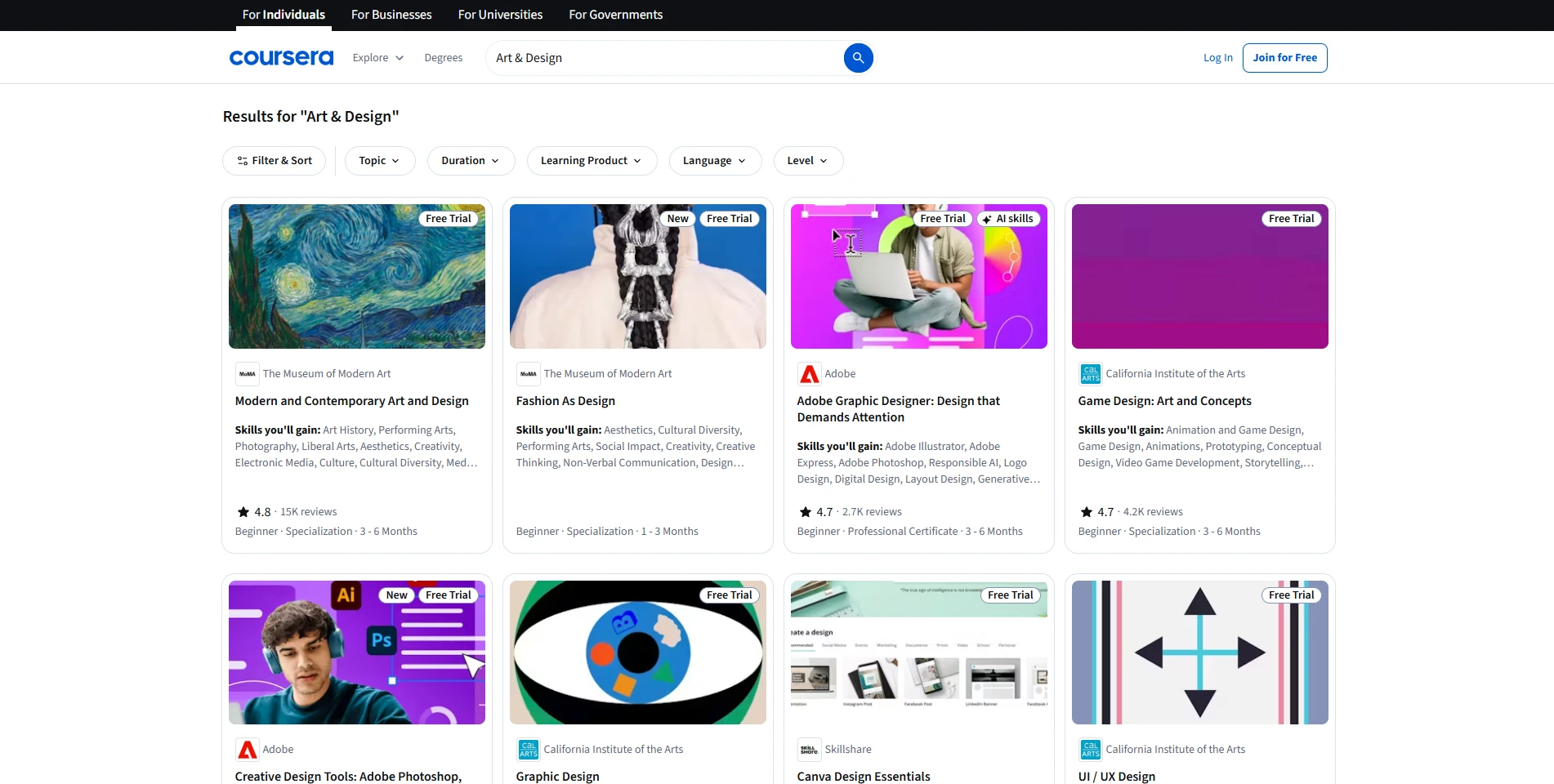
Coursera offers university art courses from CalArts, MoMA, and more. Free to audit, certificates at $49-79/month. Honest review of value and gaps.
Discover other art courses you might be interested in
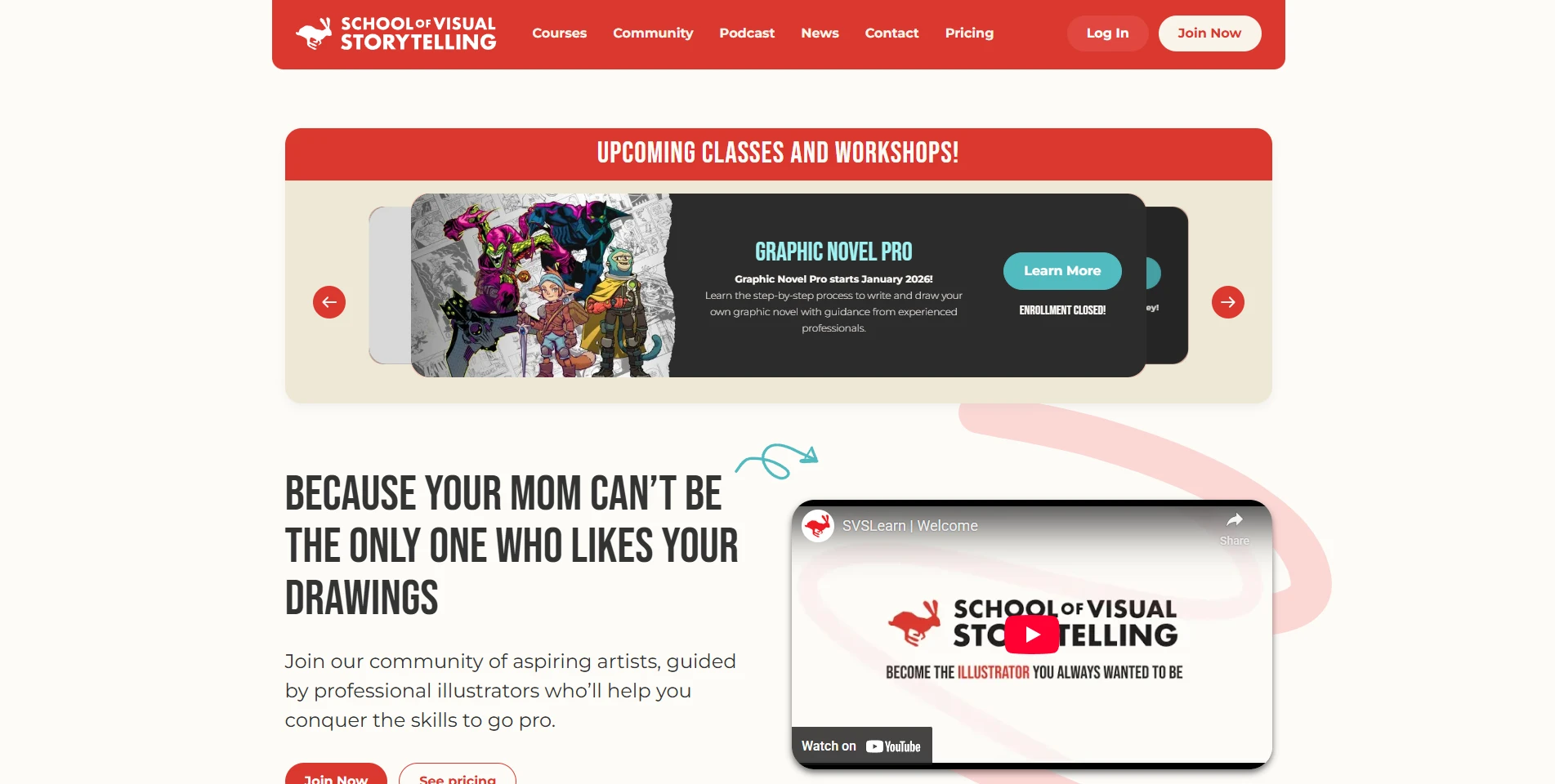
SVS Learn offers 100+ illustration courses from working pros at $250/year. Career-focused curriculum for aspiring illustrators. Honest review.
View details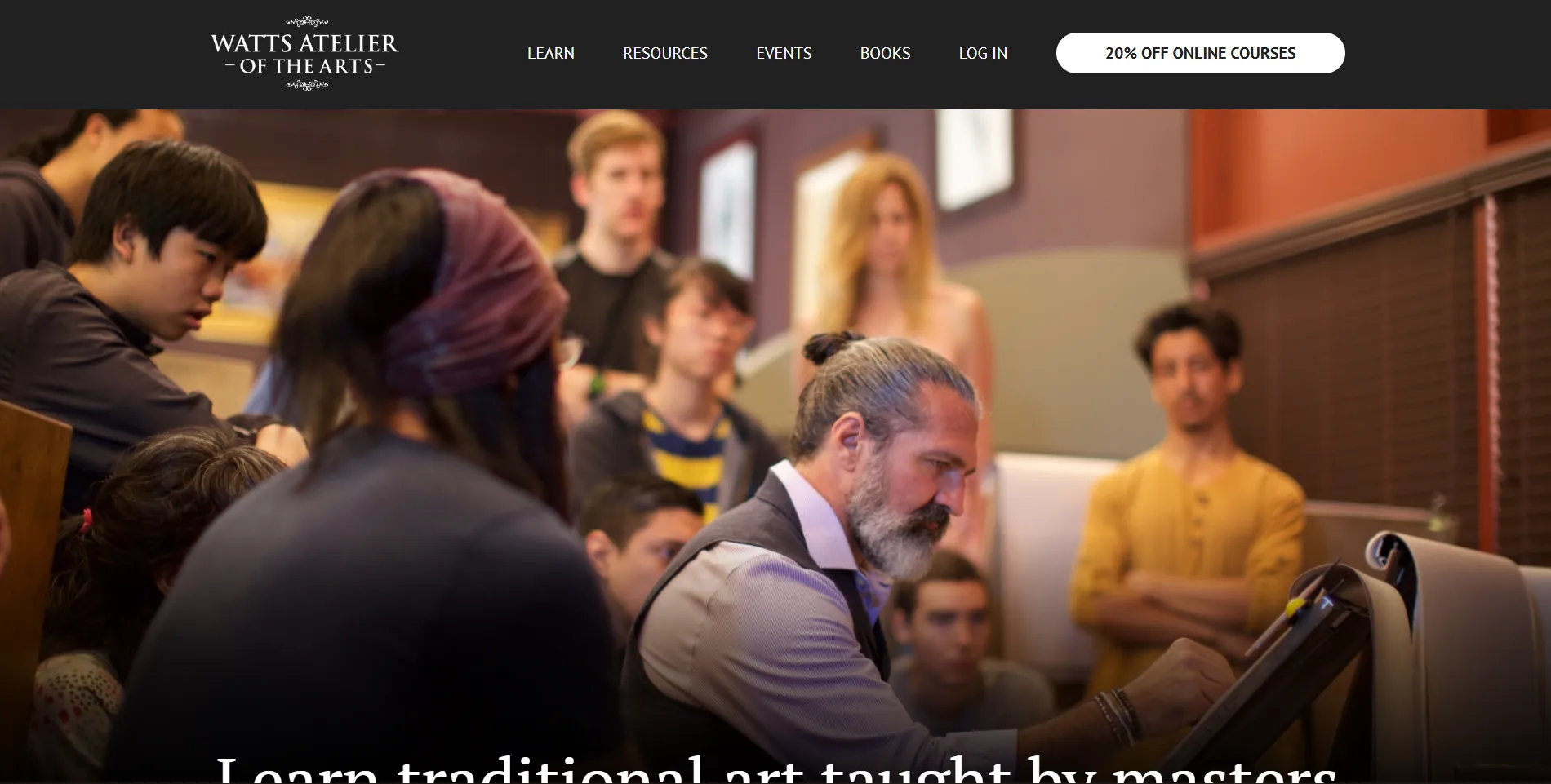
Watts Atelier Online offers 60+ classical art courses at $79-129/month. Structured atelier training with critiques. Honest review of value.
View detailsExplore definitions from our glossary that connect to this course
Propaganda posters use graphic design for political persuasion. Learn their history from WWI to Soviet propaganda to contemporary Ukrainian resistance posters, key artists, and techniques.
Art academies were official schools and standards bodies that controlled art education and exhibitions. From the Academie royale to the Royal Academy, learn their history.
Read more about this topic on our blog
From 1960s code art to 2026 AI museums, digital art has transformed what painting and creativity mean. Here is the full history and where it stands now.

Pop Art turned soup cans, celebrities, and comic strips into fine art. Learn how Warhol, Lichtenstein, and Hamilton used commercial imagery to challenge what counted as art in the 1950s and 60s.

Los Angeles became a global art city through the Light and Space movement, Ferus Gallery, CalArts, the Getty Center, and a gallery scene that grew from Venice Beach to Culver City. From Ed Ruscha to Robert Irwin, here is how LA built an art scene unlike any other.
You can audit a CalArts graphic design course for free on Coursera. The same course, taught on campus at the California Institute of the Arts, would cost you around $52,000 per year in tuition. That alone should explain why Coursera has become the default platform for learners who want academic art education without the financial destruction that typically accompanies it.
But Coursera's art and design catalog has a specific personality, and it is not for everyone. The platform excels at theory, history, and conceptual frameworks. It is weak at teaching you to actually draw, paint, or illustrate. Understanding that distinction before you spend money here will save you from disappointment.
Coursera partners with institutions including CalArts, MoMA, Goldsmiths University of London, and the University of the Arts London to deliver courses and specializations across art history, graphic design, photography, museum studies, and UX design. The content is developed by university faculty and goes through the same academic review processes as on-campus curriculum.
The platform's strength is in areas where academic knowledge matters as much as or more than physical practice. Art history, design theory, typography principles, visual communication strategy, and museum studies are subjects where Coursera's university-backed instruction genuinely outperforms hands-on platforms. You will understand why design principles work, how art movements developed in response to cultural conditions, and what critical frameworks inform contemporary practice.
What Coursera will not do is teach you to paint. If you want to learn digital painting, character design, or figure drawing, you need a different platform. Domestika and Skillshare are better for hands-on creative skills. Schoolism is better for entertainment industry techniques. Coursera is the complement to those platforms, not a replacement.
The Graphic Design Specialization from CalArts is a 5-course sequence covering typography, imagemaking, graphic design history, and brand identity, culminating in a capstone project. The instructors are CalArts faculty, the same educators who teach at one of the most respected art schools in the United States. If you want a grounding in graphic design theory from a legitimate institution without paying CalArts tuition, this is the best option available online.
MoMA's specialization was recently updated in March 2026 and covers modern art, contemporary art, and photography through three courses taught by MoMA educators and curators. You get virtual studio visits with working artists and behind-the-scenes access to MoMA's collection. For anyone who wants to understand the intellectual history of 20th and 21st century art, this is as good as it gets online.
Multiple photography courses cover composition, lighting, post-processing, and portfolio development. These are more theoretical than hands-on, focusing on critical thinking about photographic practice alongside technical instruction.
Coursera's pricing structure has a feature that most people do not know about: you can audit most courses for free. Auditing gives you full access to video lectures and readings without graded assignments, peer reviews, or certificates. If you want knowledge and do not care about credentials, you can take CalArts and MoMA courses without paying a cent.
If you want certificates, Coursera charges $49 to $79 per month while you are enrolled. A specialization that takes 3 months to complete costs roughly $150 to $237 total. Coursera also offers Coursera Plus at $399/year, which includes unlimited access to most courses and specializations. During promotional periods, Coursera runs 40% off sales that bring the annual price down further.
Financial aid is available for learners who cannot afford the subscription fee. The application is straightforward and approval rates are high, particularly for learners in developing countries. If you qualify, you get free access to the complete course experience including graded assignments and certificates.
One important note: if you are a current CalArts student, faculty member, staff, or alumnus, you can access all CalArts Coursera content for free through the Coursera for CalArts program. This is a genuinely valuable perk that many eligible people do not know about.
Coursera is fundamentally different from the other platforms on Quiet Canvas. It is the only one that offers accredited institutional content from named universities and museums.
Compared to Skillshare at $168/year, Coursera is more expensive if you want certificates but free if you only want to audit. Skillshare is better for hands-on creative skills with project-based learning. Coursera is better for theoretical depth and credentials.
Compared to Udemy at $13 to $20 per course, Coursera costs more per month but delivers university-level academic rigor that Udemy's marketplace model cannot match. Udemy instructors are self-published and quality varies wildly. Coursera instructors are university faculty whose courses go through institutional review.
For art history specifically, no other platform comes close. New Masters Academy focuses on studio skills. Proko focuses on figure drawing. Coursera is the only platform where you can take a course designed by MoMA curators.
If you want to learn to draw, paint, or illustrate, Coursera is the wrong platform. The courses are theoretical and academic. You will watch lectures, read materials, and write responses. You will not get the kind of hands-on, technique-driven instruction that SVS Learn or Ctrl+Paint provide.
If you need live feedback or portfolio critique, Coursera's peer-grading system will not satisfy you. Assignments are graded by other students, not by instructors. The feedback quality varies enormously and should not be relied upon for professional-level assessment.
If you are looking for entertainment art or concept art training, Coursera has nothing for you. Look at Schoolism or Brainstorm School instead.
Coursera is the best online platform for learners who want academic art education from named institutions without paying university tuition. It is ideal for self-directed learners who want to understand art history, design theory, and the intellectual frameworks behind creative practice. The free audit option makes it genuinely accessible to anyone with an internet connection.
It is not a replacement for hands-on studio training. Use Coursera to build your theoretical foundation, then pair it with a practical platform like Domestika or Skillshare for the making part. Start by auditing the CalArts Graphic Design Specialization or the MoMA Modern and Contemporary Art Specialization for free, and decide whether the academic approach works for you before spending money on certificates.
Quiet Canvas is a space for artists and art lovers: essays, glossary terms, tools, and curated directories to support your creative practice.
Learn more →


