
Doodle Art Explained: Styles, History, and How Artists Use It
Doodle art is more serious than it looks. From medieval manuscript margins to Zentangle and professional illustration, here is the full story of the humble doodle.
Your cart is empty
Browse the store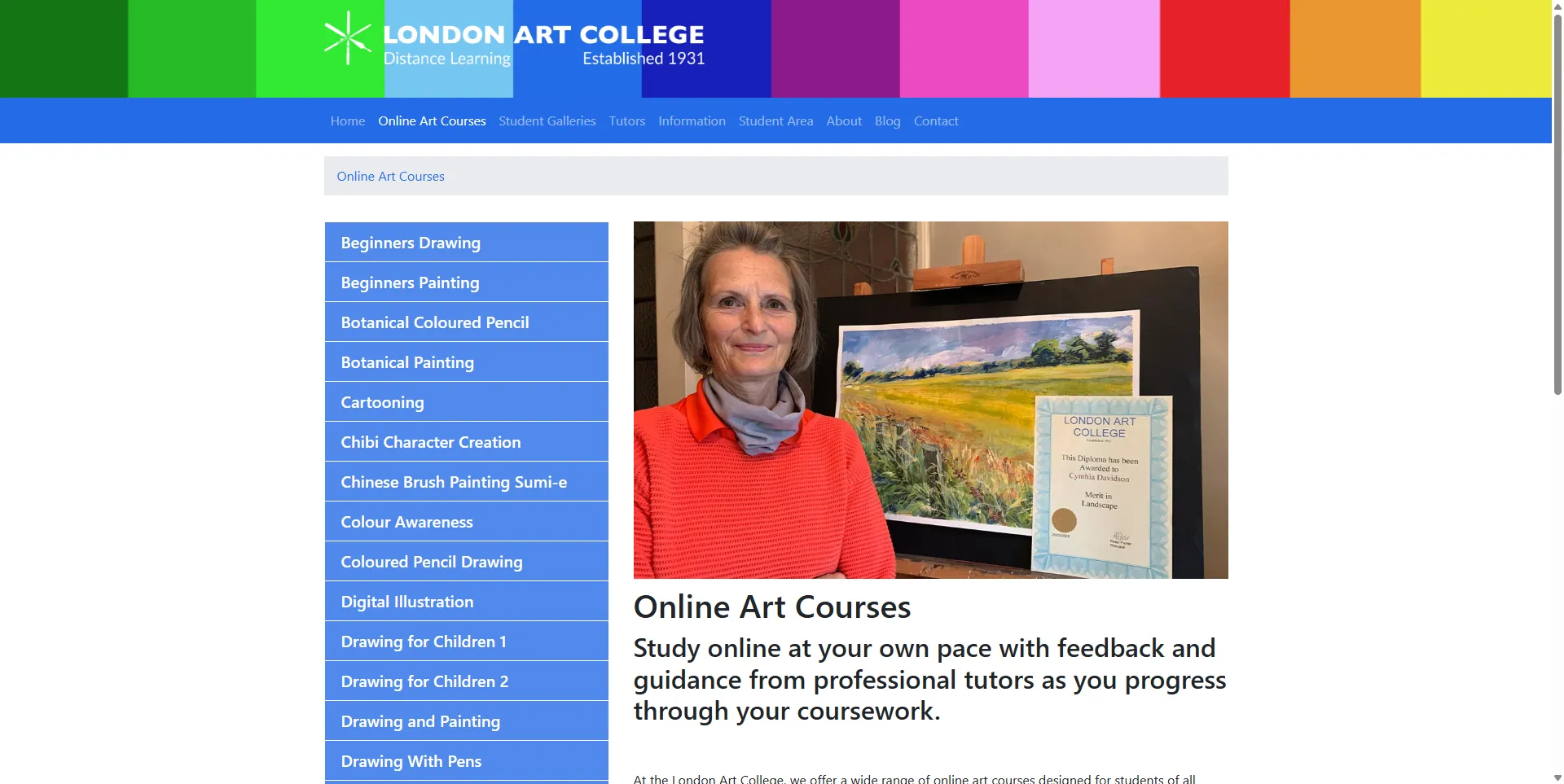
UK-based distance learning art college offering accredited diploma courses in drawing, painting, illustration, and design with personal tutor feedback and flexible self-paced study since 1931.
Discover other art courses you might be interested in
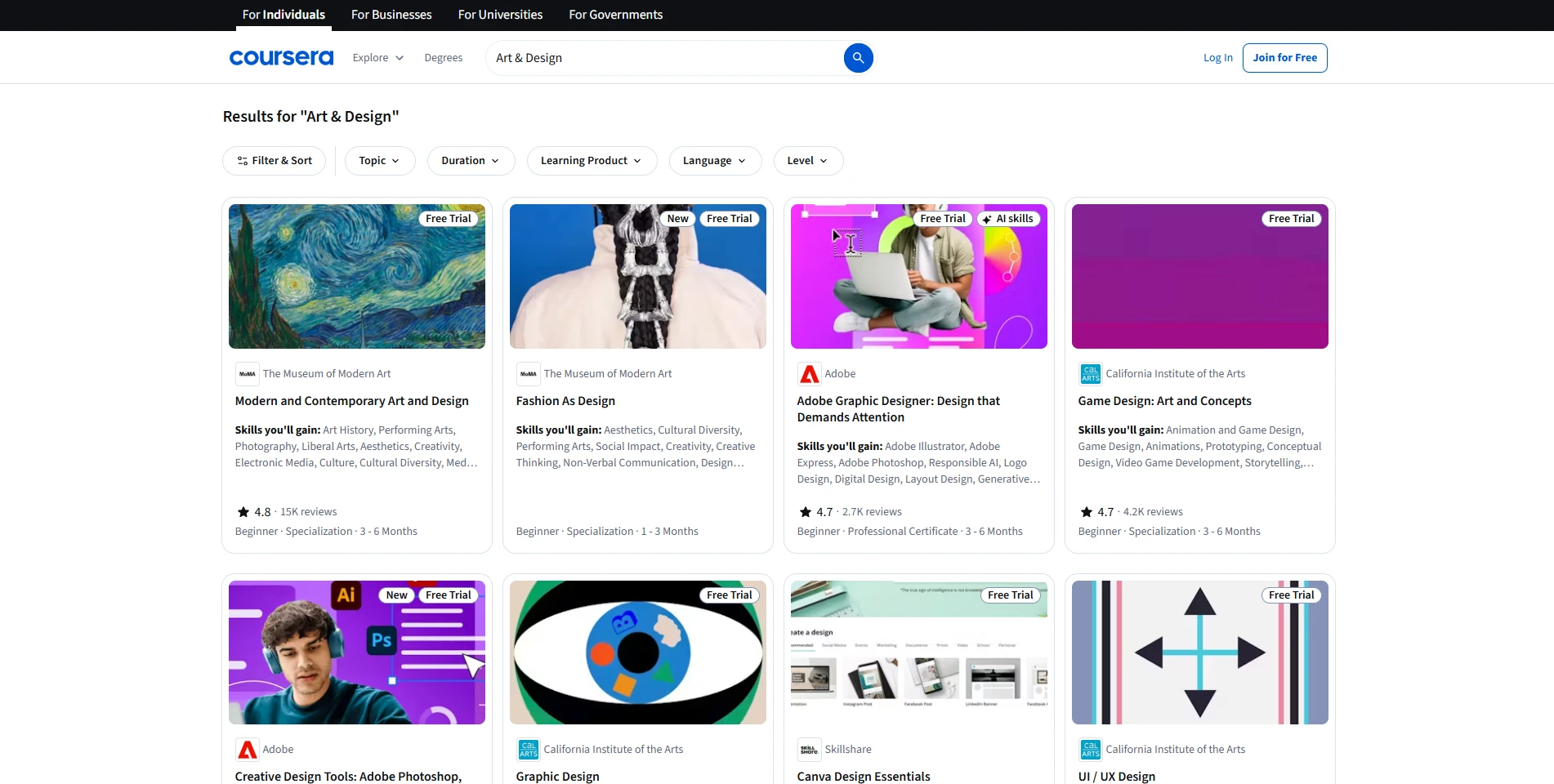
Coursera offers university art courses from CalArts, MoMA, and more. Free to audit, certificates at $49-79/month. Honest review of value and gaps.
View details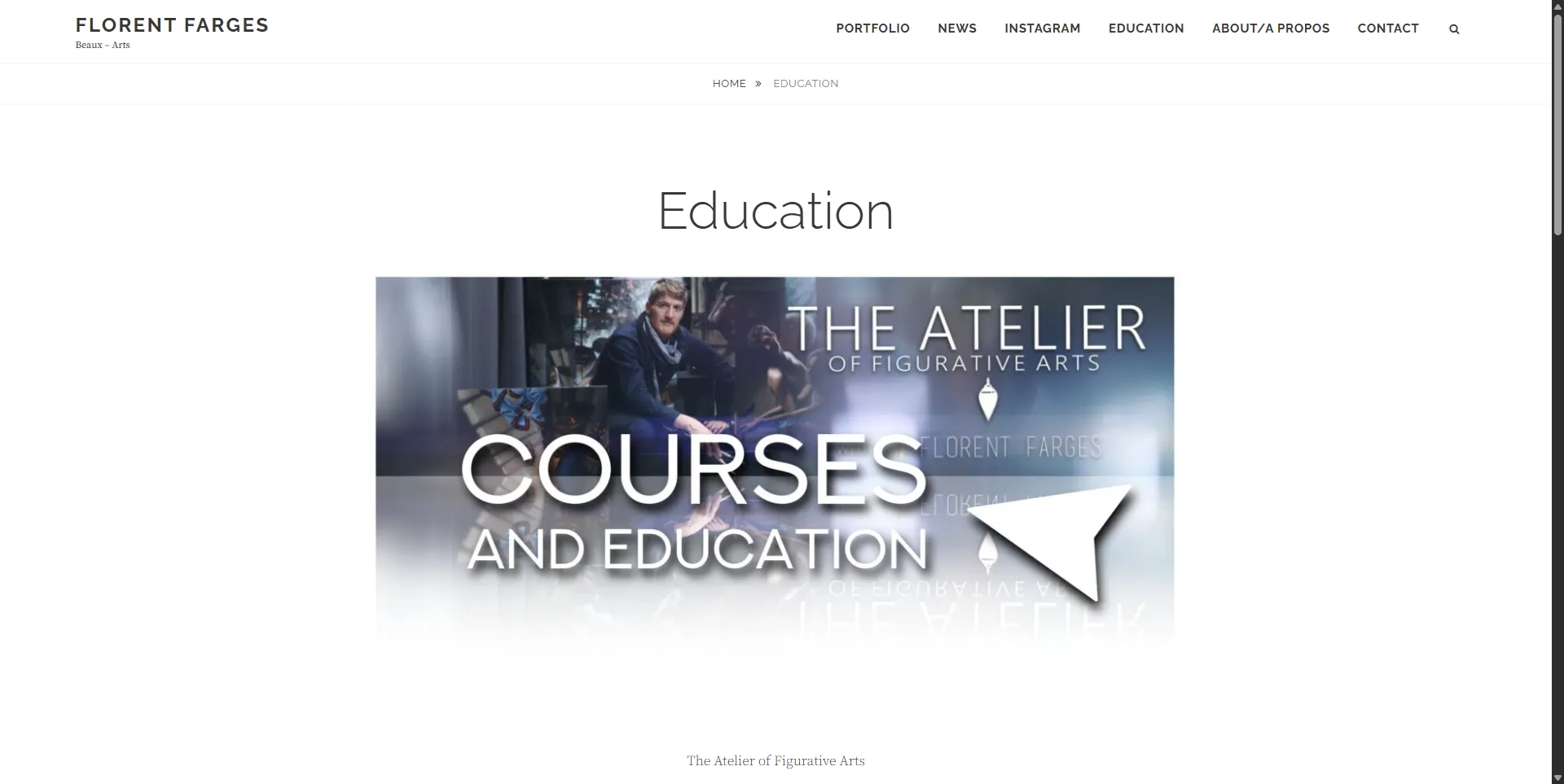
French classical realist painter Florent Farges teaches oil painting, portrait, and figure work through structured online courses grounded in the academic tradition of the French ateliers.
View detailsExplore definitions from our glossary that connect to this course
Blind contour drawing is an exercise where you draw without looking at the paper, training observation over production. From Nicolaides to Betty Edwards, learn its history.
Chalk is a soft drawing material made from natural minerals: black shale, red iron oxide, and white calcite. Learn how Leonardo, Michelangelo, and Watteau used chalk and the trois crayons technique.
Read more about this topic on our blog
Doodle art is more serious than it looks. From medieval manuscript margins to Zentangle and professional illustration, here is the full story of the humble doodle.

52 sketchbook prompts, one for every week of the year. From "draw your morning coffee" to "copy a Renaissance master." No talent required, just a pencil and 15 minutes a week.

Drawing every day accelerates motor learning. 15 minutes a day beats 3 hours once a week. Research shows consistent practice builds skill faster than talent. Here is what happens and how to start.

Lindisfarne Castle, Holy Island, Northumberland
Thomas Girtin
from $14.99

Peonies and Butterfly, from an untitled series of large flowers
Katsushika Hokusai
from $14.99

Plum Garden at Kameido (Kameido Umeyashiki), from the series "One Hundred Famous Views of Edo (Meisho Edo hyakkei)"
Utagawa Hiroshige
from $14.99

Portraits at the Stock Exchange
Edgar Degas
from $14.99
The London Art College has been running distance learning art courses since 1931. That is not a typo. This institution predates the internet, predates television, and predates most of the art education platforms that now compete with it. The reason it has survived for nearly a century is simple: it assigns every student a personal tutor who reviews their work and provides written feedback, which is the one thing that most online art courses still cannot offer at any price point below hundreds of dollars per month.
The model is straightforward. You enrol in a course, receive course materials, complete assignments, submit your work to your tutor, and receive detailed written feedback. There are no fixed class times, no deadlines that cannot be extended, and no requirement to be in any particular location. You have up to two years to complete each course, though most students finish within twelve months.
Course pricing varies by subject. As of 2026:
The college offers over 30 courses across drawing, painting, illustration, and design. Most courses fall in the GBP 395-480 range. The instalment option splits the cost into four equal payments, making it accessible without financing.
Students also get access to exclusive discounts on Derwent art supplies through a partnership with the UK brand, which helps offset material costs.
This is the core differentiator. When you enrol in a London Art College course, you are assigned a specific professional artist or illustrator as your personal tutor. This person reviews every assignment you submit, provides written feedback on what is working and what needs improvement, and guides you through the course at your own pace.
Compare this to watching pre-recorded videos on Domestika or Skillshare, where the instructor has no idea you exist. Or to Drawabox, where peer feedback is free but inconsistent and official critique costs extra. The London Art College model is closer to traditional correspondence education: you submit work, a human reads it, and you get a response tailored to your specific progress.
The tutors are working professional artists and illustrators, not career academics. They bring current professional practice to their feedback. When a tutor tells you your perspective is off, they are speaking from experience using the same skills in their own commissioned work.
The Drawing & Painting Diploma is the foundational course and the most popular starting point. It covers proportion, perspective, tone, texture, and composition through structured assignments that build from basic mark-making to complex still life and figure drawing. Six assignments with tutor feedback, using pencil, charcoal, watercolour, and acrylic.
The Watercolour Painting Diploma covers wet-on-wet and wet-on-dry techniques, colour mixing, wash control, edge quality, and painting landscapes, still life, and figures. The course includes both transparent watercolour and gouache techniques.
The Oil Painting Diploma covers the full range of oil techniques from basic colour mixing through glazing, impasto, and approaches to portrait, landscape, and still life. Surface preparation, medium use, and drying time management are addressed alongside compositional principles.
The Illustration Diploma targets students who want to develop professional illustration skills. It covers drawing, composition, character design, narrative illustration, and technical requirements for print and digital media. Tutors are professional illustrators with publishing, advertising, and editorial experience.
The Digital Illustration Diploma uses free software only: GIMP for bitmap work and Inkscape for vector work. This is a deliberate choice to keep costs down, though it means students using Photoshop or Illustrator may find the interface differences frustrating when their tutor cannot advise on software-specific issues.
London Art College courses are accredited by the Open and Distance Learning Quality Council (ODLQC), the UK's independent accreditation body for distance learning providers. The diplomas are vocational awards issued by the college itself. They do not carry academic credits and are not equivalent to a university degree.
That said, many students use the diploma as a foundation for further study at degree level or as a credential when applying for illustration and design work. The value of the diploma depends on what you need it for. If you need a recognized UK qualification for a specific career path, check whether the employer or institution accepts ODLQC-accredited diplomas before enrolling.
The student body is diverse. Adults who always wanted to learn to draw but never had the opportunity. Career changers developing skills for professional purposes. Retired people pursuing a long-held interest. Younger students building skills before applying to art school.
The distance learning model makes this diversity possible. No fixed class times, no location requirement, and a two-year completion window accommodate nearly any schedule. The personal tutor model ensures that each student receives instruction appropriate to their level, regardless of how diverse the student body is.
Against Evolve Artist, which costs $2,500 and includes professional materials, London Art College is roughly one-fifth the price but does not include supplies. Evolve offers a more structured, mastery-based program with faster feedback. London Art College offers flexibility and a broader range of subjects at a fraction of the cost.
Against Florent Farges, who sells standalone video courses without feedback, London Art College includes the tutor relationship that Farges lacks. Farges offers deeper technical instruction in classical oil painting specifically. London Art College offers breadth across multiple mediums and subjects.
Against SVS Learn, which focuses on illustration with video instruction and some feedback options, London Art College offers a more traditional correspondence model with one-to-one tutor relationships and formal diploma accreditation.
The London Art College model is text-and-image based. Course materials are written, assignments are submitted as images, and feedback is written. There are no video demonstrations, no interactive 3D models, no live-streamed classes. If you learn best by watching someone paint, this format may feel dry compared to platforms like New Masters Academy or Proko.
The technology is functional but not modern. The online submission system works, but it is not a polished learning management system. Students who expect a sleek digital experience may find the platform dated.
London Art College is for adults who want personal tutor feedback without paying thousands. It is for people who need flexibility and cannot commit to fixed class times. And it is for students who value written, considered feedback over video demonstrations and community critique.
It is not for visual learners who need to watch demonstrations. It is not for anyone seeking a university-equivalent qualification. And it is not for artists looking for cutting-edge digital art instruction.
Browse the full course catalogue at londonartcollege.co.uk and read the student testimonials on individual course pages before enrolling.
Quiet Canvas is a space for artists and art lovers: essays, glossary terms, tools, and curated directories to support your creative practice.
Learn more →