Pennsylvania Academy of the Fine Arts: America's Oldest Art School and Museum
The Pennsylvania Academy of the Fine Arts holds a distinction that no other institution in the United States can claim: it is simultaneously the oldest art museum and the oldest art school in America, founded in 1805 by the painter and naturalist Charles Willson Peale and the sculptor William Rush. For more than two centuries, PAFA has occupied a unique position in American art education, combining the functions of a teaching institution and a collecting museum in ways that give students direct, sustained access to one of the finest collections of American art in existence.
The school's history is inseparable from the history of American art itself. Thomas Eakins, whose realist paintings of athletes, surgeons, and ordinary Philadelphians are among the greatest works in the American tradition, studied and later taught at PAFA, where his insistence on working from nude models caused a scandal that led to his resignation in 1886. Mary Cassatt, the only American artist to exhibit with the French Impressionists, studied at PAFA before moving to Paris. Winslow Homer, whose seascapes and genre paintings define a particular vision of American life, was associated with the school. The list of significant American artists who passed through PAFA's studios over two centuries reads like a survey of the national tradition.
The Building and the Museum
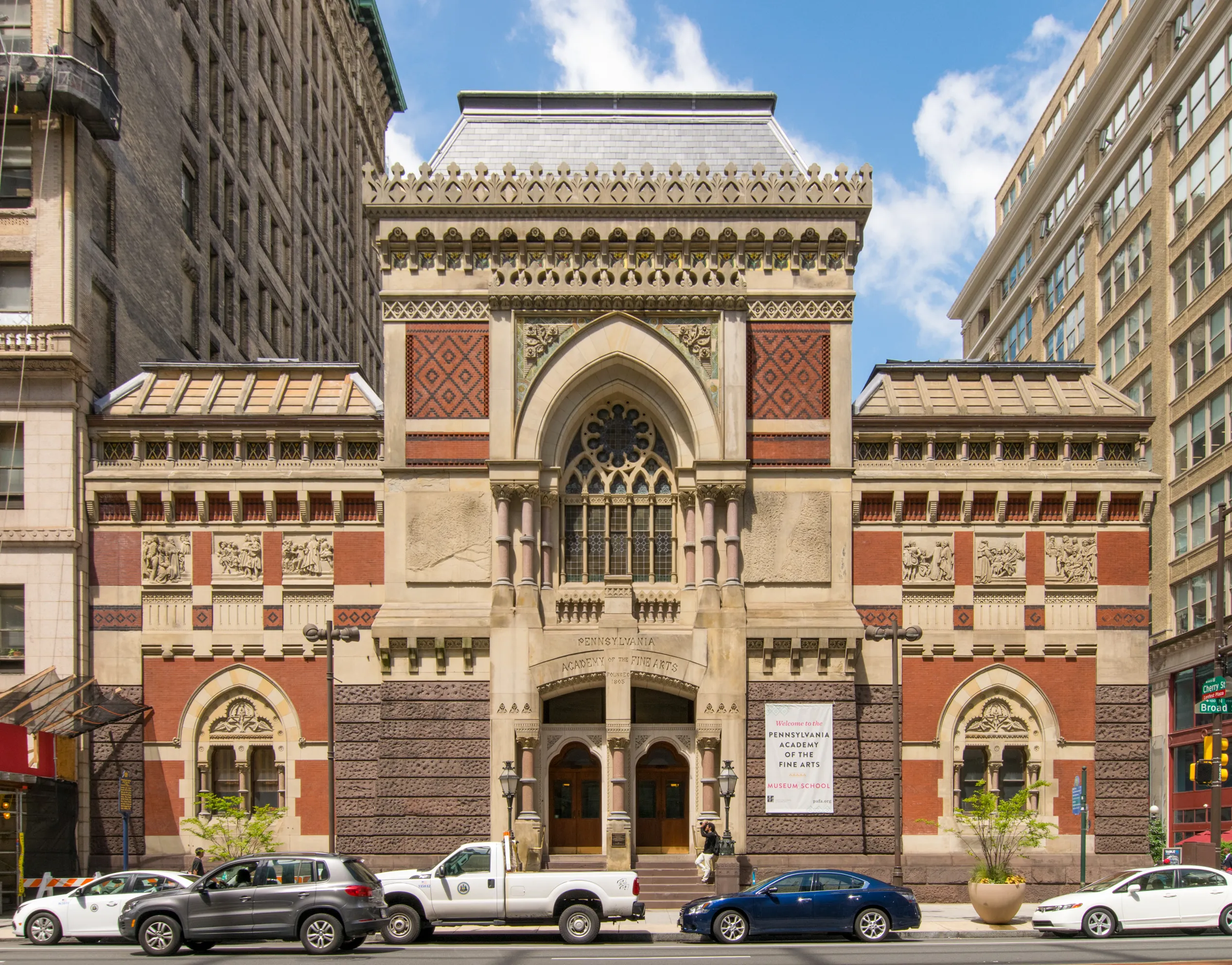
PAFA's main building, designed by Frank Furness and completed in 1876, is one of the masterpieces of American Victorian architecture. The building's polychrome stonework, Gothic and Moorish ornamental details, and dramatic spatial sequences make it one of the most extraordinary educational buildings in the country, and it was designated a National Historic Landmark in 1975. Walking through its galleries and studios, students are surrounded by the accumulated history of American art in a way that is simply not possible in a purpose-built contemporary building.
The PAFA Museum holds over 2,000 works spanning American art from the eighteenth century to the present, with particular strengths in nineteenth-century American painting and sculpture. The collection includes major works by Eakins, Cassatt, Homer, John Singer Sargent, Childe Hassam, and dozens of other significant American artists. Students have direct access to this collection as part of their education, which means studying alongside the actual paintings and sculptures that define the American tradition rather than reproductions.
The museum's galleries are integrated with the school's studios, which means that the boundary between the educational institution and the collecting museum is deliberately permeable. Students encounter the collection constantly, not as a separate destination but as part of the daily environment of their education. This integration shapes how PAFA students think about their own practice in relation to the history of American art.
The BFA Program
PAFA's Bachelor of Fine Arts is a four-year program that combines studio practice with art history, critical theory, and liberal arts coursework through a partnership with the University of the Arts in Philadelphia. The program covers painting, drawing, sculpture, printmaking, photography, illustration, ceramics, and interdisciplinary practice, with students developing their work across media under the guidance of faculty who are active practitioners.
The curriculum has a strong emphasis on traditional skills alongside contemporary practice. PAFA believes that serious artists need a genuine command of drawing, painting, and sculptural technique, and the program provides rigorous training in these foundational disciplines as the basis for more experimental and conceptual work. This emphasis on craft and technique distinguishes PAFA from more conceptually oriented programs and reflects the school's conviction that technical mastery and artistic vision are complementary rather than opposed.
The Penn BFA program, a partnership with the University of Pennsylvania, allows students to earn both a BFA from PAFA and a BA from Penn in four years, combining studio training with a full liberal arts education. This joint degree is highly competitive and provides students with the intellectual breadth of a major research university alongside the studio rigor of PAFA.
The MFA Program
PAFA's MFA program is a two-year program that provides advanced studio space and close mentorship from faculty who are significant figures in the Philadelphia and national contemporary art world. The program has a strong emphasis on studio practice, with students spending the majority of their time in their studios developing their work, supported by regular critiques, visiting artist lectures, and seminars in art history and critical theory.
The Low-Residency MFA provides an alternative path for students who cannot relocate to Philadelphia full-time. The program combines intensive residency periods with independent work during the academic year, and it is designed for working artists who want to pursue advanced study while maintaining their existing professional and personal commitments. The low-residency format has attracted a diverse group of students from across the country and internationally, and it has developed a strong reputation for producing graduates who bring genuine maturity and experience to their practice.
Philadelphia and the Art Scene
Philadelphia is one of the most underrated art cities in the United States, with a rich concentration of museums, galleries, and cultural institutions that provide a stimulating context for PAFA students. The Philadelphia Museum of Art, one of the largest and most important art museums in the country, is within walking distance of the PAFA campus. The Barnes Foundation, which holds one of the most extraordinary collections of Impressionist and Post-Impressionist painting in the world, is also nearby. The Rodin Museum, the only museum outside France dedicated to the work of Auguste Rodin, is a few blocks away.
Philadelphia's relatively affordable cost of living compared to New York makes it possible for students to maintain a serious art practice without the financial pressure that characterizes study in more expensive cities. The city's art scene, while smaller than New York's, is genuinely active and supportive of emerging artists, and many PAFA graduates choose to remain in Philadelphia after graduation, contributing to a creative community that has been shaped by the school's presence for over two centuries.
Tuition and Financial Aid
Tuition at PAFA for the 2025-26 academic year is approximately $45,750 for undergraduate programs and $40,500 for graduate programs. PAFA offers both need-based financial aid and merit scholarships, and the school actively encourages all applicants to apply for financial assistance. The school's financial aid office works with students to identify external scholarship opportunities, and PAFA's connections to the Philadelphia art world provide pathways to internships, exhibitions, and professional networking.
The Bottom Line
PAFA is one of the most historically significant art schools in the United States, combining the oldest art museum in America with a rigorous studio education in a landmark building that is itself a work of art. Its emphasis on traditional skills alongside contemporary practice, its direct access to a world-class collection of American art, and its location in Philadelphia's rich cultural landscape make it a genuinely distinctive choice. For students who want to develop their practice in direct relationship with the history of American art, PAFA offers an educational experience that is available nowhere else.