Ecole Nationale Superieure des Beaux-Arts de Paris: Art Education Since 1648
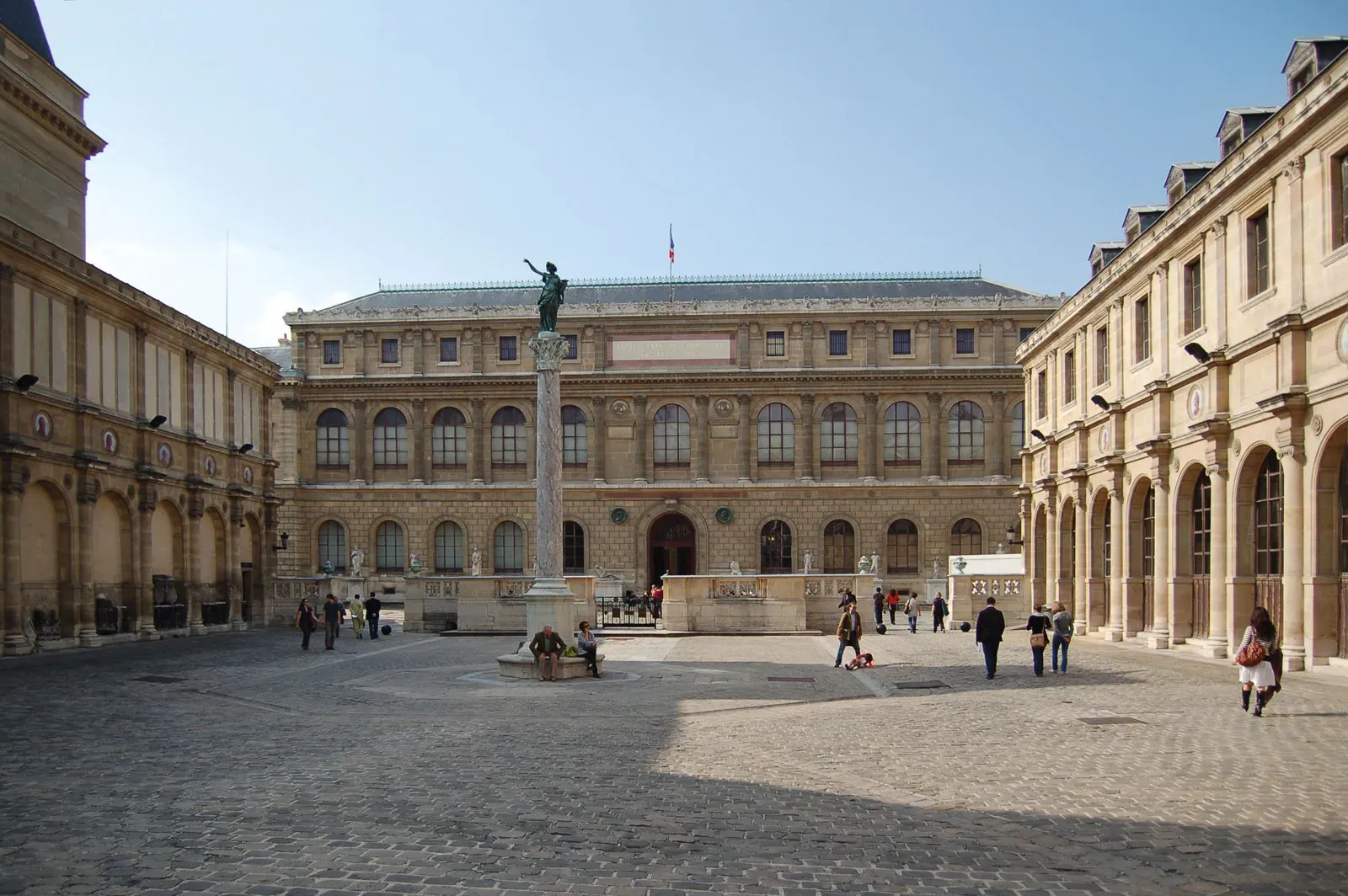
The Ecole Nationale Superieure des Beaux-Arts de Paris, known as the Beaux-Arts de Paris or ENSBA, is one of the oldest and most historically significant art schools in the world. Founded in 1648 under the patronage of Louis XIV as the Academie Royale de Peinture et de Sculpture, the school has occupied its current location on the Rue Bonaparte on the Left Bank of Paris since 1816, and its buildings, which include a remarkable collection of architectural fragments, plaster casts, and artworks accumulated over nearly four centuries, constitute one of the most extraordinary educational environments in the world.
The school's history is inseparable from the history of Western art. Edgar Degas, Auguste Renoir, Georges Seurat, Gustave Moreau, and Jean-Auguste-Dominique Ingres all studied at the Beaux-Arts, and the academic tradition that the school developed and transmitted shaped the course of European painting for two centuries. The Impressionists famously rebelled against the Beaux-Arts tradition, but even their rebellion was defined by their relationship to it, and understanding the Beaux-Arts system is essential to understanding the history of modern art.
Today the school has evolved significantly from its academic origins, offering a contemporary fine art education that engages with the full range of current practice while remaining deeply connected to its historical legacy. The combination of a genuinely historic environment, a rigorous contemporary curriculum, and the extraordinary cultural resources of Paris makes the Beaux-Arts de Paris one of the most distinctive art schools in the world.
The Campus and Collections
The Beaux-Arts de Paris occupies a complex of buildings on the Rue Bonaparte that includes the Hotel de Chimay, the chapel of the Petits-Augustins, and a series of courtyards and galleries that house one of the most remarkable collections of architectural fragments, plaster casts, and artworks in existence. The Musee des Beaux-Arts de Paris, housed within the school, contains works by former students and faculty, architectural fragments salvaged from demolished buildings, and a collection of plaster casts of ancient and Renaissance sculpture that was used for centuries as a teaching resource.
Walking through the school's courtyards, students encounter fragments of medieval and Renaissance architecture, casts of the Parthenon frieze and Michelangelo's David, and works by former students that span four centuries of French art. This environment is unlike anything available at any other art school, and it creates a constant awareness of the historical depth of the tradition in which students are working.
The school's library holds one of the most significant collections of art historical materials in France, including rare books, drawings, and documents that are unavailable elsewhere. Students have access to this collection for research, and the library's holdings support the kind of deep engagement with art history that the school's curriculum demands.
The Curriculum and Programs
The Beaux-Arts de Paris offers a five-year program leading to the DNSAP (Diplome National Superieur d'Arts Plastiques), the French national diploma in fine arts, which is recognized across the European Union and internationally. The program covers painting, sculpture, engraving and printmaking, video and new media, photography, installation, and drawing, with students developing their practice across these disciplines under the guidance of faculty who are significant figures in the French and international contemporary art world.
The curriculum is organized around studios led by individual artists, each of whom brings their own approach and perspective to the teaching. Students choose a primary studio and work closely with that studio's artist-teacher, while also taking courses in art history, theory, and other disciplines. This studio system, which has its roots in the atelier tradition of the nineteenth century, creates close relationships between students and their primary teachers and gives each studio a distinctive character.
The school also offers post-master programs and research programs for students who want to pursue advanced study beyond the DNSAP, and these programs attract students from France and internationally who want to develop their practice in one of the world's great art cities.
Paris as an Art Education
For students at the Beaux-Arts de Paris, the city itself is an essential part of the education. Paris has one of the most extraordinary concentrations of art museums and galleries in the world. The Louvre, the Musee d'Orsay, the Centre Pompidou, the Musee Picasso, the Fondation Louis Vuitton, and dozens of other institutions provide a constant source of engagement with art history and contemporary practice.
The Centre Pompidou, which houses one of the world's great collections of modern and contemporary art, is particularly important for students at the Beaux-Arts. The collection's depth in twentieth-century French and international art provides a context for understanding the tradition in which students are working, and the centre's program of exhibitions, lectures, and events keeps students connected to the current state of contemporary art.
Paris's gallery scene is one of the most significant in the world, with major international galleries maintaining spaces in the city alongside a rich ecosystem of smaller galleries and artist-run spaces. Students at the Beaux-Arts are embedded in this scene, and the school's connections to the Paris art world provide opportunities for exhibitions, internships, and professional networking.
Tuition: An Extraordinary Value
One of the most remarkable features of the Beaux-Arts de Paris is its tuition. As a French national institution, the school charges EU students approximately 400 euros per year, which is essentially free by the standards of art education in the United States or the United Kingdom. Non-EU students pay approximately 2,770 euros per year, which is still dramatically less than comparable schools in English-speaking countries.
This low tuition reflects the French government's commitment to publicly funded higher education, and it makes the Beaux-Arts de Paris one of the most extraordinary values in world art education. The catch, of course, is that the program is taught in French, and applicants must demonstrate sufficient French language proficiency to participate in studio discussions, critiques, and theoretical courses. For students who speak French or who are willing to learn, the combination of exceptional education, extraordinary environment, and minimal tuition makes the Beaux-Arts de Paris a genuinely compelling option.
The Competitive Admissions Process
Admission to the Beaux-Arts de Paris is highly competitive, with an acceptance rate of approximately 8%. The admissions process involves a portfolio review and an interview, and applicants are evaluated on the quality and originality of their work, their intellectual engagement with art history and theory, and their potential for significant development. The school looks for students who have something genuinely urgent to say and the intelligence and drive to develop the means to say it.
International applicants must demonstrate French language proficiency, typically through the DELF or DALF examinations, and the admissions process is conducted in French. The school does accept a limited number of international students each year, and the experience of studying in Paris, in one of the world's most historically significant art schools, is considered by many alumni to be among the most formative experiences of their artistic lives.
The Bottom Line
The Ecole Nationale Superieure des Beaux-Arts de Paris is one of the most extraordinary art schools in the world, combining a nearly four-century history with a rigorous contemporary curriculum, an unparalleled physical environment, and the cultural resources of Paris. Its near-zero tuition for EU students and very low fees for non-EU students make it one of the best values in world art education. For French-speaking artists who can gain admission, it offers an educational experience that is genuinely unlike anything available elsewhere.