ArtCenter College of Design: Where Professional Design Begins
ArtCenter College of Design in Pasadena, California is one of the most professionally oriented and industry-connected art and design schools in the world. Founded in 1930 in Los Angeles and relocated to its current campus in Pasadena in 1976, ArtCenter has built its reputation on a single conviction: that the best design education is one that prepares students to work at the highest professional level from the moment they graduate. The school's programs are rigorous, demanding, and explicitly focused on professional outcomes, and its graduates consistently occupy leading positions in the design industries that define contemporary visual culture.
ArtCenter is particularly famous for its Transportation Design program, which is widely considered the best in the world. The program has produced the designers behind some of the most significant automotive designs of the past half-century, and major car manufacturers including BMW, Ford, General Motors, Toyota, and dozens of others actively recruit ArtCenter graduates. The program's influence on the automotive industry is so significant that ArtCenter alumni have shaped the visual identity of virtually every major car brand in the world.
Transportation Design: The World Standard
The Transportation Design program at ArtCenter is the program that defines the school's global reputation. It covers automotive design, motorcycle design, marine design, and the broader field of vehicle design with a level of rigor and industry connection that no other school can match. Students develop skills in sketching, digital modeling, clay modeling, and the full range of design development tools used in professional automotive studios, and they work on projects that are directly relevant to the challenges facing the automotive industry.
The program's faculty includes designers who have worked at the world's leading automotive studios, and its industry connections provide students with internship opportunities and professional networks that are directly relevant to their careers. The annual ArtCenter Car Classic, one of the most prestigious automotive events in Southern California, reflects the school's deep connections to the automotive world and provides students with direct exposure to the history and culture of car design.
Industrial and Product Design
ArtCenter's Industrial Design program is equally distinguished, producing graduates who work at leading design consultancies, technology companies, and consumer goods manufacturers. The program covers the full range of industrial design disciplines, from product development and ergonomics to materials science and manufacturing processes, and it benefits from ArtCenter's connections to the Southern California technology and entertainment industries.
The Product Design program is closely related to Industrial Design but has a stronger emphasis on consumer products and the intersection of design and technology. The program's connections to Silicon Valley and the technology companies that have established design studios in Southern California provide students with internship opportunities and professional networks that are directly relevant to careers in technology product design.
Graphic Design and Visual Communication
ArtCenter's Graphic Design program is one of the most respected in the United States, with a strong emphasis on professional practice and industry connections. The program covers both traditional print design and contemporary digital practice, with a curriculum that emphasizes conceptual thinking alongside technical skill. The program's connections to the Los Angeles advertising, entertainment, and technology industries provide students with internship opportunities and professional networks.
The Advertising program is one of ArtCenter's most distinctive offerings, covering the creative side of advertising including art direction, copywriting, and campaign development. The program has strong connections to the Los Angeles and New York advertising industries, and its graduates work at major agencies and in-house creative departments worldwide.
Fine Art at ArtCenter
ArtCenter's Fine Art program is less well known than its design programs but equally rigorous, with a strong emphasis on studio practice combined with critical and theoretical engagement. The program benefits from ArtCenter's location in the Los Angeles art world, one of the most significant contemporary art scenes in the world, and its faculty are active participants in the city's galleries and institutions.
The fine art program's connections to ArtCenter's design programs create a cross-disciplinary dialogue that enriches both areas, and students in the fine art program benefit from the school's exceptional facilities and its culture of professional ambition.
The Pasadena Campus
ArtCenter's main campus in Pasadena occupies a striking building designed by Craig Ellwood and completed in 1976, a steel and glass bridge structure that spans a ravine in the San Gabriel Mountains foothills. The building's industrial aesthetic reflects the school's professional orientation, and its dramatic setting provides a genuinely inspiring environment for creative work.
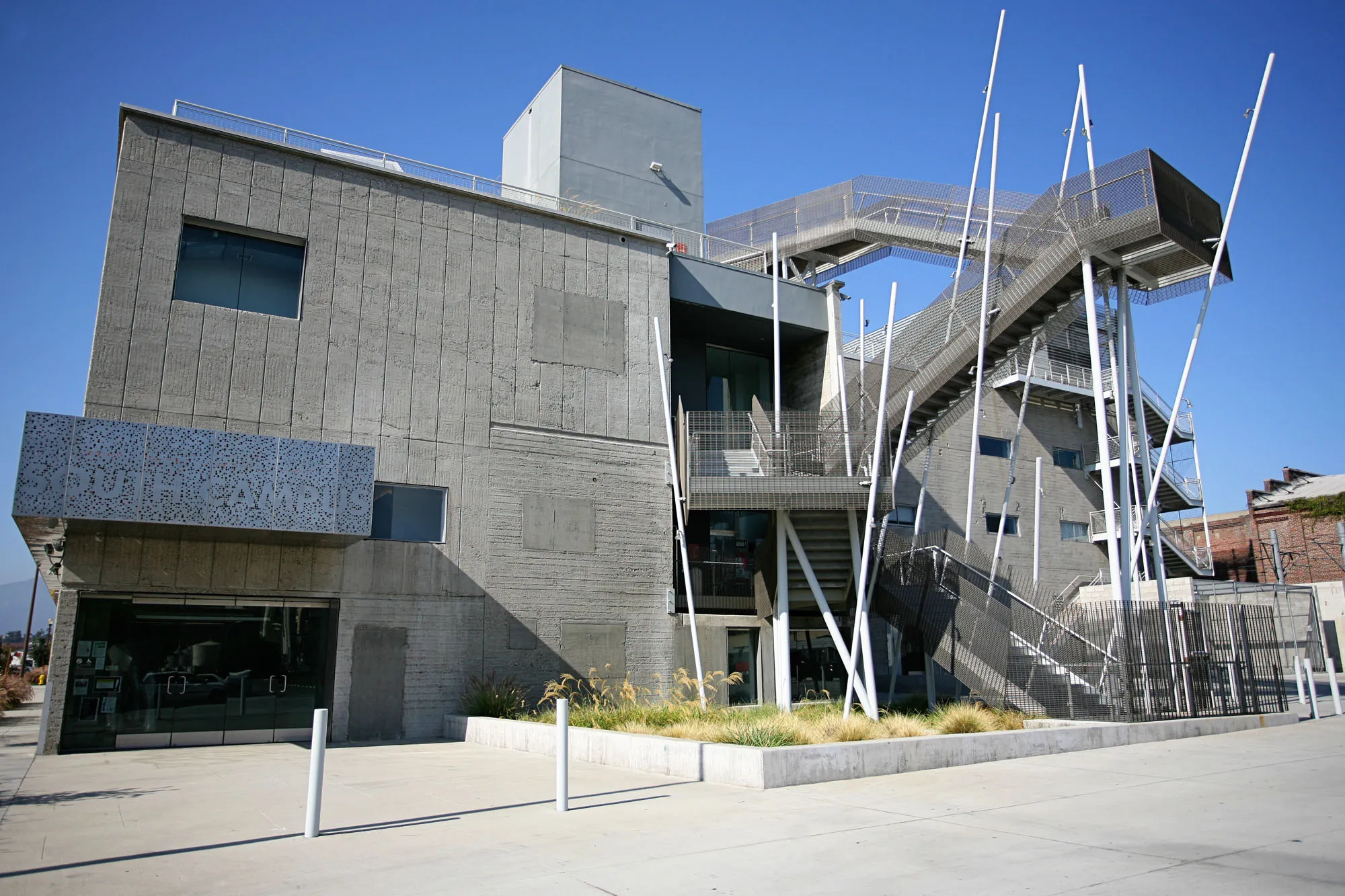
The school also operates a South Campus in downtown Pasadena, which houses the Media Design Practices graduate program and provides additional studio and exhibition space. The two campuses give students access to a range of facilities and environments, and the Pasadena location provides easy access to Los Angeles's creative industries while maintaining a more focused and less frenetic environment than the city itself.
The Term System
ArtCenter operates on a trimester system, with three terms per year rather than the two semesters that most American colleges use. This means that students can complete their degrees more quickly than at semester-based schools, and it creates a more intensive and focused educational experience. The trimester system also means that students can take more courses over the course of their degree, which supports the breadth of skills development that professional design requires.
Tuition and Financial Aid
Tuition at ArtCenter for the 2025-26 academic year is approximately $58,000, with total cost of attendance estimated at around $80,000 including Pasadena living expenses. ArtCenter offers both need-based financial aid and merit scholarships, and the school actively encourages all applicants to apply for financial assistance. The school's connections to the design industries provide pathways to internships and part-time work that can help offset costs.
The Bottom Line
ArtCenter College of Design is the world's leading school for transportation design and one of the most respected for industrial design, graphic design, and visual communication. Its explicitly professional orientation, exceptional industry connections, and rigorous curriculum produce graduates who are ready to work at the highest level from the moment they leave school. For students who want to pursue careers in design, particularly in the automotive, technology, or entertainment industries, ArtCenter offers an education that is genuinely without equal.