ECAL: Switzerland's World-Class Art and Design School
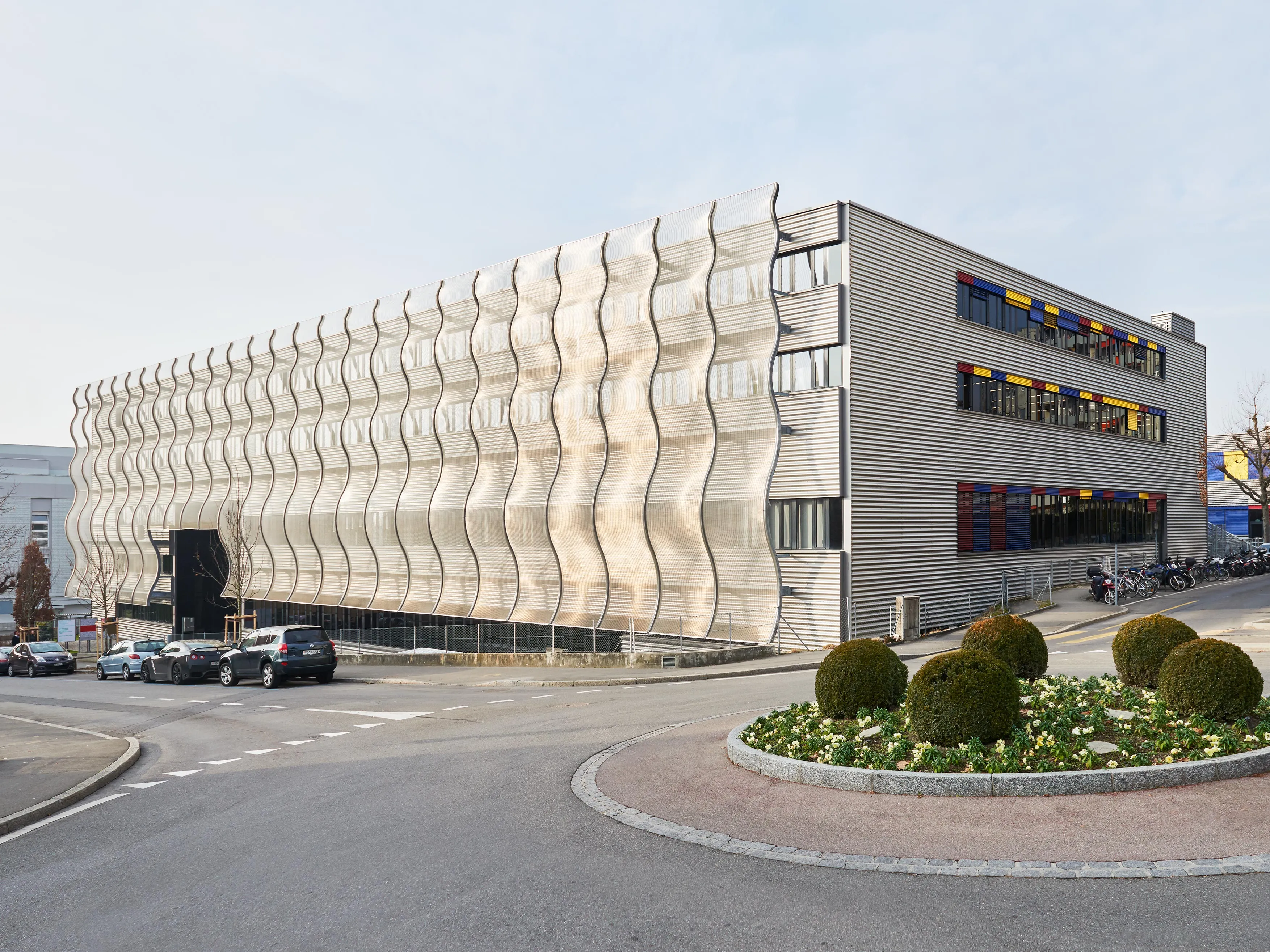
The Ecole Cantonale d'Art de Lausanne, known universally as ECAL, is one of the most consistently highly ranked art and design schools in the world. The QS World University Rankings regularly place it among the top ten design schools globally, and its graduates lead design studios, direct creative departments at major companies, and show work in galleries and museums across Europe, Asia, and the Americas. For a school of only around 700 students in a mid-sized Swiss city, ECAL's influence on global design culture is remarkable.
Founded in 1821 as a drawing school for craftspeople and manufacturers, ECAL has evolved over two centuries into a comprehensive art and design school that combines the Swiss tradition of precision and craft with a genuinely contemporary approach to design education. The school's current director, Alexis Georgacopoulos, who has led ECAL since 2011, has been central to developing the school's international profile and its distinctive approach to design education, which emphasizes the combination of rigorous conceptual thinking with exceptional making skills.
The ECAL Approach
What distinguishes ECAL from other design schools is a combination of factors that are difficult to replicate individually and nearly impossible to replicate together. The school maintains an exceptionally high ratio of faculty to students, with many of the faculty being internationally recognized practitioners who bring current professional knowledge and networks to their teaching. The facilities are among the best in the world, with workshops, studios, and digital labs that provide students with the tools to realize their ideas at the highest level of craft. And the culture of the school emphasizes the combination of conceptual ambition and technical excellence that defines the best Swiss design.
The school's approach to design education is not primarily about training students to execute existing design conventions; it is about developing students' capacity to generate genuinely new ideas and to realize those ideas with exceptional skill. This combination of conceptual ambition and technical rigor produces graduates who are not just competent practitioners but genuine contributors to the development of design culture.
Programs
ECAL offers BA programs in Art Direction, Graphic Design, Photography, Industrial Design, and Fine Arts, and MA programs in Art Direction, Graphic Design, Photography, Industrial Design, Interaction Design, and Type Design. The range of programs reflects the school's commitment to covering the full spectrum of contemporary design practice, from the most traditional disciplines to emerging areas like interaction design and type design.
The Photography program is one of ECAL's strongest and most internationally recognized, producing graduates who work across editorial, commercial, and fine art contexts. The program combines technical training with conceptual development, and its graduates are represented in major publications, galleries, and agencies worldwide. The program's emphasis on the photograph as a designed object, with attention to format, printing, and presentation alongside the image itself, reflects ECAL's broader commitment to the integration of concept and craft.
The Industrial Design program has a strong reputation for producing designers who combine aesthetic sensibility with rigorous problem-solving. The program's connections to Swiss and international industry provide students with internship opportunities and professional networks, and its graduates work at leading design consultancies, technology companies, and furniture manufacturers.
The Graphic Design program covers both traditional print design and contemporary digital practice, with a curriculum that emphasizes conceptual thinking alongside technical skill. The program has produced graduates who have shaped the visual identity of significant institutions and who have contributed to the theoretical discourse around design practice.
The Type Design MA is one of the few dedicated type design programs at any art school in the world, reflecting ECAL's recognition that typography is a specialized discipline that requires dedicated training. The program attracts students from across Europe and internationally who want to develop their skills in one of the most technically demanding areas of graphic design.
The Lausanne and Swiss Context
Lausanne is a beautiful city on the shores of Lake Geneva, surrounded by the Alps and the Jura mountains, and its quality of life is among the highest in the world. The city is home to the International Olympic Committee, several major international organizations, and a significant concentration of technology and pharmaceutical companies that provide employment and internship opportunities for ECAL graduates.
Switzerland's broader design culture is one of the most significant in the world, with a tradition of precision, clarity, and craft that has shaped graphic design, industrial design, and architecture internationally. The Swiss Style of graphic design, developed in the 1950s and 1960s by designers including Josef Muller-Brockmann and Armin Hofmann, remains one of the most influential design movements in history, and ECAL's programs are deeply informed by this tradition while also engaging with contemporary practice.
The school's location in the French-speaking part of Switzerland gives it a cultural orientation that is closer to France and the broader Francophone world than to the German-speaking Swiss design tradition, and this orientation shapes the school's aesthetic sensibility and its connections to the European design world.
Industry Connections and Collaborations
ECAL has an unusually active program of industry collaborations, in which students work on real design projects for major companies and institutions. These collaborations provide students with experience of professional practice while still in school, and they create connections to the professional world that are directly relevant to their careers after graduation. Companies including Hermès, Rolex, Nespresso, and dozens of other significant brands have collaborated with ECAL students on projects that have been exhibited internationally and that have contributed to the companies' design development.
The school's annual ECAL degree show is one of the most closely watched events in the European design calendar, attracting buyers, editors, and industry figures who are actively looking for the next generation of significant designers. The show has launched the careers of many of the school's most successful graduates and has contributed significantly to ECAL's international reputation.
Tuition and the Swiss Public University Advantage
One of ECAL's most remarkable features is its tuition. As a cantonal (state) school of the canton of Vaud, ECAL charges Swiss and EU students approximately 1,500 CHF per year (roughly $1,700 USD), which is essentially nominal. Non-EU international students pay approximately 8,000 CHF per year (roughly $9,000 USD), which is still dramatically less than comparable schools in the United States or the United Kingdom.
This low tuition reflects the Swiss government's commitment to publicly funded higher education, and it makes ECAL one of the most extraordinary values in world design education. The combination of world-class education, exceptional facilities, and near-nominal tuition for eligible students makes ECAL a genuinely compelling option for students who can gain admission.
The Bottom Line
ECAL is one of the world's great design schools, combining exceptional faculty, world-class facilities, a rigorous approach to design education, and near-nominal tuition for Swiss and EU students. Its consistent placement in the top ten of global design school rankings reflects genuine institutional excellence, and its graduates have shaped design culture across Europe and internationally. For students who are drawn to the Swiss tradition of precision and craft, who want to develop their practice in a school that takes both concept and making seriously, and who can gain admission to one of the most competitive programs in European design education, ECAL offers an experience that is genuinely without equal.