
Game Design as Art: Environmental Storytelling and Visual World-Building
Game design is one of the most sophisticated visual arts of the 21st century. Discover how environmental storytelling and visual world-building make games fine art.
Your cart is empty
Browse the store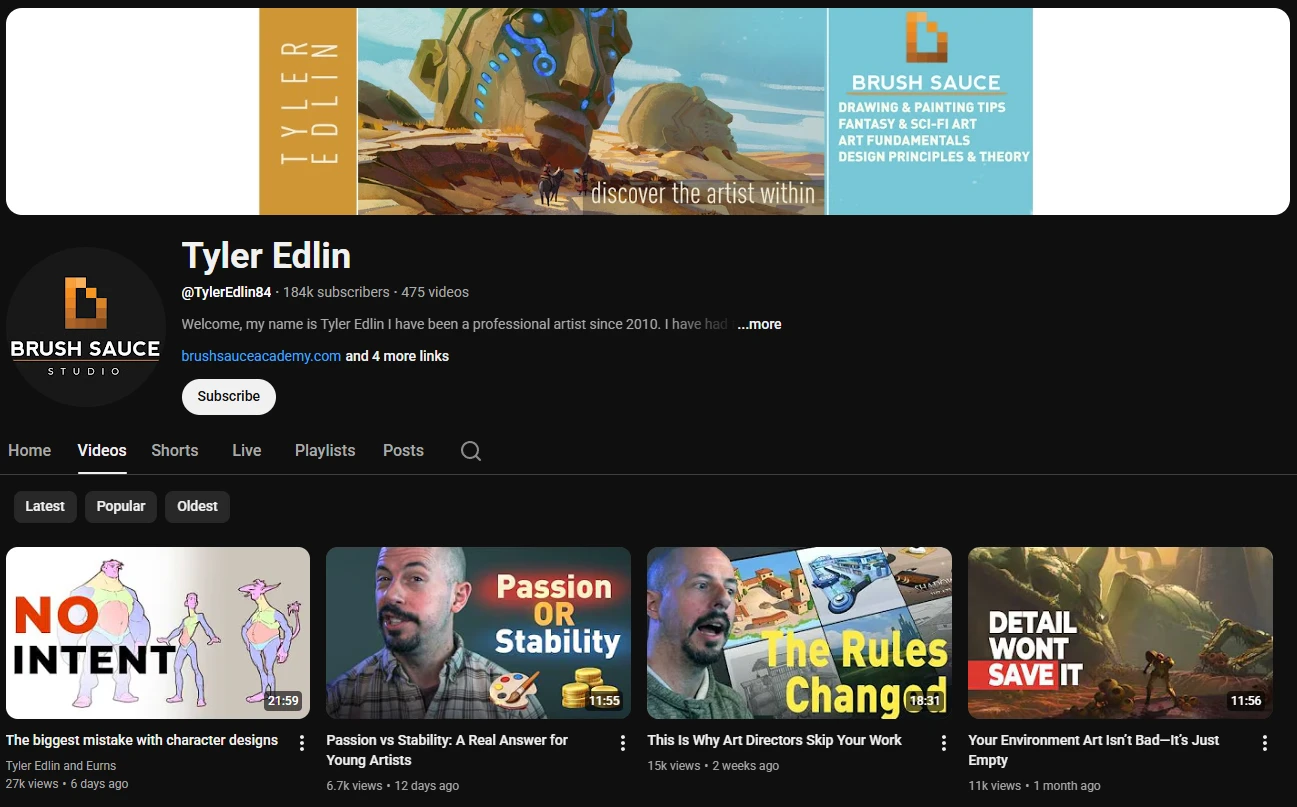
Professional concept artist Tyler Edlin teaches environment painting and world-building to 187K subscribers. Client work includes Sony, Blizzard, and Epic Games. Runs Brushsauce Academy online school.
Discover other art channels you might be interested in
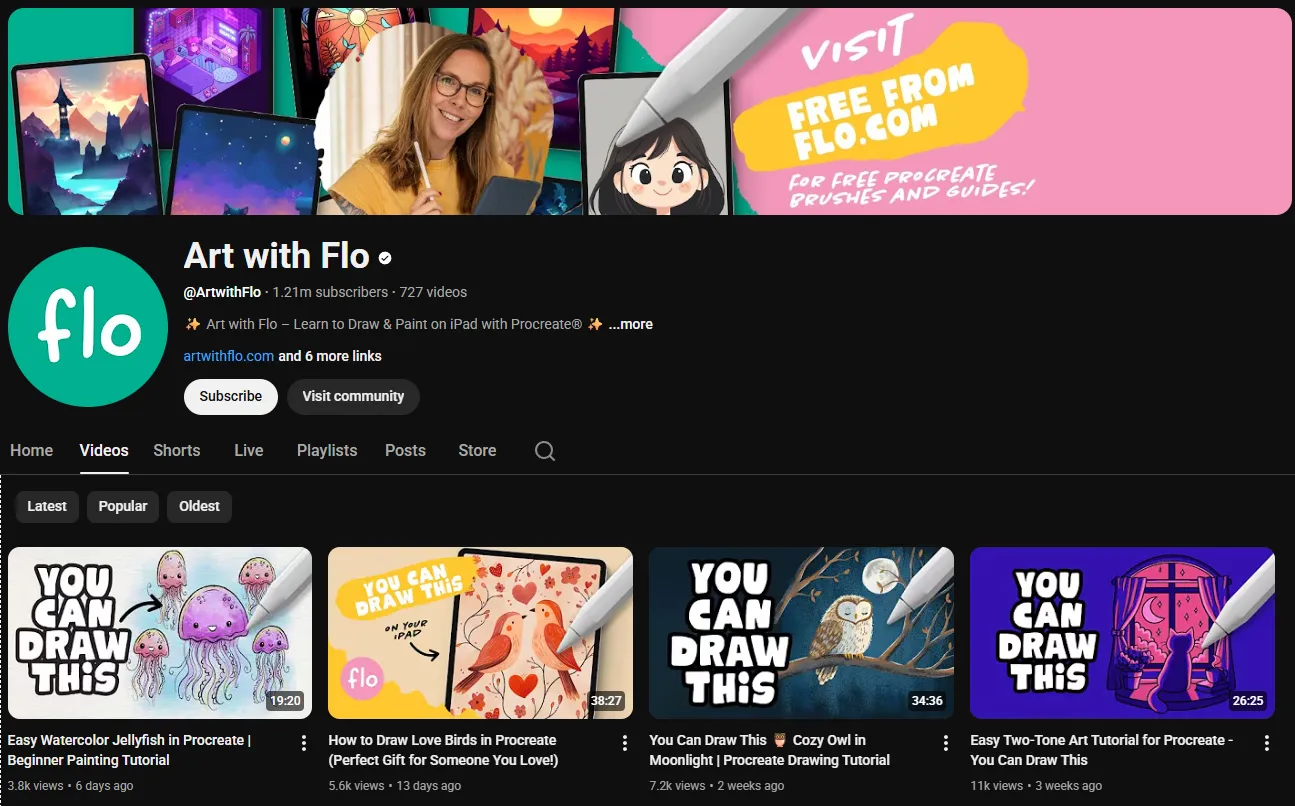
Beginner Procreate tutorials on iPad, with weekly step-by-step digital painting lessons, free brushes, and a massive library of approachable projects for new artists.
View details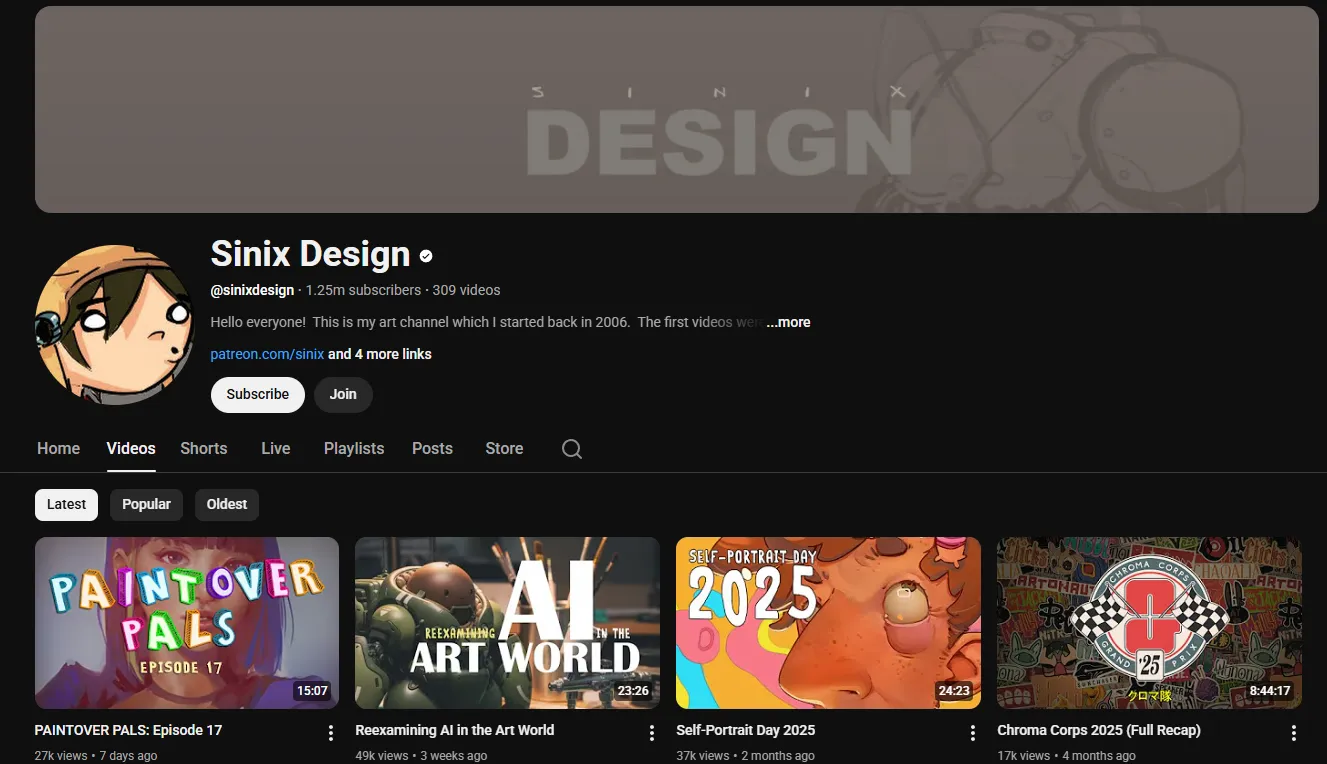
Robert Stacy's Sinix Design teaches visual appeal and design thinking to 1.27M intermediate artists. Known for Paintover Pals critiques and shape language theory that fills the gap Proko leaves open.
View detailsExplore definitions from our glossary that connect to this channel
Concept art is visual development art for games, film, and animation. Learn its history from Disney's Snow White to AI-assisted workflows in 2026.
Atmospheric perspective creates depth by making distant objects paler, bluer, and less detailed. Learn how Leonardo da Vinci codified it and how painters use it today.
Read more about this topic on our blog
Game design is one of the most sophisticated visual arts of the 21st century. Discover how environmental storytelling and visual world-building make games fine art.

Discover how Georgia O'Keeffe transformed flowers, bones, and desert landscapes into icons of American modernism. Explore her techniques, her independence, and her enduring influence.

How video games became a serious visual art form: from the painterly worlds of Journey and Shadow of the Colossus to Elden Ring's gothic mythology. A guide to game art direction, concept art, and what makes interactive visuals different.
Figure drawing and character design dominate art education on YouTube. Environment painting gets a fraction of the attention, which is strange because every game, film, and animation needs backgrounds, landscapes, and architectural environments. Tyler Edlin fills this gap. He has been a professional artist since 2010, with client work for Sony, Blizzard, and Epic Games, and his 187,000-subscriber channel is the most focused resource on YouTube for learning environment concept art and landscape painting.
Tyler also runs his own online school, Brushsauce Academy, which extends his YouTube content into structured courses and mentorship programs. The channel is not a marketing funnel for the school, though. It stands on its own as a genuinely useful free resource.
Tyler's monthly art challenge program is one of the most valuable community features on any art YouTube channel. Each month, a theme is announced. Participants create environment artwork in response. Tyler reviews submissions in detailed critique videos.
This cycle of creation, submission, and public critique creates an accountability structure that drives genuine improvement. The challenges push artists beyond their comfort zones: unfamiliar biomes, lighting conditions, architectural styles, and narrative contexts that force participants to research, experiment, and solve new visual problems.
The public critique format, where Tyler provides thoughtful, constructive feedback on selected submissions, offers educational value not just to the submitting artists but to every viewer who watches and applies the feedback principles to their own work. This is the closest thing to a classroom critique environment available for free on YouTube.
Tyler's tutorials place unusual emphasis on atmosphere and mood, the qualities that make environment paintings feel like real places rather than collections of rendered objects. Videos on fog, lighting, color temperature, aerial perspective, and weather effects teach artists to create environments that evoke emotional responses and suggest stories.
This focus reflects how professional environment art actually works. Every environment in a game or film serves a narrative purpose. The artist's job is to make that story visible through atmosphere, lighting, and composition. Tyler teaches this connection explicitly.
Environment composition presents challenges distinct from figure or still life composition. Tyler addresses depth staging, focal point creation in wide vistas, leading lines in architectural spaces, and the balance between detail and simplicity that makes environment paintings readable. These principles are essential for concept artists, matte painters, and game environment designers who need to create spaces that guide the viewer's eye and communicate spatial information.
Tyler's color and lighting tutorials break down the interaction of light sources, bounced light, atmospheric scattering, and color temperature that makes environment paintings feel illuminated by real light. From golden hour landscapes to moody interior scenes, these videos teach artists to analyze and recreate lighting conditions that give environments their distinctive character.
Tyler's niche is specific. Proko teaches figure drawing and anatomy. Sinix Design teaches visual appeal and design thinking. Trent Kaniuga covers concept art from a character and game development perspective. Tyler is the channel for environment art specifically.
For digital painting fundamentals, Ctrl Paint is more structured and comprehensive. But Ctrl Paint covers digital painting broadly, while Tyler goes deep into the specific challenges of environment painting: atmosphere, depth, architectural rendering, and the narrative function of environments in entertainment media.
For traditional landscape painting, Will Kemp Art School covers oil, acrylic, and watercolour landscapes. Tyler's content is digital-first, working primarily in Photoshop, and focused on the entertainment industry context rather than fine art landscapes.
Tyler's content is directly relevant to professional pathways in concept art, matte painting, game environment design, and film visual development. The techniques he teaches are the same ones used in professional production pipelines: digital painting workflows in Photoshop, composition and value planning methods, and the iterative refinement process that transforms rough concepts into polished environment illustrations.
For artists preparing portfolios for studio applications, Tyler's combination of technical instruction, challenge-based practice structure, and community critique provides a development framework that mirrors the kind of mentorship found in professional studio environments.
Aspiring environment artists will find Tyler's channel the most focused free resource available for learning this specific discipline. The monthly challenges provide structure and accountability that self-directed learning usually lacks.
Concept artists who want to strengthen their environment skills, in addition to character work, will find the tutorials directly applicable to professional production.
Game developers and indie creators who need to build environment assets will benefit from Tyler's workflow demonstrations, which show the complete pipeline from thumbnail to finished illustration.
Art students preparing portfolios for studio applications should participate in the monthly challenges and watch the critique videos to understand what professional-level environment art looks like and how to evaluate their own work.
Beginners who are still learning drawing fundamentals will find the content assumes a baseline of digital painting ability. Start with Proko for drawing fundamentals and Ctrl Paint for digital painting basics before tackling Tyler's environment-specific content.
Character artists who have no interest in environments will find limited directly applicable content. Tyler's channel is focused on environment art, and that focus is its strength.
Traditional media painters will find the content digital-first. While the composition and color principles transfer to traditional media, the workflow demonstrations are Photoshop-specific.
Tyler Edlin Art is the premier YouTube resource for environment concept art and landscape painting. For any artist interested in creating atmospheric, professional-quality environments for games, film, or personal projects, Tyler's channel provides the instruction, community, practice structure, and industry-relevant knowledge needed to develop these specialized skills. The monthly challenges and critique format give it a practical advantage that most tutorial channels lack. For artists outside the environment art niche, there are more relevant channels to spend your time on.
Start with his environment painting playlist and consider joining the next monthly challenge to put the instruction into practice.
Quiet Canvas is a space for artists and art lovers: essays, glossary terms, tools, and curated directories to support your creative practice.
Learn more →


