
In 1955, the designer Saul Bass created the opening title sequence for Otto Preminger's "The Man with the Golden Arm." A white jagged arm cuts across a black field, fractured and restless, while Elmer Bernstein's jazz score throbs underneath. The sequence ran for ninety seconds, and it changed the relationship between design and cinema permanently. Before Bass, title sequences were typographic housekeeping. After Bass, they were art. They told you what the film was about before the first scene began. They established tone, rhythm, and visual language. They moved.
Motion graphics as a field has traveled a long way since that sequence. It now encompasses film title design, broadcast identity, music videos, short films, gallery installations, projection mapping on buildings, and real-time visuals at concerts and events. The tools have become accessible enough that a single designer working in After Effects can produce work that, a generation ago, would have required a full studio. And the question of whether motion graphics constitute fine art, rather than commercial design, has essentially been answered in the affirmative by galleries, collectors, and institutions who have been acquiring this work for decades. A 2025 study published in the MDPI journal Heritage framed Bass's title sequences as "visual heritage," analyzing how his kinetic typography and moving compositions function as cultural artifacts that bridge visual communication, moving images, and aesthetic experimentation.
What Are Motion Graphics?
Motion graphics are graphic design elements that exist in time. Where print design is static, motion design uses movement, timing, and often sound to communicate and create experience. The term covers a wide spectrum. At one end, a lower-third name graphic that appears on a news broadcast. At the other, a twenty-minute film of abstract animated forms shown in a gallery context. Between those poles lies the bulk of contemporary motion work: title sequences, music videos, brand films, explainer animations, and short visual essays.
The relationship between motion graphics and animation is one of degree rather than kind. Animation generally involves characters, narrative, and frame-by-frame drawn movement. Motion graphics are more typically typographic, abstract, or design-led: shapes, words, and geometric elements moving according to principles of composition and timing. In practice the boundary is porous. Many motion designers work across both.
The relationship between motion graphics and video art is also one of overlap. Both involve moving images and time-based experience. Video art tends to emphasize conceptual, durational, or narrative concerns. Motion graphics tend to emphasize design, timing, and visual communication. The most interesting contemporary work often ignores that distinction entirely.
A Brief History: Saul Bass to the Screen Age
Saul Bass defined the visual grammar of title sequence design through the 1950s and 1960s. His sequences for "Vertigo" (1958), "Psycho" (1960), and "North by Northwest" (1959, with his partner Elaine Bass) combined abstract geometric forms with optical printing techniques to produce movement that felt both designed and visceral. His influence remains visible in practically every serious title sequence made today. The 2025 MDPI study on Bass's legacy traced his connections to European modernism, showing how Cubism, De Stijl, Dadaism, and Bauhaus principles all fed into his distinctive visual language. The research identified Bass as a precursor to postmodern motion design, arguing that his merging of design principles, animation studies, and technological experimentation laid the groundwork for the entire contemporary field.
The 1970s and 1980s saw television become the dominant context for motion graphics. Network identity packages, sports graphics, and news broadcast design pushed the field technically, even if the aesthetic standards were uneven. Pablo Ferro's fast-cut title sequence for "Dr. Strangelove" (1964) and the kinetic type work of Robert Brownjohn for "Goldfinger" (1964) showed how typography could be choreographed into something cinematic.
The arrival of desktop compositing software in the early 1990s, particularly Adobe After Effects (first released in 1993), democratized the field completely. For the first time, a single designer with a personal computer could produce work previously requiring an optical printer, a technical team, and a professional facility. The quality of motion graphics in broadcast design, music video, and independent film exploded across the 1990s as a generation of designers learned to use the software and pushed it to its limits.
The 2000s brought a global conversation about motion graphics as a distinct creative discipline. Studios like MK12, Imaginary Forces, and Psyop produced work that was discussed as seriously as editorial or fine art. The music video format, which had been evolving as a design space since the early MTV era, became a major context for experimentation. Michel Gondry's videos for Bjork and Chemical Brothers used in-camera and optical techniques alongside digital tools to produce imagery of genuine originality.
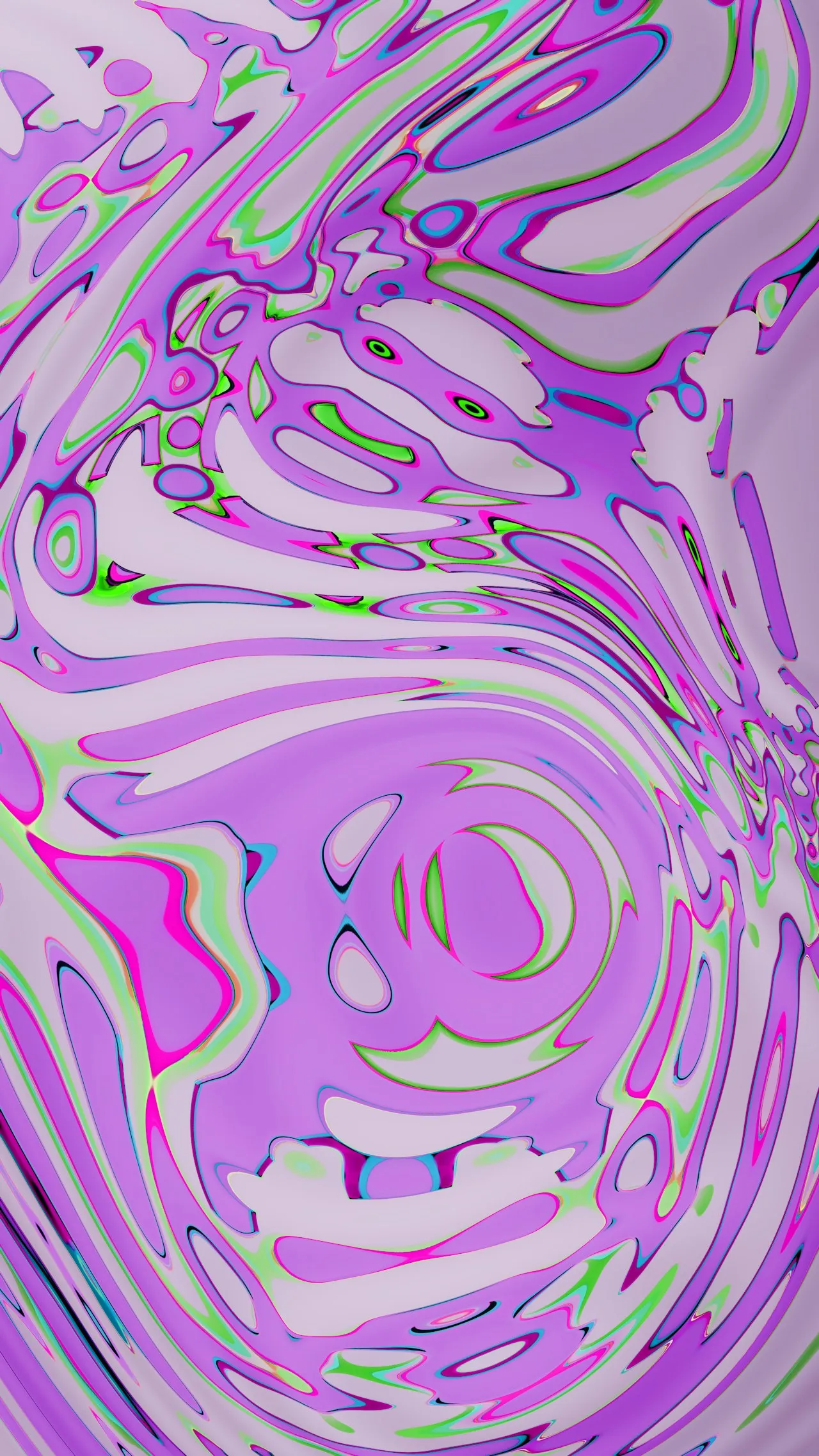
Abstract light motion. Contemporary motion graphics often explore pure visual rhythm and color interaction in ways that reference both abstract painting and kinetic art. Photo: Unsplash.
Kinetic Typography: When Words Move
Kinetic typography is the practice of animating type to convey meaning, rhythm, or emotion beyond what static text can achieve. It has roots in the film title work of Bass and Brownjohn, but the form became a genre in its own right through the internet era. Fan-made kinetic type videos set to film speeches and songs became a visible form of popular visual culture on YouTube from around 2006 onward, and motion design programs in universities began teaching it as a core discipline.
At its best, kinetic typography is not decoration applied to words. The movement is the meaning. The timing of a word's appearance, the direction and speed of its motion, the scale change as emphasis shifts: all of these decisions are analogous to the decisions a performer makes about pace, pause, and stress. The designer is choreographing language.
Jonathan Barnbrook's animated typography for David Bowie's "Heathen" (2002) album and press materials showed how kinetic type could serve a broader visual identity. Kyle Cooper's title sequence for "Se7en" (1995), with its scratched, handwritten type cut to a Nine Inch Nails track, influenced a decade of title design and demonstrated that typographic animation could carry emotional weight equivalent to any other cinematic element.
In 2026, generative typography is pushing kinetic type into new territory. The exhibition "Pixel Traps: Typefaces Programmed to Play," presented at Hayy Open Space from February 11 to 25, 2026, showcased typeface systems that transform and evolve based on algorithmic parameters, inviting visitors to manipulate letters through interactive installations. And at Palazzo Citterio in Milan, artist Sasha Stiles' "Lorem Ipsum Variorum" (July 14 through October 25, 2026) transforms a monumental LED wall into a kinetic page where text becomes image, exploring how language technologies are reshaping memory and meaning. Both exhibitions demonstrate that kinetic typography has moved from film titles into gallery contexts as a legitimate art form.
Tools for Motion Artists in 2026
Adobe After Effects remains the industry standard for motion graphics production. It is a compositing and animation application that handles everything from simple text animation to complex 3D compositing, particle systems, and expression-driven procedural animation. Every professional motion studio uses it, and its output is standard in broadcast, film, and digital media. It requires an Adobe Creative Cloud subscription.
Cinema 4D, made by Maxon, is particularly strong for 3D motion graphics and has a tight integration with After Effects through the Cineware plugin. For motion designers who want to incorporate 3D elements into their work without committing to Blender's steeper learning curve, Cinema 4D with After Effects is the professional standard pipeline. It is used extensively in broadcast design and brand work.
Cavalry is a motion design application built specifically for procedural, data-driven animation. Released in 2020, it attracts designers who want more systematic and programmable workflows than After Effects provides. It is gaining adoption among designers who come from a creative coding background.
Notch is a real-time 3D and effects tool used primarily for live event visual production, large-scale projection mapping, and broadcast real-time graphics. It is the professional standard for concert visuals and live broadcast graphics requiring real-time rendering.
Notable Motion Artists and Studios
Buck is a New York and Los Angeles-based motion design studio whose work spans brand films, music videos, and broadcast design. Their visual language, characterized by rich color, confident typography, and a mix of 2D and 3D techniques, has defined a significant strand of motion design aesthetics since the mid-2000s.
Maxim Zhestkov is a motion artist whose solo work explores abstract simulated systems: particles, fluids, and material simulations arranged into compositions that feel equally influenced by abstract painting and natural processes. His work has been shown at major international festivals and purchased by collectors internationally.
Zeitguised, the studio of Berlin-based Jamie Raap and Heike Raap, produces motion work that sits between design and fine art. Their series "GeoForm Fantasies" uses procedural geometry and material simulation to produce imagery that reads as both product visualization and abstract sculpture. Several pieces have entered private collections.
Robert Seidel is a German artist working with generative real-time graphics. His large-scale projections have been shown at festivals including Transmediale in Berlin and at ZKM Center for Art and Media in Karlsruhe. His work occupies the space where generative art and immersive installation intersect.
Motion Graphics in Galleries and Public Spaces
The line between motion graphics shown commercially and motion work shown as art has blurred significantly in the past decade. The Samsung Art Store, which distributes art and design work to be shown on Samsung's Frame televisions, has made motion work accessible to domestic contexts in ways that hanging prints have been for a century. Galleries including 1/6, a Paris-based space that focuses on screen-based work, show motion art as primary wall works rather than documentation of performances.
Large-scale projection mapping on architectural surfaces has also become a context for motion art that reaches audiences far beyond the gallery world. The annual Festival of Lights in Lyon attracts millions of visitors to see commissioned projection works on the facades of the city's major buildings. Similar festivals in Amsterdam, Berlin, and Sydney have made motion art a form of public culture with genuine mass audiences.
Final Thoughts
Motion graphics are no longer a supporting role in the story of visual art. They are a primary medium with their own history, their own aesthetic discourse, and their own institutional recognition. The work that Saul Bass began in the 1950s has evolved through television, music video, the internet, and live performance into a field that touches practically every context where images appear in time.
Whether you come to motion graphics from graphic design, fine art, filmmaking, or music, the tools and community available in 2026 make this one of the most accessible points of entry into time-based visual practice. For context on related moving image art, the guide to video art covers the gallery tradition that parallels motion design's commercial history. And if code-driven generative systems interest you more than compositing tools, the guide to creative coding provides an entry point into making motion through programming. For a broader historical perspective on how design and art intersect, our guide to the Bauhaus movement traces the origins of the design-meets-art conversation that motion graphics continues today.


