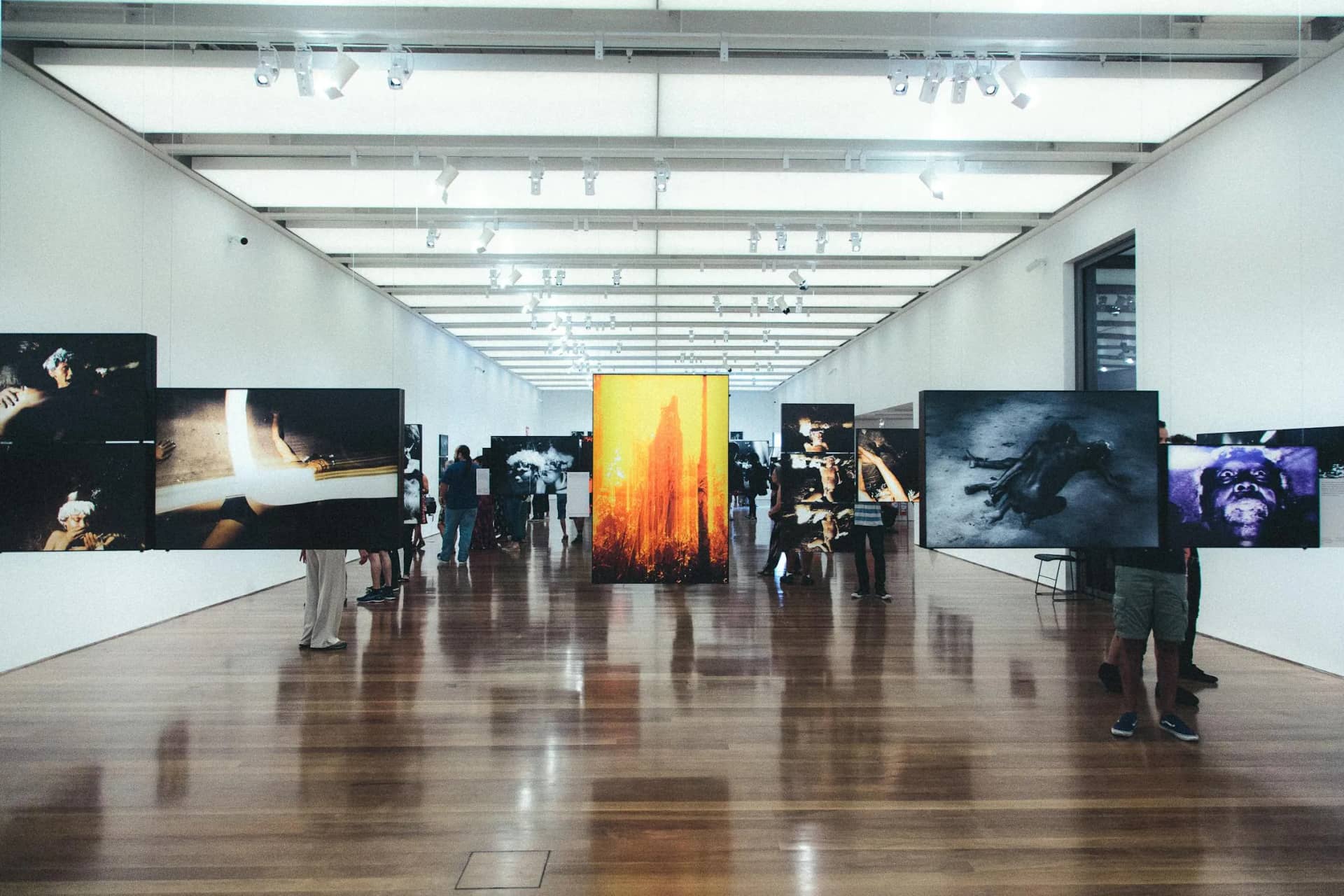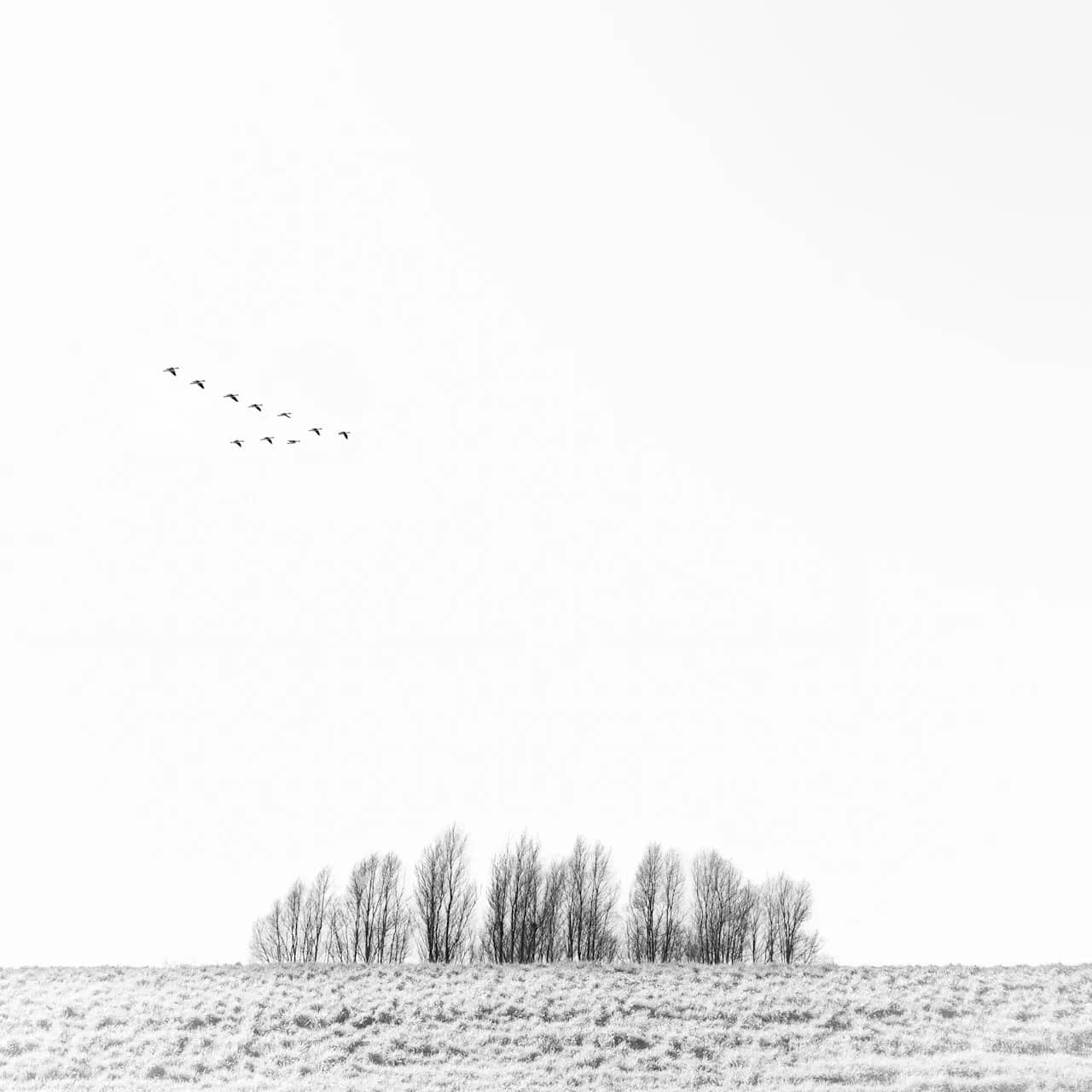
Look at the white space around the bird in a Japanese ink painting. Now look at the bird. Now look at the white space again. Your eye cannot settle permanently on either. It moves between the described form and the open space around it, and the image lives precisely in that movement. The white is not background. It is as active a part of the composition as the brushwork that defines the bird's form. Take away the white, fill it with any color or texture, and the painting dies.
Positive space is the area occupied by a subject: the figure, the object, the described form. Negative space is everything else: the area around, between, and behind the subject. This distinction is one of the most fundamental in all of visual art, and it is the one that beginning art students and casual gallery visitors most consistently overlook. Our eyes are trained by daily visual experience to attend to objects and ignore the space they inhabit. Artists work to counteract this training. The best ones make negative space as deliberately designed as positive space, and the most sophisticated compositions use the relationship between the two to generate visual energy that neither element alone could produce.
What Negative Space Actually Does
Negative space performs several distinct functions in a composition, and understanding each one makes you a more perceptive viewer of any visual art.
It defines the positive form. A figure can only be read as a figure if its edges are legible, and those edges are defined by the space they border. In silhouette images, the negative space is literally the only visual information available. The figure emerges entirely from the boundary between the two. In more complex compositions, the quality of the negative space, its texture, value, color, and whether it is compressed or expansive, directly affects how clearly the positive forms read and how much visual weight they carry.
It controls pacing and breath. A composition with densely occupied positive space and minimal negative space feels pressured, urgent, or claustrophobic depending on the handling. A composition with generous negative space feels calm, spacious, or monumental. The Japanese aesthetic concept of "ma," which might be translated as "meaningful interval" or "pregnant pause," captures how negative space creates timing in a composition the way silence creates timing in music. A pause between notes is not an absence of music. It is part of the music.
It generates movement. The eye follows the shape of negative space through a composition just as it follows positive forms. A wedge of negative space between two figures points toward something. A long horizontal band of negative space at the top of a landscape painting creates sky that presses the landscape into the lower register, making it feel grounded and heavy. A void to one side of a figure creates tension, because the eye senses something is absent, or about to arrive, or being looked toward.
Hokusai and the Active Empty Space
Katsushika Hokusai's "The Great Wave off Kanagawa" (c. 1831) provides one of the clearest demonstrations of negative space as active compositional force. The wave dominates the picture. But the sky and sea behind it, which occupy roughly half the image, are not passive background. The sky is pale, the water at the lower center is relatively flat, and these areas of reduced activity create a visual rest that makes the wave's turbulent positive form more forceful by contrast. The negative space also contains the silhouette of Mount Fuji in the upper right, far smaller than the wave, using the scale relationship of positive forms against negative space to make an argument about the overwhelming power of natural forces against the permanence of the mountain.
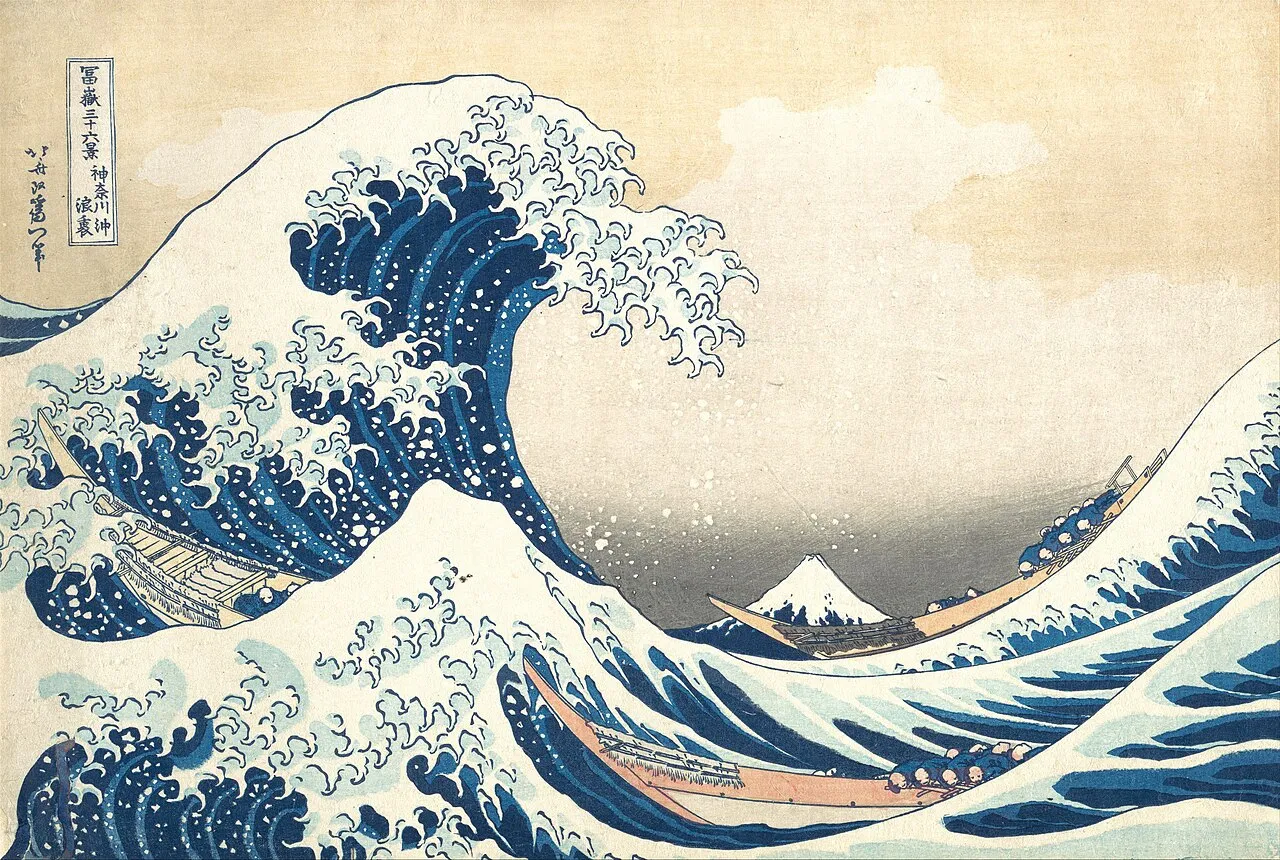
Katsushika Hokusai, "The Great Wave off Kanagawa" (c. 1831), color woodblock print, 25.7 x 37.9 cm. The active claw-like wave occupies positive space while the pale sky and flat water create the negative space that amplifies the wave's energy by contrast. The tiny silhouette of Mount Fuji sits in the upper right, its stillness defined by the surrounding negative space. Image: Public domain, via Wikimedia Commons
This use of East Asian compositional conventions, which allocated space very differently from the European tradition of covering picture surfaces with figures and landscapes, was enormously influential on Western artists in the late 19th century. The Japonisme movement, triggered by the arrival of Japanese woodblock prints in Europe through trade, directly transformed how Degas, Monet, Whistler, and Toulouse-Lautrec thought about negative space. Degas began cropping figures at the picture edge, allowing the negative space to press in from the margins. Whistler titled his paintings as "arrangements" and "harmonies," prioritizing the tonal relationship between positive and negative areas over narrative content.
Matisse and the Cutouts: Space as Subject
Henri Matisse spent the last decade of his life, confined increasingly to bed and wheelchair, working with scissors and paper painted in flat gouache colors. His "Jazz" series (1947) and large late decorative works like "The Snail" (1953) are built entirely from cut shapes arranged on white or colored grounds. In these works, the distinction between positive and negative space breaks down almost completely. Every shape is a positive form, but every gap between shapes is a shape in its own right, equally designed and equally active.
Matisse described the process as "drawing with scissors," and the phrase captures how he used negative space. When he cut a shape, he was simultaneously creating a positive form (the cut piece) and a negative form (the hole it left). He often displayed both, keeping the cut sheet and the cut shape as related works. This reversibility, the ability to read either the presence or the absence as the figure, is the essential quality of mature negative space handling. The image becomes ambiguous in the most productive sense, and the viewer's eye is kept in continuous active movement.
Mondrian and the Grid
Piet Mondrian's mature grid paintings, including "Composition with Red, Blue and Yellow" (1930), use the relationship between positive and negative space with extreme rigor. The colored rectangles (red, yellow, blue) occupy relatively small areas of each canvas. The large areas of white grid spaces are the dominant visual fact. But the white is not empty: it is shaped, proportioned, and positioned with the same care as the colored areas. Each white rectangle is a distinct shape with specific visual weight, and the relationship between white areas is as compositionally deliberate as the placement of the color.
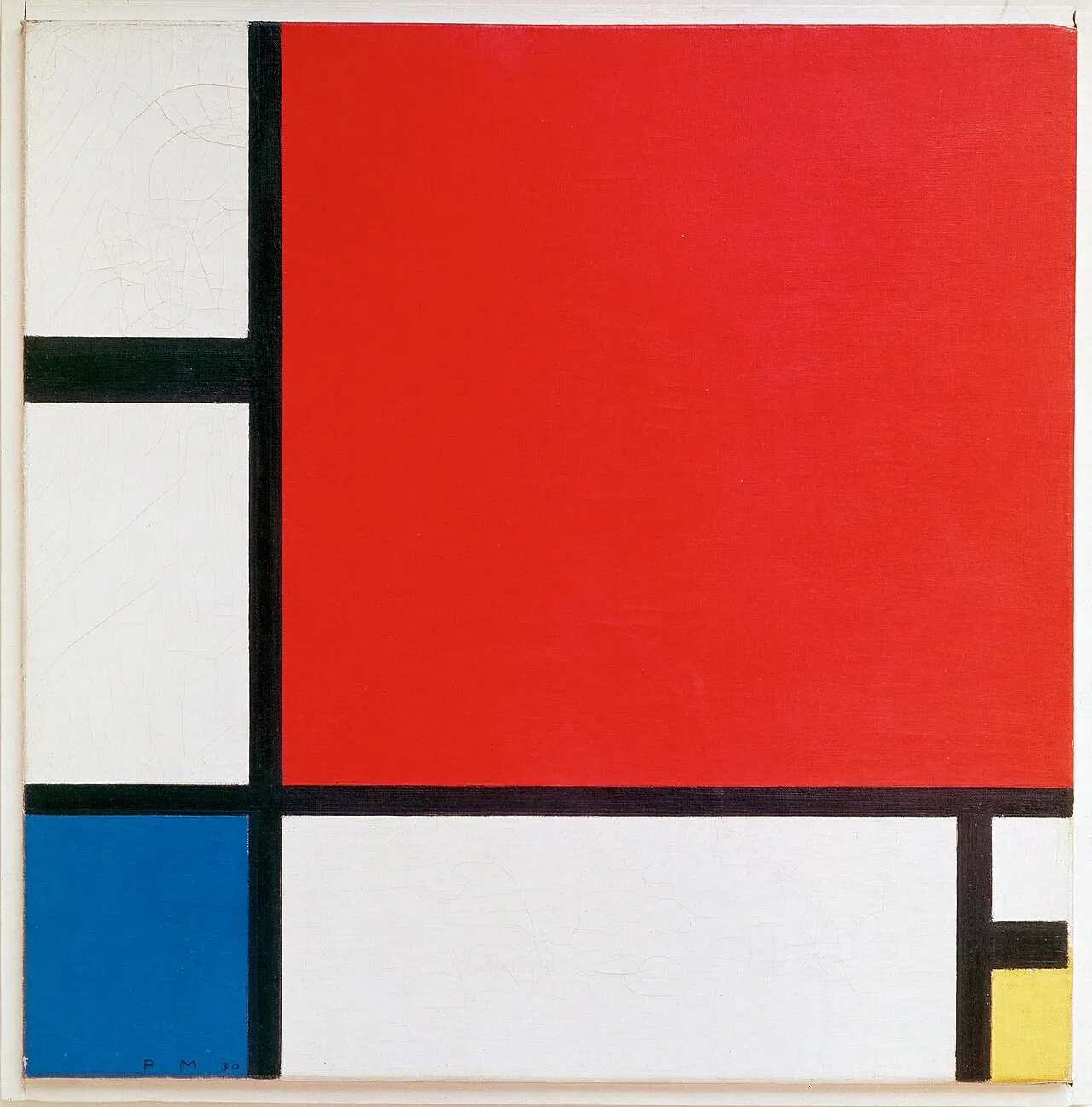
Piet Mondrian, "Composition II in Red, Blue, and Yellow" (1930), oil on canvas, 46 x 46 cm. Kunsthaus Zurich. The colored rectangles are small; the white areas dominate. But Mondrian designed every white rectangle as carefully as every colored one, understanding that the active negative space was as compositionally significant as the positive color areas. Image: Public domain, via Wikimedia Commons
Mondrian arrived at this reduced, grid-based composition through a long process of reducing natural forms to their essential horizontal and vertical tensions, documented in decades of transitional work from representational tree paintings through increasingly abstracted versions to the final grids. The process is instructive precisely because it shows how negative space becomes more active as positive form is reduced. The less there is to look at, the more carefully the viewer must attend to what remains.
Negative Space in Contemporary Practice
The strategic use of negative space has not diminished in contemporary art. It has, if anything, become more varied. Kara Walker's large-scale silhouette installations, most famously "A Subtlety" (2014) at the Domino Sugar Factory in Brooklyn, use the relationship between positive black forms and surrounding white or light-colored negative space to create deeply charged images about race, labor, and American history. The silhouette format, which Walker adopted from 18th-century paper-cutting traditions, makes negative space an explicit part of the visual language. The white areas are not neutral background. They actively define the forms and carry their own historical associations.
Sculptor Anish Kapoor has spent decades exploring negative space in three dimensions. Works like "Descent into Limbo" (1992), a perfectly circular void cut into the floor of a gallery, turn negative space into the subject itself. Viewers report that the black hole reads as genuinely bottomless, a perceptual illusion created by coating the interior with a light-absorbing paint. The work has no positive form in the traditional sense. It is entirely defined by what is not there.
How to Practice Seeing Negative Space
The most effective exercise for developing awareness of negative space is contour drawing using negative space as the primary reference. Instead of drawing the outline of an object, draw the shapes of the spaces around it. If you are drawing a chair, draw the triangular space between the legs, the trapezoidal space between the back rails, the gap between the seat and the floor. The chair emerges as a consequence of the accurately described spaces around it, and the exercise teaches the eye to see the space rather than bypassing it to attend to the object.
In gallery-going, practice consciously attending to the areas of a painting that contain no described subject matter. Ask: What color is the background? Is it textured or flat? Is it uniform or varied? Does it push toward or pull away from the figures? These questions direct attention toward the negative space as designed form rather than mere backdrop. You will quickly discover that skilled painters treat these areas with as much deliberation as the central subjects, and that the quality of the negative space is one of the clearest indicators of compositional sophistication.
Final Thoughts
Negative space is one of those concepts that once noticed cannot be unnoticed. You will never again look at a composition without being aware of what the artist has done with the areas between and around the subjects. That awareness is not a technical footnote. It is access to a significant dimension of how meaning is created in visual art. The space between things is as much a part of the composition as the things themselves, and learning to see it is one of the clearest signs of a developing visual intelligence.
For how negative space interacts with compositional structure, balance, and focal points, our guide to composition in art covers these relationships in detail. And for how color decisions within negative space areas affect the overall tonal and emotional impact of a painting, see our guide to color theory for art appreciation.