Palace Museum Beijing: 1.8 Million Treasures Behind a Ticket System Designed to Defeat You
The Palace Museum occupies the Forbidden City, the imperial palace complex that was the political center of China for nearly 500 years. It holds 1.8 million artifacts spanning Chinese imperial art and culture, and it draws 19 million visitors a year, making it the most visited museum in the world. None of that matters if you cannot get in.
Tickets are capped at 40,000 per day and must be booked in advance through the official Palace Museum website or WeChat mini-program. There are no walk-up tickets. Tickets go on sale 7 days before your visit date at 8 PM Beijing time, and during peak seasons (Golden Week in October, May Day holiday, summer months) they sell out within minutes. If you miss the release window, unsold allocations sometimes reappear earlier in the day, but you should not count on it. Set an alarm.
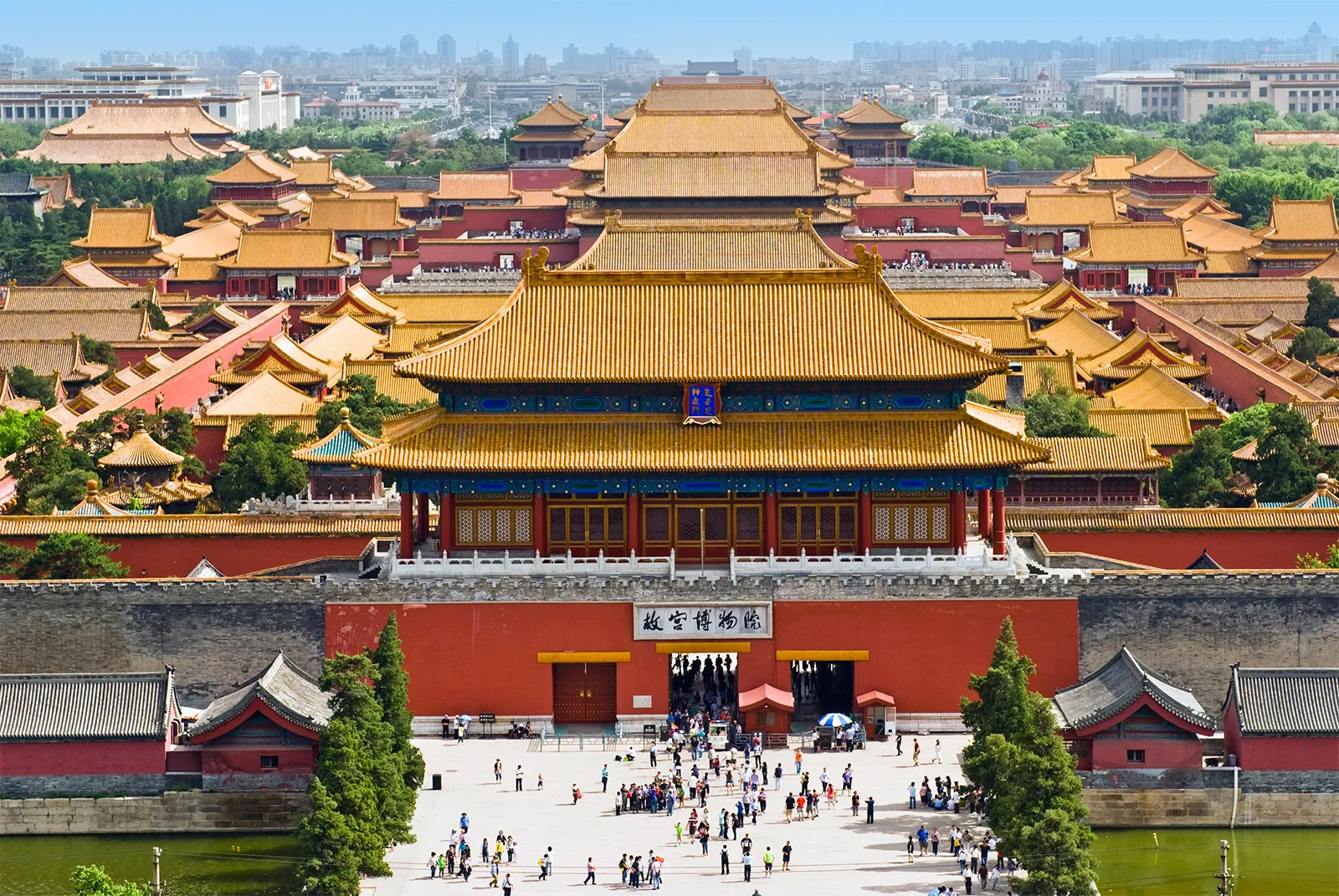
The building itself is the main attraction. The Forbidden City is the largest palace complex in the world, with nearly 1,000 buildings covering 180 acres, organized along a central north-south axis that embodies Chinese cosmological principles. The architecture is the museum's greatest artifact, and walking through it is an experience no collection of paintings or ceramics can replicate.
What to See If You Only Have Half a Day
Start at the Meridian Gate (Wumen), the main southern entrance. If you arrive before 9 AM, you can walk the Outer Court's three great ceremonial halls in relative quiet. The Hall of Supreme Harmony, the Hall of Central Harmony, and the Hall of Preserving Harmony are the most magnificent wooden structures ever built in China, with golden-tiled roofs and carved marble terraces designed to inspire awe in anyone approaching the emperor.
After the central axis, head to the eastern wing for the two add-on galleries that most visitors skip. The Treasure Gallery (Zhēnbǎo Guǎn, CNY 10 extra) displays the finest objects from the imperial collection: jade carvings, gold Buddhist statues, court jewelry, and personal objects belonging to the Qianlong Emperor. The centerpiece is a large jade carving depicting a mountain landscape that is justifiably famous. The Gallery of Clocks (Zhōngbiǎo Guǎn, CNY 10 extra) houses over 200 European and Chinese mechanical clocks and automata from the 18th and 19th centuries, many of which perform miniature theatrical scenes when wound. Both are worth every yuan.
If time permits, the Ceramics Gallery in the Hall of Martial Valor (Wuyingdian) presents a comprehensive survey of Chinese ceramic art from Neolithic pottery through Song dynasty monochrome glazes to Qing imperial porcelains. The Song wares, including Ru, Guan, Ge, Jun, and Ding ceramics, represent the pinnacle of Chinese ceramic aesthetics.
Current Exhibitions in 2026
The Palace Museum has an active special exhibition program. All Dharmas Return to One: History, Culture and Art of Sakya Monastery ran from February 10 to May 10, 2026, in the Meridian Gate Exhibition Hall, bringing together over 200 treasures from the Tibetan Sakya Monastery, many leaving the temple for the first time. The exhibition included a 1375 imperial edict by Ming dynasty founder Zhu Yuanzhang, written in vernacular Chinese, protecting the practice of the Fourth Karmapa.
A Garden Within: An Immersive Light and Shadow Exhibition of Qianlong Garden opened July 9, 2026 at the National Library of China (National Museum of Classic Books), presented by the Palace Museum. Featuring 15 immersive scenes and 17 interactive installations, it uses digital technology to make the Qianlong Garden, located in the Palace of Tranquil Longevity and not yet fully open to the public, accessible through virtual exploration. The exhibition runs through December 6.
The Jade from the Kunlun Mountains exhibition, showcasing Hetian jade culture in the Qing court, ran through January 4, 2026 in the Hall for Abstinence.
How It Compares
The Palace Museum is fundamentally different from encyclopedic museums like the Louvre or the British Museum. Those institutions collect from across cultures and centuries. The Palace Museum collects from a single tradition: Chinese imperial art, produced for or collected by the emperors who lived in this building. That narrow scope is also its strength. No other museum in the world can claim this level of depth in Chinese painting, calligraphy, ceramics, jade, and decorative arts.
Against the National Museum of India, the Palace Museum has a grander setting, more visitors, and better-preserved architecture, but a narrower cultural range. The Hermitage Museum in St. Petersburg is the closest parallel: both are former royal palaces converted to museums, both have vast collections assembled by imperial patrons, and both are architectural masterpieces in their own right.
Insider Tips
Arrive before 8 AM. The ticket queue opens at 8, and the crowds from organized tour buses peak between 10 AM and 1 PM. If you are at the Meridian Gate entrance by 8:15, you will walk the Outer Court in near-silence. By mid-morning, the central axis between the three great halls becomes a slow-moving mass of tour groups.
Book tickets through the official site. Foreigners can now use email and passport to book through en.dpm.org.cn. The process involves 6 steps: register with passport number, select date, select time slot (morning or afternoon), pay, receive confirmation QR code, and present passport at entry. Do not use third-party booking sites that charge markup.
Do not skip the add-on galleries. The Treasure Gallery and Gallery of Clocks are on separate tickets (CNY 10 each) and are tucked into the eastern wing, which most visitors skip because they are focused on the central axis. This is a mistake. These two galleries contain some of the most impressive objects in the entire complex.
The central axis is best in the early morning or early afternoon. Between 10 AM and 1 PM, the three Outer Court halls are at maximum capacity. If you arrive late, go to the eastern or western wings first and return to the central axis after 2 PM when tour groups have moved on.
Wear comfortable shoes. The complex is vast. Visitors walk approximately 2 to 3 miles from the Meridian Gate to the North Gate. There is minimal seating inside the complex.
Getting there: The nearest metro station is Tian'anmen East on Line 1, or Tian'anmen West on Line 1. Both are a short walk to the Meridian Gate entrance.
Practical Information
Admission: Peak season (April 1 to October 31) CNY 60. Off-season (November 1 to March 31) CNY 40. Treasure Gallery and Gallery of Clocks: CNY 10 each. Minors 7-18: CNY 20. Seniors 60+: 50% off. Children under 6: free.
Hours: Peak season 8:30 AM to 5:00 PM (last entry 4:00 PM). Off-season 8:30 AM to 4:30 PM (last entry 3:30 PM). Closed Mondays, except when Monday falls on a Chinese public holiday.
Book tickets: en.dpm.org.cn or the Palace Museum WeChat mini-program. Book 7 days in advance. Tickets are non-refundable and non-transferable.
Final Verdict: Who Is This Actually For?
Anyone visiting Beijing. The Forbidden City is not optional. It is the single most important historical site in China, and the collection of imperial art inside it is the finest of its kind anywhere. The ticket system is frustrating, the crowds are intense, and the scale is exhausting, but none of that changes the fact that this is one of the great museums of the world. Book early, arrive early, pay the extra CNY 20 for the Treasure Gallery and Clock Gallery, and plan for at least half a day. Skip it only if you have been before, and even then, the rotating special exhibitions may give you a reason to return.