

Game Design as Art: Environmental Storytelling and Visual World-Building
Game design is one of the most sophisticated visual arts of the 21st century. Discover how environmental storytelling and visual world-building make games fine art.
Your cart is empty
Browse the store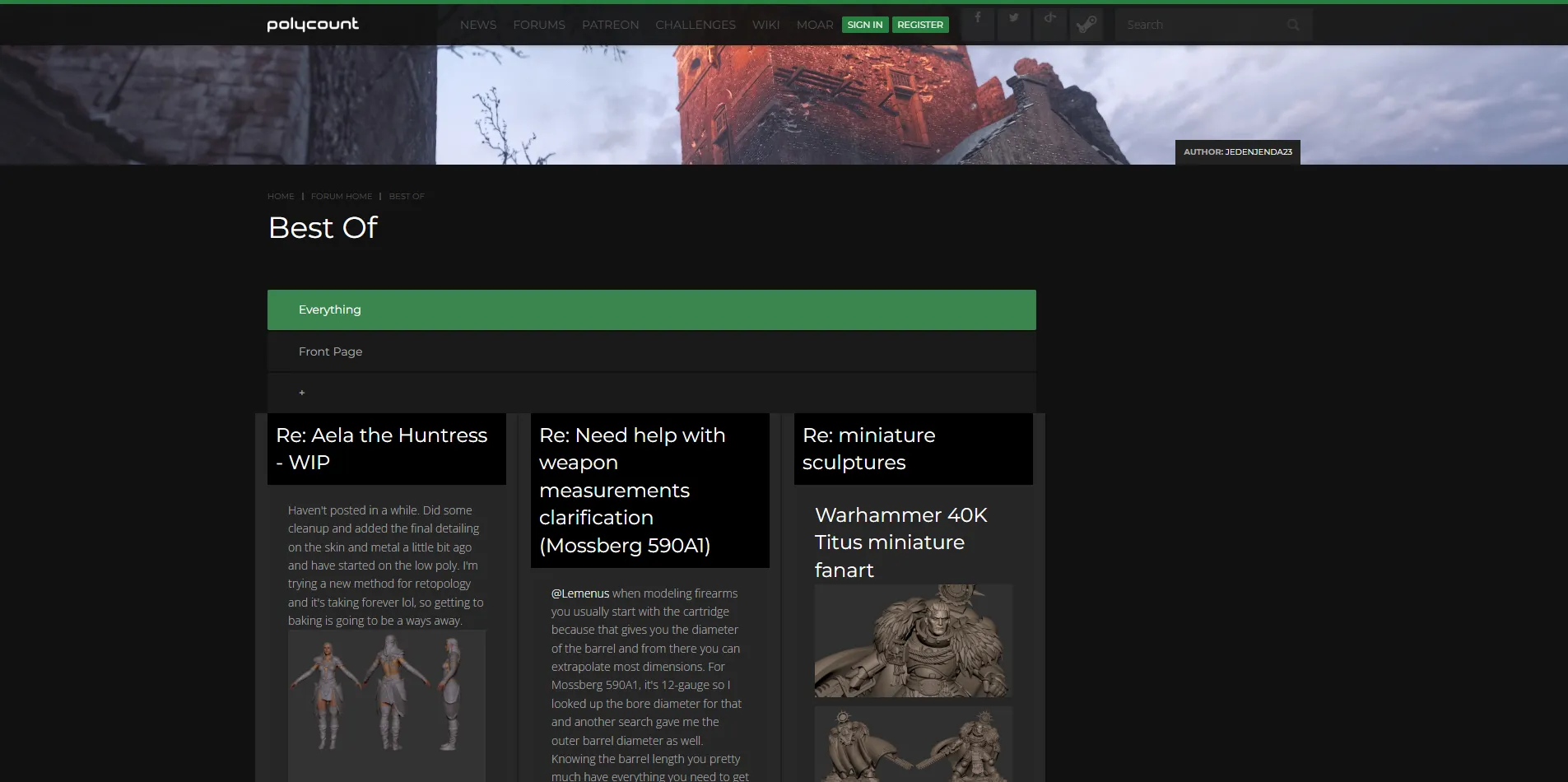
The longest-running forum for game artists, offering searchable critique threads, art challenges, and a technical knowledge archive spanning two decades of production know-how.
Discover other art communities you might be interested in
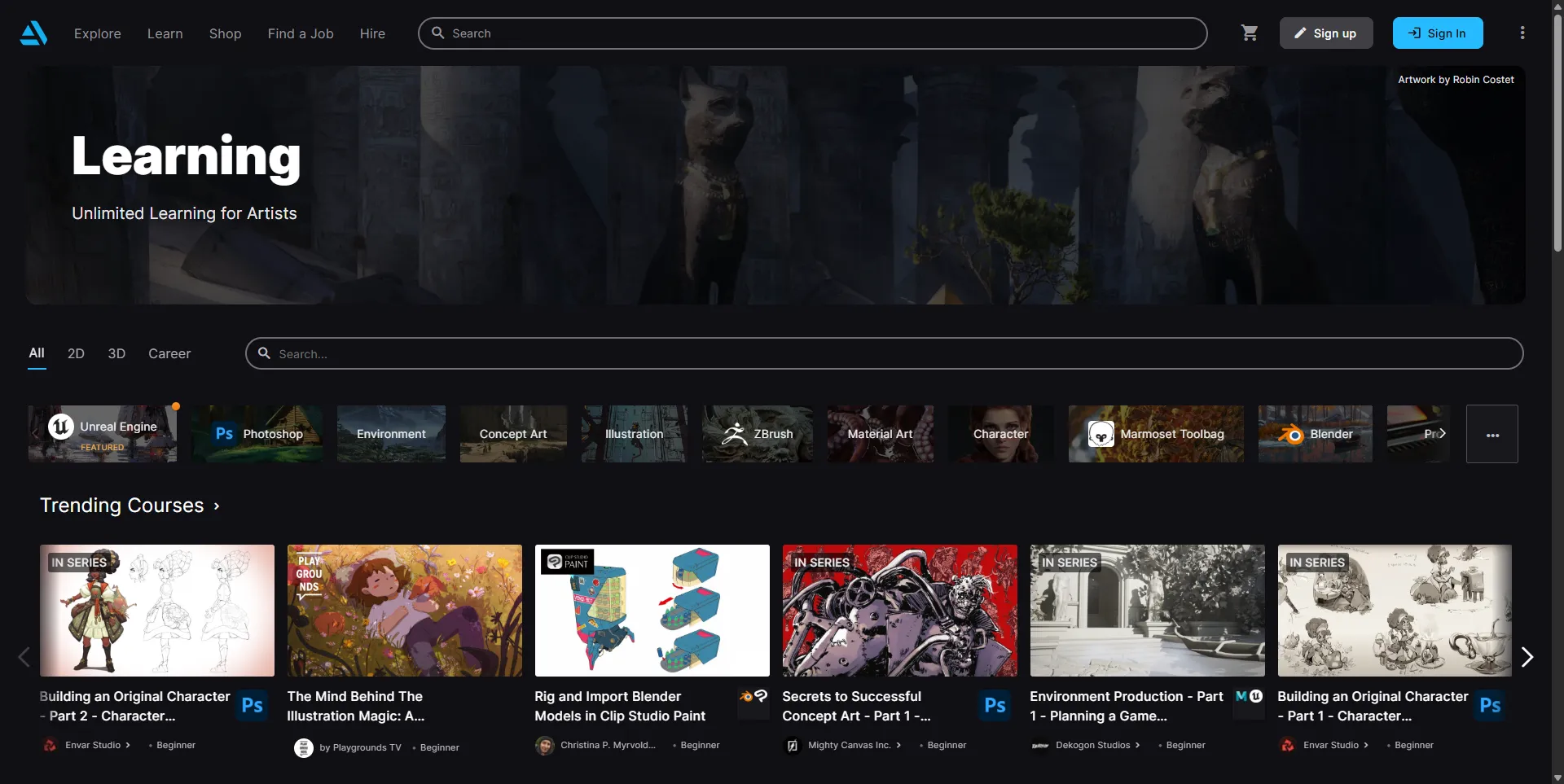
ArtStation Learning offers professional-grade courses from working entertainment artists, covering 3D, concept art, and VFX skills the industry actually hires for.
View details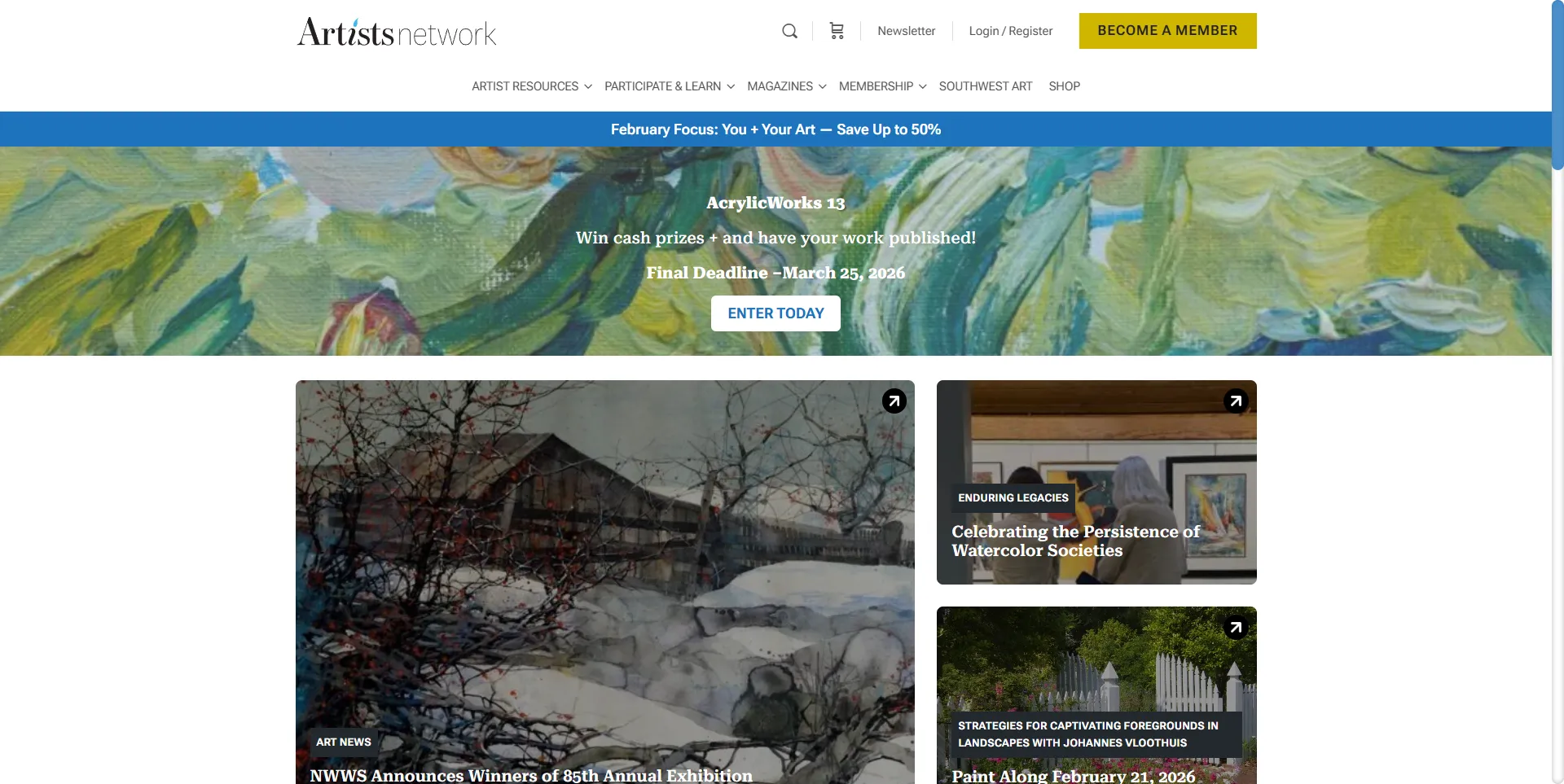
Home of The Artist's Magazine and Watercolor Artist, offering 1,000+ hours of video instruction, art competitions, and a searchable magazine archive for traditional media painters.
View detailsExplore definitions from our glossary that connect to this community
3D modeling is the process of creating three-dimensional objects in digital space. Learn its history from the 1975 Utah teapot to Meta's SAM 3D and Roblox's AI Build in 2026.
Concept art is visual development art for games, film, and animation. Learn its history from Disney's Snow White to AI-assisted workflows in 2026.
Read more about this topic on our blog
Game design is one of the most sophisticated visual arts of the 21st century. Discover how environmental storytelling and visual world-building make games fine art.

Explore 3D art and digital sculpture using Blender and ZBrush. Learn how artists move from screen to physical object with 3D printing and the new forms it enables.

From 1960s code art to 2026 AI museums, digital art has transformed what painting and creativity mean. Here is the full history and where it stands now.
Polycount should not still exist. Forums are supposed to be dead, killed by Discord, Reddit, and social media. And yet polycount.com is still running in 2026, still posting new threads daily, and still producing the kind of technical, production-grounded critique that you cannot find on any Discord server or ArtStation feed. The community is smaller and quieter than it was at its peak, and its own members openly debate whether it is "dying." But the forum format that makes it feel dated is exactly what makes it valuable: threads are searchable, discussions are permanent, and you can track an artist's growth over years rather than watching their work scroll past in a chat channel.
Founded in 2003, Polycount has served as the central gathering place for 3D modelers, texture artists, character artists, and environment artists working in the video game industry for over two decades. The forum's membership has included senior artists and art directors from Blizzard, Riot Games, Naughty Dog, Epic Games, and Ubisoft. Many of those professionals are less active now, a reality the community acknowledges openly. But the archive of their posts, critiques, and workflow breakdowns remains, and new artists continue to post work and receive feedback from experienced members who are still engaged.
The game art community has scattered. ArtStation serves as the portfolio platform. Discord servers handle real-time conversation. Reddit's r/gameart and r/3Dmodeling provide broad community discussion. But none of these platforms do what Polycount does: preserve detailed, multi-page critique threads where an artist documents an entire project from blockout to final render, receiving specific technical feedback at every stage.
A thread on Polycount's own forum about whether the platform is dying captures the dynamic perfectly. Members acknowledge that activity has declined, that Discord has pulled away real-time conversation, and that the industry is shrinking. But they also point out that Discord is "a black hole that can't be searched," that information shared in chat disappears, and that Polycount's searchable, permanent format is irreplaceable for technical knowledge exchange.
The What Are You Working On (3D) 2026 thread is still active as of July 2026, with artists posting WIP images and linking to their detailed project threads. The sticky threads for hand-painted textures, low-poly art, and sketch work are all receiving new posts. The technical art forum remains particularly active, with experienced members regularly answering questions about shader setup, optimization, and pipeline issues.
On ArtStation, feedback means "great work" and a like. On Discord, feedback is real-time but ephemeral and often superficial. On Polycount, a critique might address the edge flow of a character model's topology, the normal map baking artifacts on a prop, the PBR material values of a texture set, or the compositional balance of an environment scene. And it will be posted in a thread that stays visible, that other artists can learn from, and that the original poster can reference months later.
This level of specificity exists because the community is composed of working professionals and serious students who understand the technical requirements of game art production. A beautiful 3D model that crashes the frame rate or a texture that consumes excessive memory is not useful in production, regardless of its artistic quality. Polycount is one of the few communities where artistic and technical dimensions are discussed with equal rigor.
The community also maintains a culture of respectful directness. If a model has topology problems, members will identify them clearly and suggest fixes. This is not a place for vague encouragement. It is a place for the kind of frank assessment that helps artists improve to a professional standard.
Polycount's art challenges remain among the most respected community-run competitions in game art. These challenges provide a theme, constraints (polygon limits, texture resolution caps), and a deadline. Participants create game-ready assets that meet the specified requirements, and entries are judged by community vote and sometimes by industry professionals.
The Brawl2 Tournament ran in December 2025, and the forum continues to host themed challenges across specializations. Winning or placing well in a Polycount challenge is still a recognized credential in the game art community, and entries frequently appear in professional portfolios.
Many game artists credit Polycount challenges with helping them land their first industry jobs. The combination of portfolio-quality work, demonstrated ability to work within constraints, and visibility within a community that recruiters monitor creates a direct path from challenge participation to employment.
Polycount is organized into sections that reflect game art production disciplines:
The work-in-progress threads are particularly valuable. They document the entire creation process from initial blockout through high-poly sculpting, retopology, UV mapping, texturing, and final presentation in a game engine. Following a skilled artist's WIP thread is essentially a free education in professional game art workflow.
ArtStation is where you host your portfolio and see industry-level finished work. It is not a community for critique or technical discussion. Use it as your professional showcase.
Discord servers (including game studio-specific servers and general game art servers) are where you go for real-time conversation, quick questions, and social connection. The downside is that information shared in chat is not searchable and disappears.
Polycount is where you go for detailed, permanent, technically informed critique. Post a WIP thread, receive specific feedback over days or weeks, and build a documented record of your project development. It is slower than Discord and less visual than ArtStation, but it does something neither of those platforms does.
The reality is that most working game artists use all three. But if you are an aspiring artist trying to break into the industry and you are only using ArtStation and Discord, you are missing the platform that provides the most actionable feedback.
This is for you if: You are an aspiring or working game artist who wants detailed, technically informed critique on 3D models, textures, or environment art. You are willing to engage in a forum format that is slower than Discord but more substantive. You want to build a visible, searchable record of your project development.
This is not for you if: You want real-time social interaction (use Discord). You want to browse polished finished work (use ArtStation). You are a 2D illustrator or concept artist looking for a large, active community (the 2D sections are quieter than the 3D sections). You expect instant responses to your posts.
Polycount is not the busiest game art community anymore, and pretending otherwise would be dishonest. Activity has declined, many professionals have moved to Discord, and the forum format feels dated compared to modern platforms. But the critique quality, the searchable archive, and the permanent discussion format provide value that faster, more modern platforms do not replicate.
For aspiring game artists, Polycount remains one of the best places to get specific, technical feedback that can directly improve your portfolio. For working professionals, it is a quieter space than it used to be, but the technical art discussions and archive of production knowledge are still worth checking periodically.
Next steps: Create a free account at polycount.com, browse the 3D Art Showcase section to see the level of work and critique, and start a WIP thread for your current project. You can also explore our art software directory for tools like Blender, Substance Painter, and ZBrush, or our communities directory for other game art groups.
Quiet Canvas is a space for artists and art lovers: essays, glossary terms, tools, and curated directories to support your creative practice.
Learn more →


