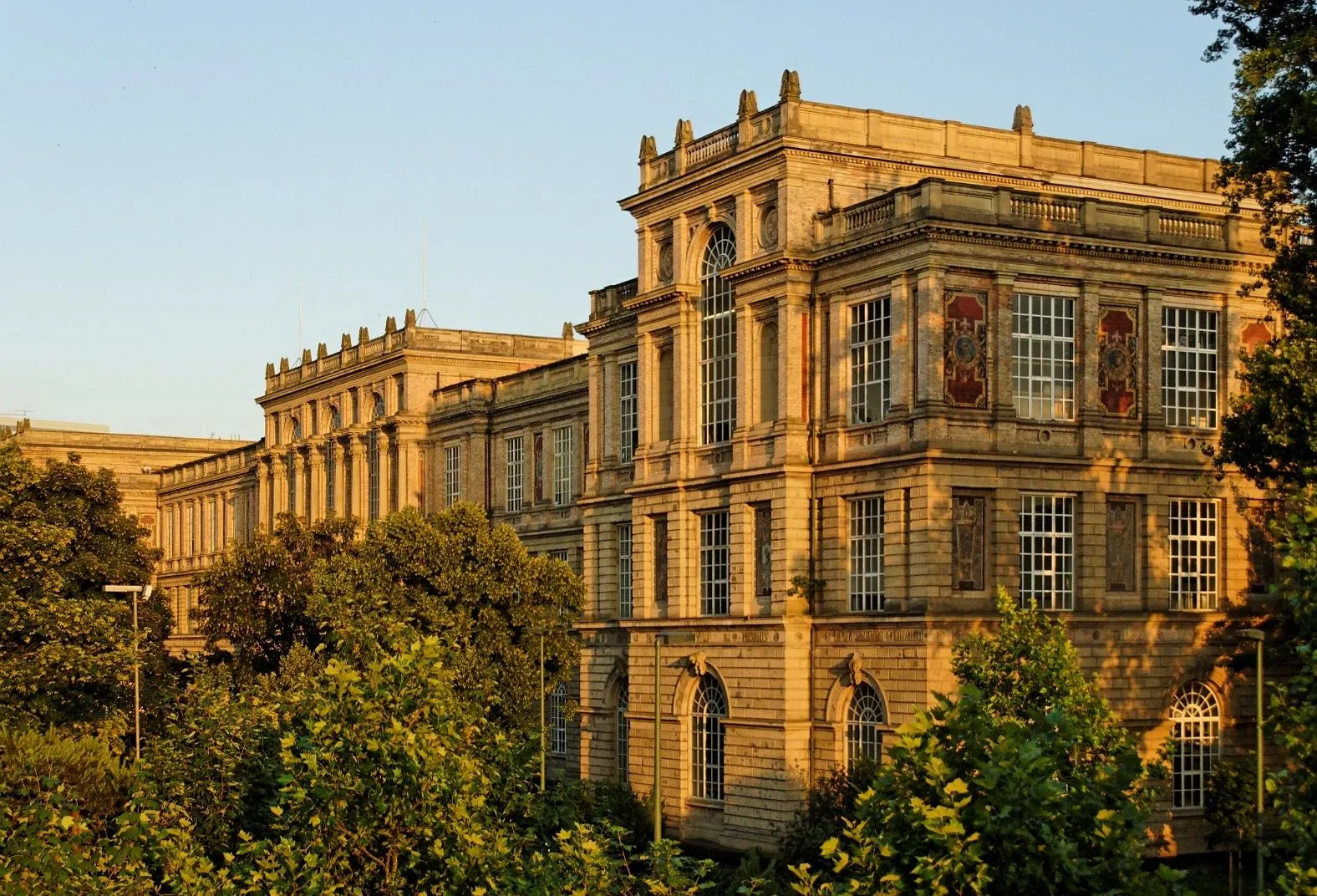
Kunstakademie Dusseldorf: The Academy That Shaped Postwar Art
The Kunstakademie Dusseldorf is one of the most consequential art schools in the history of modern art. Founded in 1773, the academy spent its first two centuries as a respected but not exceptional institution. Then, in the postwar decades, something extraordinary happened: a concentration of exceptional artists and teachers transformed it into the most influential art school in the world for a generation. The names of its faculty and alumni from the 1960s through the 1990s read like a who's who of the most significant art of the postwar period: Joseph Beuys, Gerhard Richter, Sigmar Polke, Katharina Grosse, Andreas Gursky, Thomas Ruff, Candida Hofer, Imi Knoebel. No other art school in the world can claim a comparable concentration of significant artists from a single period.
The academy's influence on contemporary art is difficult to overstate. Beuys's concept of "social sculpture," his performances, and his charismatic teaching transformed how a generation of artists thought about the relationship between art and society. Richter's photorealist and abstract paintings redefined the possibilities of painting in the age of photography. Polke's ironic, layered canvases anticipated postmodern strategies that would become central to art in the 1980s and beyond. The Dusseldorf photographers, Gursky, Ruff, Hofer, and Thomas Struth, trained under Bernd and Hilla Becher at the academy and went on to produce some of the most significant photographic work of the late twentieth century.
The Klasse System
The Kunstakademie Dusseldorf operates on the Klasse (class) system, in which each professor leads a studio class of approximately 20 to 30 students. Students apply to a specific professor's Klasse, and if accepted, they work primarily within that class for the duration of their studies. The professor is responsible for the intellectual and artistic direction of the class, and the relationship between students and their professor is close and sustained.
This system creates classes with strong, distinctive characters. A Klasse led by a painter with a particular approach to abstraction will have a different character from one led by a conceptual artist or a photographer, and students choose their Klasse in part because of their affinity with the professor's practice and thinking. The system also creates a strong sense of community within each class, with students supporting and challenging each other's work over several years of shared studio practice.
The most famous Klasse in the academy's history was Joseph Beuys's class, which operated from 1961 until Beuys's dismissal in 1972 following his decision to admit all applicants regardless of the official enrollment limits. Beuys's class was a center of intellectual and artistic ferment, attracting students who went on to become some of the most significant artists of their generation. The tradition of serious, committed teaching that Beuys established continues in the current faculty.
Admission and the Meisterschuler
Admission to the Kunstakademie Dusseldorf is extraordinarily competitive, with an acceptance rate of approximately 5%. The admissions process involves a portfolio review and an interview, and applicants are evaluated on the quality and originality of their work and their potential for significant development. The academy accepts students from Germany and internationally, and the program is conducted primarily in German, though many faculty and students are comfortable working in English.
Students who complete the standard program receive a Diploma in Fine Arts. The most accomplished students are invited to continue as Meisterschuler (Master Students), a designation that indicates exceptional achievement and provides additional studio time and mentorship from the professor. The Meisterschuler designation is highly prestigious in the German art world and is a significant credential for artists pursuing careers in Germany and internationally.
Essentially Free Education
One of the most remarkable features of the Kunstakademie Dusseldorf is its cost. As a public institution of the state of North Rhine-Westphalia, the academy charges no tuition. Students pay only a semester fee of approximately 300 euros, which covers administrative costs and provides access to public transportation in the Dusseldorf region. This makes the Kunstakademie Dusseldorf one of the most affordable serious art schools in the world, and it reflects the German tradition of publicly funded higher education.
For international students, the combination of essentially free tuition and Dusseldorf's relatively affordable cost of living compared to London, Paris, or New York makes the academy an extraordinarily compelling value proposition. The main barrier for international students is language: the program is conducted primarily in German, and students who do not speak German will need to develop sufficient proficiency to participate in critiques, seminars, and the broader life of the academy.
Dusseldorf as an Art City
Dusseldorf is one of the most important art cities in Germany and one of the significant art centers in Europe. The city's Kunsthalle Dusseldorf, Museum Kunstpalast, and K20 and K21 (the Kunstsammlung Nordrhein-Westfalen) provide access to major collections of modern and contemporary art. The city's commercial gallery scene is one of the most active in Germany, with galleries representing significant German and international artists.
The Dusseldorf art scene has been shaped by the academy's presence for decades, and many academy graduates choose to remain in the city after completing their studies, contributing to a creative community that is closely connected to the school. The city's position in the Rhine-Ruhr metropolitan area, one of the most densely populated and economically significant regions in Europe, provides access to a large and culturally active population.
The Academy Today
The current faculty at the Kunstakademie Dusseldorf includes significant figures in contemporary German and international art, and the academy continues to attract exceptional students from Germany and around the world. The tradition of serious, committed studio practice that was established by Beuys, Richter, and their contemporaries continues in the current generation of faculty and students.
The academy's influence on contemporary art remains significant, and its graduates continue to be represented in major international exhibitions, galleries, and museums. The Dusseldorf model, in which a small number of exceptional artists teach a small number of exceptional students in close, sustained relationships, continues to produce artists who make a genuine contribution to the development of contemporary art.
The Bottom Line
The Kunstakademie Dusseldorf is one of the most historically significant and currently influential art academies in the world, with a record of producing exceptional artists that no other institution can match for the postwar period. Its essentially free tuition, the Klasse system, the extraordinary alumni legacy, and the stimulation of Dusseldorf's art scene make it a compelling choice for serious artists who speak German or are willing to learn. For students who can gain admission, it offers an educational experience that is genuinely connected to the most significant traditions in contemporary art.