School of the Art Institute of Chicago: 160 Years of Interdisciplinary Art Education
The School of the Art Institute of Chicago (SAIC) is celebrating its 160th anniversary in 2026, making it one of the oldest continuously operating art schools in the United States. Founded in 1866 alongside the Art Institute of Chicago museum, SAIC has built its educational philosophy around a single powerful idea: that artists and designers should be free to work across disciplines, following their ideas wherever they lead rather than being confined to a single medium or department. This commitment to interdisciplinary practice has produced some of the most significant artists of the twentieth and twenty-first centuries and continues to define what makes SAIC distinctive among art schools worldwide.
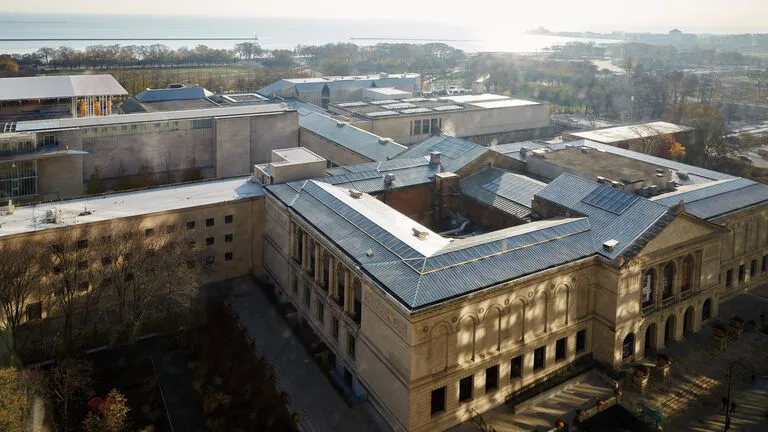
Located in the heart of Chicago's Loop, SAIC occupies a unique position in American art education. Its buildings sit adjacent to and are connected with the Art Institute of Chicago, one of the world's great encyclopedic art museums. Students have direct access to the museum's collection of over 300,000 works, from ancient Egyptian artifacts to contemporary installations, as a living laboratory for their studies. This proximity to a world-class collection is not merely symbolic: SAIC students regularly use the museum for research, inspiration, and the kind of sustained looking that develops genuine visual intelligence.
The Interdisciplinary Philosophy
SAIC's most distinctive feature is its non-departmental structure. Unlike most art schools, which organize students into separate departments based on medium, SAIC does not have a painting department, a sculpture department, or a photography department in the traditional sense. Instead, students are organized around broad areas of study and are actively encouraged to move between media, combine disciplines, and develop practices that resist easy categorization.
This structure reflects a genuine conviction that the most interesting contemporary art practice does not fit neatly into medium-based categories. A student might begin working in painting, move into video and installation, incorporate writing, and end up making work that draws on all of these simultaneously. SAIC's curriculum is designed to support this kind of exploratory, evolving practice rather than to channel students toward mastery of a single medium.
The interdisciplinary approach is supported by shared studios and facilities that are open to all students regardless of their declared area of study. The printmaking facilities are available to sculpture students. The video editing suites are available to painters. The fabrication shop is available to photographers. This openness creates unexpected collaborations and cross-pollinations that are central to the SAIC experience.
Programs and Degrees
SAIC offers a Bachelor of Fine Arts (BFA) as its primary undergraduate degree, with students choosing from a range of areas of study including Painting and Drawing, Sculpture, Photography, Printmaking, Fiber and Material Studies, Film/Video/New Media/Animation, Art and Technology Studies, Fashion Design, Architecture, Interior Architecture, Visual Communication Design, and Writing.
The Master of Fine Arts (MFA) is the primary graduate degree, and SAIC's MFA program is consistently ranked among the top five in the United States by US News and World Report. The MFA is a two-year program that provides advanced studio space, a dedicated cohort of peers, and close mentorship from faculty who are themselves significant figures in contemporary art.
Graduate students also have access to Master of Arts (MA) programs in Art History, Arts Administration and Policy, Art Education, and Modern Art History, Theory and Criticism, as well as a Master of Design (MDes) and a Master of Architecture (MArch). This range of graduate programs makes SAIC unusual among art schools in offering serious academic programs alongside studio degrees.
Faculty and Visiting Artists
SAIC's faculty includes artists whose work is shown in major international galleries and museums, designers whose clients include major corporations, and scholars whose books are assigned in art history courses worldwide. The school's location in Chicago, one of the world's great art cities, means that the faculty roster reflects the vitality of Chicago's art scene as well as connections to New York, Los Angeles, and international art centers.
The Visiting Artists Program brings significant figures from the contemporary art world to SAIC for lectures, critiques, and extended residencies. In recent years, this program has included artists, curators, critics, and gallerists from across the spectrum of contemporary practice, giving students direct access to the people who are shaping the art world they are preparing to enter.
The Chicago Art Scene
Chicago has one of the most distinctive and underappreciated art scenes in the world, and SAIC is at its center. The city's galleries, museums, and alternative spaces provide a rich context for student work, and the relatively lower cost of living compared to New York means that artists can sustain a serious practice without the financial pressures that drive many artists out of more expensive cities.
The Chicago Imagists, a group of figurative painters who emerged from SAIC in the 1960s and 1970s, represent one of the most significant regional art movements in American history, and their influence continues to be felt in the work of Chicago-based artists today. Understanding this history gives SAIC students a sense of the school's role in shaping American art and the possibility of contributing to a living tradition.
Tuition and Financial Aid
Tuition at SAIC for the 2025-26 academic year is approximately $57,480, with total cost of attendance estimated at around $78,000 including housing, meals, and supplies. SAIC offers both need-based financial aid and merit scholarships, with merit awards available to incoming students based on portfolio quality and academic achievement. The school encourages all applicants to submit the FAFSA and to apply for merit consideration simultaneously.
Graduate students have access to teaching assistantships, research assistantships, and fellowship funding. The school also administers a range of external scholarship opportunities and maintains connections with foundations that support graduate study in the arts.
The Bottom Line
SAIC offers one of the most genuinely interdisciplinary art educations available anywhere, in a city with a rich and distinctive art culture, connected to one of the world's great art museums. For students who want the freedom to develop a practice that crosses media and disciplines, who are drawn to conceptual rigor alongside technical skill, and who want to be part of a community that takes contemporary art seriously, SAIC is one of the most compelling choices in American art education. The school's 160-year history and its roster of distinguished alumni demonstrate that its approach to art education produces artists who matter.