
The History of Digital Art: From Pixel to Prompt
Trace digital art from 1960s plotter drawings to AI image generation. This complete history covers every landmark moment in creative computing and digital making.
Your cart is empty
Browse the store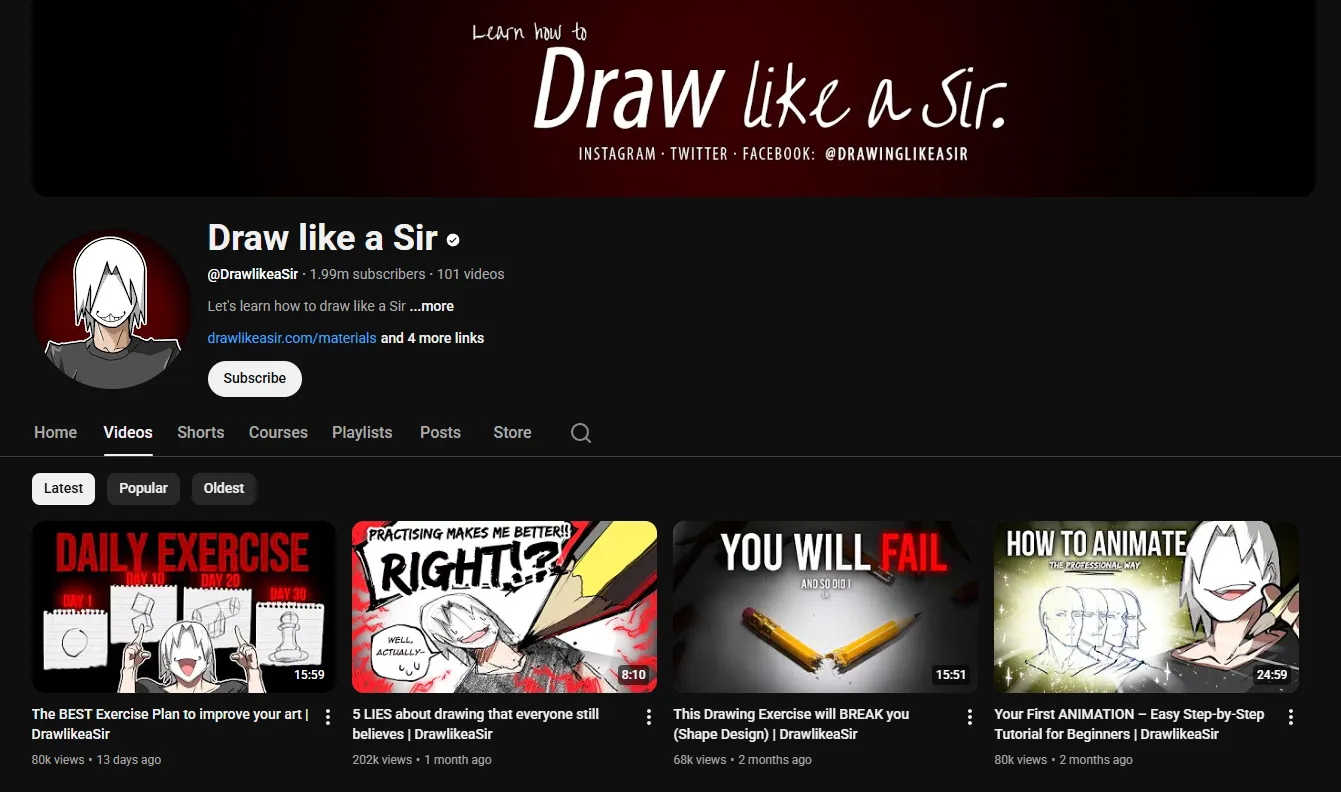
2.1 million subscribers and a British persona: Marcel Kuhn teaches manga and character design with humor, genuine technique, and published how-to books from Quarto Publishing.
Discover other art channels you might be interested in
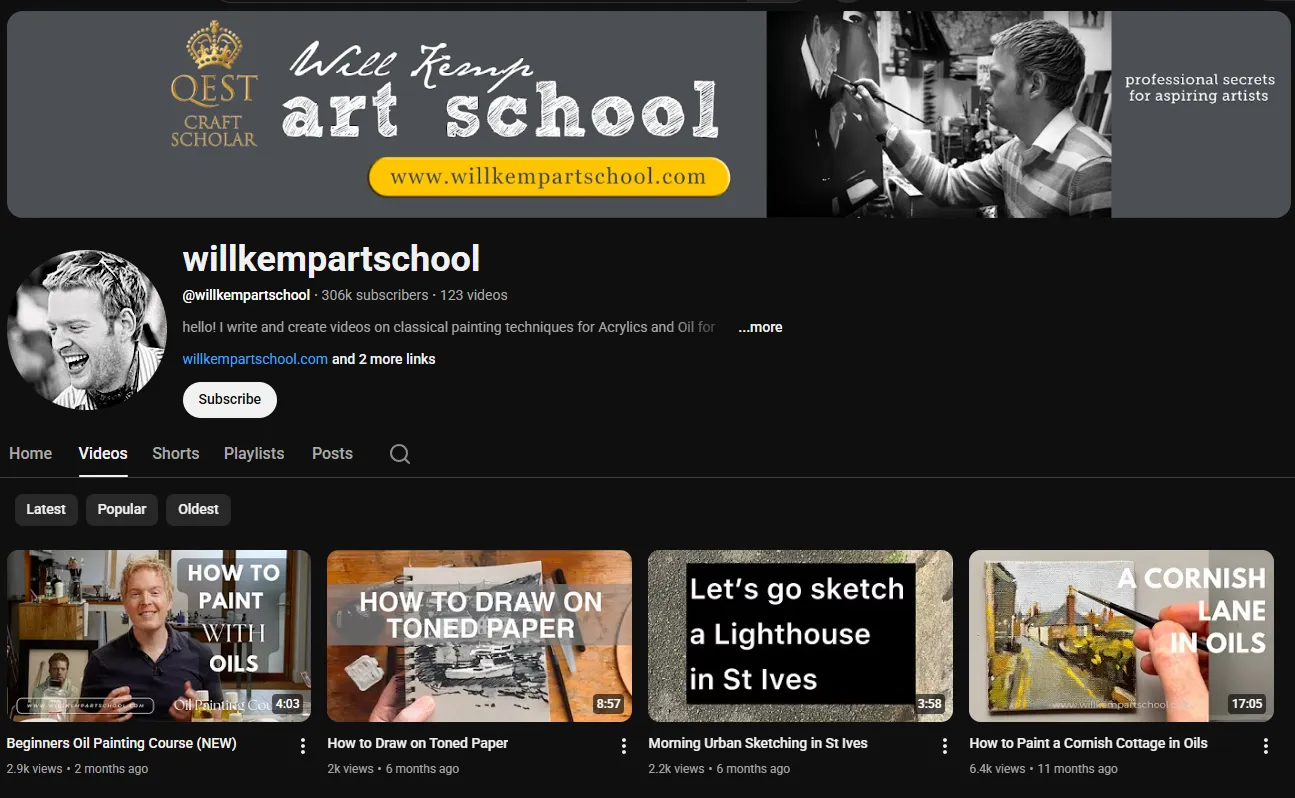
UK painter Will Kemp teaches oil, acrylic, and watercolour to 300K subscribers through structured YouTube tutorials. His colour mixing series and beginner-friendly approach make painting fundamentals accessible.
View details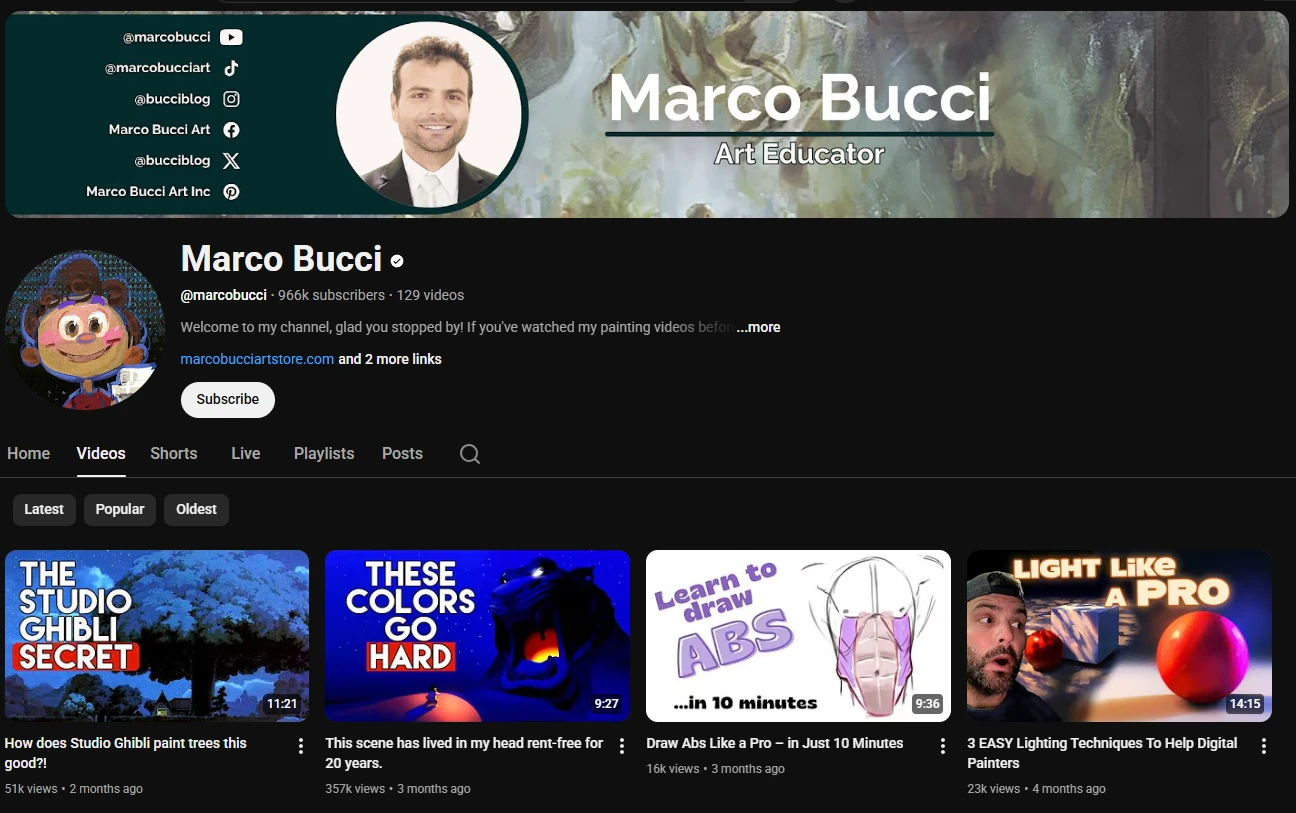
Professional concept artist Marco Bucci delivers masterclass-level color theory and painting instruction trusted by nearly 1 million YouTube subscribers.
View detailsExplore definitions from our glossary that connect to this channel
3D modeling is the process of creating three-dimensional objects in digital space. Learn its history from the 1975 Utah teapot to Meta's SAM 3D and Roblox's AI Build in 2026.
Browser art is art made with or for web browsers. Learn its history from early net art to WebGPU generative works commissioned by the Whitney Museum in 2026.
Read more about this topic on our blog
Trace digital art from 1960s plotter drawings to AI image generation. This complete history covers every landmark moment in creative computing and digital making.

A practical comparison of Procreate, Photoshop, and Illustrator for digital artists. Learn what each tool does best, the raster vs vector distinction, and how to choose the right one for your specific workflow.

Discover how visual artists use code as a creative tool. A practical guide to p5.js, Processing, and openFrameworks with real examples and first steps.
Marcel Kühn is a Swiss-German artist who pretends to be a refined British gentleman on YouTube. That sounds like a joke, and it is, but the joke has 2.1 million subscribers and 113 million views. Draw Like A Sir launched in March 2020, and in just over six years it has become one of the most popular art education channels on the platform by solving a problem that most art educators refuse to acknowledge: learning to draw is boring for most beginners, and boring content teaches nothing.
The persona is simple. Marcel puts on a British accent, adopts the mannerisms of a polite, slightly eccentric Victorian gentleman, and delivers manga drawing tutorials with dry wit and theatrical flair. The character sounds like a gimmick, and it is, but it is a gimmick in service of a genuine educational purpose. The humor keeps you watching. The watching keeps you learning. The learning keeps you practicing. That is the entire model, and it works.
Behind the character, the instructional content is substantive. The channel specializes in manga and anime art styles, covering the specific techniques and conventions that define these genres.
Stylized anatomy is taught as a design tool, not a medical exercise. Marcel explains how to simplify and stylize the human body for anime and manga: how to exaggerate proportions for different character archetypes, how to draw expressive faces with the large eyes and simplified features characteristic of Japanese illustration, and how to create dynamic poses that convey energy and emotion. His approach breaks complex forms into simple geometric shapes (boxes, cylinders, and spheres) that beginners can understand and replicate.
Character design tutorials cover the complete process from initial concept and silhouette exploration through detailed rendering. He teaches how to design distinctive hairstyles, clothing, accessories, and expressions that give characters personality and visual identity. His explanation of shape language (how round, angular, and square shapes communicate different character traits) is accessible and immediately applicable.
Inking and line art tutorials cover line weight variation, inking techniques, and the specific conventions of manga panel layout and storytelling. These bridge the gap between drawing individual characters and creating complete comic pages.
Digital art fundamentals are covered for artists transitioning from traditional media. Marcel covers choosing a drawing tablet, setting up software like Clip Studio Paint, understanding layers and blending modes, and developing a digital workflow.
Marcel's manga instruction culminated in the publication of Draw Like a Mangaka: The Complete Beginner's Guide to Learning to Draw Manga, published by Quarto. The book compiles and expands on the techniques he has refined over years of manga drawing and teaching, providing a structured curriculum that takes readers from absolute beginner to competent manga artist.
A second volume, Draw Like a Mangaka 2, continues the curriculum with more advanced techniques. The publication of physical books through a major publisher validates what the YouTube channel demonstrates: the depth of knowledge behind the entertainment is genuine and has been recognized by the traditional publishing industry.
The books are a natural companion to the YouTube channel. Videos are great for demonstration, but a book provides the structured, sequential progression that scattered video playlists cannot deliver. Many viewers find that combining the two creates a more complete learning experience.
The British gentleman character serves three practical educational purposes that are worth understanding because they explain why the channel succeeds where more straightforward tutorials fail.
It removes intimidation. Art education has a reputation for gatekeeping. Marcel's character dismantles this entirely. The tone is warm, supportive, and self-deprecating. Mistakes are acknowledged as a normal part of learning. The implicit message is that drawing is a skill anyone can develop, not a gift reserved for the talented few.
It sustains attention. The humor keeps viewers watching long enough to absorb the actual lesson. A technically perfect tutorial that viewers click away from after two minutes teaches nothing. A slightly less rigorous tutorial that viewers watch to completion and then practice teaches everything. Marcel's retention rates reflect this.
It builds community. The character creates a shared cultural reference point. Viewers identify as part of the "Sir" community, participate in inside jokes, and engage with each other in comments and on Discord. This sense of belonging encourages consistent practice and long-term engagement.
Draw Like A Sir is not the only manga-focused channel on YouTube, but it is the most popular one by a significant margin. Jazza covers digital art more broadly with a similar entertainment focus but less manga specialization. Marc Brunet offers more structured, art-school-style education but at a higher skill level and with less humor.
The closest comparison in terms of target audience might be Kesh Art, who also targets anime and manga fans, but Kesh's approach is more artistic and less performative. Marcel's channel is specifically designed for the person who has never drawn before and needs both permission and entertainment to start.
The key differentiator is the balance between entertainment and instruction. Many art channels are either entertaining but shallow or deep but boring. Draw Like A Sir manages to be both entertaining and substantive, which is why it has grown faster than most art education channels on YouTube.
Anime and manga fans who want to draw their own characters, illustrations, or comics will find the channel directly aligned with their goals. The manga-specific instruction is among the best available on YouTube.
Complete beginners benefit from the low barrier to entry. Marcel's teaching assumes no prior knowledge and builds skills progressively, making the channel an ideal starting point for anyone picking up a pencil or stylus for the first time.
Young artists and teenagers find the entertaining format far more engaging than traditional art instruction. The channel's ability to make learning feel like entertainment rather than homework is a genuine pedagogical achievement.
Traditional artists transitioning to digital will find the software tutorials and digital workflow guidance practical and clearly explained.
Draw Like A Sir is not designed for artists seeking classical realism, academic rigor, or fine art training. The focus is squarely on stylized illustration, manga, and character design. Artists who want to learn observational drawing, oil painting, or anatomically precise figure work should look to Proko or Alphonso Dunn instead.
The persona, while effective for most viewers, may not appeal to everyone. Some adult learners may prefer a more straightforward instructional tone without the character performance. The channel also publishes relatively infrequently compared to daily-upload channels, with 113 videos in six years, meaning the library is curated rather than exhaustive.
Draw Like A Sir is the best entry point on YouTube for anyone who wants to draw manga and anime but finds traditional art tutorials too dry or intimidating. If you are a complete beginner who needs both entertainment and instruction to stay motivated, Marcel's channel is purpose-built for you. If you are an experienced artist looking for advanced technique or classical training, you will outgrow this content quickly and should look elsewhere.
Start with his YouTube channel and consider picking up Draw Like a Mangaka for the full structured curriculum. For complementary education on digital painting fundamentals, see Ctrl+Paint, and for figure drawing and anatomy, check out Proko.
Quiet Canvas is a space for artists and art lovers: essays, glossary terms, tools, and curated directories to support your creative practice.
Learn more →


