
In May 2026, the artist JR inflated a giant cave over Paris's Pont Neuf, the oldest bridge in the city. The structure was 120 meters long and 18 meters tall, built from 18,900 square meters of fabric and 20,000 cubic meters of pressurized air. It swallowed the 17th-century bridge whole, turning it into a walk-through grotto complete with sound design by Thomas Bangalter of Daft Punk and augmented reality layers visible through Snap's AR Spectacles. JR called it "La Caverne du Pont Neuf," a tribute to Christo and Jeanne-Claude, who wrapped the same bridge in golden fabric in 1985. It was one of the most ambitious public artworks Paris had seen in decades, and it was, at its core, a street art project. No gallery could hold it. No museum could ticket it. It existed in public space, for free, for three weeks, and then it was gone.
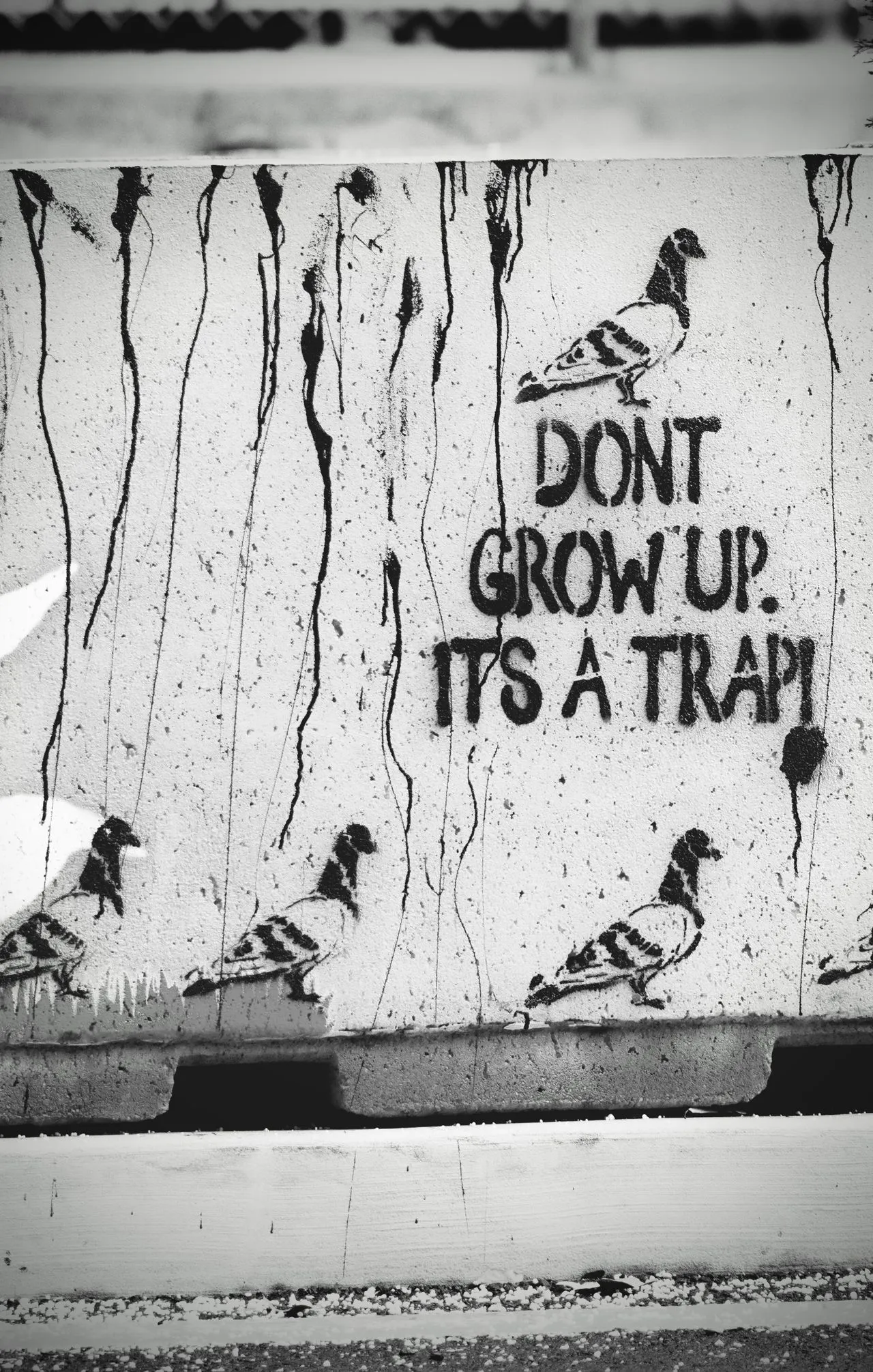
Photo by Constanze Marie on Pexels.com
Street art has always lived in this tension between permanence and erasure. It shows up uninvited on walls, bridges, sidewalks, and abandoned buildings. It speaks to anyone who walks past, not just those who buy tickets. And in 2026, it is arguably the most globally visible form of contemporary art, with artists like Banksy commanding headlines and auction prices that rival any gallery artist. Understanding street art means understanding a practice that began as vandalism and became one of the most powerful visual languages of the 21st century.
What Street Art Is and Where It Came From
Street art is visual art created in public spaces, usually without formal authorization. It encompasses murals, stencils, wheatpaste posters, stickers, tile mosaics, yarn bombing, and sculptural interventions placed in urban environments. The key characteristic is the use of public space as canvas, which means the work is encountered by people who did not seek it out and who may have no context for what they are looking at.
The roots of street art go back to graffiti writing, which emerged in Philadelphia and New York in the late 1960s and early 1970s. Young writers like TAKI 183 and Darryl "Cornbread" McCray tagged their names on subway cars and walls as a form of self-assertion in cities that ignored them. Graffiti was primarily about identity and presence: your name, your crew, your territory, made visible to everyone who rode the train. It was competitive, coded, and largely illegible to outsiders.
Street art diverged from graffiti by shifting the emphasis from the written name to the visual image. Jean-Michel Basquiat began as the graffiti writer SAMO in late 1970s New York, spraying philosophical phrases on walls in SoHo and Manhattan. His transition from street to gallery showed that the energy and urgency of graffiti could carry into a broader visual practice. By the 1980s, artists like Keith Haring were drawing on subway advertising panels with white chalk, creating images that communicated to the general public rather than to a subculture of writers. You can read more about Basquiat's trajectory in our guide to Basquiat and neo-expressionism.
Key Artists Who Changed the Field
Banksy is the most famous street artist in the world, and his 2026 output confirms that he is still operating at full force. In April 2026, a gilded statue appeared on a plinth in Waterloo Place in central London, near monuments to imperial history and military dominance. Banksy confirmed it was his. The sculpture depicts a suited man walking forward off a plinth while carrying a flag that covers his face. Its location, in an area designed to celebrate 19th-century British imperialism, was deliberate. As BBC News reported, Banksy's representatives said the statue was installed in the early hours and the artist posted a video on his Instagram account. Westminster City Council chose to protect and preserve it rather than remove it. This is the same artist who created an animal trail across London in 2024, painting a goat, elephants, a gorilla, monkeys, piranhas, a rhino, and pelicans on various surfaces across the city. You can read the full BBC report here.
JR, the French artist sometimes called the "French Banksy," has taken street art to a scale that no one else has matched. His practice involves pasting enormous photographic portraits on buildings, walls, bridges, and rooftops around the world. His "Inside Out" project, launched in 2011, has involved hundreds of thousands of participants in over 140 countries, each pasting their own portrait in public space. The Pont Neuf cave project in June 2026 concluded a five-year series of large-scale trompe l'oeil works spanning Florence, Rome, and Milan. What sets JR apart is his insistence on participatory practice: 800 volunteers helped build the Pont Neuf installation, and his past projects have involved prisoners in Los Angeles and volunteers in Lviv, Ukraine. More details on the Pont Neuf project are available from Artnet News.
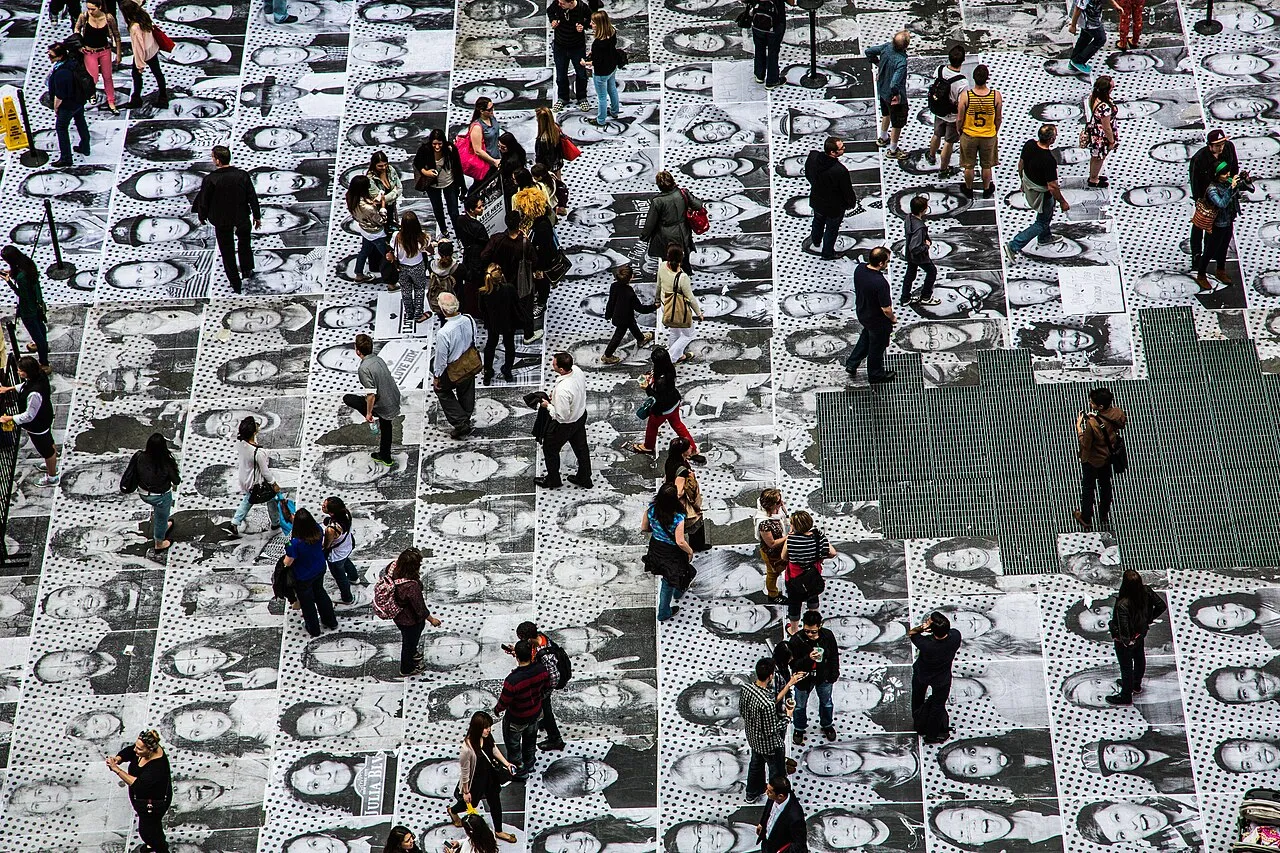
JR, Inside Out project pasteup in New York City. JR is known for his larger-than-life pasted-paper faces and bodies on buildings and public spaces. Image: CC BY-SA, via Wikimedia Commons
Shamsia Hassani, Afghanistan's first female street artist, paints murals in Kabul that transform bombed walls into images of women with flowing hair and closed eyes, asserting presence in a society that has systematically erased women from public space. Her work is street art in its most urgent form: the wall is not a canvas choice but a necessity, because no gallery in Kabul would show her work and no audience would find it there. Shepard Fairey, who began with the "Obey Giant" sticker campaign in 1989, created the "Hope" poster for Barack Obama's 2008 presidential campaign, which became one of the most widely reproduced political images of the 21st century. C215 (Christian Guemy) creates layered stenciled portraits on sidewalks, bridges, and alleyways across Europe, giving forgotten urban corners a human face.
Street Art vs. Graffiti: Why the Distinction Matters
People often use "street art" and "graffiti" interchangeably, but the distinction matters if you want to understand what you are looking at. Graffiti is primarily text-based. It is about the name, the tag, the crew. Its audience is other writers, and its value system is built on visibility, risk, and style within a coded subculture. Street art is primarily image-based. It uses stencils, murals, posters, and mixed materials to communicate with a broader public audience. Its value system is built on message, accessibility, and visual impact.
This is not a hierarchy. Graffiti is not lesser art because it is coded and insular. It is a different practice with different goals. But the distinction explains why street art crossed into mainstream cultural recognition while graffiti remained, for decades, dismissed as vandalism. A Banksy image communicates instantly to anyone who sees it. A wildstyle burner communicates only to writers who can decode the lettering.
How Street Art Changes Cities
Street art transforms urban space in ways that gallery art cannot. A mural on a blank wall turns a forgotten corner into a place people notice. A paste-up on a boarded window makes a dead storefront speak. The economic effects are real: street art tours in cities like Berlin, Lisbon, and Bogota bring revenue to local businesses. The cultural effects are more significant. When a neighborhood's walls carry images made by local artists, the neighborhood's identity becomes visible in a way that municipal signage never achieves.
The technology of street art is also evolving. Augmented reality has entered the field. JR's Pont Neuf project included AR layers visible through smartphones, hiding digital content within the physical installation. Artists are beginning to create works that exist only when viewed through a phone screen, hidden in plain sight on walls that appear blank to the naked eye. This does not replace the physical practice. It extends it.
For more on how art operates in public space and the relationship between art and its context, see our guide to how context changes meaning. The question of where art belongs and who gets to see it is also explored in our post on why art matters in society.
Final Thoughts
Street art is the most democratic form of visual art in existence. It does not ask permission. It does not charge admission. It does not require a degree to understand. It speaks in the visual language of the city, and it is heard by anyone who walks past. The artists who practice it are working in a tradition that runs from Basquiat to Banksy to JR, and the work they make is not decoration. It is argument, testimony, and presence asserted in spaces that were designed to be passed through without looking.
The next time you see a mural on a wall or a stencil on a sidewalk, stop and look at it. Someone put it there for you to find. And if you want to understand the broader context of how contemporary art operates outside gallery walls, our guide to contemporary art covers the territory. What street art have you noticed in your city recently? Share in the comments below.
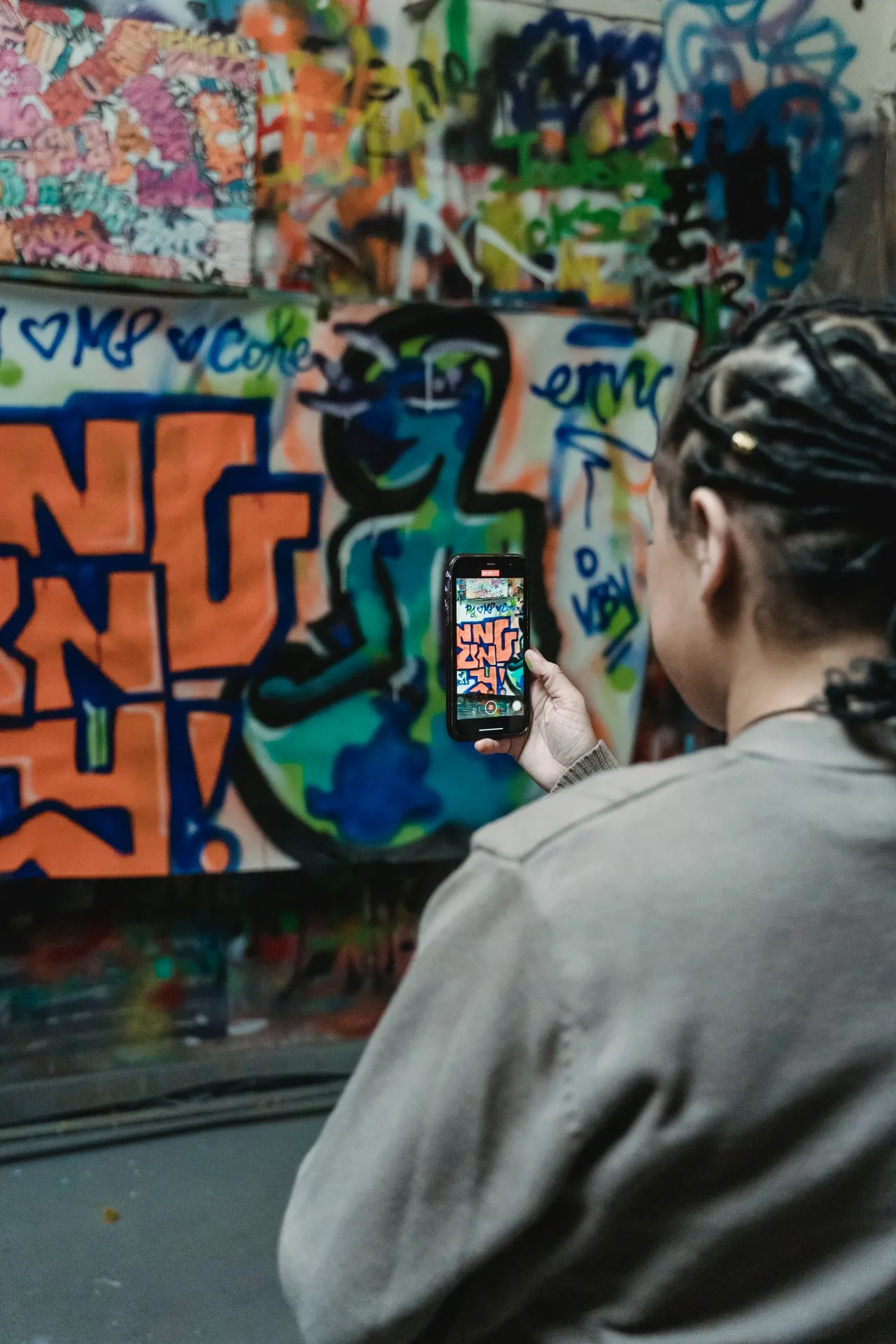
Photo by Felicity Tai on Pexels.com


