
In 2006, the artist Jason deCaires Taylor installed the first sculptures in what would become the Molinere Underwater Sculpture Park off the coast of Grenada. The works were cast from pH-neutral marine cement and placed on the ocean floor in areas where coral reefs had been damaged by storms and human activity. Within months, coral began colonizing the surfaces. Fish moved in. The sculptures became reefs. They are still growing, still changing, still being shaped by the ocean that surrounds them. They will never look the same twice.
That project is a useful entry point into sustainable art because it demonstrates what the field is actually doing: not just making art about the environment, but making art that functions as part of the environment. The work does not represent ecological repair. It performs ecological repair. The distinction matters, and it separates serious sustainable art from the much larger category of art that simply uses recycled materials or depicts climate themes.
Sustainable art is a practice that considers the environmental impact of art-making at every stage: material sourcing, production process, distribution, and afterlife. It has grown significantly since the early 2000s, driven by increasing awareness of the art world's own carbon footprint, the toxicity of conventional art materials, and the broader cultural urgency of climate change. By 2026, major institutions including the Tate, the Museum of Modern Art, and the Venice Biennale have all adopted sustainability policies that would have been unthinkable a decade ago. This guide covers what sustainable art is, the specific materials and methods its practitioners use, the artists who have defined the field, and the challenges that remain.
What Sustainable Art Actually Means
The term "sustainable art" is broad enough to cause confusion. It encompasses work that uses recycled or reclaimed materials, work that uses non-toxic and biodegradable materials, work that is designed to decompose or be reabsorbed into natural systems, work that generates environmental repair as a direct function of its existence, and work that addresses ecological themes as its primary subject. Not all of these categories overlap, and some practitioners work in several simultaneously.
The common thread is a refusal to treat environmental impact as external to the artwork. A conventional painting on canvas with oil paint involves cadmium or cobalt pigments that can contaminate water when brushes are washed, a cotton canvas grown with pesticides, wooden stretchers from logged forests, and varnishes that off-gas volatile organic compounds. The sustainable art movement asks artists to account for these facts rather than ignore them. The Tate's environmental policy, published in 2022 and updated annually, provides a useful institutional framework for understanding how museums are approaching these issues.
Materials and Methods
Natural and Non-Toxic Pigments
Conventional artist paints contain heavy metals that function as pigments: cadmium red, cobalt blue, lead white. These metals are effective and have been used for centuries, but they are toxic to aquatic ecosystems when they enter waterways through brush washing and studio disposal. Natural pigment alternatives include earth pigments, iron oxides, and plant-based dyes. Turmeric produces a yellow that ranges from gold to amber depending on the mordant. Beetroot yields crimson. Indigo produces blue through a fermentation process that is thousands of years old. Madder root produces a red that was the standard for European textile dyeing until synthetic dyes replaced it in the 19th century.
The trade-off is permanence. Many natural pigments are less lightfast than their synthetic equivalents. A turmeric yellow will fade noticeably after several years of UV exposure, while cadmium yellow will not. Artists working with natural pigments must either accept impermanence as part of the work's meaning or use UV-protective varnishes and display conditions that extend the pigment's life. Some practitioners consider the fading itself to be part of the artwork's environmental honesty: the material returns to the earth rather than persisting in its original form for centuries.
Recycled and Reclaimed Materials
Using discarded materials as art supplies reduces waste and redirects objects from landfill to gallery. The practice ranges from simple material substitution to complex conceptual projects where the material's history is part of the work's meaning.
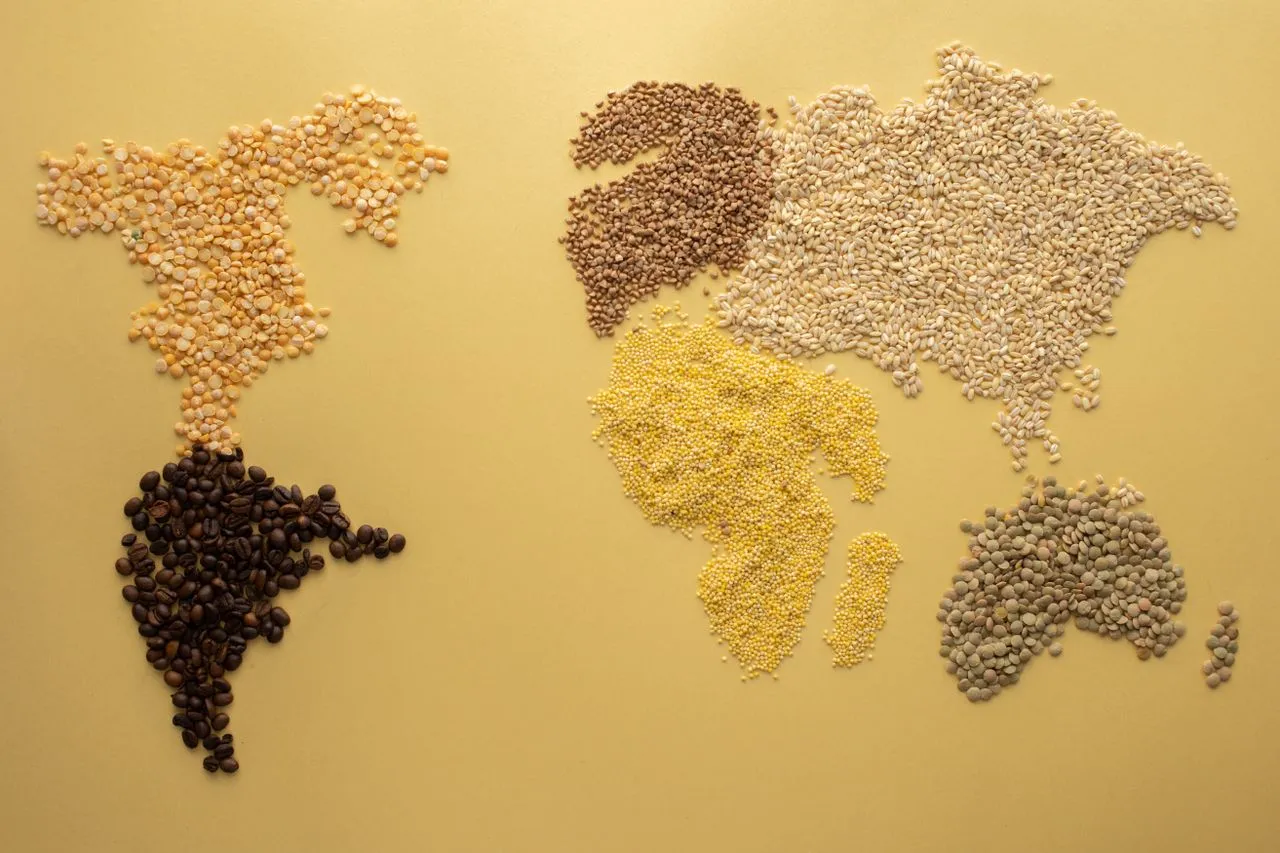
Photo by Monstera Production on Pexels.com
Biodegradable and Ephemeral Materials
Some sustainable artists work with materials that are designed to decompose: hemp, clay, organic cotton, mushrooms, ice, leaves. Andy Goldsworthy's nature sculptures, made from stones, leaves, and ice in outdoor settings, are designed to be reclaimed by the environment. The photographs documenting their existence are the only permanent record. This approach accepts impermanence as a condition rather than a problem, and it aligns the artwork's life cycle with natural processes of growth and decay.
Low-Impact Studio Practices
Beyond material choice, sustainable art encompasses the energy and resource consumption of the studio itself. Solar-powered kilns, rainwater collection for clay work, non-toxic cleaning methods, and local sourcing to reduce transportation emissions are all part of the practice. The Gallery Climate Coalition, founded in 2020 in London, has developed carbon accounting tools specifically for the art sector and now has over 1,500 member organizations worldwide as of 2026.
Artists Who Defined the Field
El Anatsui
The Ghanaian artist El Anatsui constructs large-scale metal tapestries from discarded bottle caps and copper wire collected near his studio in Nsukka, Nigeria. The works hang like fabric but are made from industrial waste. Each bottle cap references global trade, alcohol consumption, and the colonial history of West Africa. The material carries its own history into the gallery, and the works are simultaneously beautiful objects and arguments about waste, consumption, and cultural exchange. Anatsui's work has been acquired by the Metropolitan Museum, the British Museum, and the Centre Pompidou, placing sustainable art practice firmly within the institutional mainstream.
Agnes Denes
In 1982, Agnes Denes planted a two-acre field of wheat on a landfill in Battery Park, Manhattan, two blocks from Wall Street. The project, "Wheatfield: A Confrontation," produced over 1,000 pounds of wheat that was harvested and distributed globally. The work addressed land use, food distribution, and the contradiction of growing grain in the financial center of global capitalism. It remains one of the most influential environmental art projects of the 20th century. Denes's work predates the term "sustainable art" but established many of its core principles: art that operates at environmental scale, that produces tangible ecological outcomes, and that confronts economic and political systems directly.
Jason deCaires Taylor
Jason deCaires Taylor's underwater sculpture parks in Grenada, the Bahamas, and Mexico represent the most direct form of environmental art: work that functions as ecological infrastructure. The sculptures are designed to attract coral colonization and provide habitat for marine life. The Museo Subacuático de Arte (MUSA) off the coast of Cancun contains over 500 sculptures and covers an area of over 420 square meters. The works reduce pressure on natural reefs by diverting tourist traffic to artificial sites, and they provide substrate for coral growth in areas where natural reef has been damaged. Taylor's project website documents the ongoing ecological development of the sites.
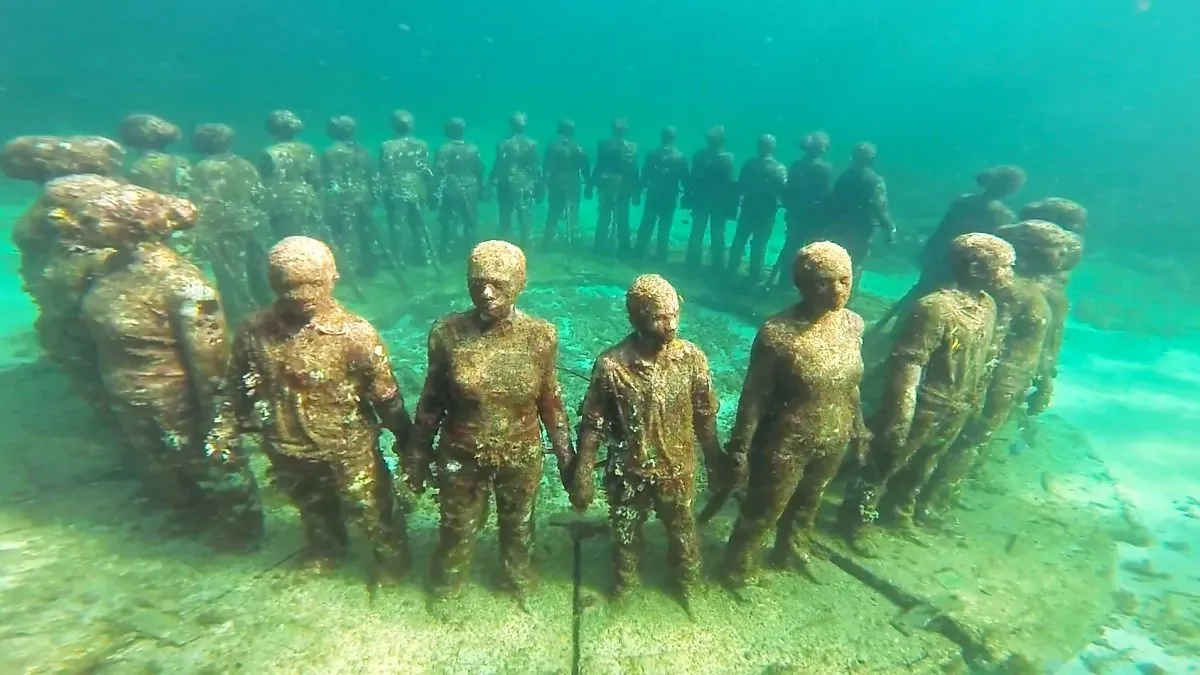
Molinere Underwater Sculpture Park, Grenada. Image Source: Uncommon Caribbean
Olafur Eliasson
Olafur Eliasson's work with ice, water, and temperature has brought environmental themes to major institutional audiences. "Ice Watch" (2014, 2015, 2018) involved transporting blocks of glacial ice from Greenland to public squares in Copenhagen, Paris, and London, where they were left to melt as a direct, physical experience of climate change. Visitors could touch the ice, hear it crack, watch it shrink. The project was criticized by some for the carbon emissions involved in transporting the ice, a criticism that Eliasson acknowledged and incorporated into the work's discourse. The tension between the work's message and its own environmental cost is a productive one that the sustainable art movement continues to grapple with.
The Challenges and Contradictions
Sustainable art faces genuine difficulties that its advocates sometimes understate. Natural pigments often lack the permanence and color intensity of synthetic alternatives, which limits their use for artists who need specific visual results. Recycled materials can be inconsistent in quality and supply. Biodegradable works have short lifespans, which complicates museum acquisition and long-term preservation. The art market's existing infrastructure, from shipping crates to climate-controlled storage, is built around assumptions of permanence that ephemeral and biodegradable work challenges directly.
The carbon footprint of the international art world itself is substantial. A 2023 report by the Gallery Climate Coalition estimated that the commercial art sector produces approximately 70,000 tonnes of CO2 equivalent annually, primarily from shipping artworks for fairs and exhibitions and from international travel by dealers, collectors, and curators. Major events like Art Basel and Frieze have begun implementing sustainability requirements for participating galleries, including carbon offsetting for shipping and waste reduction mandates, but progress has been incremental rather than transformative.
There is also a definitional problem. The label "sustainable" is applied so broadly that it risks becoming meaningless. A sculpture made from recycled plastic is labeled sustainable regardless of whether the energy used to process it came from fossil fuels. A painting about climate change is labeled sustainable regardless of the toxicity of its materials. The most thoughtful practitioners are explicit about the specific environmental claims their work makes and do not overstate them. The least thoughtful use the label as marketing.
Final Thoughts
Sustainable art is not a single movement or aesthetic. It is a set of practices and commitments that take environmental impact seriously as a material condition of art-making. The best work in the field, from El Anatsui's bottle-cap tapestries to deCaires Taylor's underwater reefs, demonstrates that environmental consciousness and artistic ambition are not in conflict. They can reinforce each other, producing work that is formally compelling and ecologically functional at the same time.
The questions the field raises, about what art is made from, where it goes when it is finished, and what it leaves behind, are questions that all art should be asking. The fact that some artists have begun answering them does not make sustainable art a niche category. It makes it a necessary one.
Photo by Modest M on Pexels.com
For more on how artists work with unconventional materials, explore the guide to sculpture materials and techniques. For the broader context of how contemporary art engages with social and environmental issues, see why art matters in society and the overview of art styles from Realism to Contemporary.


